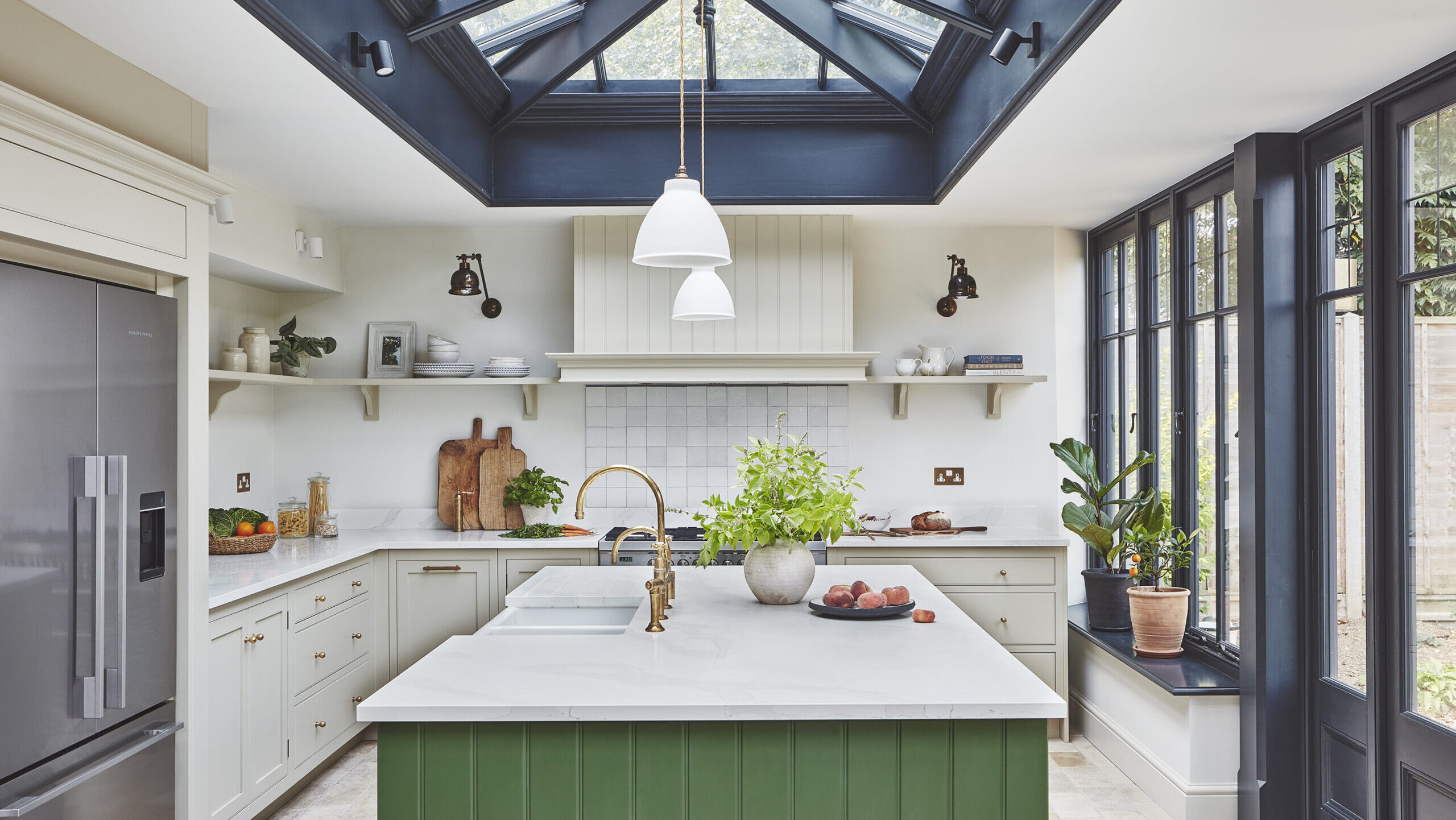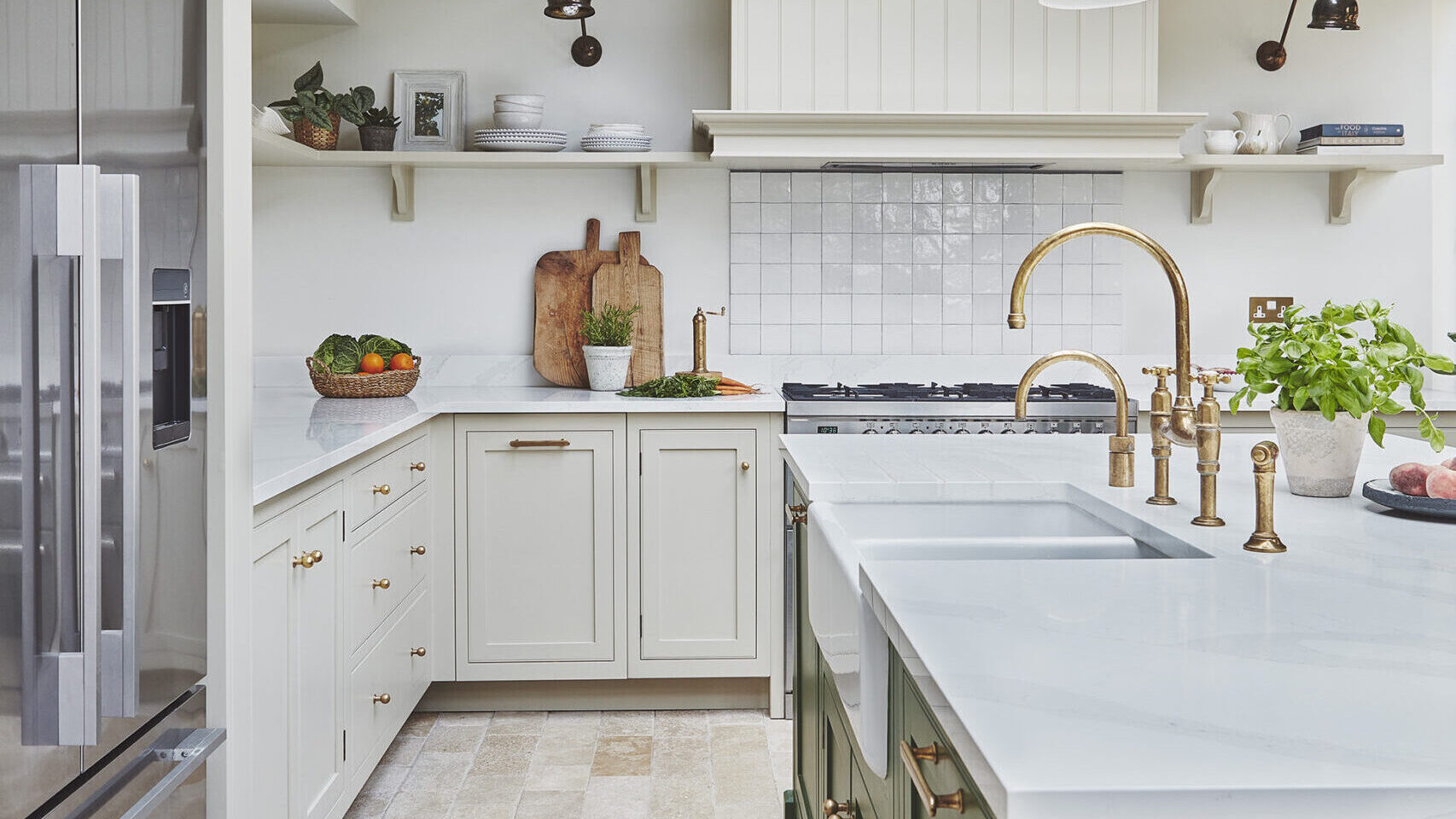
When it comes to designing a functional luxury kitchen, the l-shaped layout stands out for its versatility and efficiency.
Whether you’re rethinking a small kitchen space or designing a large, open plan layout, l-shaped kitchens can adapt to your needs while maximising space and workflow. This popular layout works beautifully in both compact homes and expansive kitchen diner settings, offering flexibility without compromising on elegance.
From designs for small kitchens to spacious kitchen dining room layouts, l-shaped configurations make it easy to combine cooking, dining and socialising in one cohesive space.
Discover real, bespoke kitchen & home inspiration.
What is an L-Shaped Kitchen?
An l-shaped kitchen is a layout where two countertops meet at a right angle, forming an “L” shape. This design typically includes cabinetry, appliances and workspaces along two adjoining walls, leaving the remaining sides open.
The l-shaped configuration is prized for its ability to create a natural work triangle between the sink, hob, and fridge. It’s a layout that promotes both efficiency and ease of movement. This design is perfect for luxury kitchens of all sizes, offering ample storage and workspace while keeping the room feeling open and connected.
Because the layout opens outwards, it naturally lends itself to open plan living. Many homeowners choose l-shaped kitchens when designing a kitchen diner or family space because the layout helps separate cooking areas from dining or relaxation zones without needing physical walls. The result is a bespoke kitchen that feels structured yet sociable.
What Are Some L-Shaped Kitchen Ideas?
1. Leave enough space for movement
One of the key considerations in an l-shaped kitchen is ensuring adequate space between the countertops for comfortable movement. Aim for at least 1.2 metres of clearance to prevent the layout from feeling cramped. This spacing is especially important in smaller kitchens where every inch counts.
When planning l-shaped kitchen floor plans, it’s helpful to map out walkways and work zones early in the kitchen design process. Considering how people will move between the sink, fridge and hob ensures the layout remains practical even in busy households.
Thoughtful spacing is particularly important in l-shaped designs for small kitchens, where the layout must balance practicality with openness. Ensuring there is enough clearance between work surfaces allows multiple people to move through the space without disrupting cooking tasks.
In larger rooms, this open area becomes an opportunity rather than a limitation. It can help create a natural transition between the zones, particularly in an l-shaped kitchen dining room layout, where the cooking space flows directly into a dining or living area.
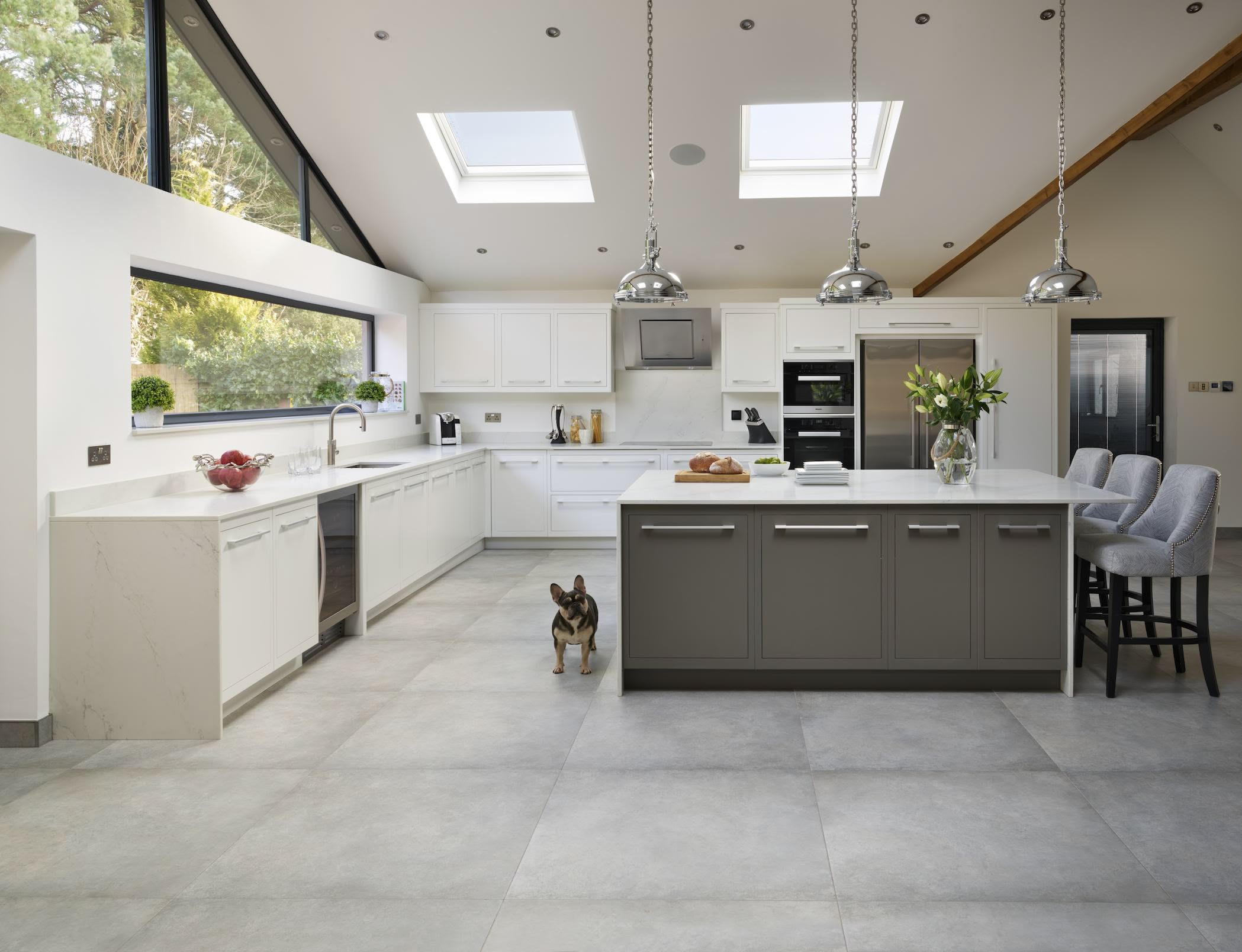
2. Position the fridge near the end of the longer wall
Placing the fridge at the end of the longer wall in your l-shaped kitchen ensures it’s easily accessible while keeping it out of the main cooking area. This placement is particularly effective in high-traffic kitchens, as it allows others to grab items without interrupting the cook.
Opt for an integrated model with cabinetry housing for a seamless, cohesive finish that blends effortlessly into your luxury kitchen design. Alternatively, choose a freestanding model to create a bold statement piece.
Positioning the fridge at the edge of the layout also supports a smoother workflow. It keeps food storage slightly separate from the cooking zone, which is particularly helpful in family kitchens where several people may be using the space at once.
In many l-shaped kitchen designs, this placement also keeps the fridge slightly separated from the main preparation zone. This allows family members to access drinks or ingredients without interrupting cooking, which is particularly useful in open-plan kitchen diner spaces.
3. Balance the hob and sink by placing them on opposite walls
To achieve harmony in your kitchen’s design, consider positioning the hob and sink on opposite sides of the l-shape. This creates a balanced workflow, making it easy to move between tasks while cooking and cleaning.
Distributing appliances in this way helps maintain the classic kitchen work triangle, which is one of the reasons l-shaped kitchens remain such a practical layout. The distance between each point of the triangle is short enough to keep cooking efficient but spacious enough to prevent overcrowding.
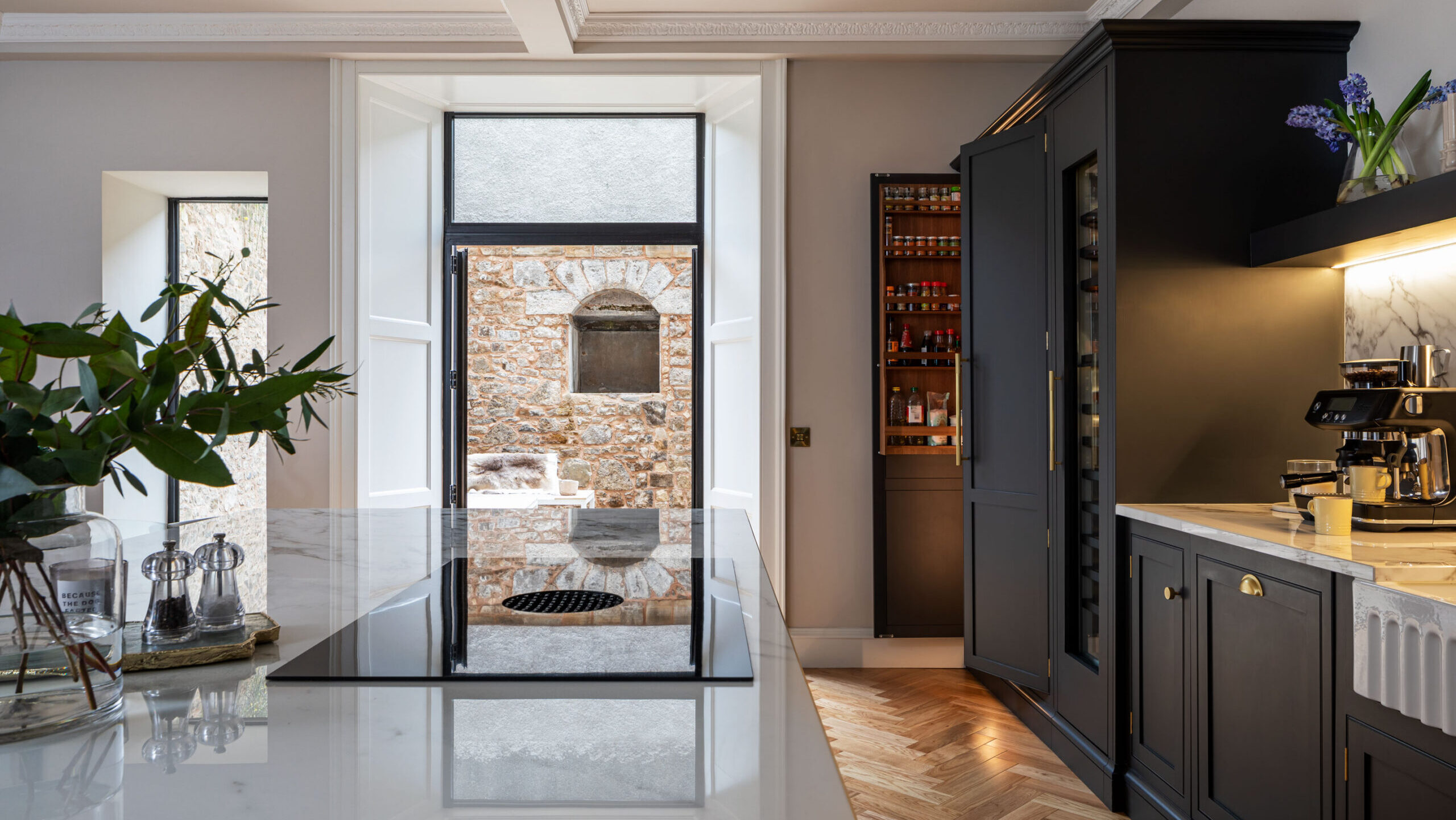
Opt for statement hobs or sinks to add a focal point, such as a bold induction hob or a farmhouse-style sink, perfect for timeless designs like bespoke Shaker style kitchens.
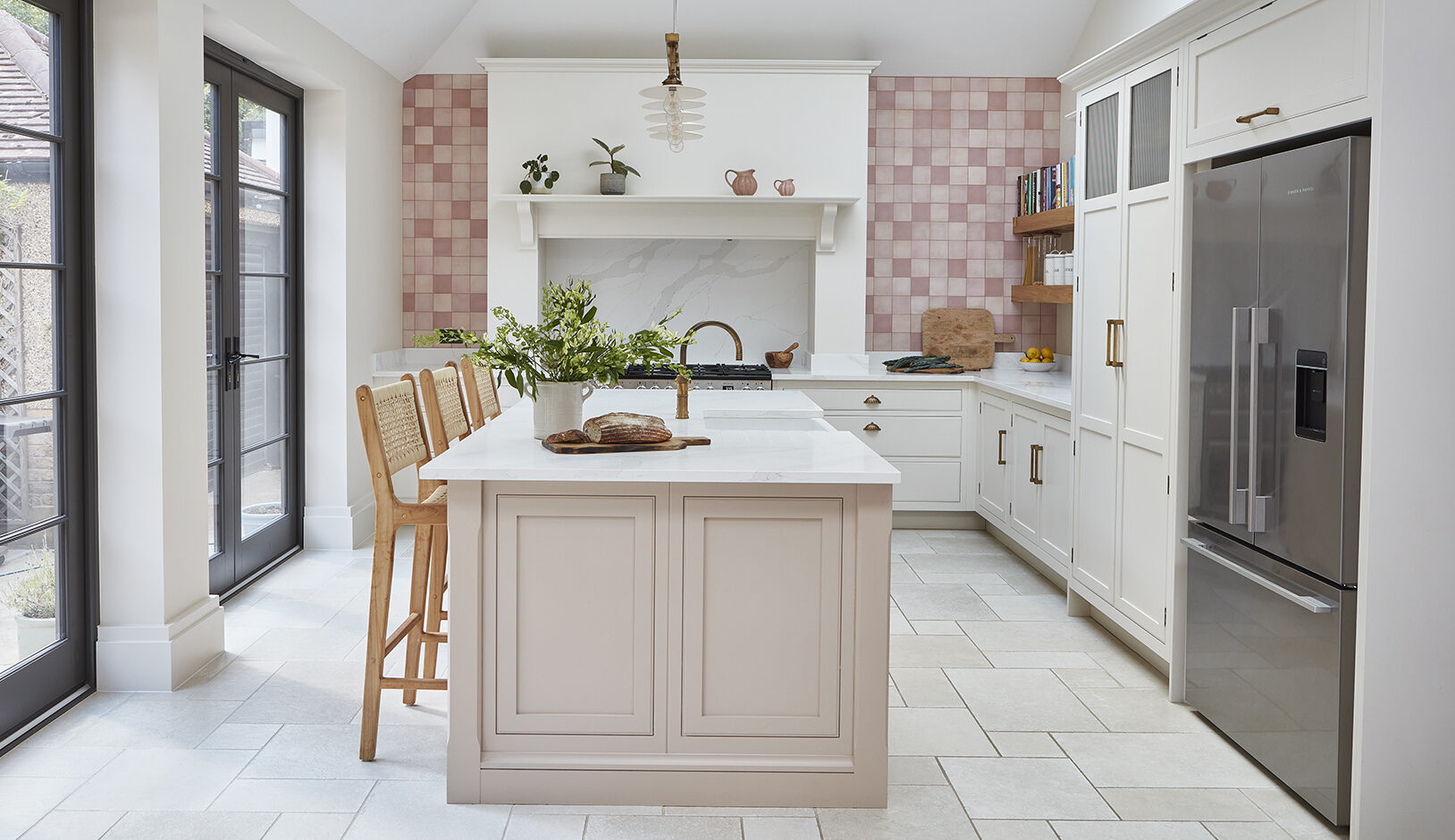
4. Fill the triangle of empty space with a kitchen island
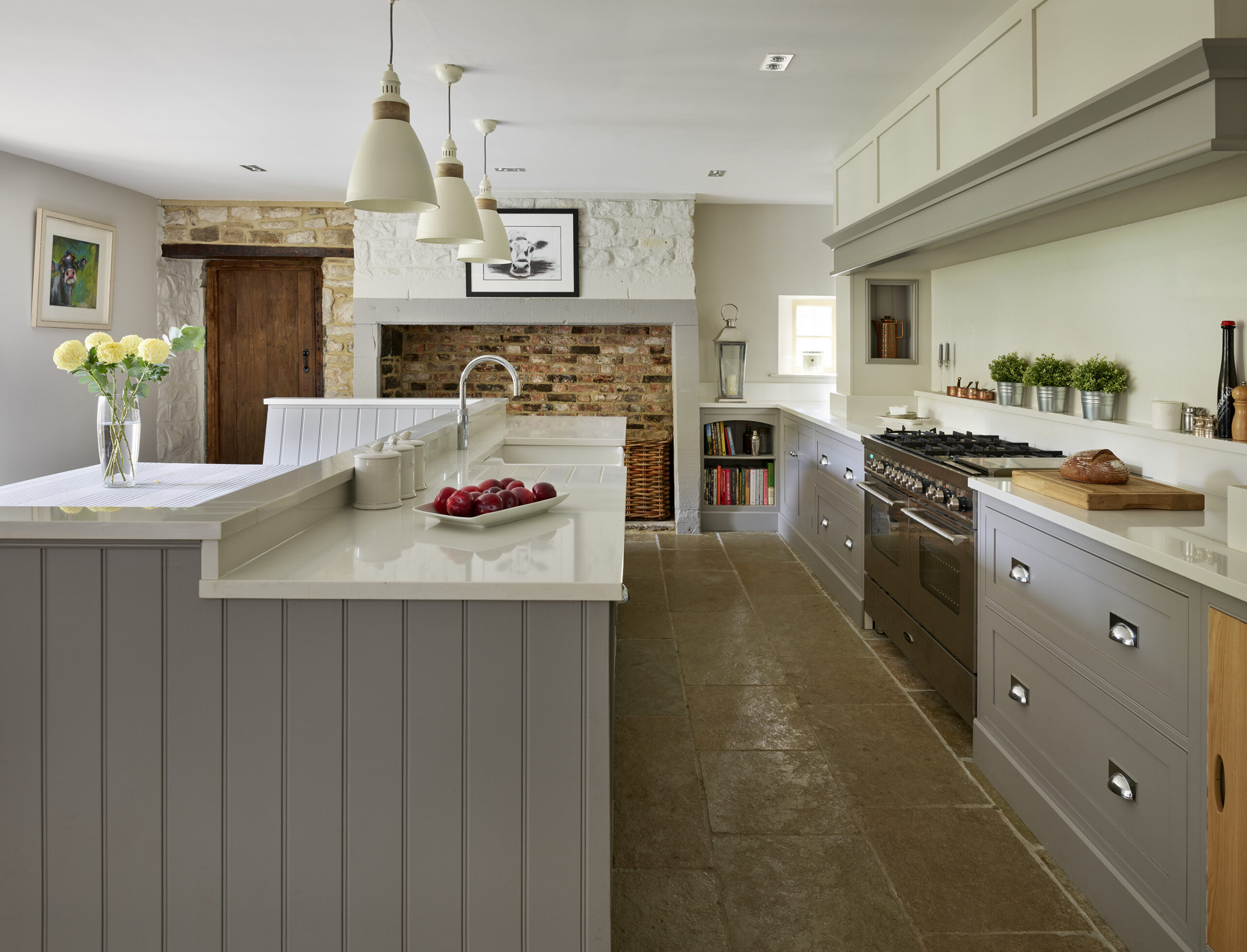
In larger l-shaped kitchens, the open space created by the layout can be complemented with a kitchen island. This addition provides extra storage, workspace, and seating, making the kitchen the true heart of the home.
When planning a small l-shaped kitchen with island, careful measurements are essential to ensure the island enhances rather than restricts movement. Slimline islands, peninsula units or compact prep islands can provide additional storage and seating while maintaining comfortable circulation around the kitchen.
For a cohesive look, choose an island that matches your cabinetry and finishes or shade from the same colour palette. Fully bespoke kitchen islands can be tailored to your exact specifications to ensure they fit seamlessly into your design.
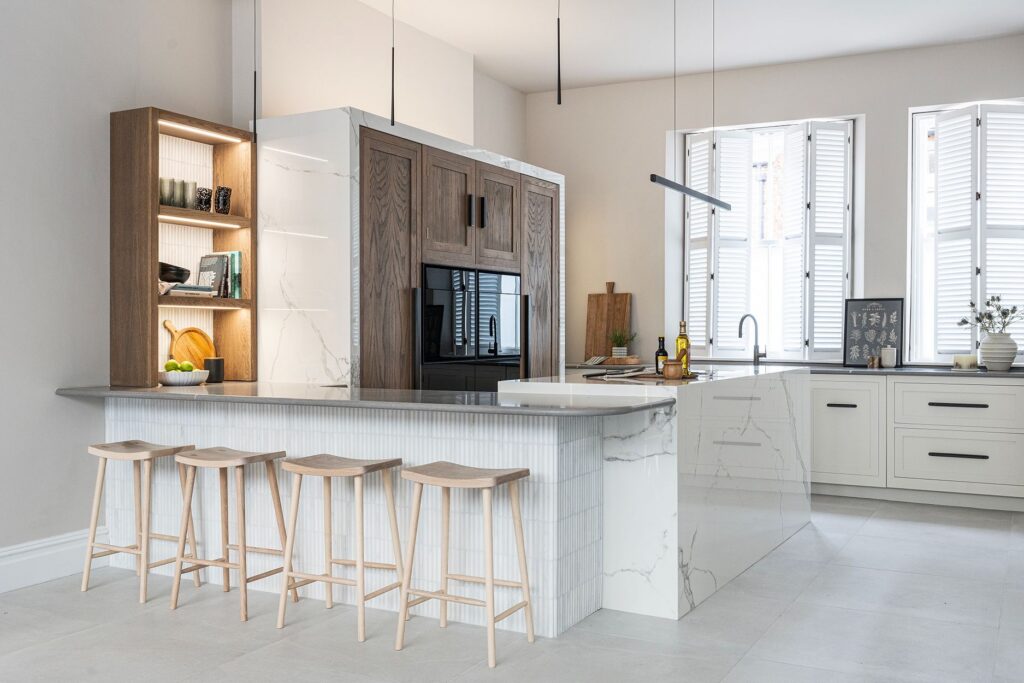
5. Add an L-shaped kitchen with breakfast bar
Another way to make the most of the open side of the layout is by incorporating a breakfast bar in an l-shaped kitchen. This feature is particularly popular in open plan homes, where the kitchen connects with the dining or living space.
A bespoke breakfast bar provides informal seating for quick meals, morning coffee or evening drinks while cooking. It also creates a subtle visual divide between the bespoke kitchen workspace and the surrounding living areas without closing the room off.
Pairing a breakfast bar with pendant lighting or statement stools can turn this simple addition into a stylish focal point. A thoughtfully designed l-shaped kitchen with breakfast bar can also help maximise smaller spaces. By extending a worktop slightly beyond the cabinetry run, you can create a casual seating area that works for quick breakfasts, homework sessions or relaxed entertaining.

6. Use corner storage solutions
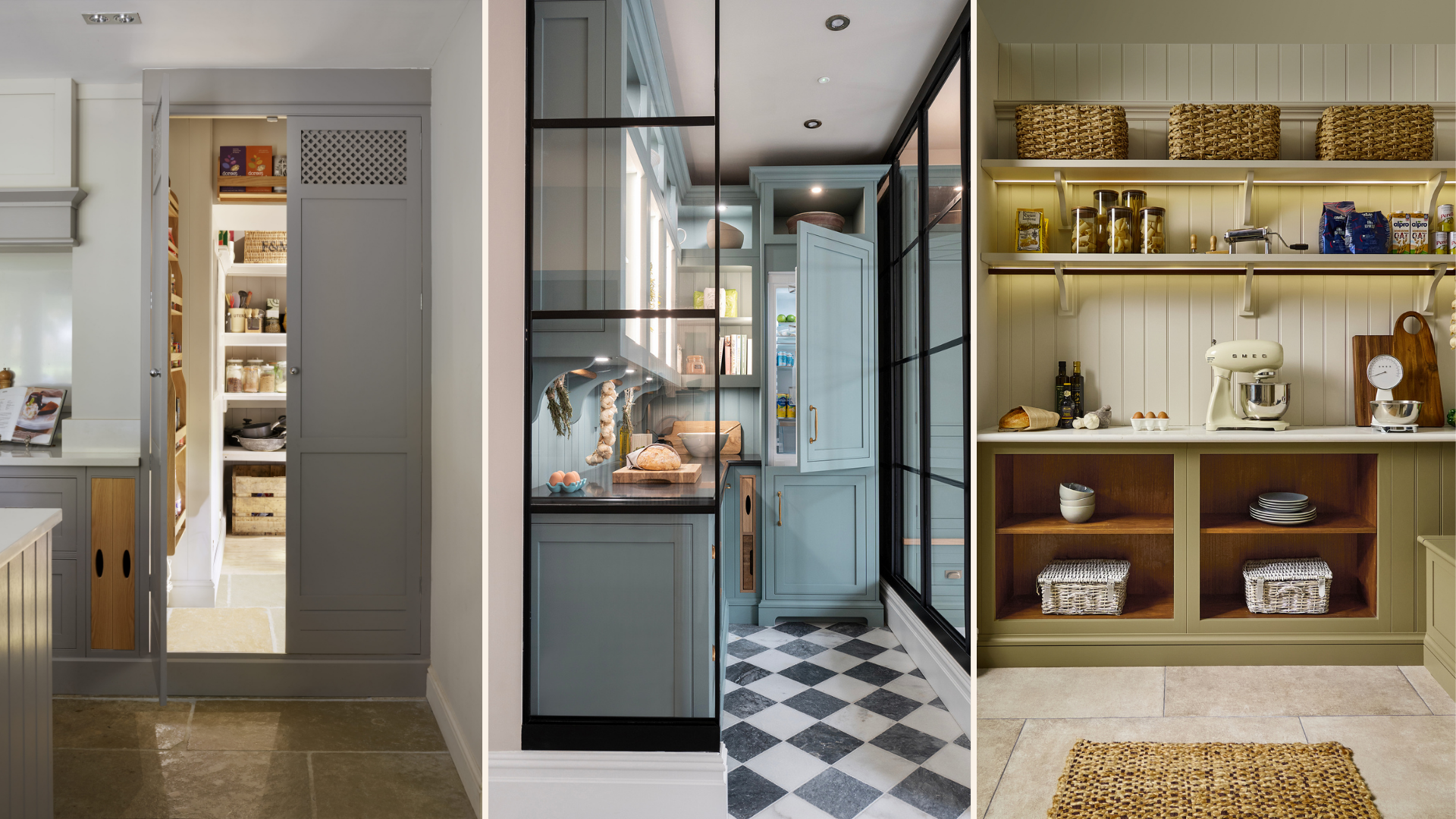
Maximise the functionality of your l-shaped kitchen by utilising corner storage solutions. Pull out shelves or carousel units ensure that no space goes unused and make accessing items in the deepest parts of the corner easy.
Corners are one of the defining features of l-shaped kitchen designs, but without the right design, they can quickly become difficult to use. Clever internal storage solutions allow you to make the most of every inch while keeping everything organised and accessible.
These practical additions help maintain the clean, uncluttered look that makes l-shaped kitchens feel so open and streamlined. Bespoke storage is the key to maximising space.
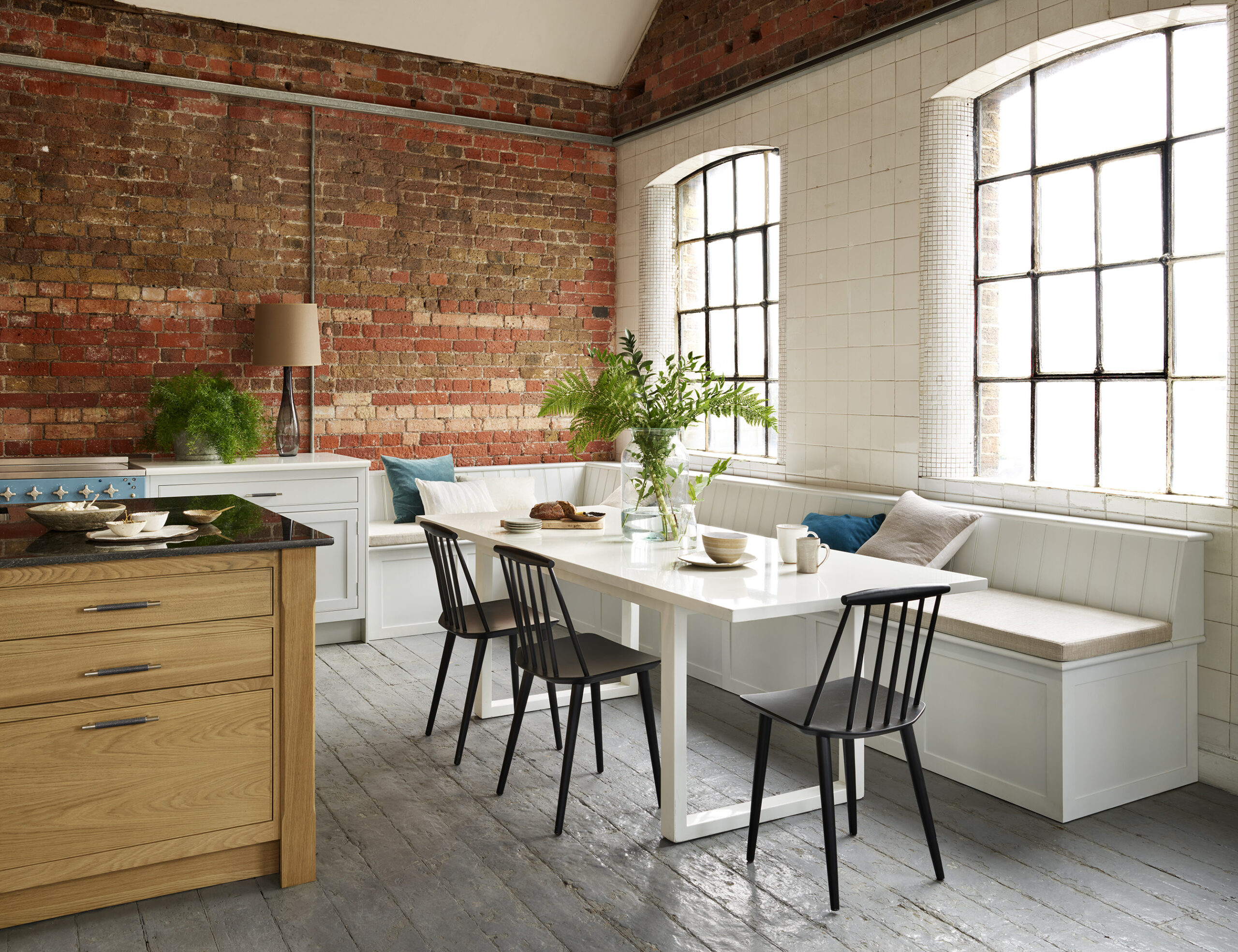
7. Add a dining area along the open side
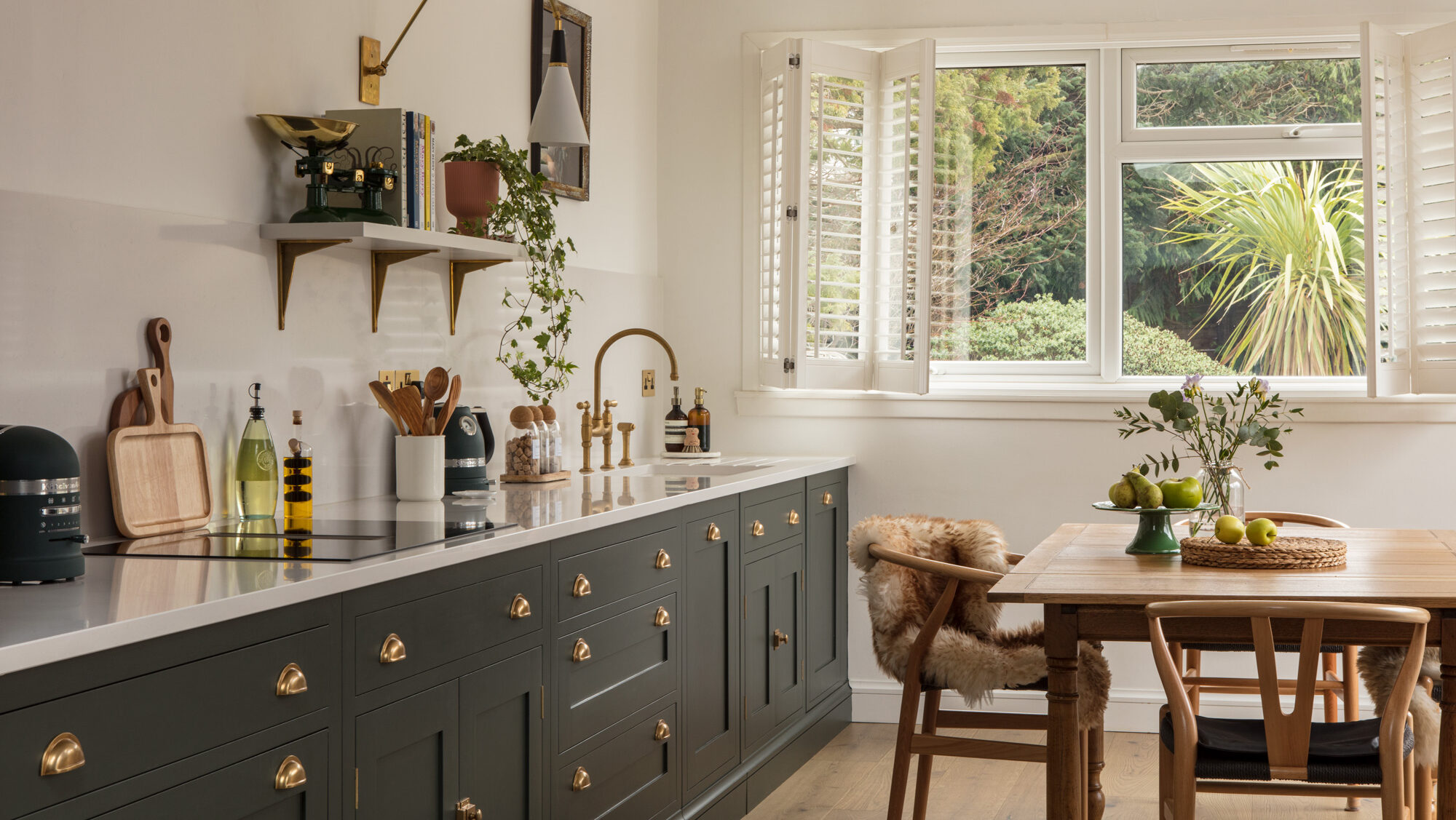
If your l-shaped kitchen opens into a larger space, consider incorporating a dining area along the open side. A stylish table or bespoke breakfast nook can define the kitchen zone while providing a cosy spot for meals and gatherings.
This approach works particularly well in an l-shaped kitchen dining room layout, where the luxury kitchen seamlessly transitions into a dining space. Bespoke built-in bench seating or a window-side breakfast nook can make the area feel inviting while saving space.
In a well-designed l-shaped kitchen dining room layout, the dining table or breakfast nook becomes a natural extension of the kitchen rather than a separate room. This approach works particularly well in open-plan homes where the kitchen acts as the central hub for family life and entertaining.
Designing Beautiful L-Shaped Kitchens for Every Home
The best l-shaped layouts combine clever planning with bespoke kitchen design to create a space that feels both practical and beautifully balanced. By carefully positioning appliances, maximising corner storage and considering additions such as islands, breakfast bars or dining areas, the layout can adapt effortlessly to different home sizes and lifestyles.
Whether you are planning l-shaped kitchen designs for small kitchens or exploring ways to enhance a spacious kitchen diner, this layout offers the flexibility to create a room that feels open, organised and welcoming.
Start Designing Your L-Shaped Kitchen with Harvey Jones
If you’re considering l-shaped kitchen design ideas for your home, working with experienced designers can help you make the most of your space. From tailored cabinetry to beautifully integrated islands and dining areas, every element can be crafted to suit your lifestyle.
Harvey Jones expert kitchen designers create bespoke kitchens that balance elegance with practicality. Book a design consultation to discuss your ideas or browse our brochure for more inspiration and guidance.
FAQs About L-Shaped Kitchens
If you’re planning l-shaped kitchens, you may have a few practical questions about layout rules, appliance placement and materials. Below we answer some of the most common design queries.
What is the rule for the l-shaped kitchen?
The main rule for l-shaped kitchens is to maintain an efficient kitchen work triangle between the sink, hob and fridge. These three key areas should be positioned within comfortable reach while still leaving enough space for movement between them. Following this principle ensures the layout feels balanced and practical, whether you are designing a compact kitchen or a larger open-plan space.
Where to put a fridge in an l-shaped kitchen?
In most l-shaped kitchen designs, the fridge is best placed near the end of the longer run of cabinetry. This keeps it accessible without interrupting the main cooking area. Positioning it at the edge of the layout also works well in open plan kitchens, as it allows family members to access the fridge without crossing through the primary cooking zone.
What are the common l-kitchen design mistakes?
One of the most common mistakes in l-shaped kitchens is not allowing enough space between the two runs of cabinetry, which can make the room feel cramped. Another issue is underutilising corner storage, leaving valuable space difficult to access. Poor appliance placement can also disrupt the work triangle, making every day cooking less efficient.
What flooring complements l-shaped kitchens?
Flooring that creates visual continuity works particularly well in l-shaped kitchens, especially in open plan spaces. Materials such as natural wood, stone or large-format tiles help connect the kitchen with adjoining dining or living areas. Choosing the same flooring throughout a kitchen diner can make the layout feel larger and more cohesive.