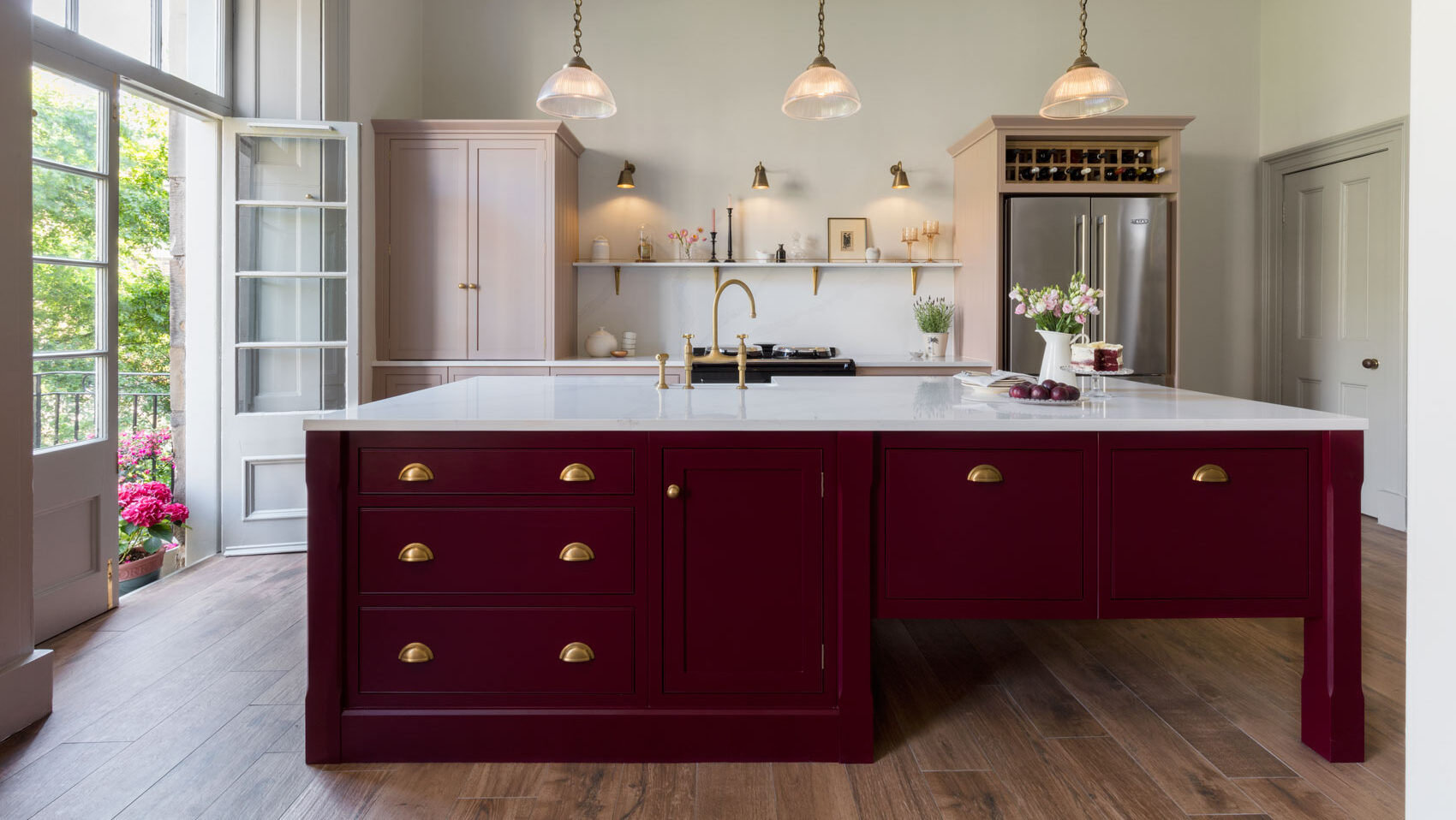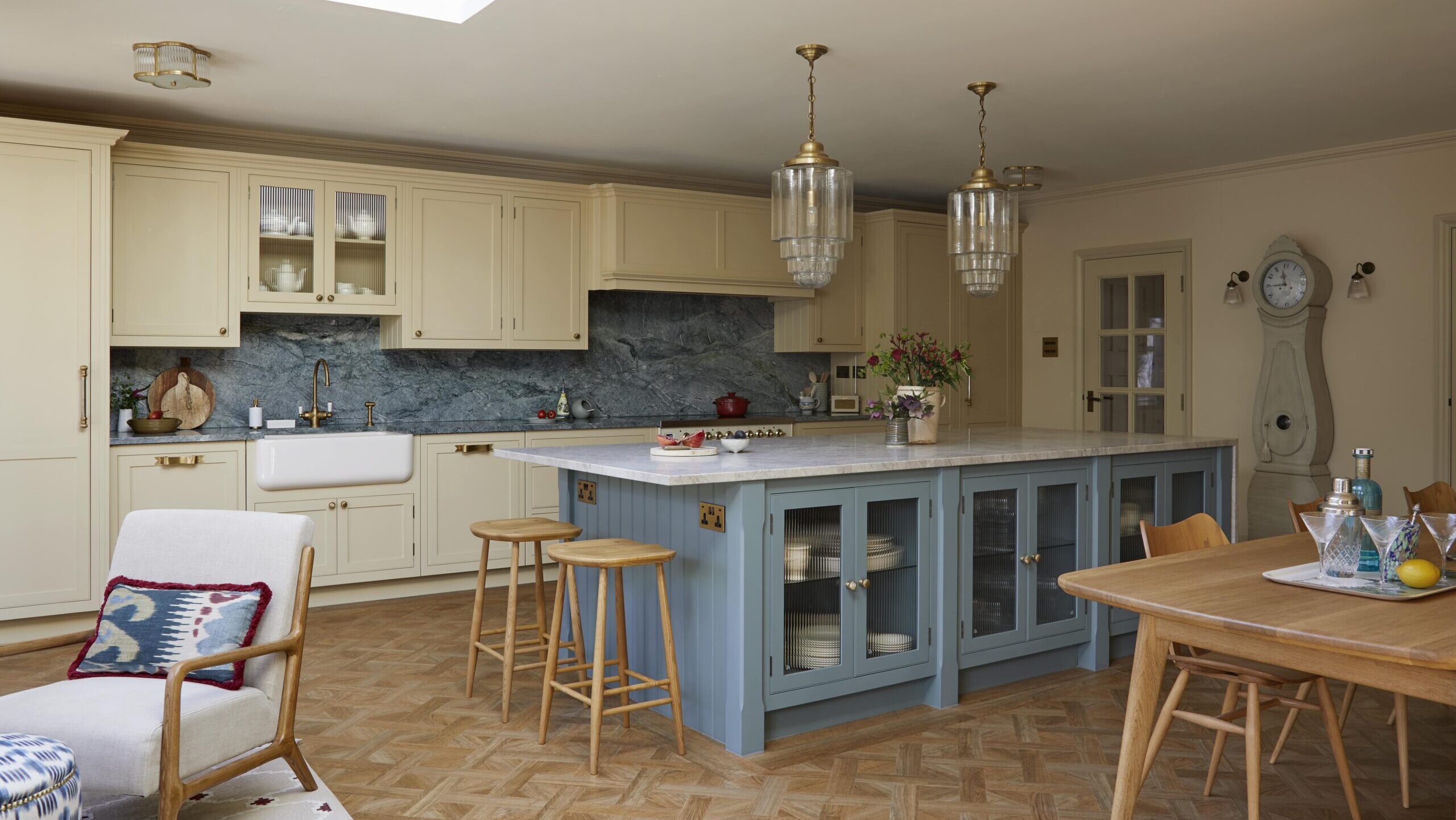
If you’re dreaming of a space where cooking, eating and relaxing all flow into one – you’re not alone. Open plan living has become one of the most sought-after features in modern British homes, and for good reason. Light pours in. Family life feels more connected. And a truly beautiful bespoke kitchen gets the stage it deserves.
But knowing how to design an open plan kitchen well – so it feels cohesive, functional and genuinely enjoyable to live in – takes more than simply knocking down a wall. In this guide, our expert kitchen designers share everything you need to know, from choosing the right layout to zoning your space with style.
Discover real, bespoke kitchen & home inspiration.
What is an Open Plan Kitchen?
An open plan kitchen is a space that connects directly to another area of your home – most commonly a dining room, living room or both. By removing internal walls, you increase natural light, improve flow between rooms and create a single, sociable space the whole family can share.
It’s also a brilliant way to showcase a high end kitchen design. In a traditional layout, your kitchen is hidden away. In an open plan space, it becomes a centrepiece of daily life.
There are a few common configurations to choose from, depending on your lifestyle and interior preferences:
- Open plan kitchen-living room: Ideal for families. You can keep an eye on the children while you’re making breakfast, or chat from the sofa while someone else is on dinner duty.
- Open plan kitchen diner: Perfect for entertaining. No doors to navigate when it’s time to serve, and no disappearing into the kitchen while your guests are having all the fun.
- Semi open plan kitchen: The best of both worlds. Screens, half-walls or thoughtful shelving create a sense of separation while keeping the space feeling connected and bright.
The Benefits of Open Plan Living
Before diving into designing an open plan kitchen, it’s worth pausing on why so many homeowners are choosing open plan layouts – and why it works so well with bespoke fitted kitchens.
- More natural light: Removing walls opens up sightlines and allows light to travel freely across the entire space.
- Better family connection: Everyone gravitates to the same room. Conversations happen naturally, without anyone being isolated.
- Flexible entertaining: Hosting feels effortless when cooking, dining, and relaxing all happen in one flowing space.
- Your kitchen becomes a design feature: A luxury designer kitchen in an open plan room isn’t just functional – it’s something to be proud of.
Choosing the Right Layout for Your Open Plan Kitchen
The layout of your open plan kitchen sets the tone for everything else. Here are the most popular configurations, and when each one works best.
Open Plan L-Shaped Kitchens
A versatile classic, the L-shape tucks neatly into a corner, freeing up floor space for a dining table or island. It creates a natural work triangle between the fridge, sink and hob while leaving plenty of room for the rest of your open plan living area to breathe. It’s one of the most popular choices for contemporary open plan kitchen living rooms.
Open Plan U-Shaped Kitchens
Ideal for larger spaces, a U-shaped layout wraps cabinetry around three sides, maximising storage and worktop space. In an open plan design, one arm of the U often becomes a peninsula, offering seating and acting as a subtle divider between kitchen and living zones.
Open Plan Kitchen with Island
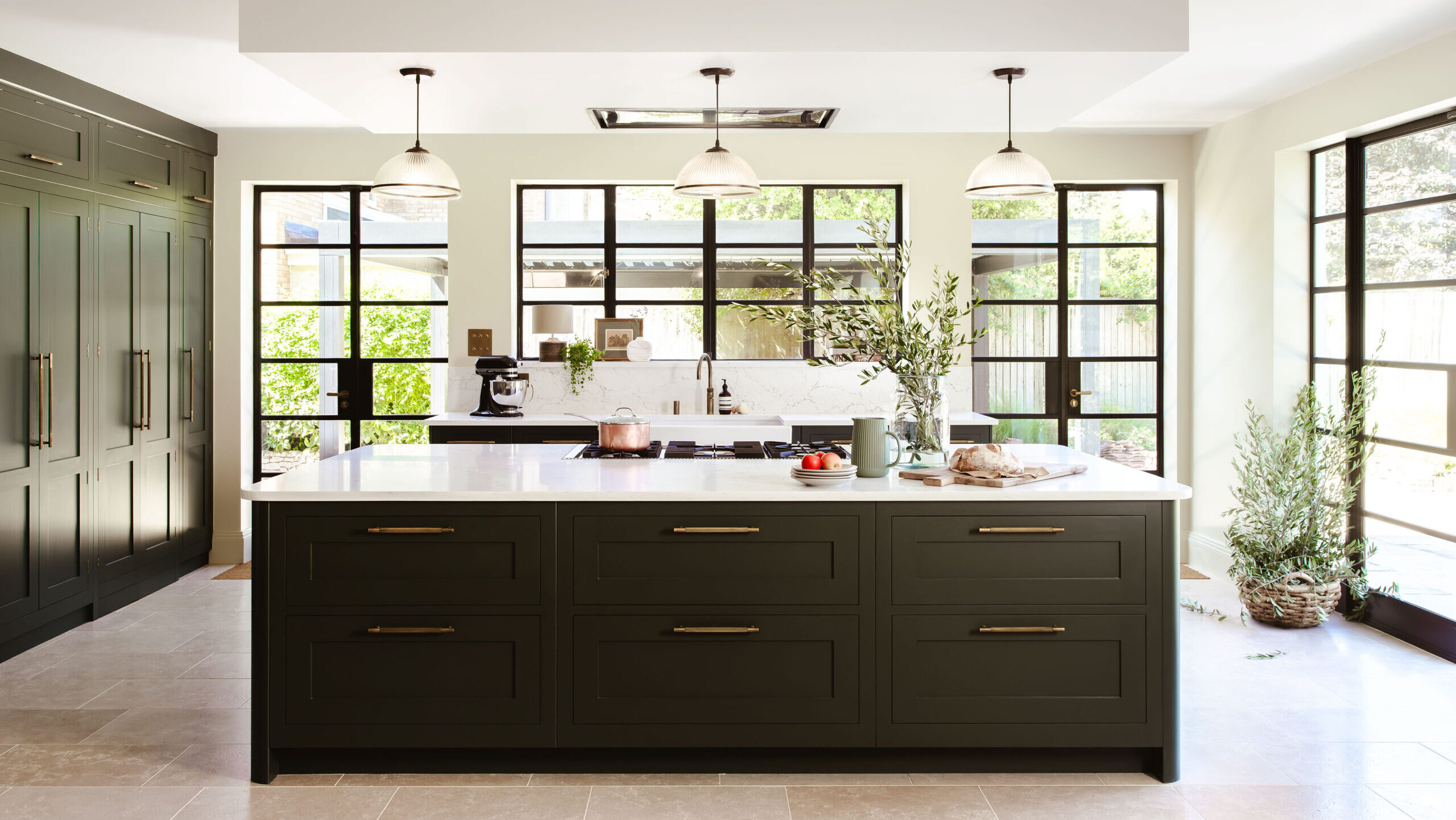
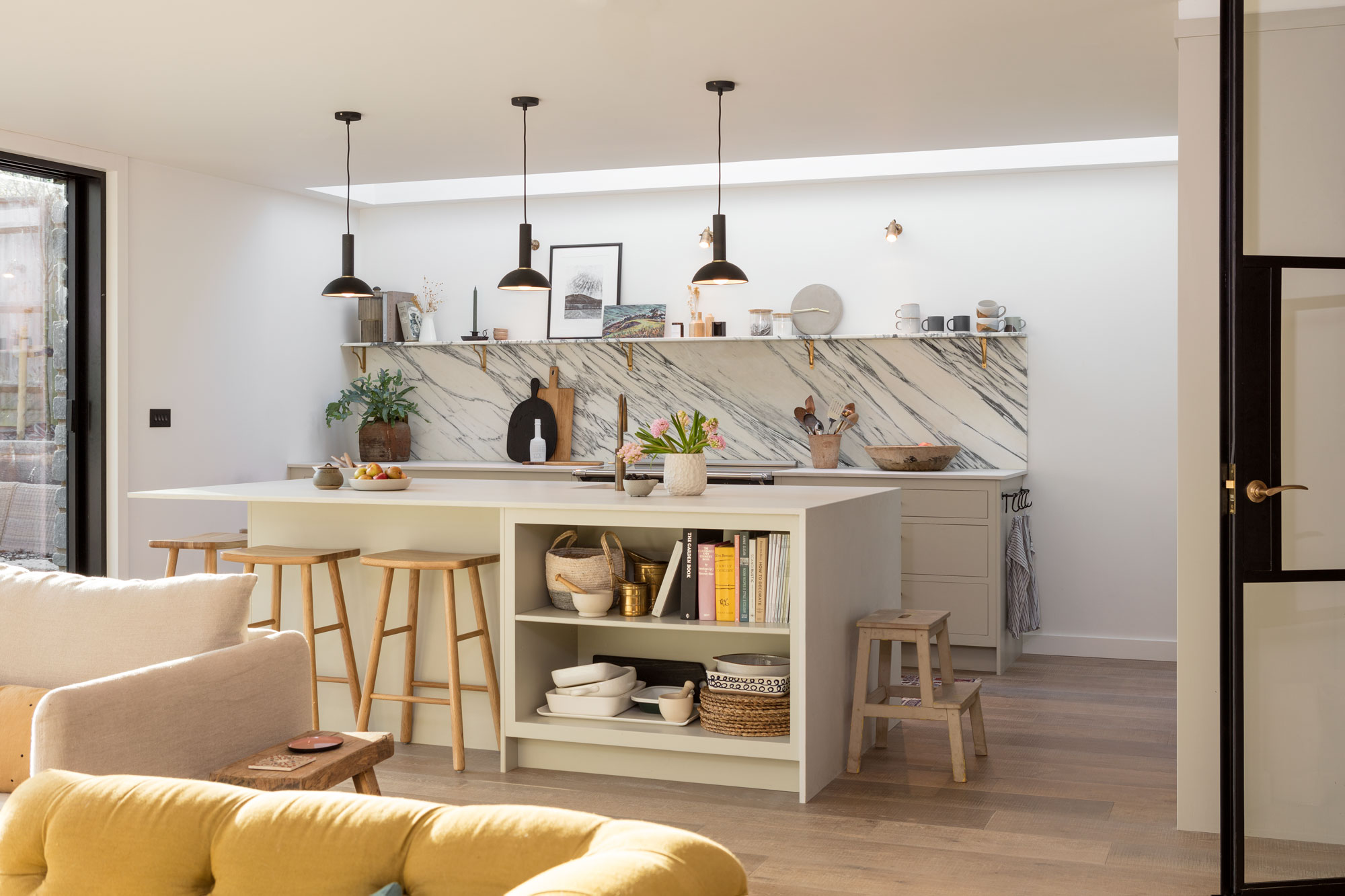
A kitchen island is one of the most powerful tools in open plan design. It adds prep space, seating and storage – but it also does something no other feature can quite match: it defines the kitchen zone without closing anything off. A bespoke kitchen island design can become the natural meeting point of your whole home.
How to Separate an Open Plan Kitchen and Living Room
One of the most common questions we hear is: how do you divide an open plan kitchen and living room without losing the sense of space? The answer lies in thoughtful zoning, using design rather than walls to create definition.
As Josh, one of our expert kitchen designers, explains:
“We think about a kitchen in distinct zones, using colour and subtle changes in height to guide how you move through the space. A step up to the island, continuous flooring to keep it flowing, and shifts in materials to gently and effectively define areas.“
Use your island or peninsula
Positioned thoughtfully, a kitchen island creates a natural boundary between cooking and relaxing without blocking light or sightlines.
Consider flooring transitions
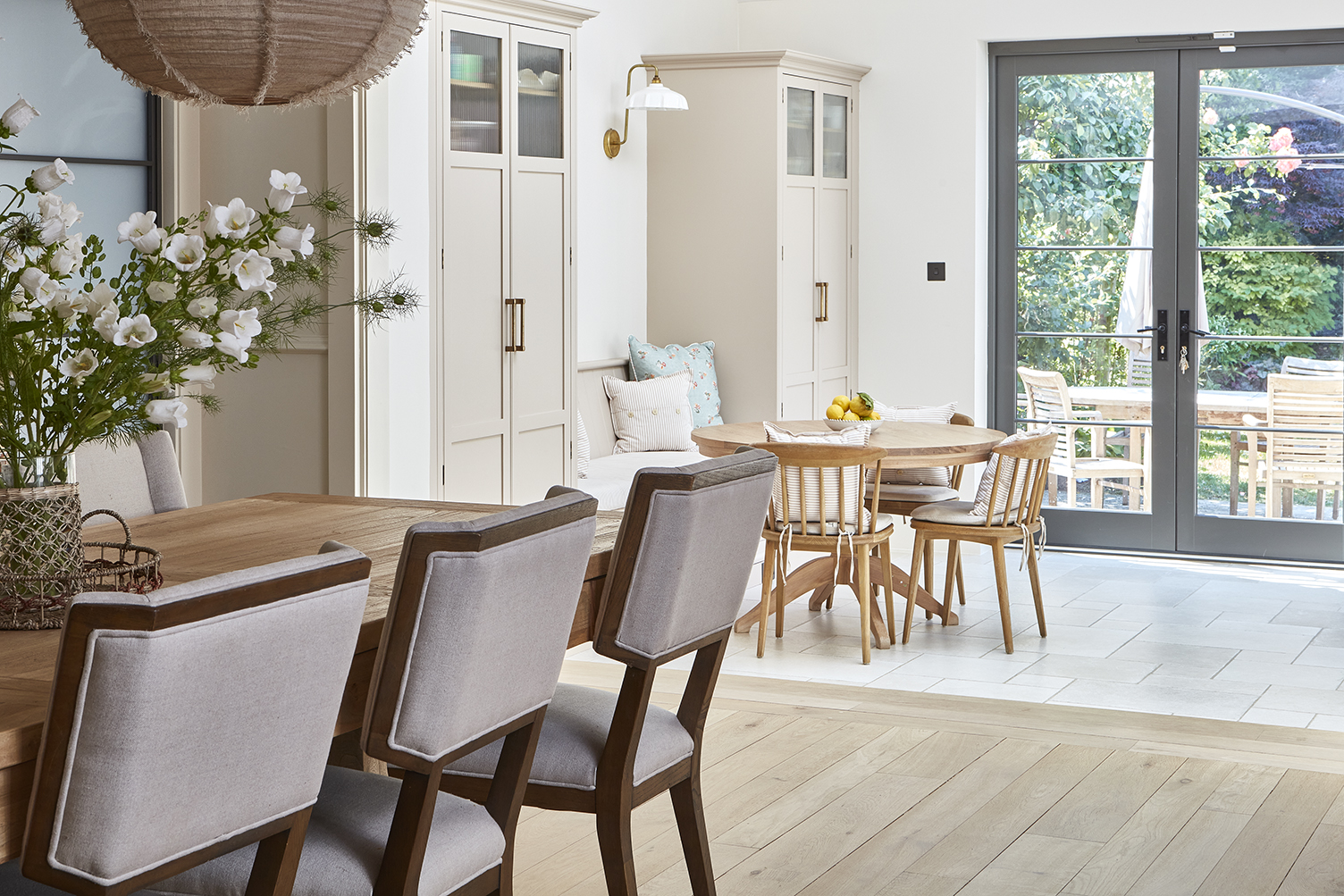
Different flooring, like stone or tile in the kitchen and warm reclaimed wood in the living area, creates a subtle visual break. Creating a step up or down into different zones also helps to create a subtle divide. Alternatively, the same flooring run throughout can unify the space beautifully – it depends on the effect you’re after.
Position furniture strategically
The back of a sofa facing the dining zone creates an invisible boundary. It’s a simple trick that works remarkably well. Alternatively, use a large dining table to act as a divider between kitchen, eating and living spaces in larger homes.
Explore semi open plan options
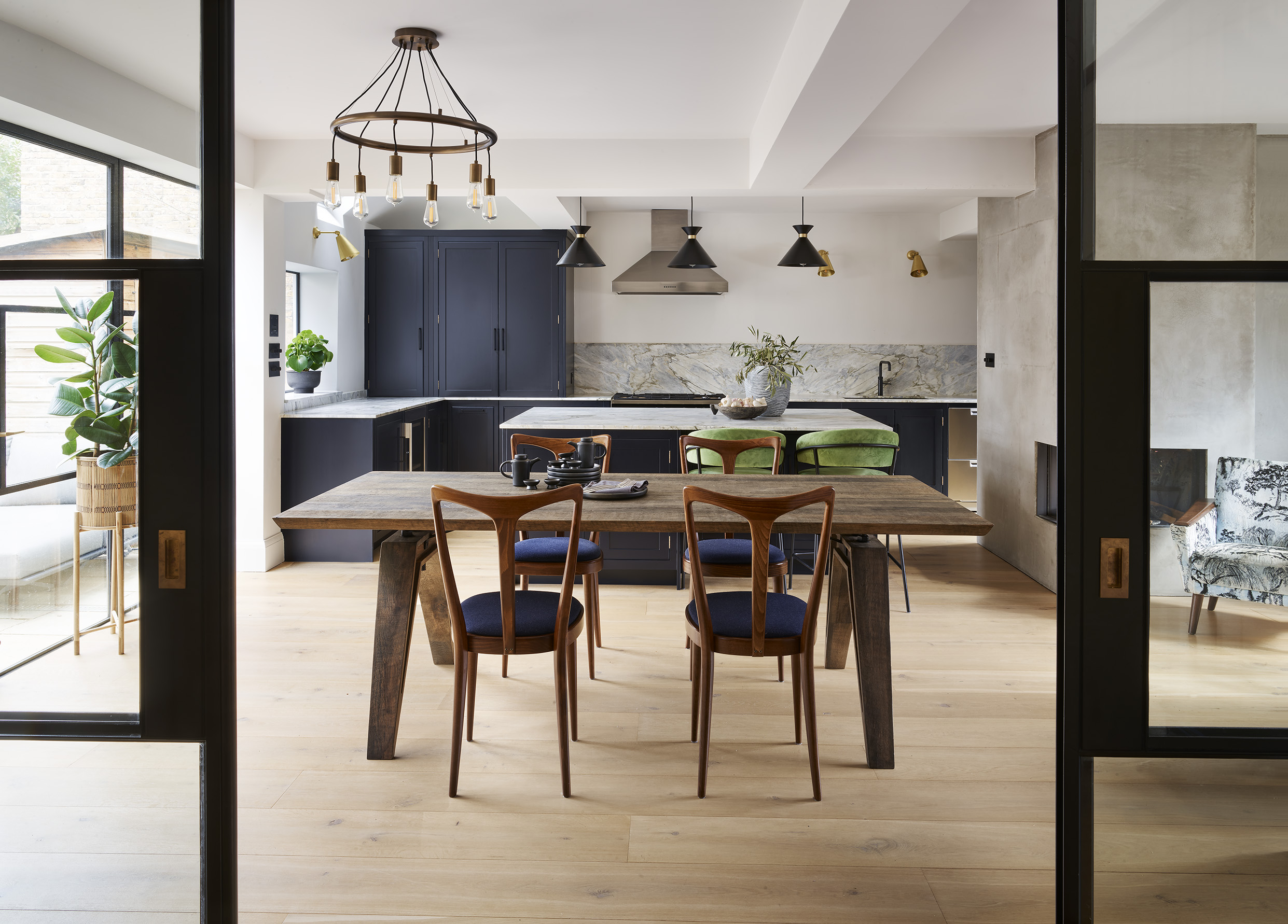
If you want connection without full openness, flexible dividers are a great option. Pocket doors, a glass partition or a Crittall-style screen can give you the best of both. Privacy when you need it and a connected social zone when you don’t.
Let lighting do the work
Pendant lights above the island or dining table signal a change of zone. Task lighting in the kitchen, softer lamps in the living area – layered lighting is one of the most effective (and underused) zoning tools available.
As Sally, an expert Harvey Jones kitchen designer, explains:
“Layering your lighting is transformative in a big space that has to do many things. You may need bright task lighting for the kids doing their homework at an island and cooking dinner. But then in the evening, having just cabinetry lighting and lamps on whilst having a glass of wine gives an cosy feeling at the flick of a switch.”
How to Decorate an Open Plan Kitchen Diner
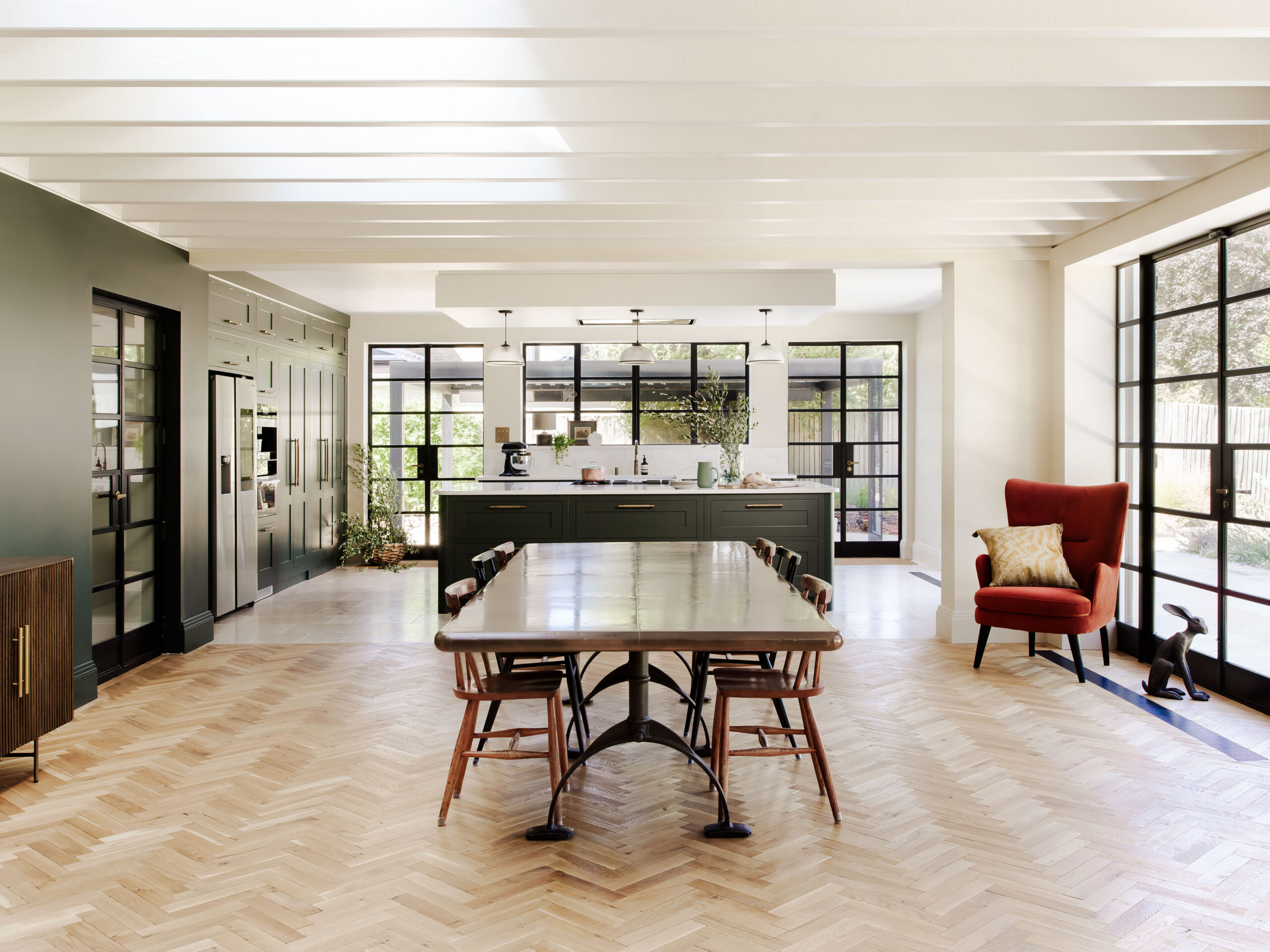
Decoration is where the real character comes through, and in an open plan space, consistency is everything. The kitchen and living areas need to feel like one considered whole, not two rooms that happened to be joined together.
1. Start with a coherent colour palette
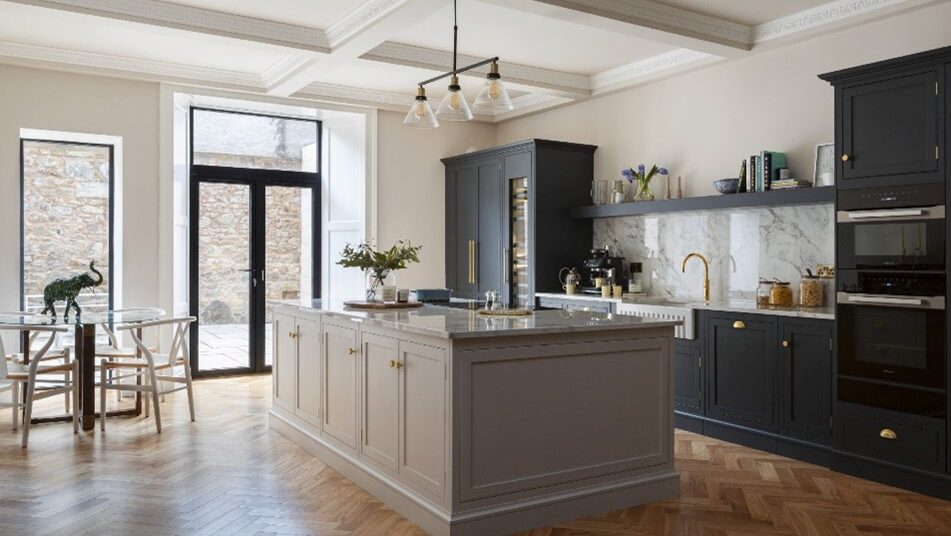
Deep navy cabinetry, for instance, can be echoed in artwork, cushions, or upholstery across the living area. It ties everything together without being in-your-face. If you prefer neutral kitchen styles. adding in an accent material, like wood, is a great way to maintain a natural feel.
2. Use materials to create warmth
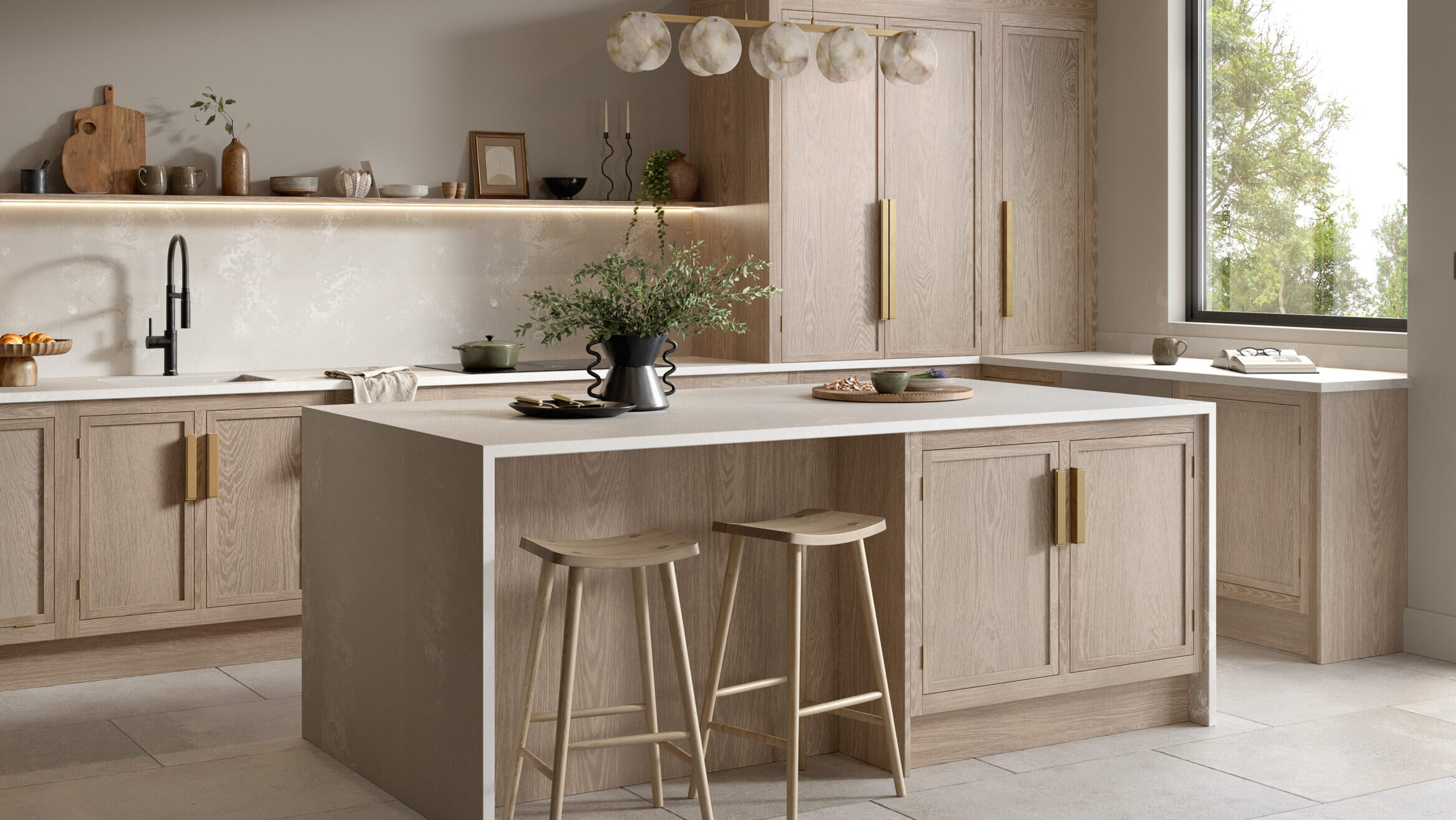
In a high end kitchen, natural materials – aged brass handles, stone worktops, solid wood cabinetry – bring texture and character. Carry those material cues through into the rest of the space with wooden furniture or woven textiles.
3. Consider what’s on show
In an open plan kitchen, your cabinetry is always visible. Bespoke Shaker kitchens, in particular, lend themselves beautifully to open plan living – their clean lines and timeless style work across every aesthetic, from contemporary to traditional.
4. Don’t forget the details
Open shelving, plants, pendant lighting – these aren’t afterthoughts. They’re what makes the difference between a space that looks finished and one that feels genuinely lived in. Curating a space that truly feels like yours takes time, but adding touches of personal style is the difference between a showroom and a bespoke kitchen design.
Discover real, bespoke kitchen & home inspiration.
Practical Planning Considerations
Before your designer starts drawing up plans, a few practical decisions need to be made.
As Josh, one of our bespoke kitchen designers, explains:
“Before we start designing, we focus on how you actually live in the space. That means understanding whether it’s used for dining, relaxing in a snug, or entertaining guests, and whether seating is a priority. We map out the essentials first, so we can shape a layout that genuinely reflects how the kitchen will be used.”
How will you use the space?
Do you want more worktop room, or is a generous living area the priority? Would you prefer a dining table, or does casual seating around an island suit your lifestyle better?
Do you need seating in the kitchen?
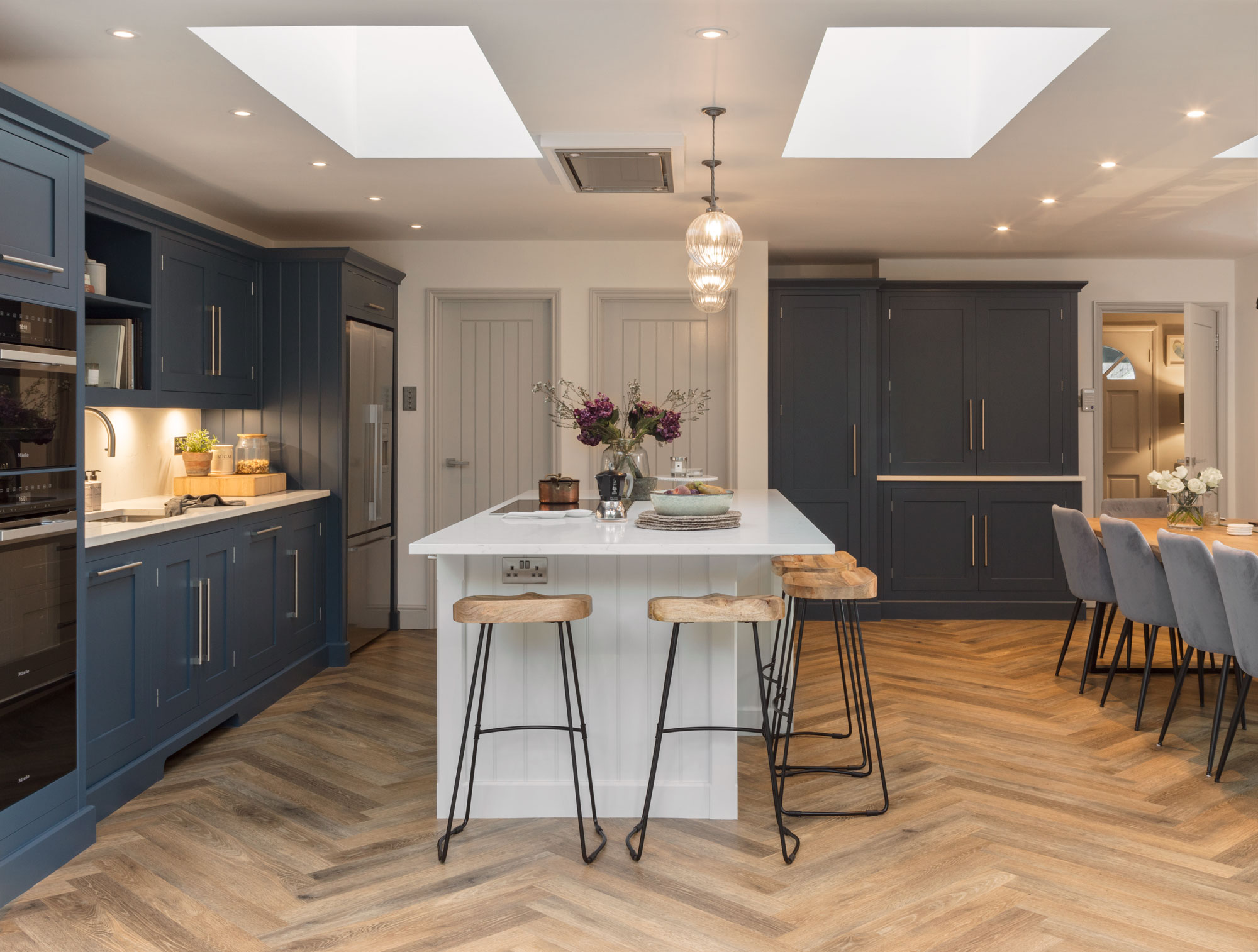
Formal dining often sits in a dedicated space, such as a farmhouse table for shared meals and occasions. More social, relaxed living tends to centre around a kitchen island, where seating naturally connects cooking and conversation. Informal moments suit banquette seating, ideal for coffee, homework, or quiet catch-ups away from the main flow of the kitchen.
Where will the kitchen sit within the room?
Think about how people move through the space. If the kitchen is positioned so people have to walk through it to reach the garden, that might feel like an interruption – these are things worth considering when you begin to design.
Do you need a utility room?
If you’re designing in a large open plan space, a separate bespoke utility room is worth considering. It keeps laundry, cleaning equipment, and noise out of sight, and ensures cooking smells don’t end up in your clean washing.
Where will ventilation be located?
In a closed kitchen, smells stay contained. In an open plan space, a powerful extractor, extractor hob or a statement recirculating hood becomes essential.
Do you need an expert kitchen designer?
Engaging open plan kitchen designers at the beginning of your project – before any renovations begin – means you’ll get a more accurate quote, smarter decisions and a space that truly works years into the future. Bespoke kitchen designers, like Harvey Jones, are a great option for full design flexibility when building an entire open plan living space.
Is Open Plan Right for You?
Open plan living isn’t for everyone – and that’s perfectly fine. If you love the idea of connection but want to be able to close off the kitchen when needed, a semi open plan layout could be the answer.
The best kitchen is the one that fits your life, now and years into the future, not based on trends.
Ready to Design Your Open Plan Kitchen?
Whether you’re drawn to a classic kitchen diner, a family-focused living space, or something more quietly luxurious, our bespoke kitchen designers would love to help you bring it to life.