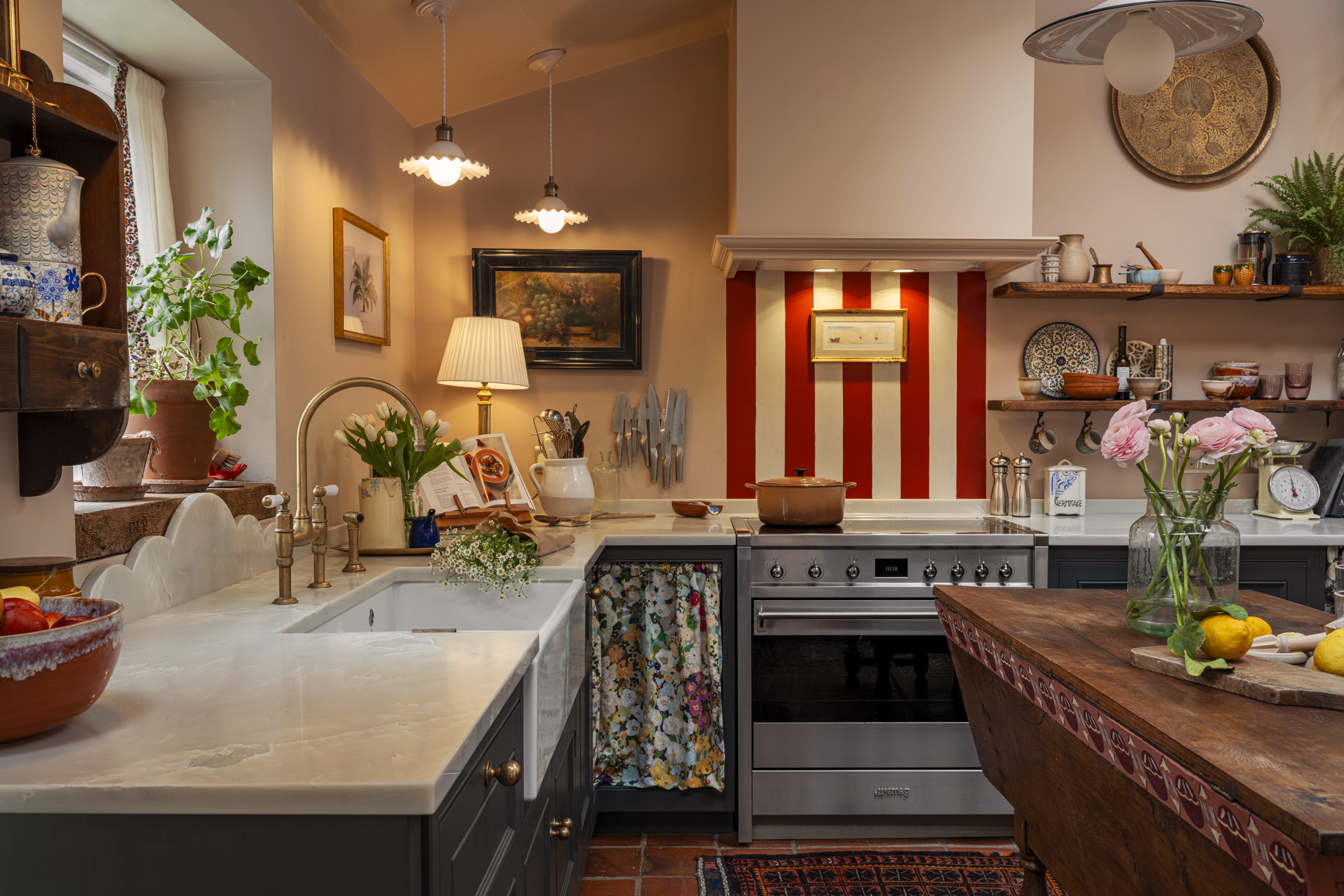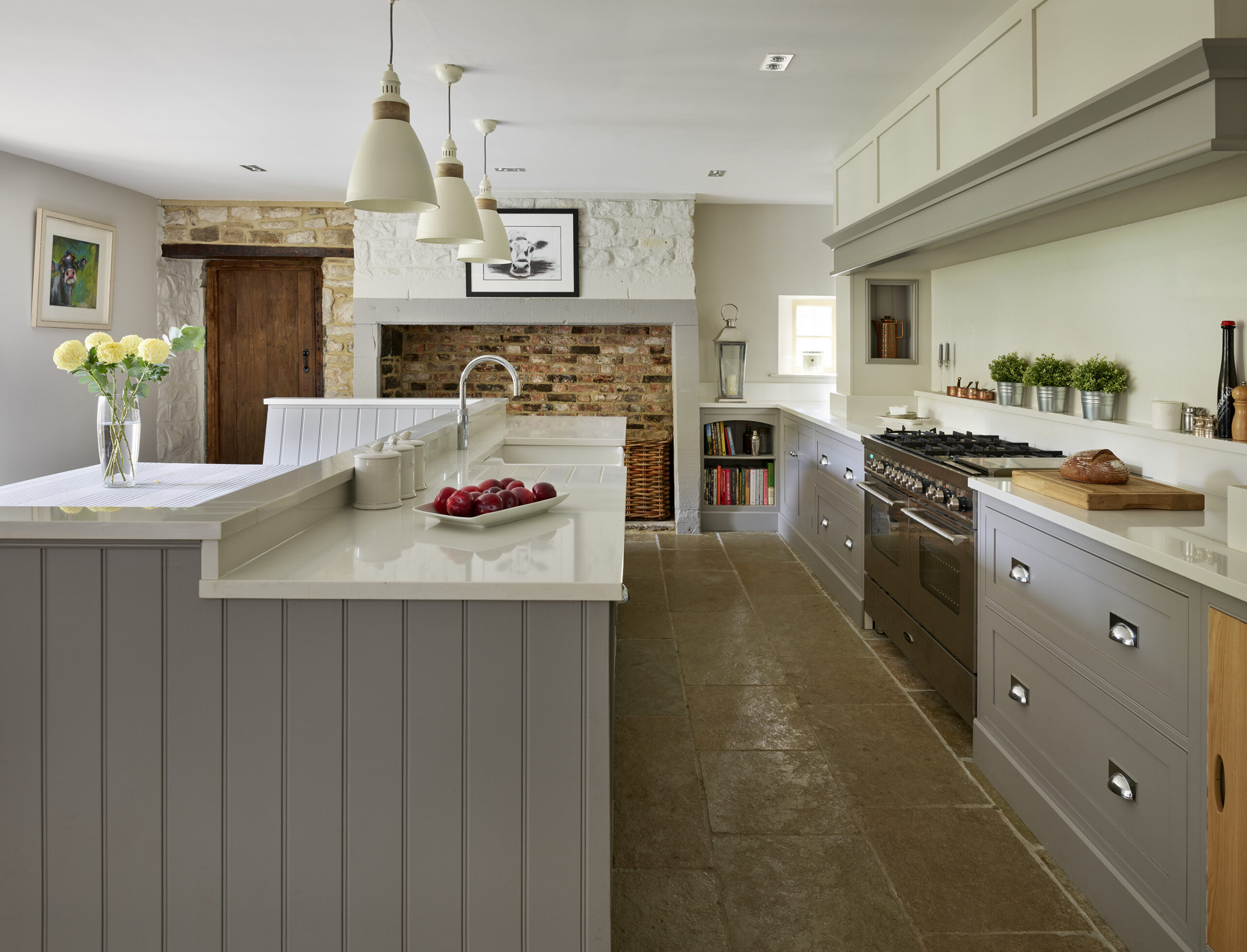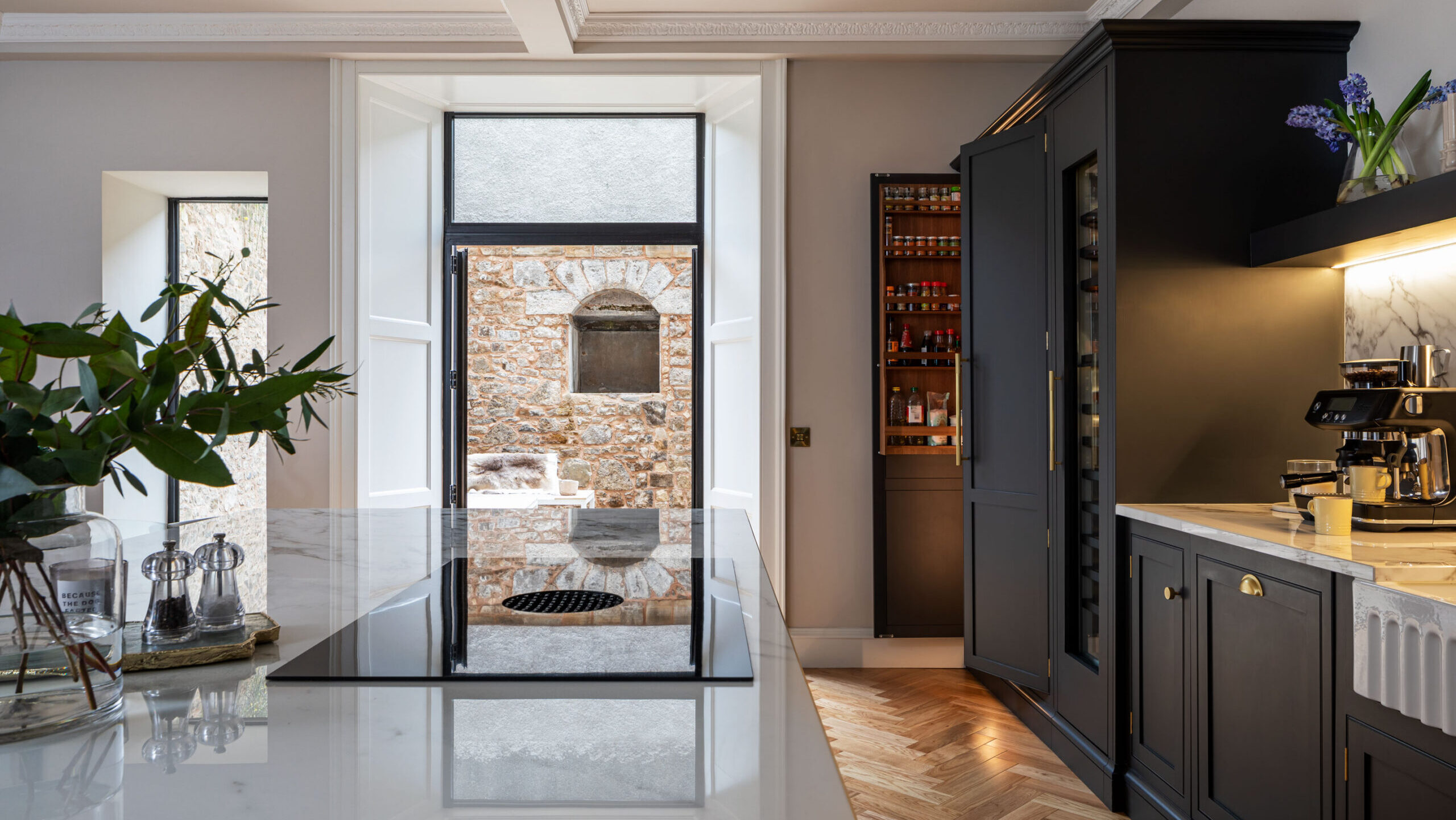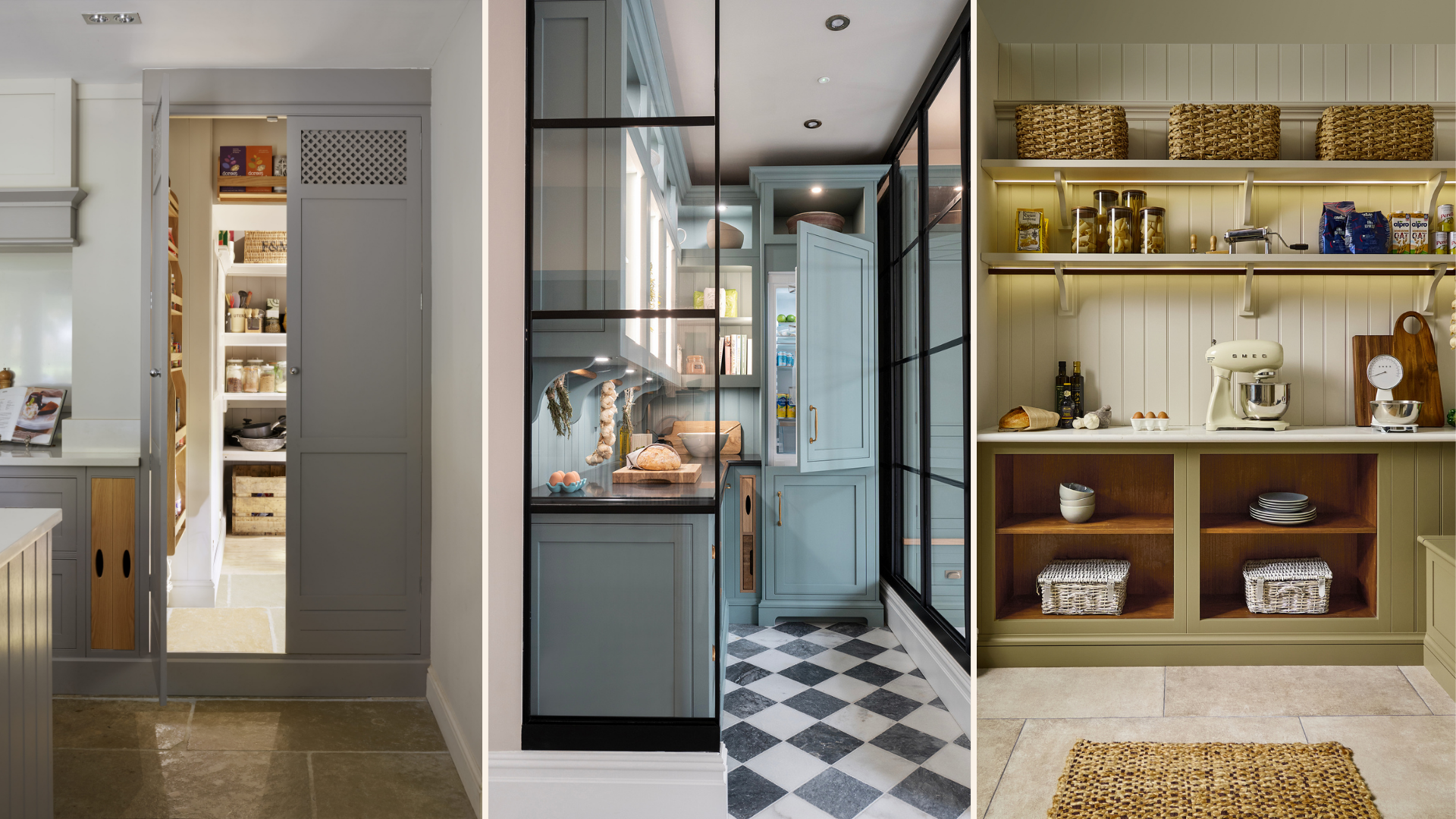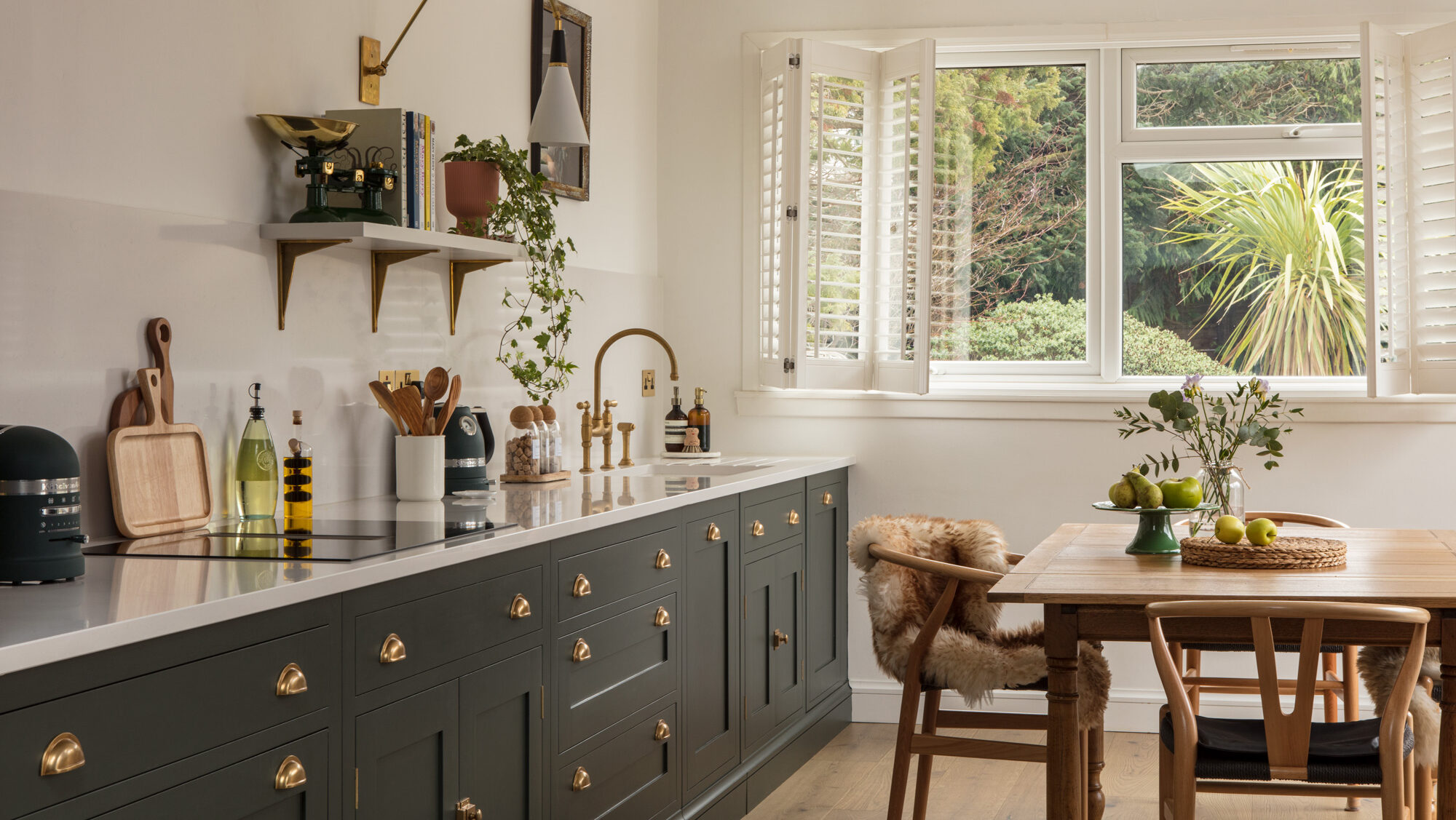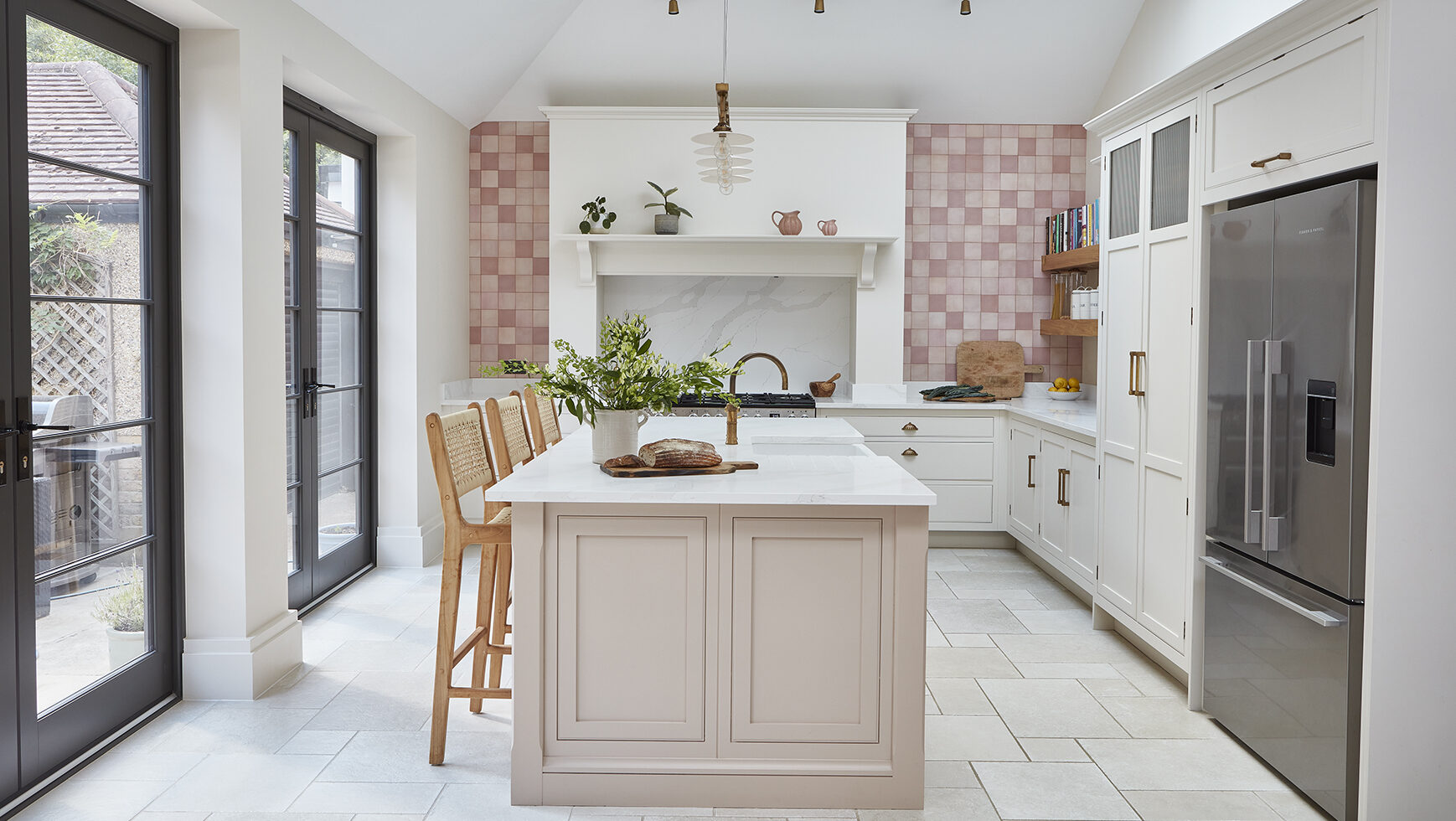
Bespoke kitchen islands have become one of the most requested features in luxury kitchen designs, and for good reason. They work harder than almost any other element in the room.
But they’re not right for every kitchen. And a poorly planned island can be just as frustrating as an inspiring one – blocking flow, limiting appliance placement or simply feeling out of proportion to the space.
In this guide, we explore everything you need to know about bespoke kitchen island design: whether one is right for your home, what purpose it should serve, how to plan for a hob or sink, the best storage configurations and how an expert kitchen designer makes all the difference.
Discover real, bespoke kitchen & home inspiration.
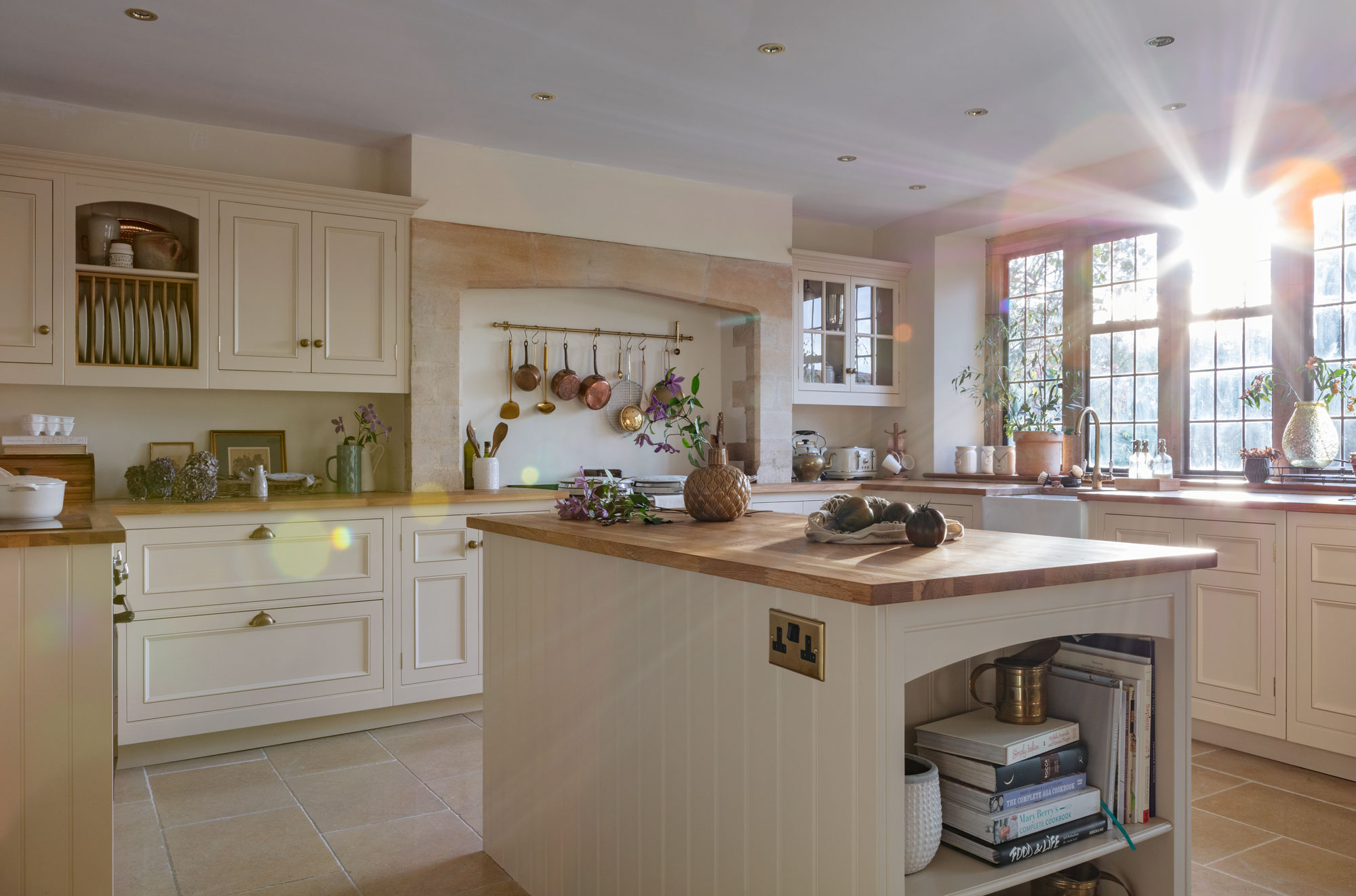
What is the Purpose of Your Bespoke Kitchen Island?
The purpose you have in mind for your island shapes everything else – its dimensions, the appliances it houses, the number of plug sockets required, the worktop material and whether it needs seating. Get clear on this before anything else.
Here are the most common configurations our designers work with.
A Kitchen Island with a Hob: Cooking at the Centre of Things
Integrating a hob into your bespoke kitchen island changes the entire dynamic of the room. Instead of cooking with your back to the room, you’re facing into it. It’s a subtle shift that has a genuinely significant impact on how the kitchen feels to use.
An induction hob is the most popular choice for island cooking, and not just for aesthetic reasons. With no naked flame and a flush, smooth surface, it maintains a clean and considered high-end kitchen aesthetic. It’s also safer for families with young children.
When planning a kitchen island with a hob, make sure cooking appliances face the kitchen side, not the dining or seating area, to keep the working zone clearly defined.
Extraction is equally important. A ceiling-mounted extractor or a downdraft system integrated directly into the worktop avoids the need for an overhead hood, preserving sightlines across the room.
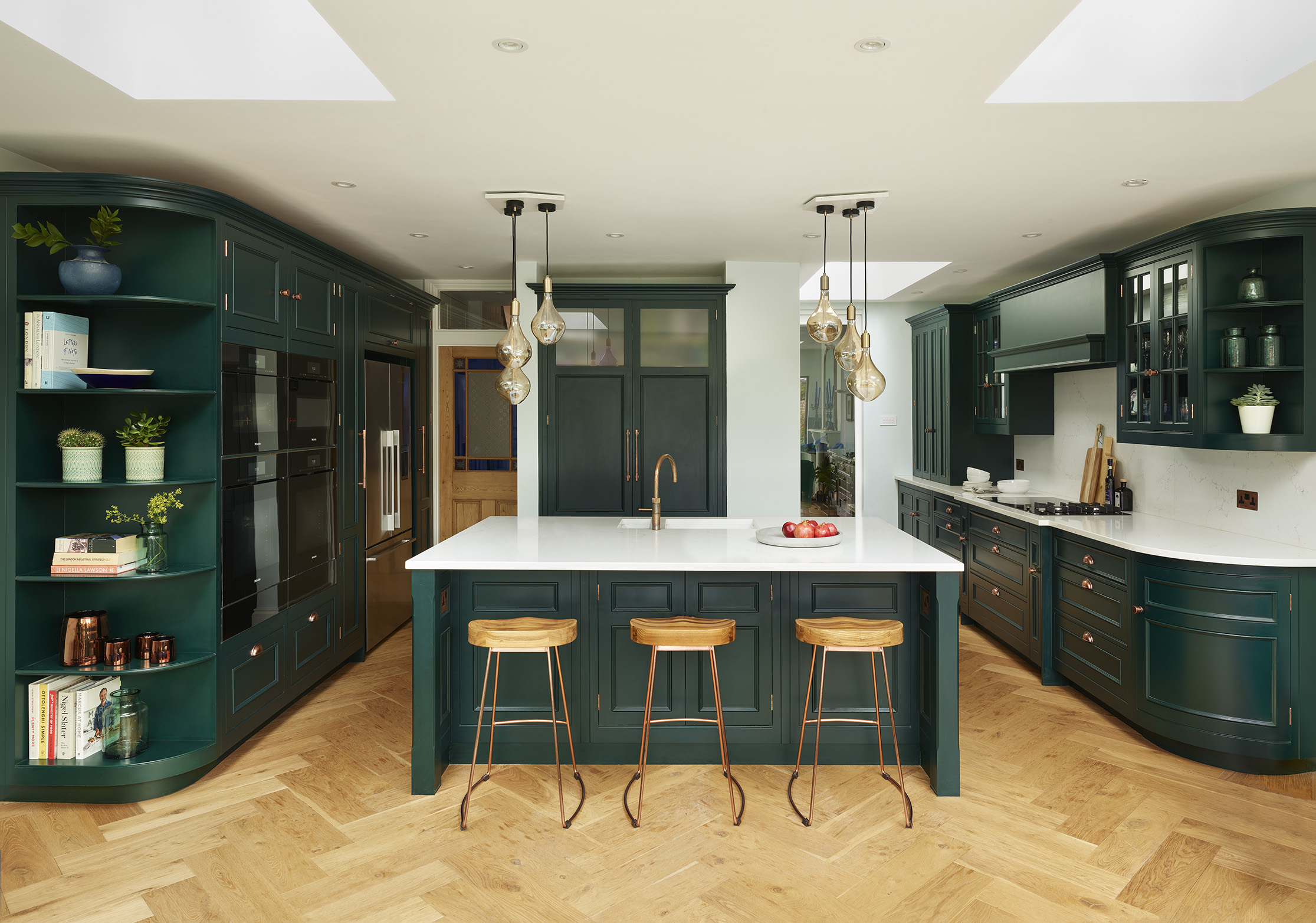
A Kitchen Island with a Sink: Streamlining Prep and Clean-Up
A sink in the island allows you to wash vegetables, fill pans, and rinse dishes right at the heart of the kitchen – often while looking out to the garden or across the room rather than at a wall.
The practical consideration here is plumbing. Running water and drainage to the centre of the room requires planning at the early stages of the project, and ideally before any flooring is laid. This is something your Harvey Jones designer will factor into the layout from the very beginning.
Sink sizing matters too. A large statement sink can dominate the worktop and leave little space for preparation alongside it. A compact prep sink, perhaps paired with a larger main sink elsewhere in the kitchen, often strikes the better balance.
Bespoke Kitchen Island with Seating: A Place to Gather
A bespoke kitchen island with seating does something no other piece of furniture in the room can quite replicate: it creates an effortless social space that belongs in the kitchen rather than feeling borrowed from another room. Whether it’s a spot for children to do homework, a place for guests to perch with a glass of wine, or a casual dining spot, seating changes how the whole room is used.
The configuration depends on your space and lifestyle. A worktop overhang on one or two sides creates a natural breakfast bar. Bar stools slide neatly underneath when not in use.
For a more relaxed, dining-table feel, a lower tier on one end of the island can accommodate chairs rather than stools, which is particularly popular in open plan kitchens where a separate dining table would take up too much space.
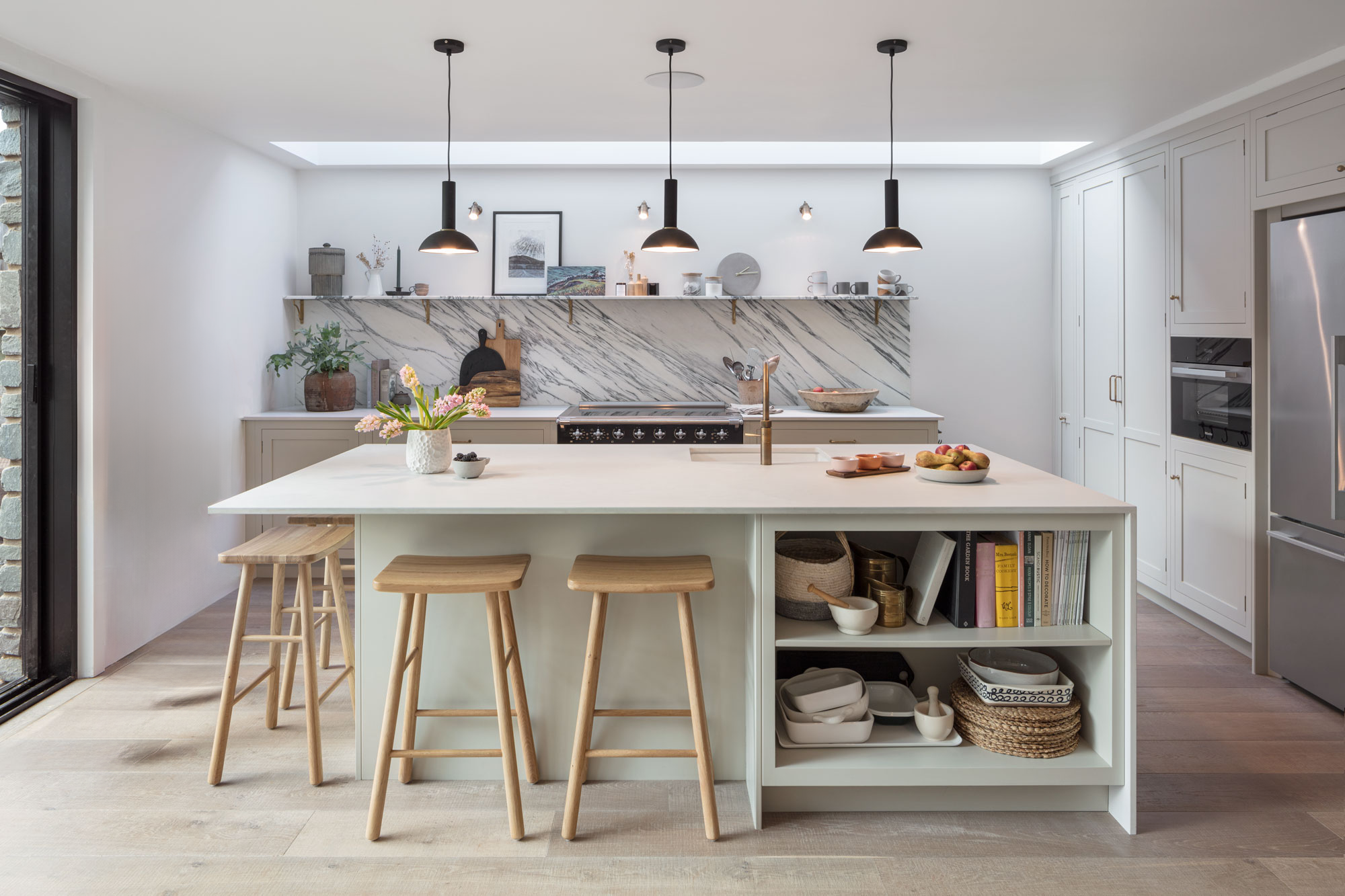
Bespoke Kitchen Island Storage: Making Every Inch Work
Storage is one of the most underused features in island design. A large bespoke kitchen island can house everything from deep pan drawers and a wine fridge to concealed bin pull-outs, spice organisers, and even a charging drawer for phones and tablets.
Some of our favourite island storage solutions include:
- Deep pan drawers on the kitchen-facing side
- Run-end storage for spices, oils and everyday condiments
- A built-in wine fridge or drinks cupboard on the dining side
- Drawer inserts for cutlery, utensils or stationery
- Open shelving or display niches for cookbooks and ceramics
- Concealed drawers with integrated wireless charging points or USB sockets
At Harvey Jones, every storage solution is fully bespoke. There’s no compromising with standard sizes or off-the-shelf fittings – each drawer, shelf and insert is built around your specific needs.
A Place to Work: Islands for the Modern Home
Kitchens are no longer just for cooking and socialising. As luxury kitchen design continually demands more as a multifunctional space, many of our clients want their island to function as a home workspace too.
If this resonates, think carefully about seating height and back support (a stool may not be comfortable for extended work), task lighting and how to manage cables. Concealed drawers with integrated USB charging or flush in-worktop power points keep things tidy without compromising the aesthetics.
Island Design Details That Make the Difference
Beyond function, your island is a design statement. Here are some of the details that elevate a beautiful kitchen island.
Contrasting Colours
One of the most popular island design choices is a contrasting colour to the main run of cabinetry. A deep navy or forest green island against pale cabinetry, or a warm oak-toned island in an otherwise painted kitchen, creates a natural focal point and gives the room visual depth.
Did you know, with refurbishing service, your bespoke kitchen can be repainted at any time – so you could refresh the island colour without replacing the whole kitchen.
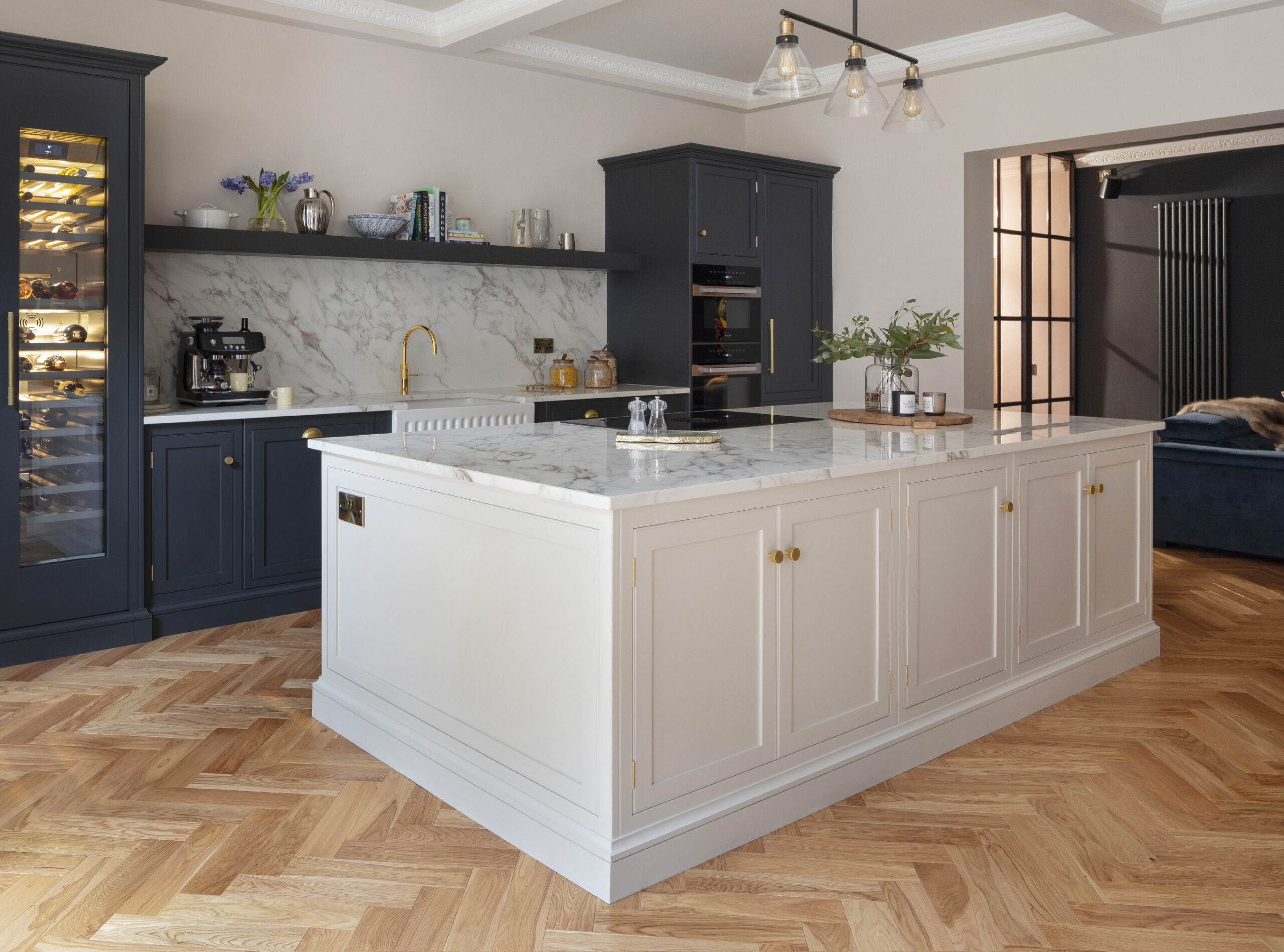
Worktop Materials
The island worktop often carries more visual weight than any other surface in the kitchen and it can afford to be a little bolder. Many clients choose a different material on the island to the perimeter worktop for exactly this reason.
Natural stone like marble or concrete brings quiet luxury, where a thick timber surface adds warmth.
Pendant Lighting
Pendant lights above a kitchen island do double work – providing task lighting for the worktop and anchoring the island visually within the room.
A row of three pendants works beautifully above a large bespoke kitchen island. Scale matters: oversized pendants in a high-ceiling kitchen feel considered; the same kitchen lighting in a lower room can feel claustrophobic.
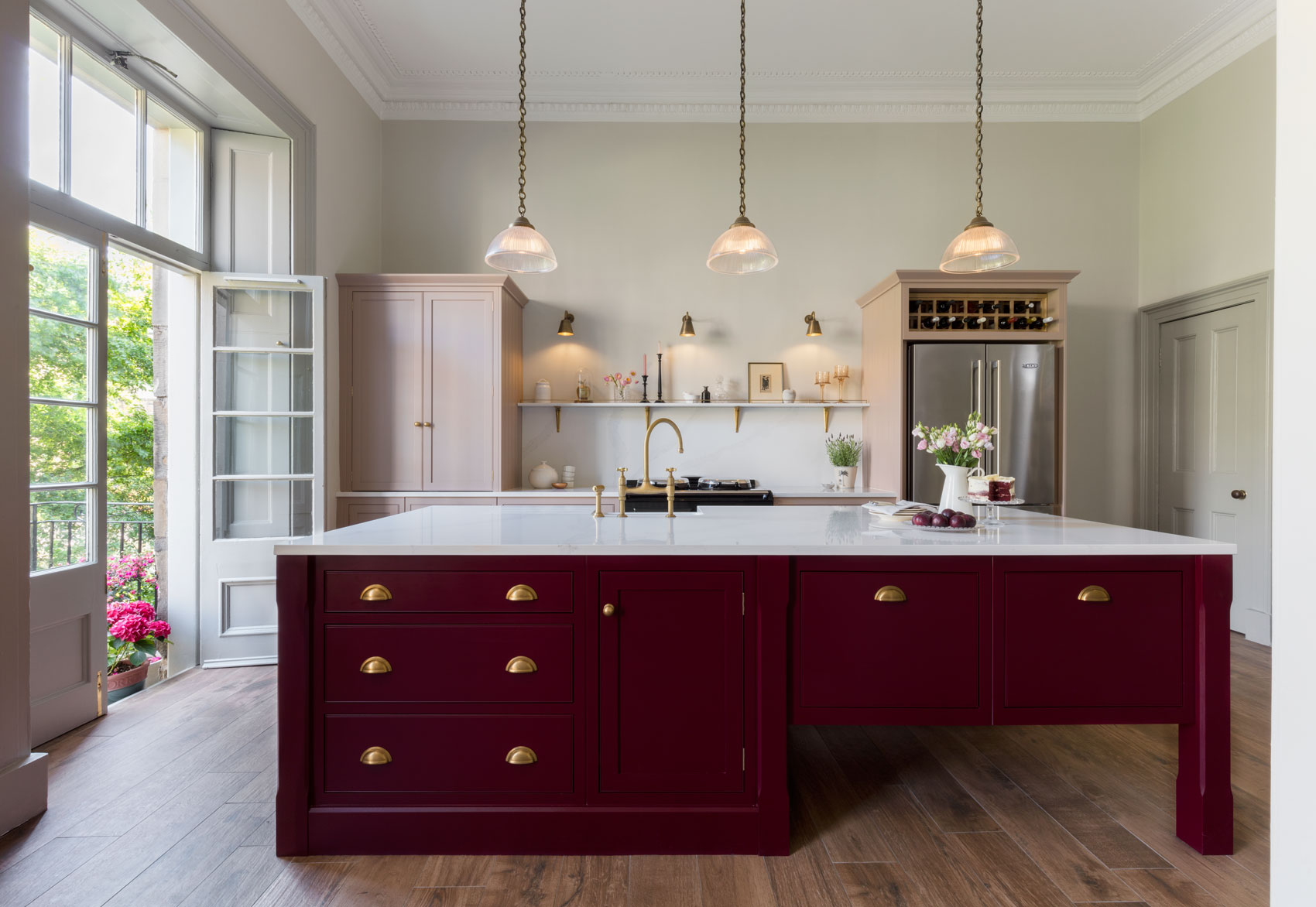
Island Legs and Decorative Panelling
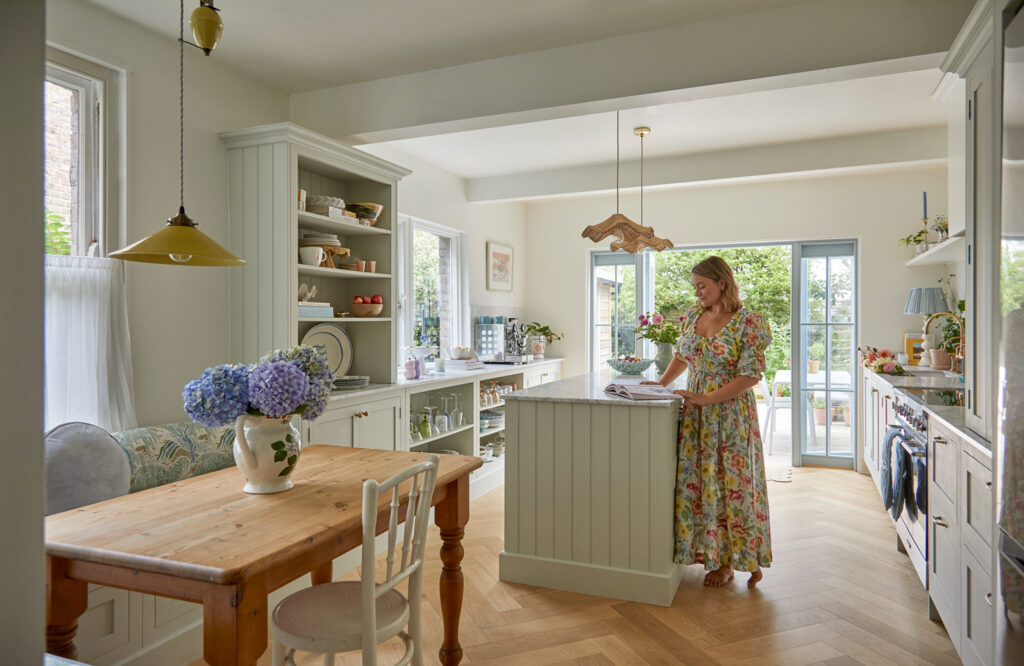
A cabinetry panel that wraps cleanly around the base gives a kitchen island a fitted, seamless look. For something more traditional, turned legs at the corners or tongue and groove panelling on the sides nod beautifully to furniture-making heritage. These are the details that make a bespoke luxury kitchen island feel genuinely handcrafted.
Why Choose a Bespoke Kitchen Island?
A freestanding island has its place, but it has significant limitations. It comes in fixed sizes, fixed configurations and often in finishes that don’t quite match the rest of the kitchen. You adapt your kitchen to fit the island, rather than the other way around.
A bespoke kitchen island works the other way. It’s built around your room, your lifestyle and your aesthetic. Every dimension is considered in the context of your specific space – flow, lighting, lifestyle, proportion and daily routines. The internal fittings are chosen around how you actually use your kitchen. The paint colour, worktop material and hardware is selected as part of the wider design.
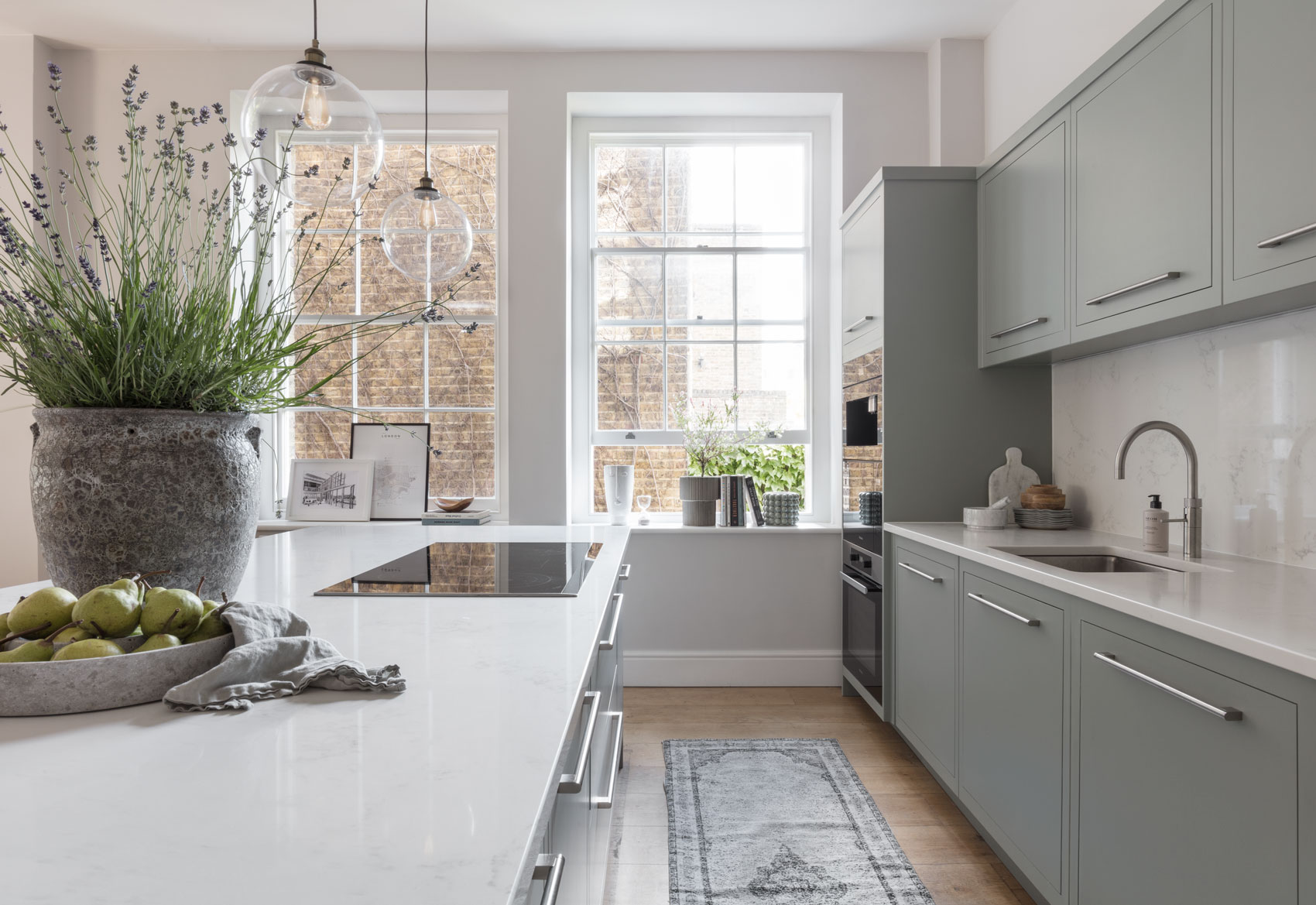
A Few Considerations Before Adding a Kitchen Island
While a kitchen island can transform the way a space looks and functions, it’s important to ensure it suits the room and layout.
In smaller kitchens, an island may feel too dominant, while in some layouts it can interrupt the natural flow between key areas. Features like sinks or hobs also require plumbing and electrics to be planned from the outset.
The good news is that with thoughtful design and the right proportions, these challenges are easily addressed. In many cases, a bespoke island or alternative layout can achieve the same sense of connection, storage and practicality without compromising the space.
Why Work with a Bespoke Kitchen Island Specialist?
The difference between a kitchen island that works beautifully and one that falls short is almost always down to the quality of the design process. Off-the-shelf solutions can’t account for your specific ceiling height, room proportions, lifestyle, or the way light moves through your space at different times of day.
Expert kitchen designers, like Harvey Jones, spend time understanding how you live in your kitchen before they begin designing anything. They’ll explore your ideas, introduce possibilities you may not have considered, and shape a design that feels as practical as it is beautiful, right down to the finest details.
Ready to Design Your Own Kitchen Island?
Whether you’re drawn to a classic Shaker style kitchen island in a painted finish or a clean-lined Linear handleless design in natural oak, our handcrafted cabinetry offers the quality and longevity that a bespoke kitchen island deserves.
Explore our brochure for inspiration or book a design appointment at your nearest Harvey Jones showroom.
Frequently Asked Questions About Bespoke Kitchen Islands
Can I put a hob on a kitchen island?
Yes, and it’s one of the most popular island configurations. An induction hob is particularly well suited to island cooking as it’s sleek, safe and keeps the worktop looking clean. You’ll need to plan for appropriate extraction (either ceiling-mounted or downdraft) and ensure electricity supply is routed to the island at the start of the project.
Can I add a sink to a bespoke kitchen island?
Absolutely. A prep sink on an island is a practical and popular choice, allowing you to wash produce and rinse dishes right in the centre of the kitchen. It does require careful plumbing planning as water supply and drainage need to run to the middle of the room, so this needs to be factored in at the early design stage.
Does a kitchen island add value to a property?
A well-designed kitchen island is widely regarded as one of the most positive features a kitchen can have from a buyer’s perspective. It signals both quality and thoughtful design – particularly when it’s a bespoke luxury kitchen island built as an integral part of the overall kitchen scheme.
What storage can I include in a bespoke kitchen island?
Almost anything you need. Common options include deep pan drawers, run-end storage, a wine fridge or drinks refrigerator, concealed bin pull-outs, open shelving for cookbooks, drawer inserts for cutlery or stationery, and integrated charging points. A bespoke island allows every internal fitting to be tailored to your specific requirements.
How do I choose the right worktop for my kitchen island?
The island worktop is often a chance to make a design statement. Stone like marble, granite, or honed quartz brings a sense of luxury and works beautifully for preparation. Timber adds warmth. Many clients choose a different material for the island than the perimeter worktops to create visual contrast and highlight the island as the centrepiece of the kitchen.
What’s the difference between a bespoke island and a fitted island?
A fitted island is built into the kitchen as part of a fixed layout, integrated with the surrounding cabinetry in terms of height, finish and flow. A bespoke island goes further – every dimension, internal fitting, finish and feature is designed around your specific space and how you use it, rather than adapted from a standard configuration. At Harvey Jones, all our islands are both fitted and bespoke: built into the room, but designed entirely around you.
How do I start the design process for a bespoke kitchen island?
The best place to start is a design appointment at your nearest Harvey Jones showroom. Your designer will talk through how you use your kitchen, what you want the island to do, and what the space allows. From there, they’ll develop a design that works practically and looks exactly right. You can also request our brochure for inspiration ahead of your first conversation.