Traditional designer kitchens combine in-frame cabinetry, detailed door profiles and natural materials with the storage and appliances modern households need. Popular styles include English country house, bespoke Shaker, farmhouse, Georgian and Edwardian inspired, heritage timber and collected traditional. Each works in period and modern British homes when proportions suit the space.
Choosing a kitchen for a modern British home often comes down to character. You may want the warmth of a classic design without giving up a practical, contemporary layout.
Traditional designer kitchens offer that balance. They’re defined by craftsmanship rather than trends, with in-frame doors, hand painted finishes, natural stone and carefully chosen hardware. The look has lasted for generations because it’s built to be lived in.
This guide explains what makes a traditional designer kitchen and walks through six styles, colour palettes, worktops, storage and layouts. We’ll also cover how to choose a bespoke kitchen maker, so you can plan with confidence.
Discover real, bespoke kitchen & home inspiration.
What Defines a Traditional Designer Kitchen?
A traditional designer kitchen is a bespoke kitchen built around classic joinery, detailed cabinet doors and natural materials. It draws on British and European country house design. Symmetry, proportion and craftsmanship matter more than fashion.

In-frame cabinetry and joinery
In-frame cabinetry is the hallmark of the style. The door sits inside a solid timber frame instead of overlapping it, which shows off the quality of the joinery.
Every Harvey Jones kitchen begins in our Cambridgeshire workshop. Our in-frame doors solid wood dovetailed drawer boxes are made to last for many years. This is what separates bespoke traditional kitchens from off-the-peg alternatives.
Detailing, profiles and natural materials
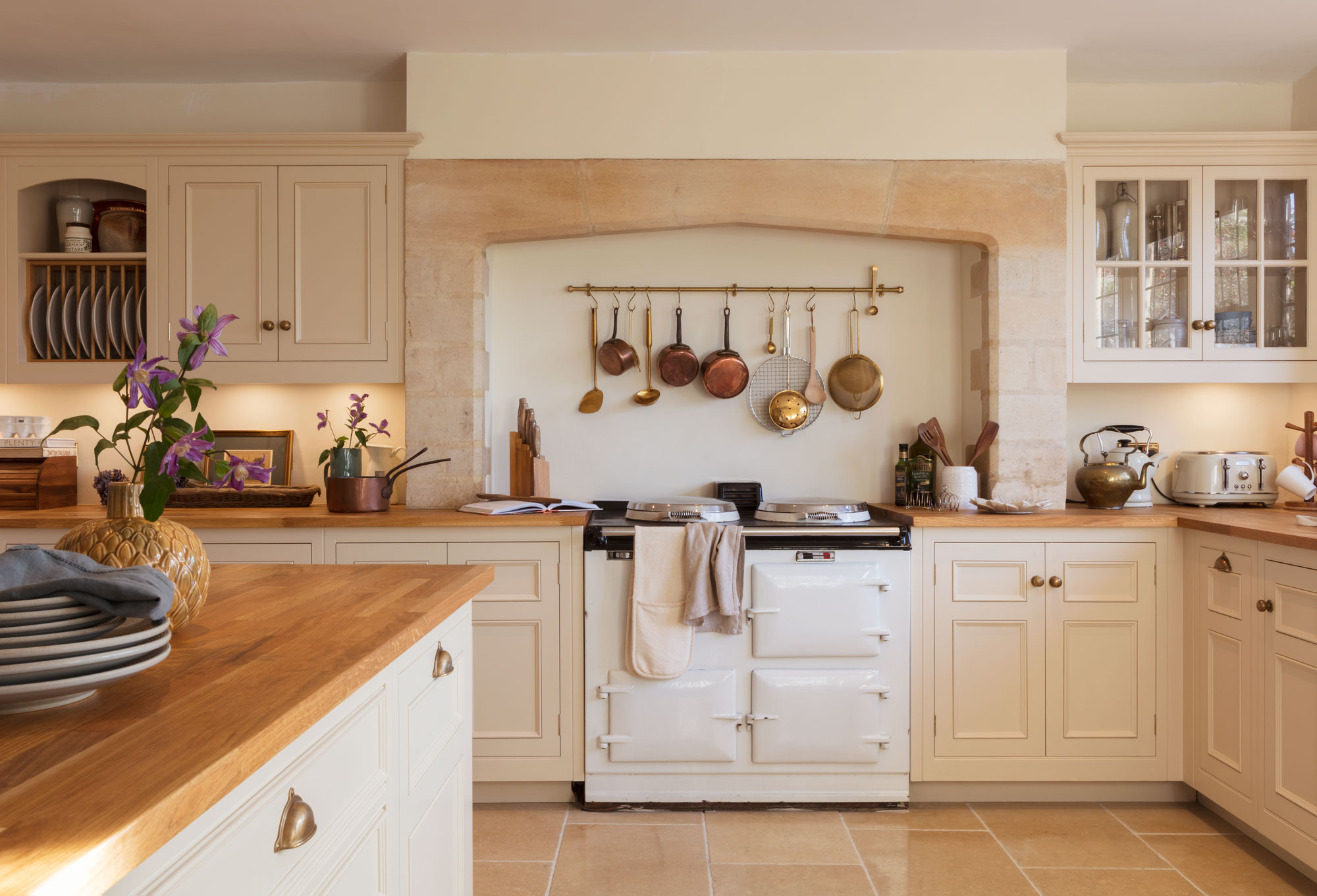
Beading, recessed panels, cornices and cooker mantels give traditional kitchens their depth. Glazed wall cabinets can also lighten a run of solid timber. Natural materials such as stone, oak and brass then add texture and warmth.
The key is restraint. A few well-chosen details feel more authentic than every traditional feature used at once.
“Traditional designer kitchens champion timeless, elegant design that draws inspiration from the homeowner’s evolving lifestyle. Think hardwearing materials, expertly crafted solid wood cabinetry that’s designed around every corner, well-thought-out storage and styles with depth and visual interest.“
Lewis Buckley, Harvey Jones Designer in Chester.
Six Traditional Designer Kitchen Styles to Inspire You
Traditional designer kitchens don’t follow one formula. These six styles show how varied the look can be.
1. Classic English country house
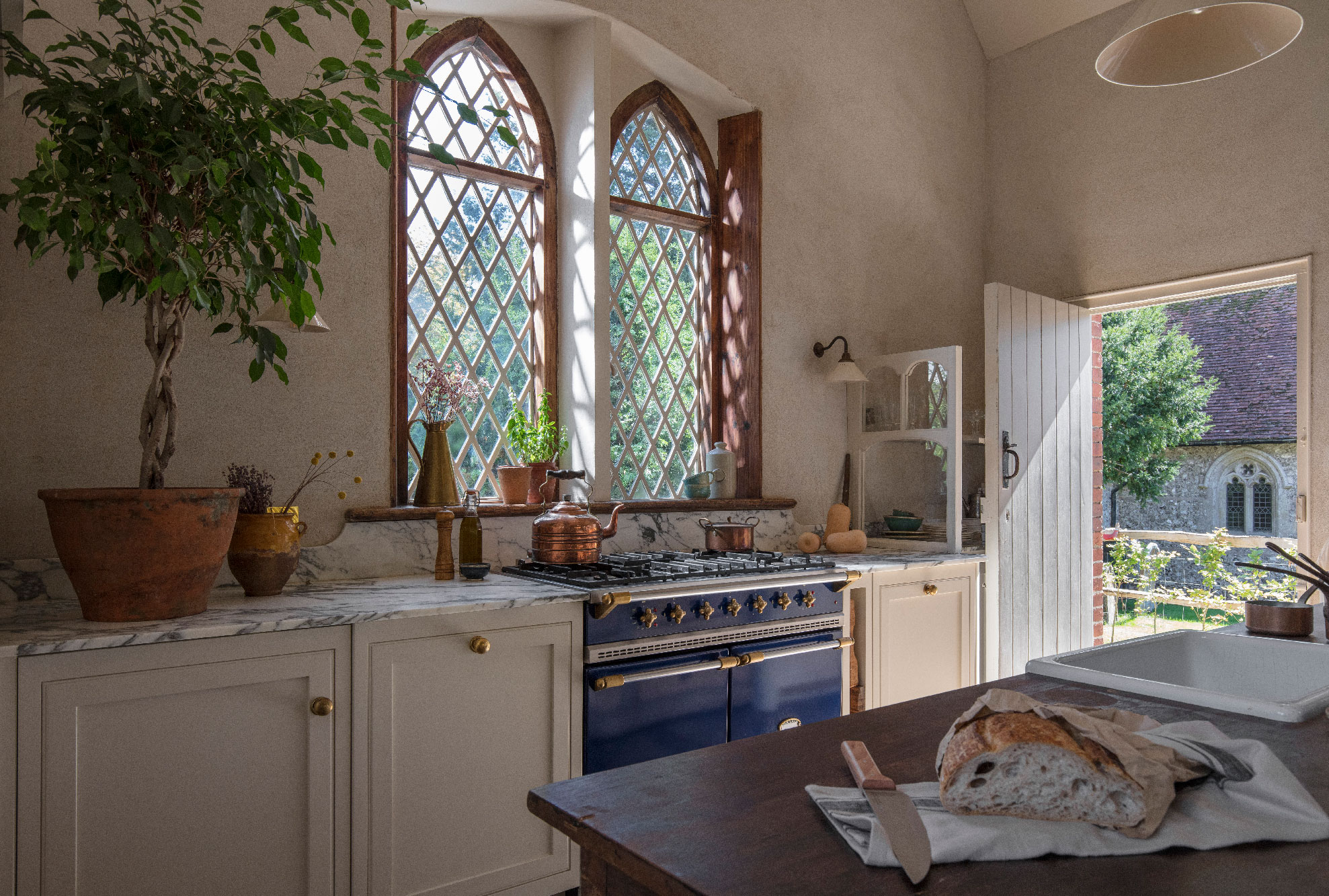
Elegant, understated and beautifully crafted. Look for framed cabinetry, cream paint, marble worktops, traditional brassware and a freestanding dresser.
Best for: Georgian and period homes, or anyone who wants a refined country house feel.
2. Bespoke Shaker
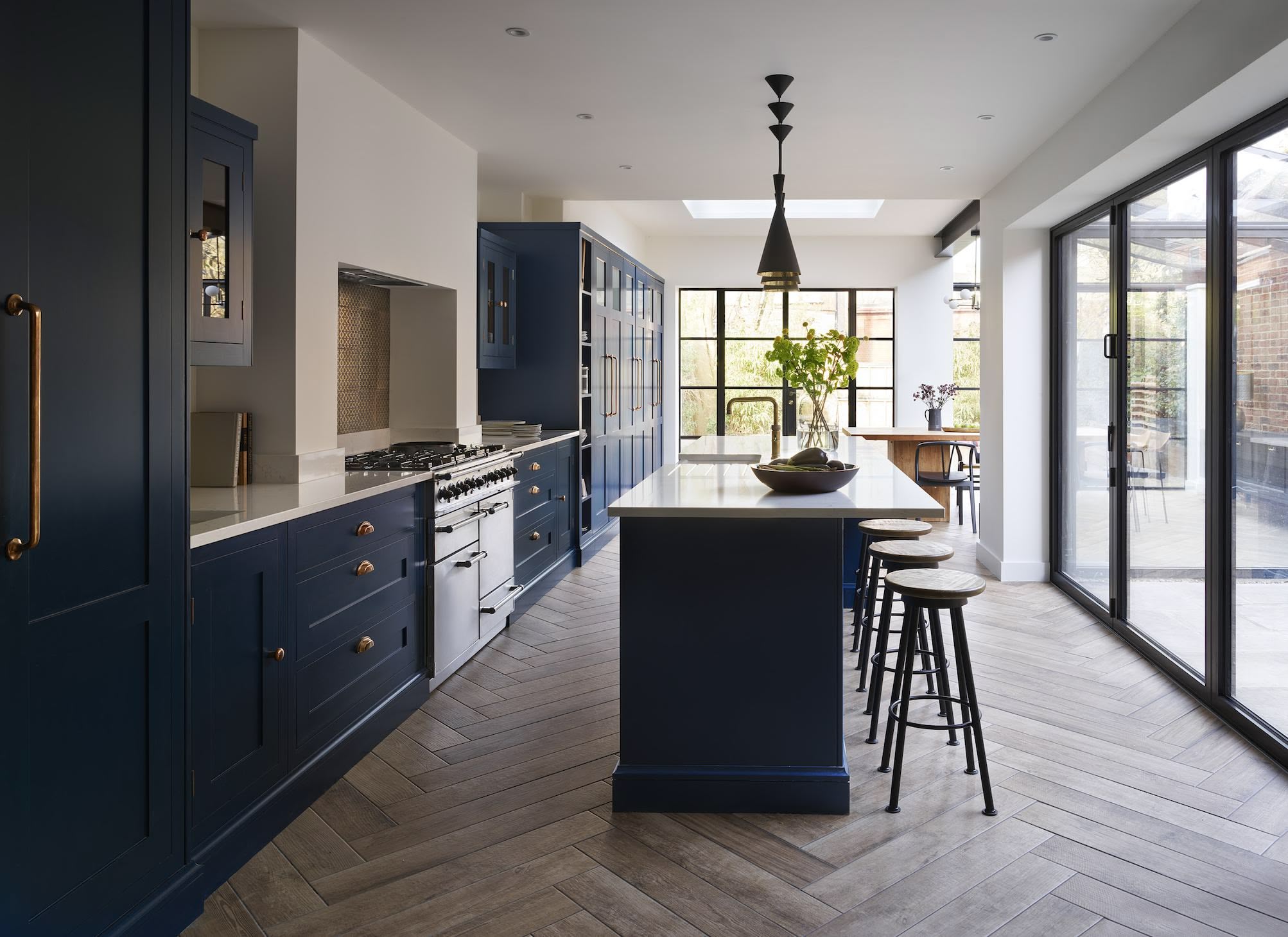
Recessed-panel doors, in-frame construction and carefully proportioned drawers define this style. Sage green, navy, warm white and muted grey all work well. Our luxury Shaker kitchens suit modern and period homes because the lines are clean yet traditional.
Best for: a timeless kitchen that balances traditional detail with everyday practicality.

3. Traditional farmhouse
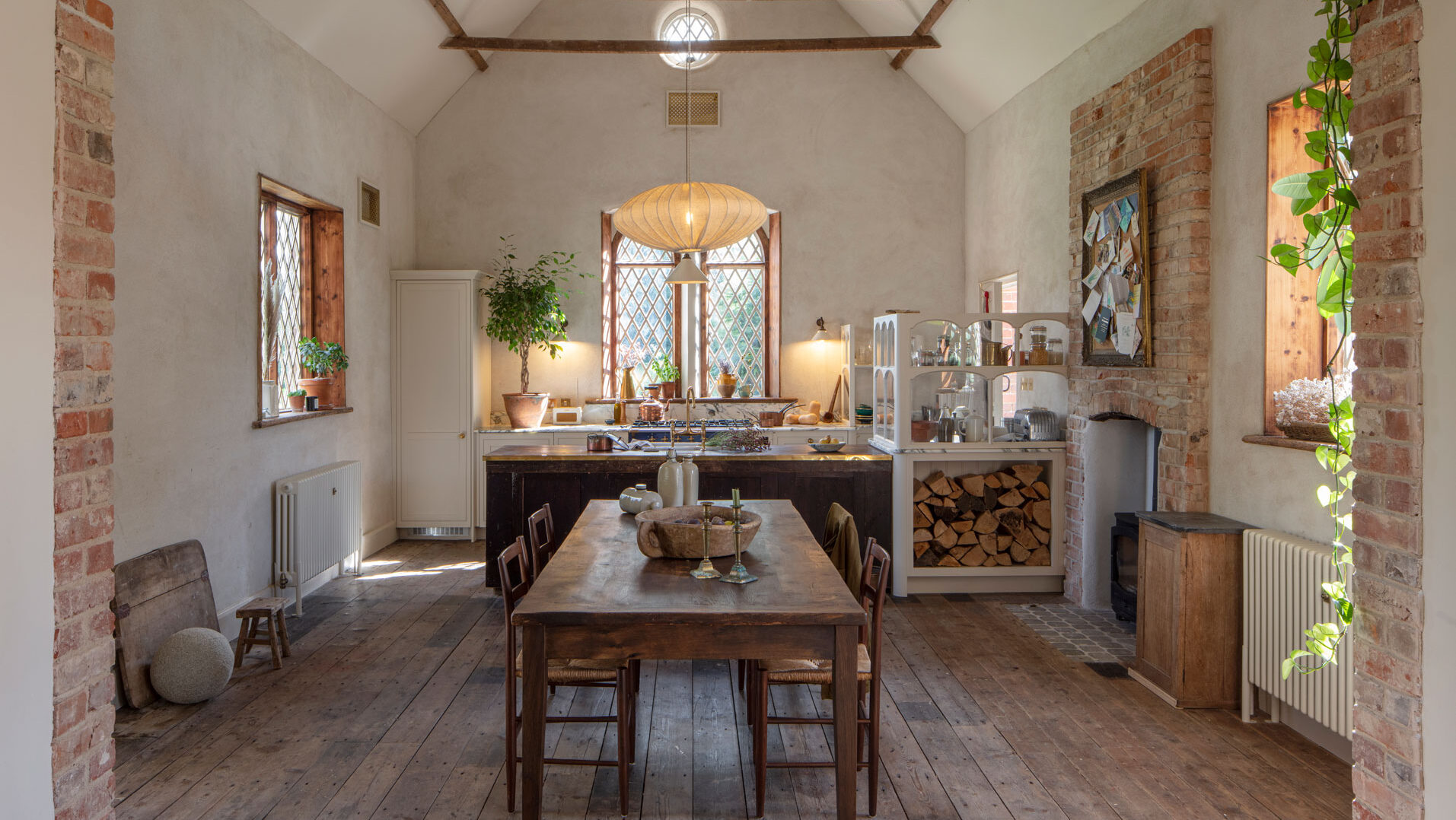
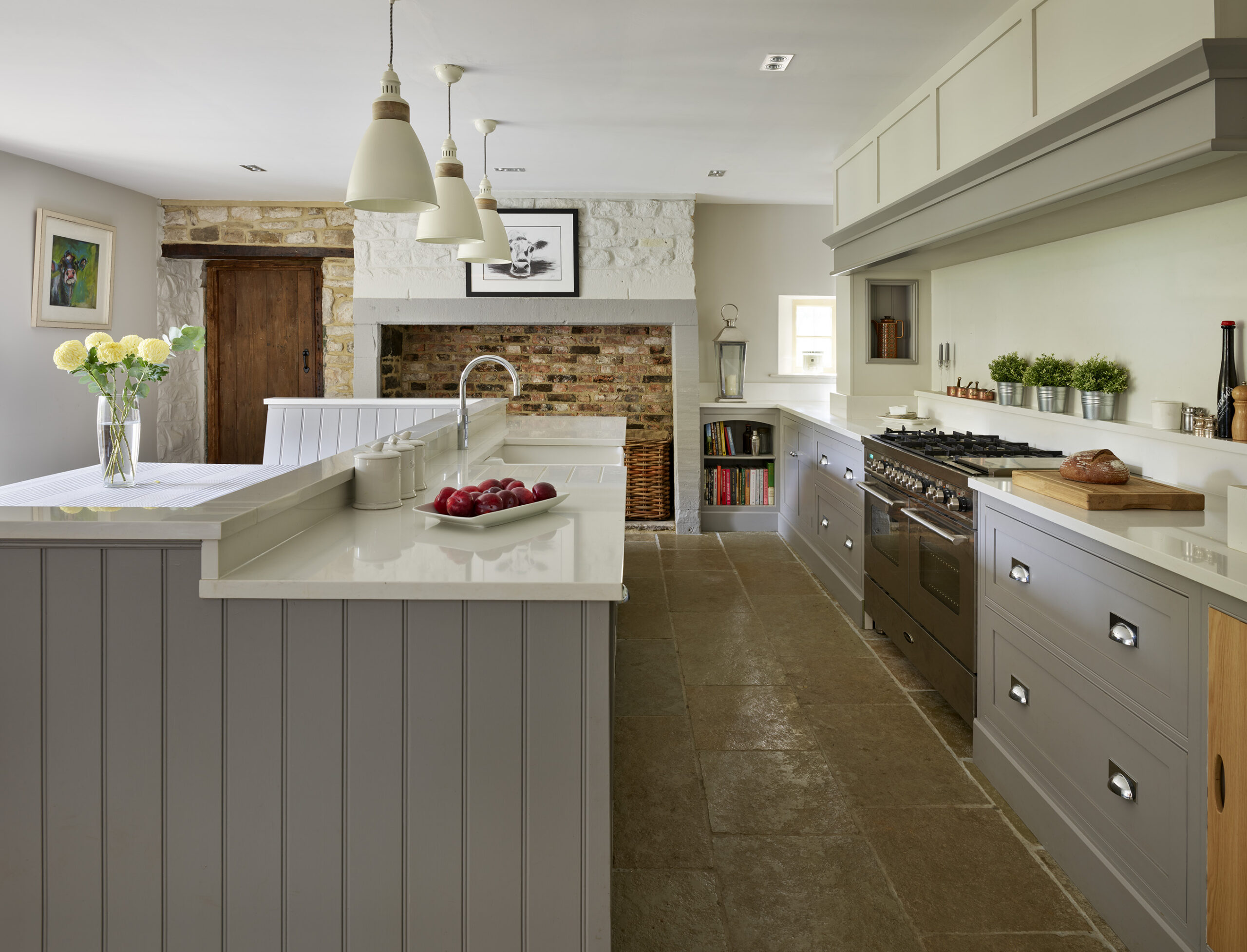
Natural oak, a Belfast sink, a generous range cooker and a substantial timber island give this style its welcome. Stone flooring completes the look.
Best for: rural homes, cottages and relaxed family kitchens.

4. Georgian and Edwardian inspired
Symmetrical cabinetry, decorative cornicing, ornate cooker surrounds and glazed dressers create a more formal look. For Edwardian kitchens, fine beading adds period character without feeling heavy. Our Original design suits this style best.
Best for: high-ceilinged rooms and grand period properties.
5. Heritage timber
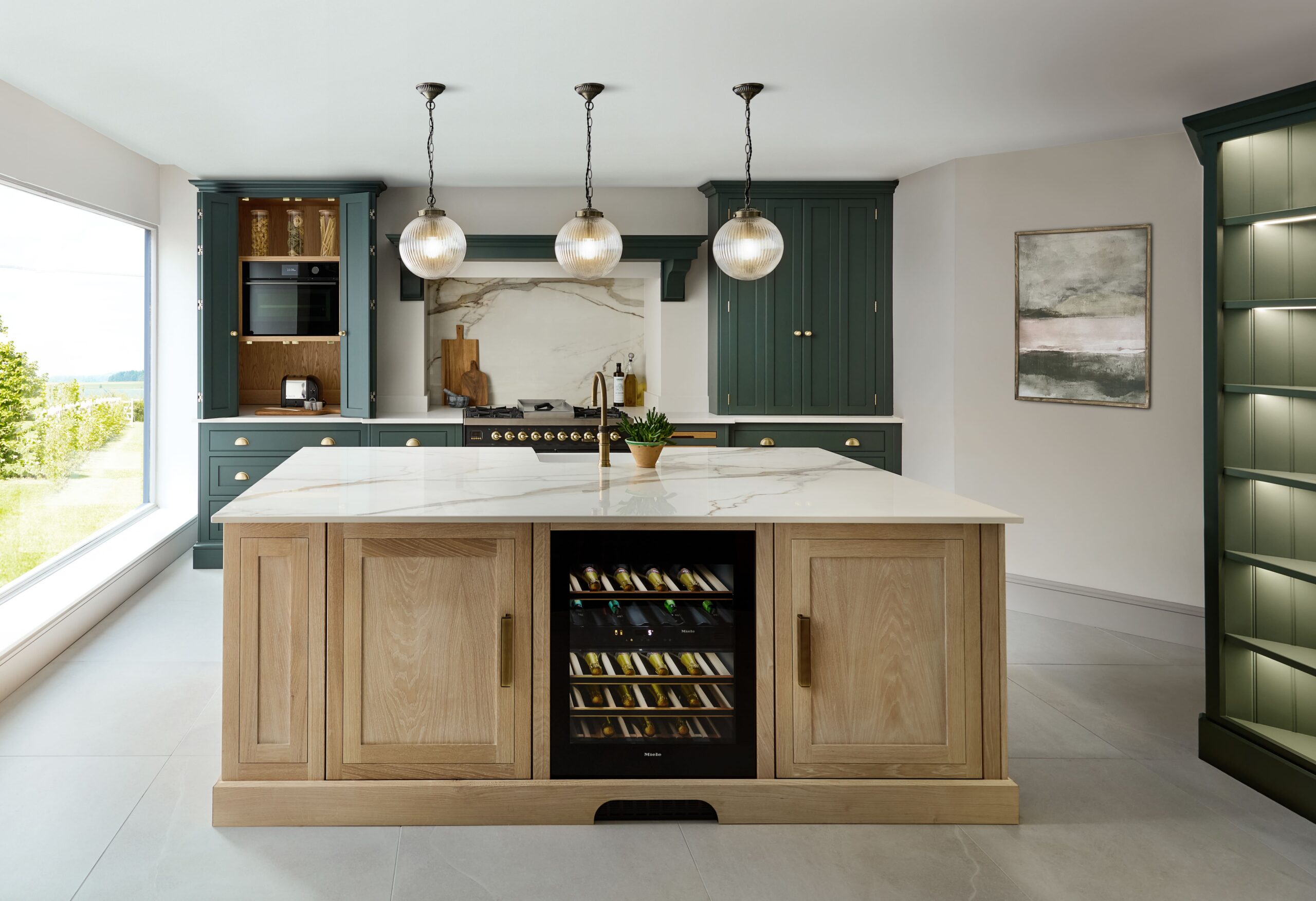
Rich oak or walnut, aged hardware finishes, traditional joinery and natural stone bring depth without elaborate decoration.
Best for: a characterful kitchen with a more substantial feel.
6. Collected and eclectic traditional
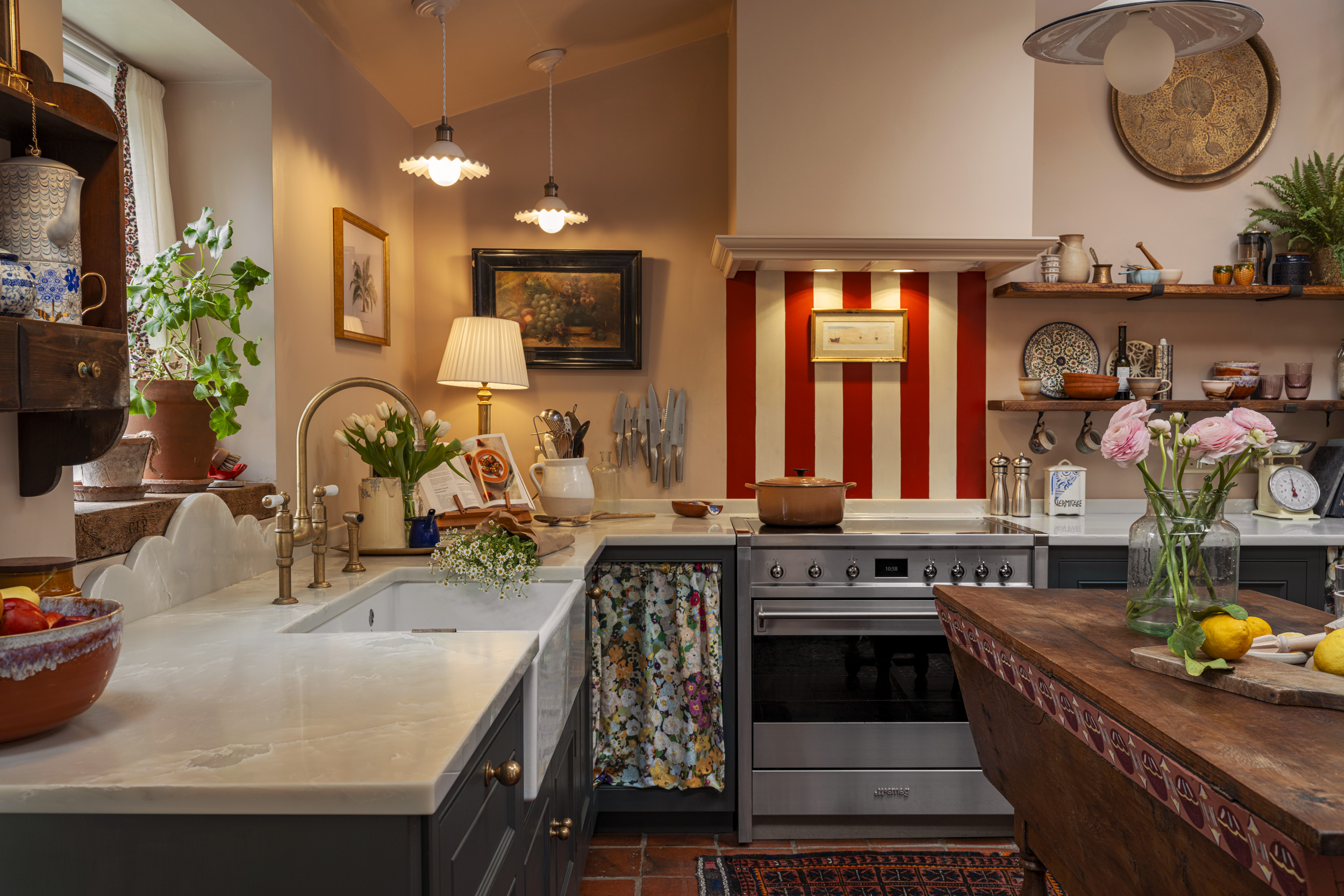
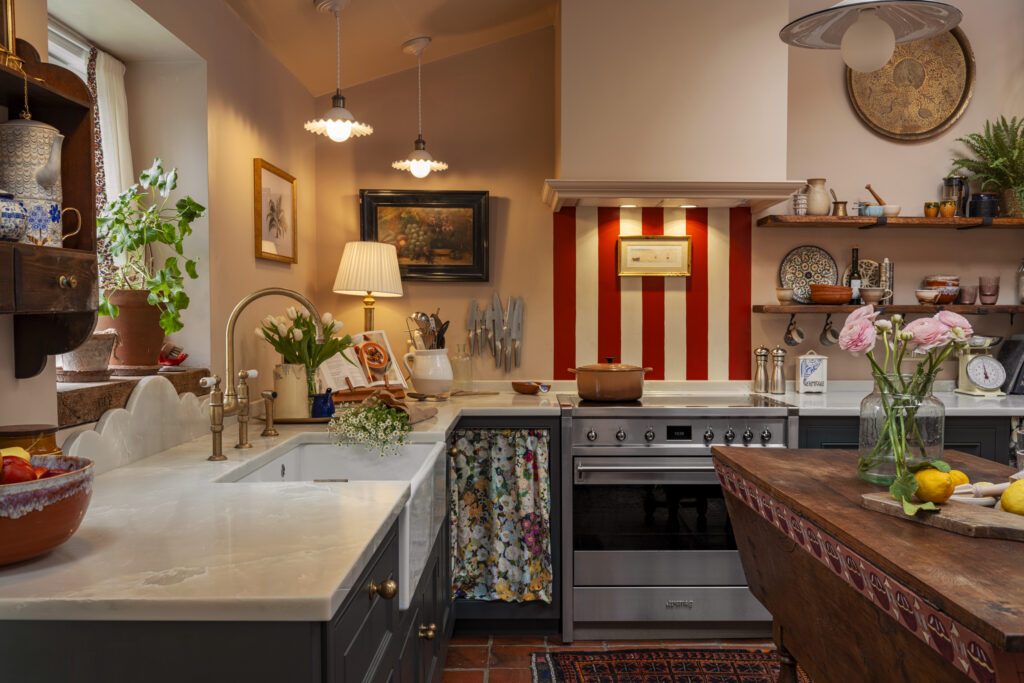
Combine fitted cabinetry with antique furniture, a freestanding dresser, vintage lighting and distinctive stone. The result feels individual rather than showroom perfect.
Best for: homes where craftsmanship, antiques and personality matter as much as luxury.
Colour Palettes for Traditional Designer Kitchens
The best paint colours for traditional kitchens are soft neutrals such as cream, ivory and warm white, plus deeper heritage shades such as sage, navy and forest green. Both work because they feel settled rather than stark.

Soft neutrals and warm whites
Cream, ivory and warm grey brighten a room and let the joinery take centre stage. They suit smaller spaces and kitchens with limited natural light.

Deeper heritage colours
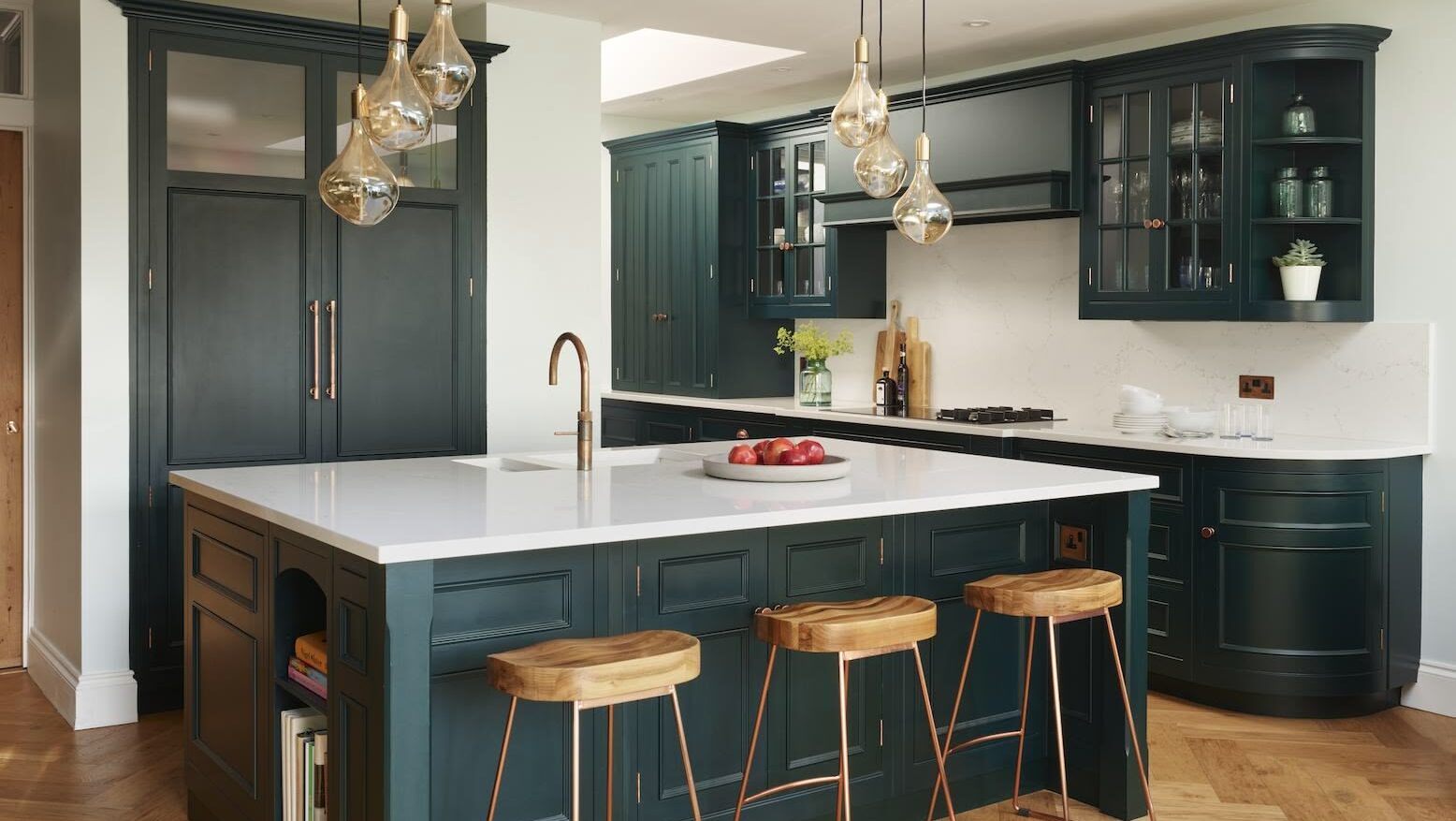
Sage, navy, slate and forest green add depth and pair well with brass and natural stone. Navy in particular has become a classic choice for traditional kitchens, and it looks especially good on an island.
Two-tone schemes
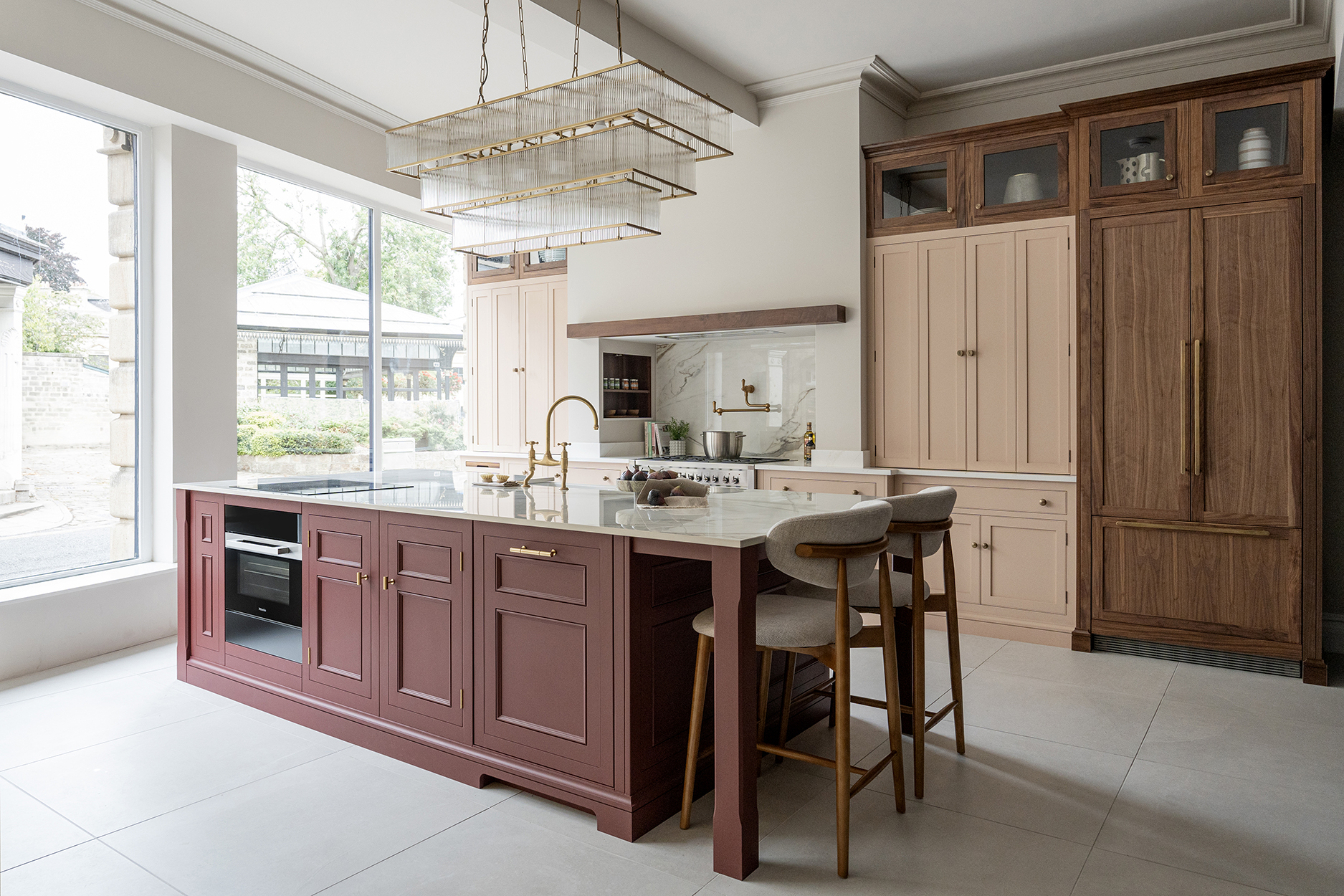
A darker island with lighter perimeter cabinetry is a popular designer approach. It anchors the room and adds contrast without overwhelming it.
Because our bespoke painted kitchens are hand-painted in any colour, you can match a favourite shade exactly. Whichever palette you choose, view paint samples in your own kitchen light before you decide.
“In a personal favourite of my projects, we used an off black on the main cabinetry run and then a soft neutral for the island. In a traditional room with ornate features and walnut interior cabinets, it was a lovely unexpected way of using otherwise popular colour choices.”
Sally, Harvey Jones Designer in Edinburgh.
Worktops, Hardware and Finishes That Suit Traditional Kitchens
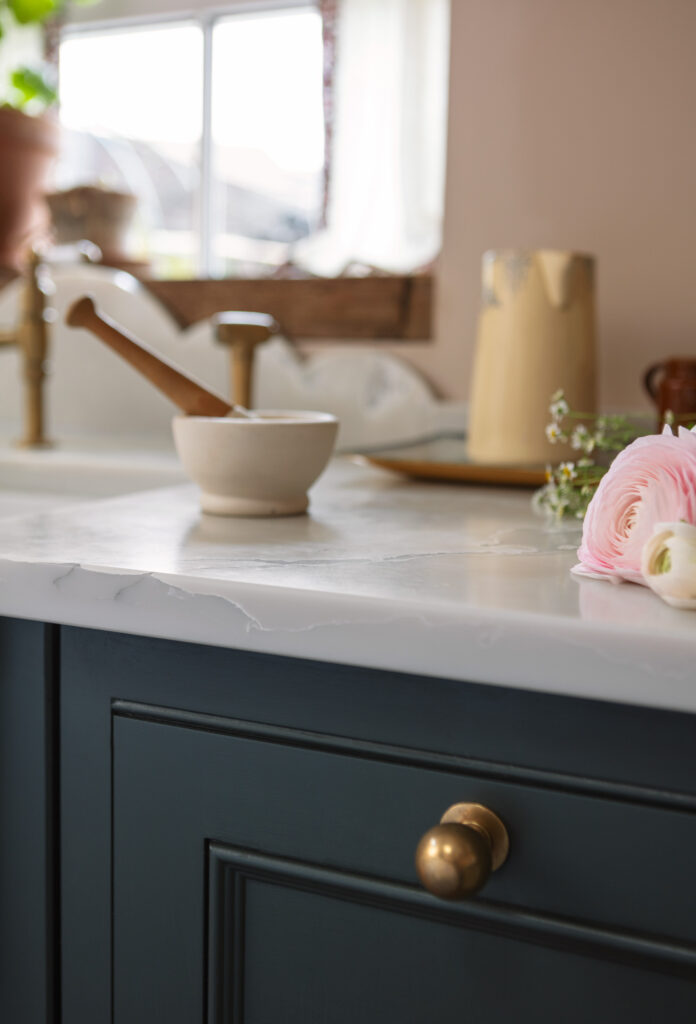
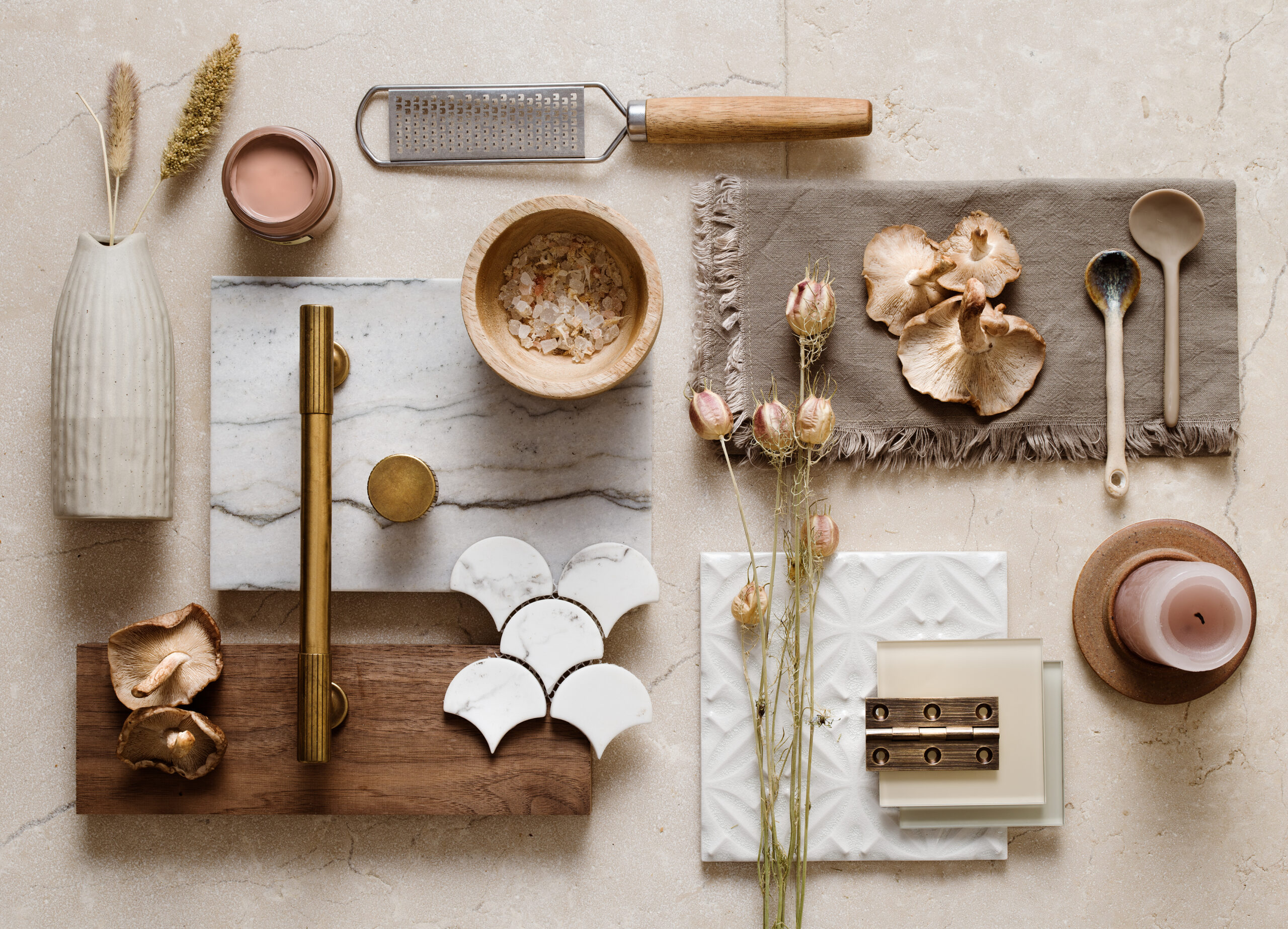
Natural materials with organic movement anchor the look. Marble such as Carrara or Calacatta offers classic luxury with soft veining. It does need careful maintenance, so it’s worth discussing how you cook before you commit.
Honed or leathered granite and quartz give more durability with a softer, less glossy finish. Oak block works beautifully on an island or preparation area.
Hardware ties the design together. Brass, polished nickel and aged bronze each develop character over time. Cup pulls suit drawers while classic knobs suit doors. A bridge tap and a Belfast sink then complete the picture.
Stone, hardware and paint should be considered together. A warm brass handle looks different against sage green than it does against navy. For that reason, we recommend viewing samples side by side in a showroom.


Storage and Appliances in Traditional Designer Kitchens
Traditional kitchens work best when modern appliances stay quiet. Dishwashers, fridges and wine coolers are usually hidden behind matching cabinet panels. A statement range cooker, set within a mantel or alcove, can then become the focal point.
“When designing a traditional kitchen, I recommend integrating appliances and bins where possible and hide freestanding appliances inside dressers to keep the worktops clear and the design as the focal point.”
Charlotte, Harvey Jones Designer in Brighton.
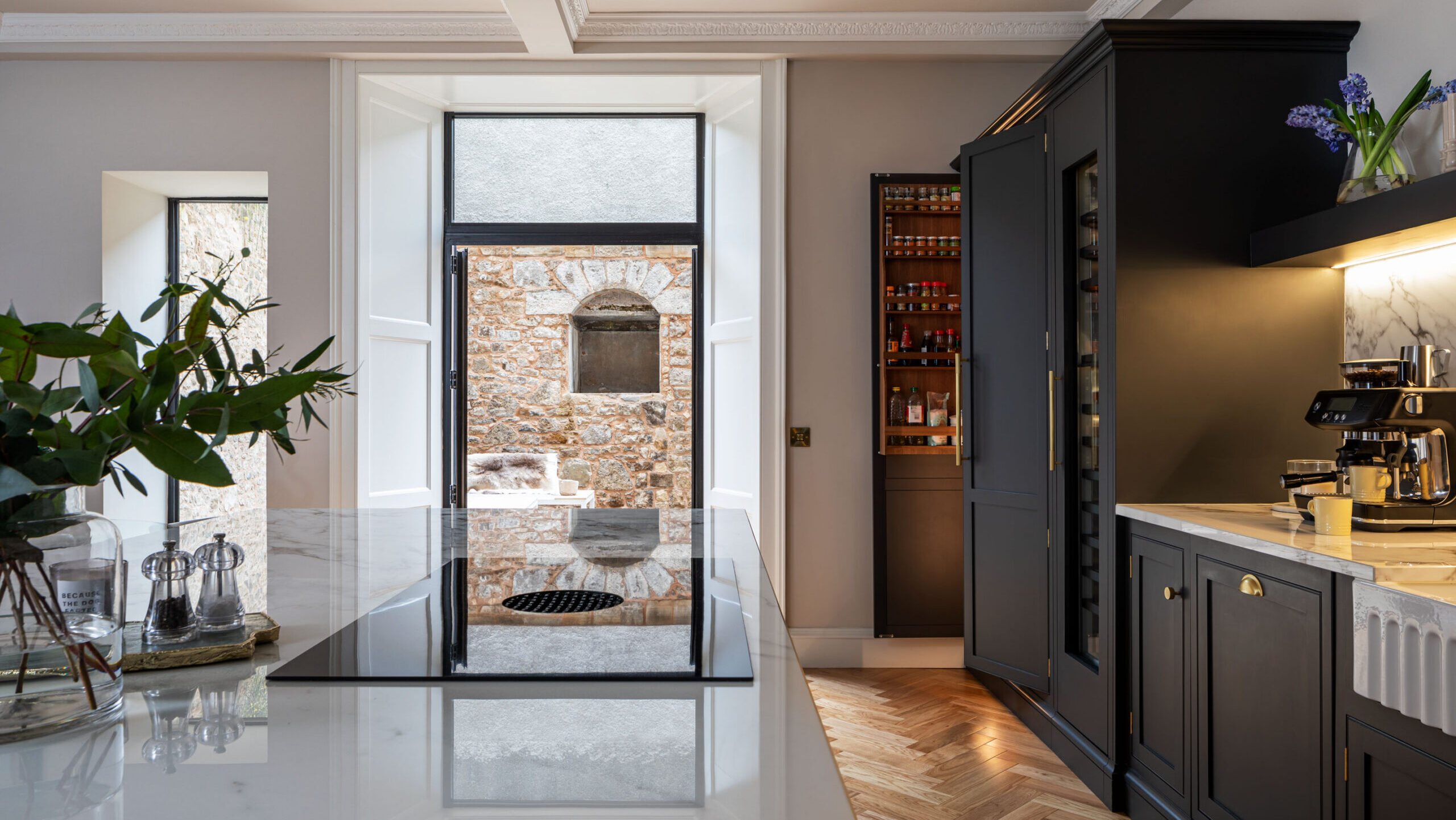
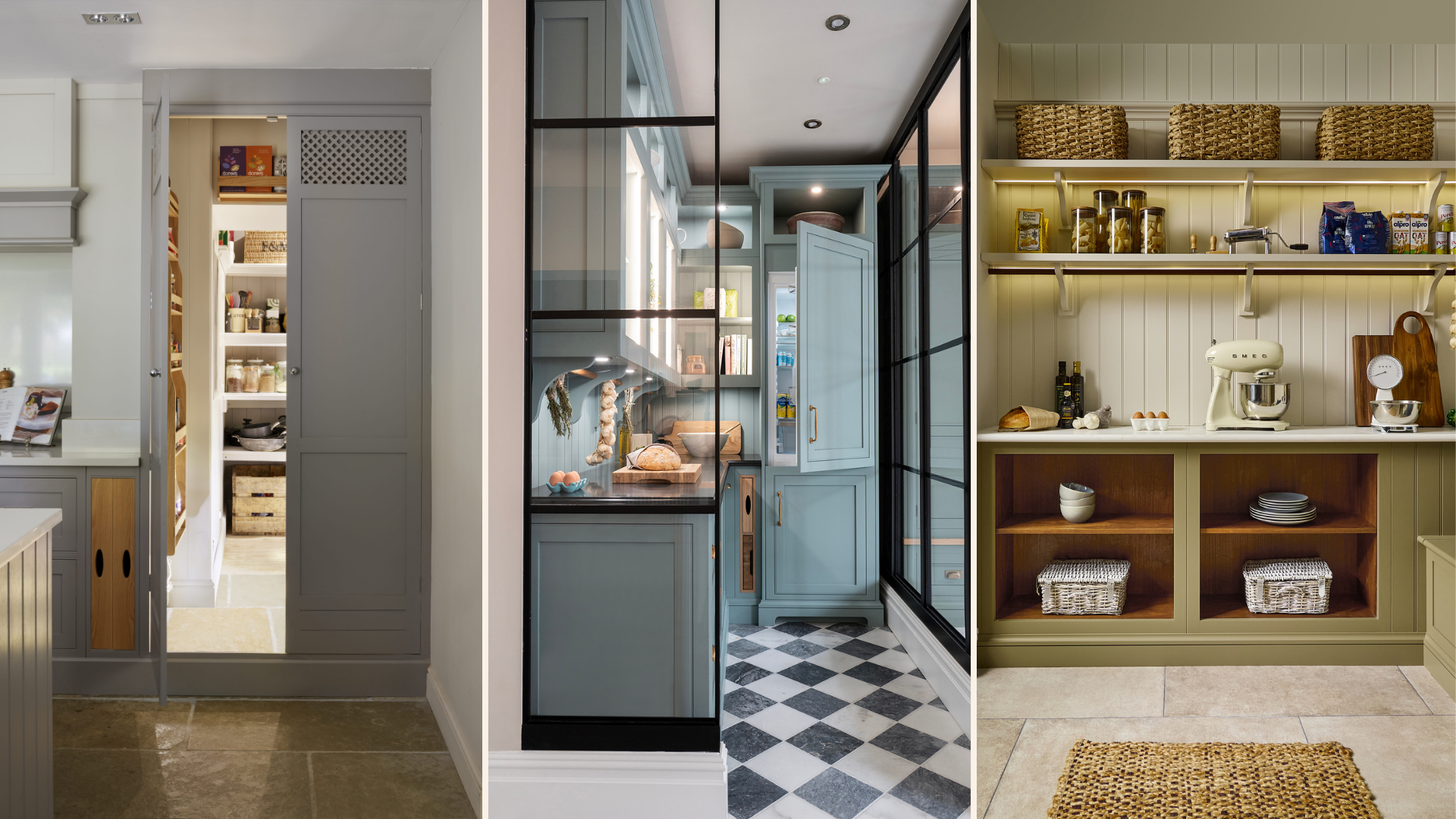
Storage matters just as much. A floor-to-ceiling larder with internal drawers, spice racks and a coffee station keeps worktops clear. Bespoke storage solutions can be planned around the way you cook, which is a real advantage of luxury kitchens made to order.
Layouts That Suit a Traditional Kitchen
Most traditional layouts fall into three groups.
- Island layouts: a central island adds prep space, seating and sometimes a second sink. Explore our guide to bespoke kitchen islands for more ideas.
- L-shaped and U-shaped layouts: these maximise storage and worktop space along the walls while keeping the centre open.
- Broken-plan layouts: a dining table or armchair nook within the kitchen adds a relaxed, family feel.
The right choice depends on your room and how you live. Your designer will plan the layout around your measurements and daily routine.

Keeping a Traditional Kitchen Feeling Modern
Good high end kitchen design is about editing. Choose the details that suit your home’s architecture, then leave the rest out. A beaded door in a Victorian terrace feels natural. In a newer home, a plain Shaker door with quality hardware often looks more at ease.
Lighting, appliances and storage can all be thoroughly modern. Integrated appliances, concealed charging points and well-planned task lighting protect the traditional look while making daily life easier.
If you’re working with an older property, our guide to designing a modern kitchen for a period home covers this in more depth.
How to Choose a Traditional Designer Kitchen Maker
Choosing the right maker matters as much as choosing the right style. Bespoke designer kitchens depend on skilled joinery, so it helps to know what to look for.
- Its own workshop: made-to-order kitchens built in one place are easier to tailor to your room.
- In-frame construction: ask about solid timber frames, jointing and dovetailed drawer boxes.
- Hand-painted finishes: these give depth that sprayed finishes can’t match.
- A cabinetry guarantee: a confident maker stands behind its cabinetry.
- Showrooms you can visit: seeing finished kitchens helps you judge quality in person.
The best traditional designer kitchens feel authentic to the property and practical for the people who use them. Our designers can help you turn these ideas into a kitchen made for your home.
Frequently Asked Questions
What are the defining characteristics of a traditional designer kitchen?
A traditional designer kitchen has in-frame cabinetry, detailed door profiles such as beading or recessed panels, hand painted finishes and natural materials like stone and oak. Symmetry and proportion guide the design. Modern appliances are usually integrated behind matching panels.
What are the best paint colours for classic kitchen cabinetry in UK homes?
Soft neutrals such as cream, ivory and warm white are the most versatile choices. Deeper shades such as sage green, navy and forest green also suit traditional kitchens well. Many people choose a two-tone scheme with a darker island. Always view samples in your own light.
How do I choose traditional kitchen cabinets?
Start with the door style and construction. In-frame cabinets with solid timber joinery and dovetailed drawers offer the best longevity. Then choose a profile that suits your home, such as plain Shaker or beaded. Finally, check the finish, the guarantee and how the cabinets will be made to fit your room.
How much does a high end traditional kitchen cost?
A high end traditional kitchen costs more than a standard fitted kitchen because it’s made to order and finished by hand. The total depends on room size, materials, worktops and appliances. Our kitchen costs and pricing page explains what to expect, and a design appointment gives a tailored estimate.
Where can I find bespoke cabinet makers for period style kitchens?
Look for a maker with its own workshop, experience in period properties and showrooms where you can see finished kitchens. Harvey Jones has showrooms across the UK, so you can meet a designer and see in-frame joinery in person.
What’s the difference between a traditional kitchen and a Shaker kitchen?
Shaker is one style within traditional design. It has a simple recessed-panel door and clean lines. Other traditional kitchens add beading, cornices, mantels and ornate detail. Many people choose a bespoke Shaker kitchen for a traditional look with a lighter feel.
Begin your design journey and craft your dream kitchen.