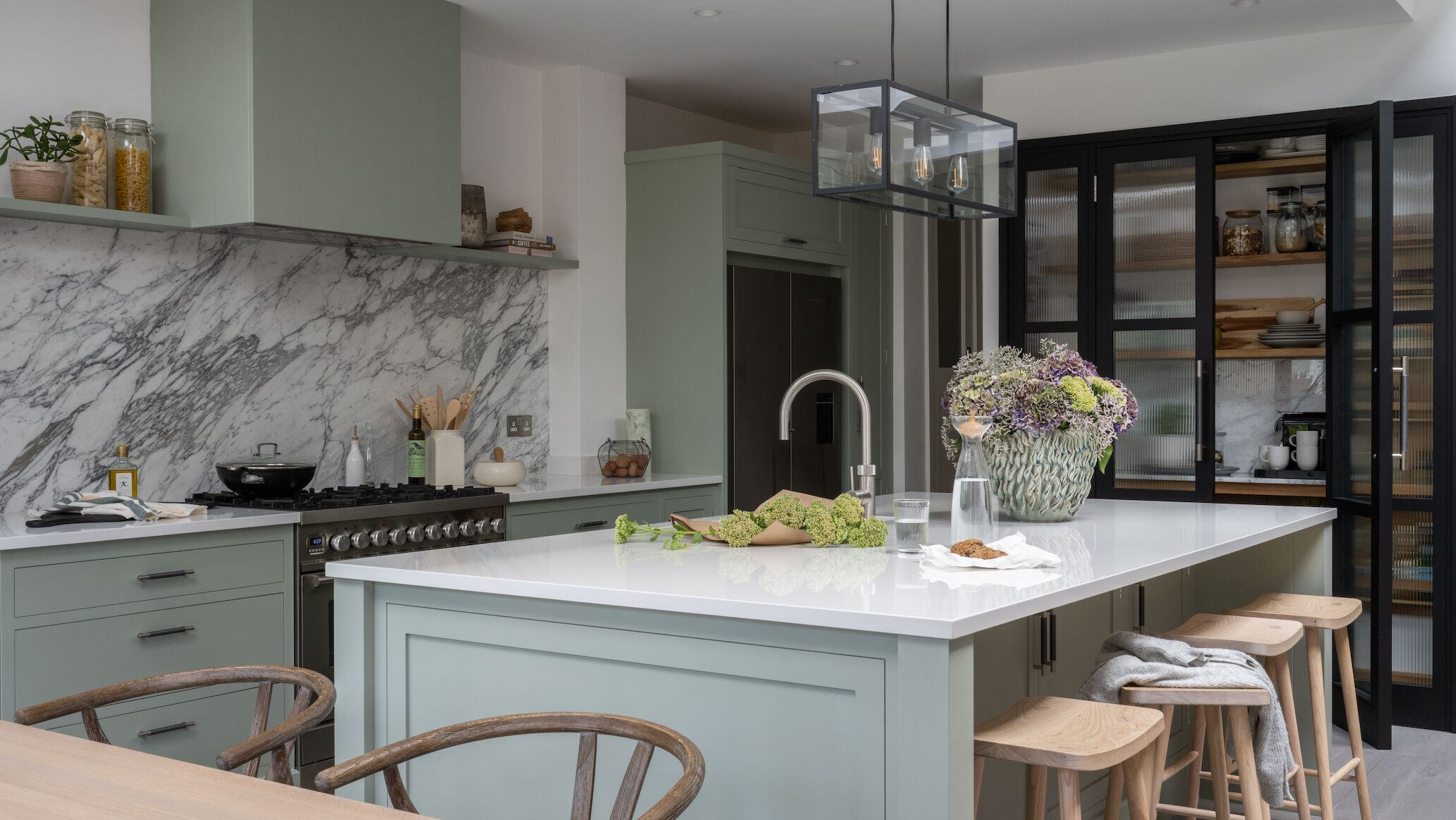
The best materials for modern kitchens balance durability, low maintenance and clean style. Quartz and porcelain lead the way for worktops. Hardwood and painted MDF suit cabinetry. Engineered wood or large format porcelain tiles work well underfoot. The right combination always depends on how a kitchen is actually used.
Choosing materials for a kitchen renovation can feel like a lot to take in at once. Worktops, cabinetry, flooring and sinks each come with their own range of finishes, price points and practical trade offs.
Discover the best materials for modern kitchens, from hardwearing worktops to sustainable flooring, and how to combine them with confidence.
Discover real, bespoke kitchen & home inspiration.
What to Consider When Choosing Kitchen Materials
Before falling in love with a finish, it helps to think about how your kitchen will actually be used. A family kitchen that sees daily cooking and homework needs tougher surfaces than a space designed mainly for entertaining.
Maintenance matters too. Some materials need regular oiling or sealing, while others are wipe clean and low fuss. Budget plays a role as well. Quartz, porcelain and solid wood all sit at different price points depending on finish and supplier.
Sustainability is increasingly a consideration for homeowners investing in a new kitchen. Bespoke kitchens tends to outlast mass produced alternatives, which is worth factoring in alongside the material itself.
Cabinet Materials for a Modern Kitchen
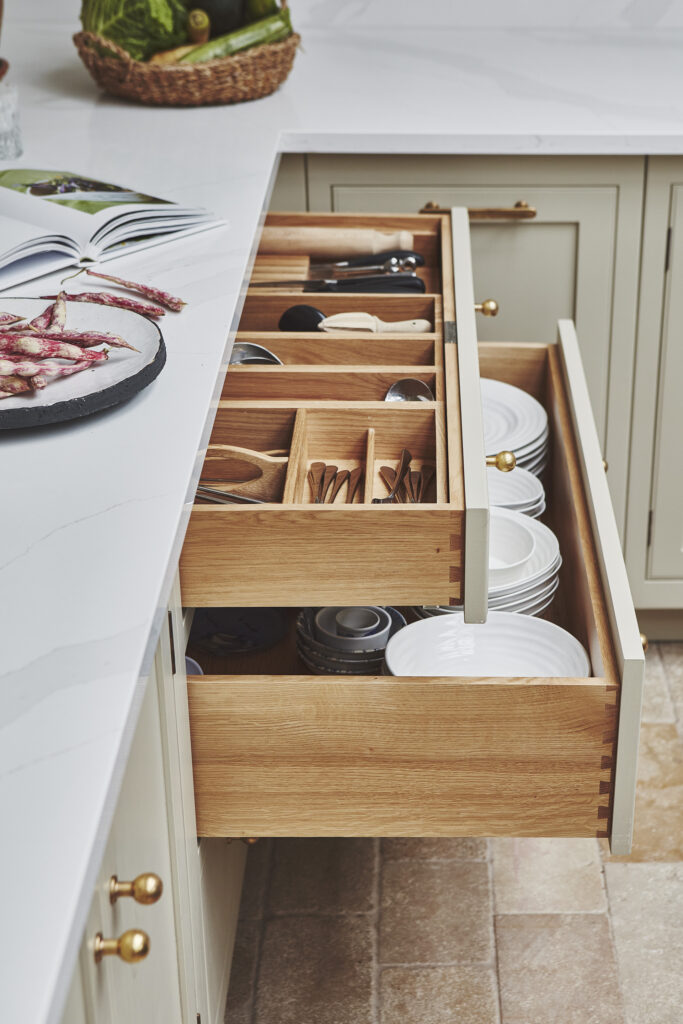
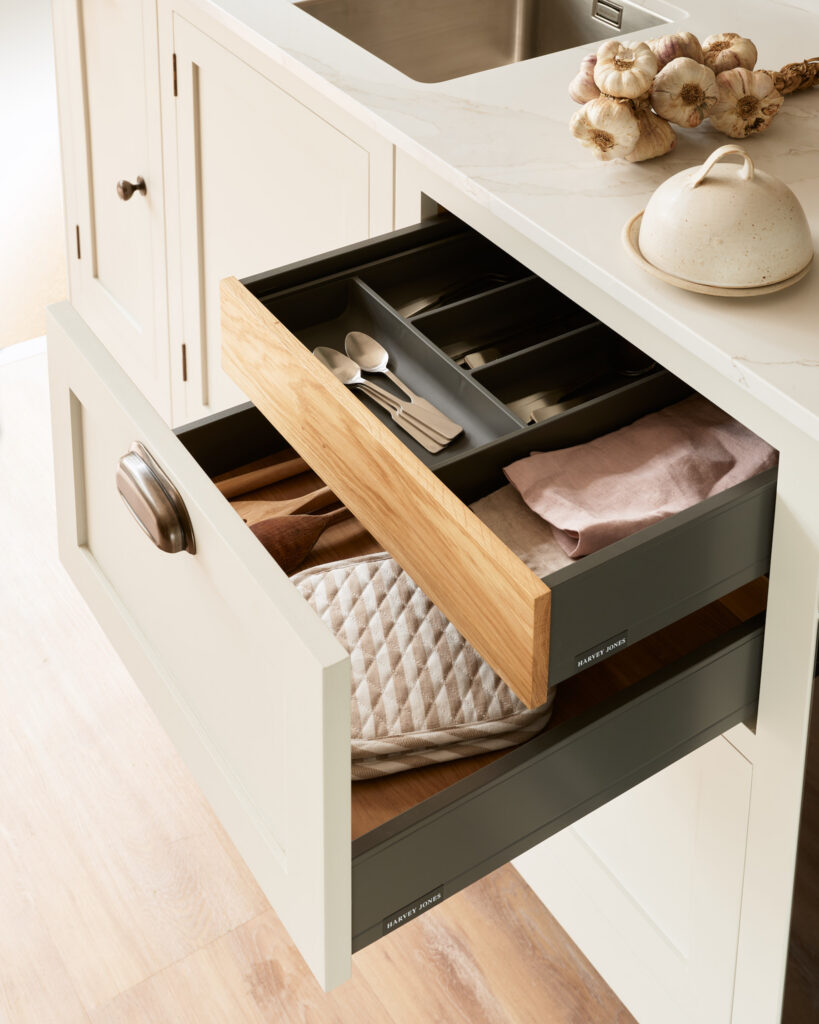
Cabinet materials shape both the look and the longevity of a kitchen.
For a modern finish, painted MDF remains a popular budget choice. It gives a smooth, seamless surface that suits handleless and Shaker style doors equally well, and it takes paint beautifully for a true bespoke colour match.
Alternatively, wood veneer is another strong option for kitchen furniture material, particularly oak, walnut or ash, which bring warmth to an otherwise pared back scheme.
For households drawn to premium materials, solid wood fronts remain a timeless choice. Hardwood is long-lasting option for luxury fitted kitchens with a softer, more tactile feel.
Whatever the kitchen cupboard material, hand painted finishes and traditional joinery techniques tend to age more gracefully than factory laminate, which matters most in a kitchen you plan to keep for years.
Worktop Materials: Quartz and Beyond
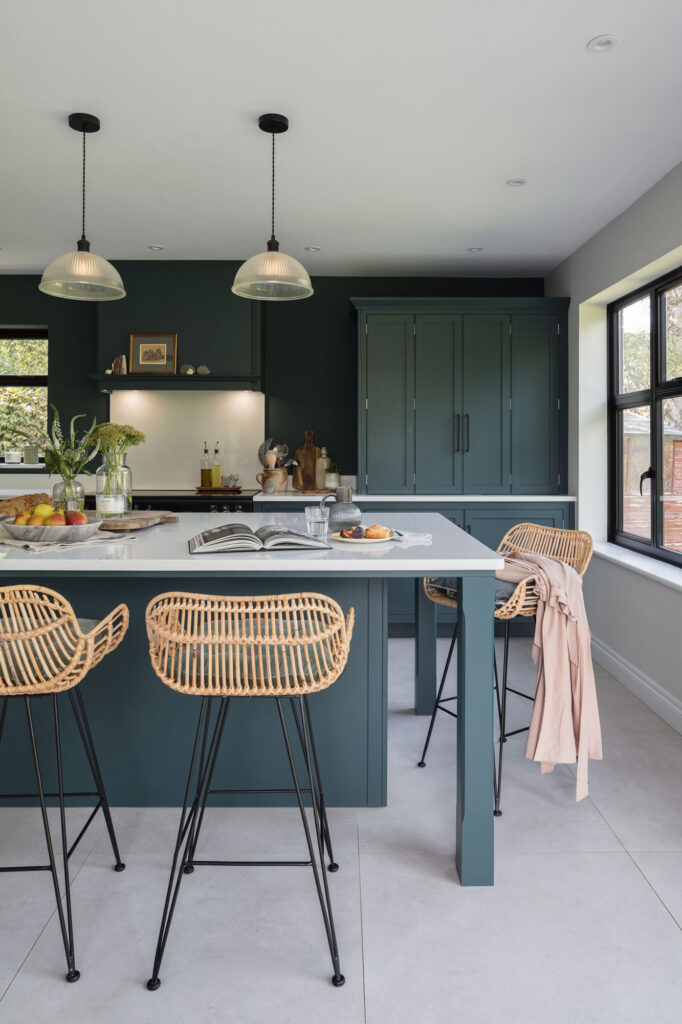
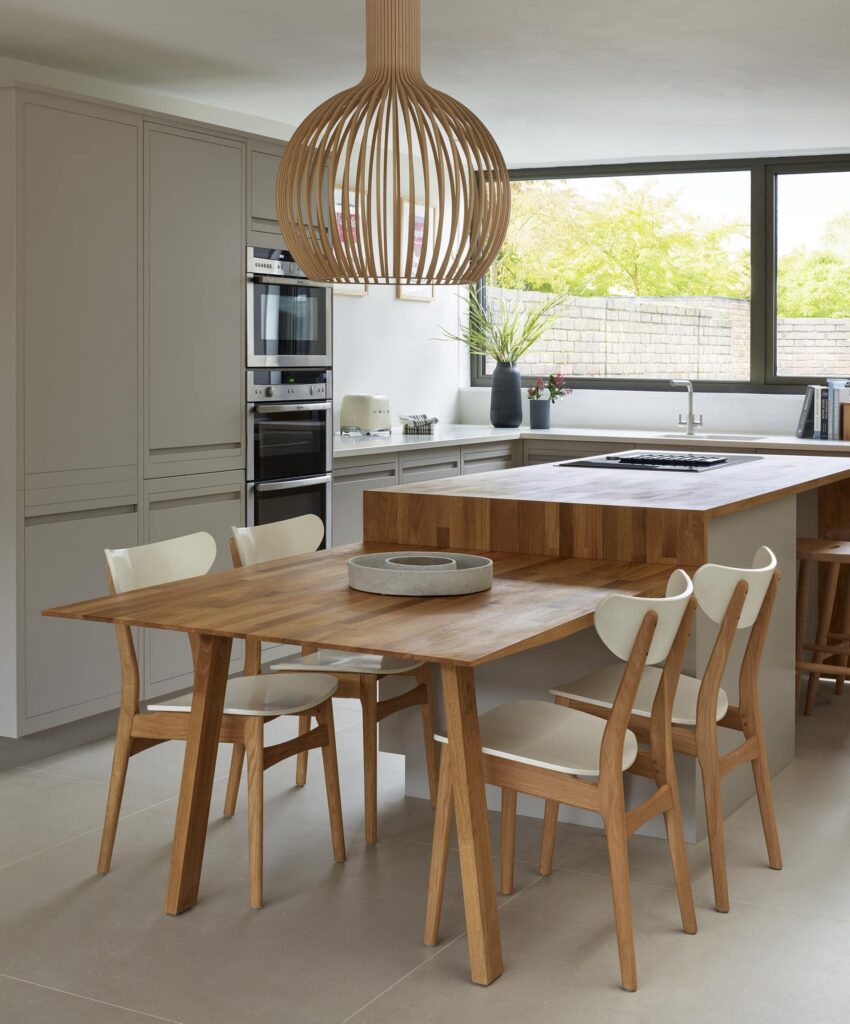
Worktops take more daily wear than almost anything else in the kitchen, so this is one area worth prioritising.
Quartz is the standout choice for most modern kitchens. It’s non porous, scratch resistant and available in a wide range of patterns and colours, which makes it a natural fit for busy households and contemporary luxury kitchen design.
Porcelain is worth considering too, particularly for its heat resistance and ultra slim, seamless profiles.
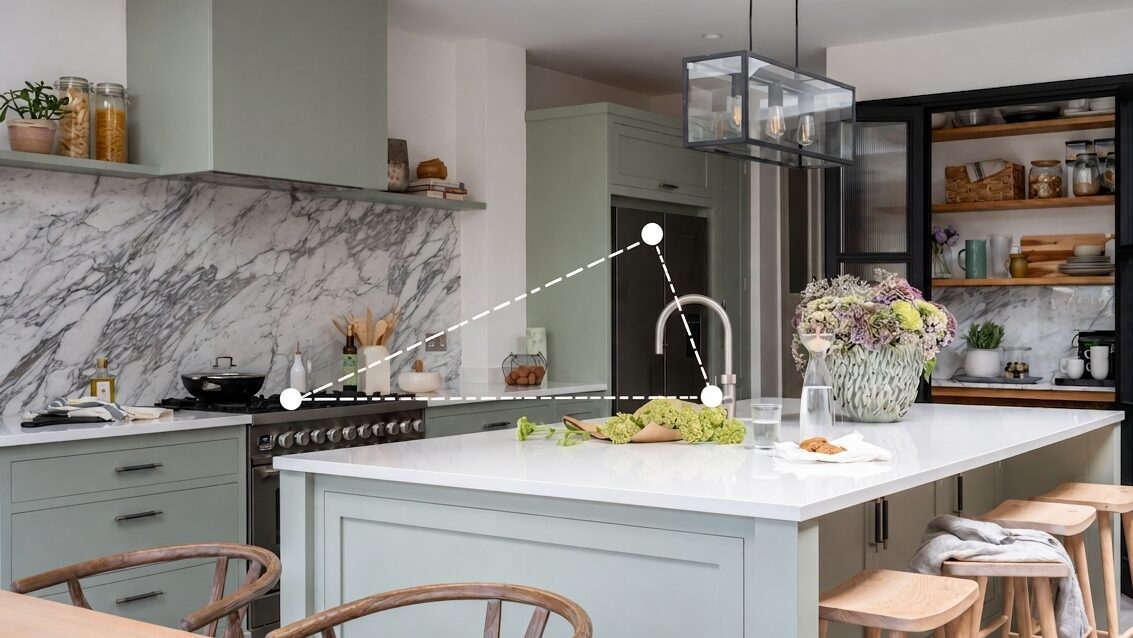
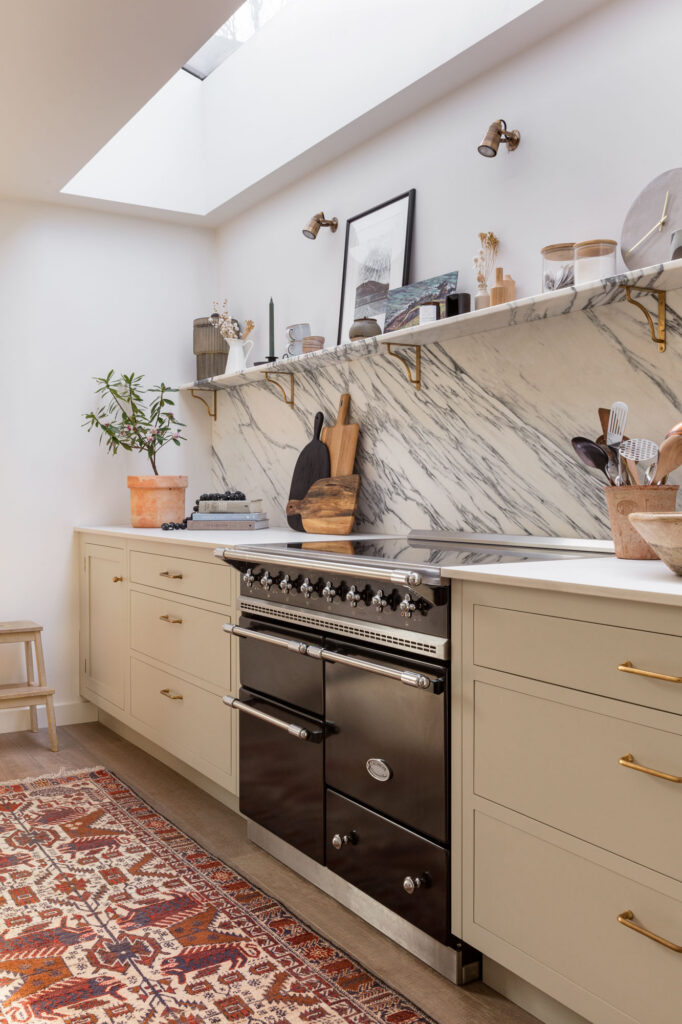
For a softer, more traditional look, solid wood or marble both bring real character, although marble needs more care around staining.
Harvey Jones luxury kitchen designer, Josh, shares his worktop recommendation:
“For a kitchen that stands the test of time, I often recommend a ceramic worktop. It’s highly resistant to scratches, stains and heat, making it an excellent choice for everyday family life.“
Kitchen Sinks: Built to Work as Hard as They Look
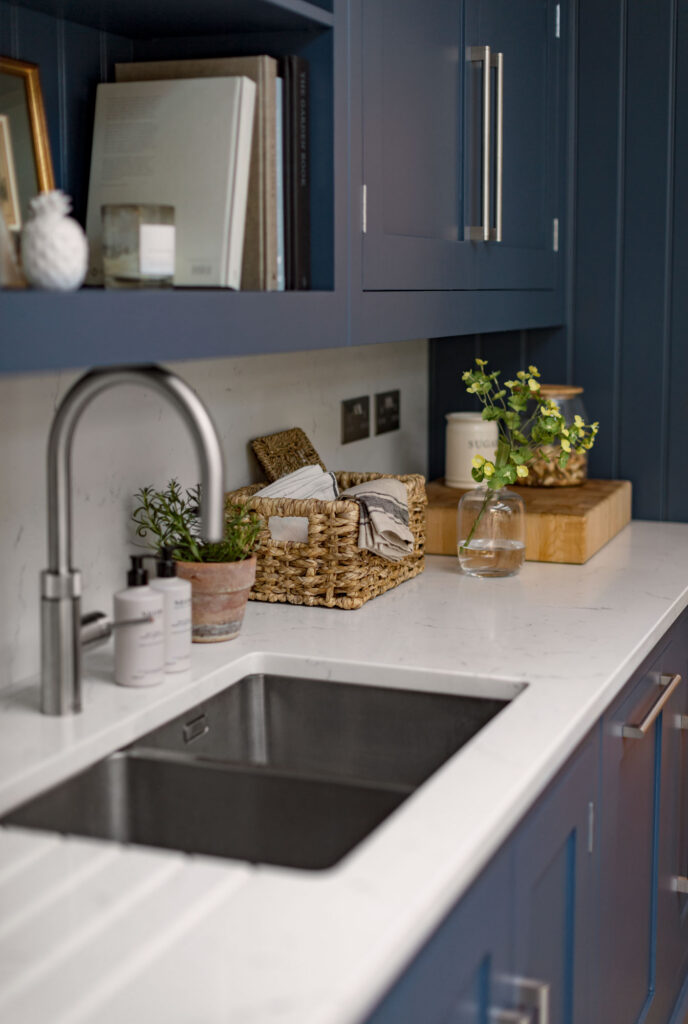
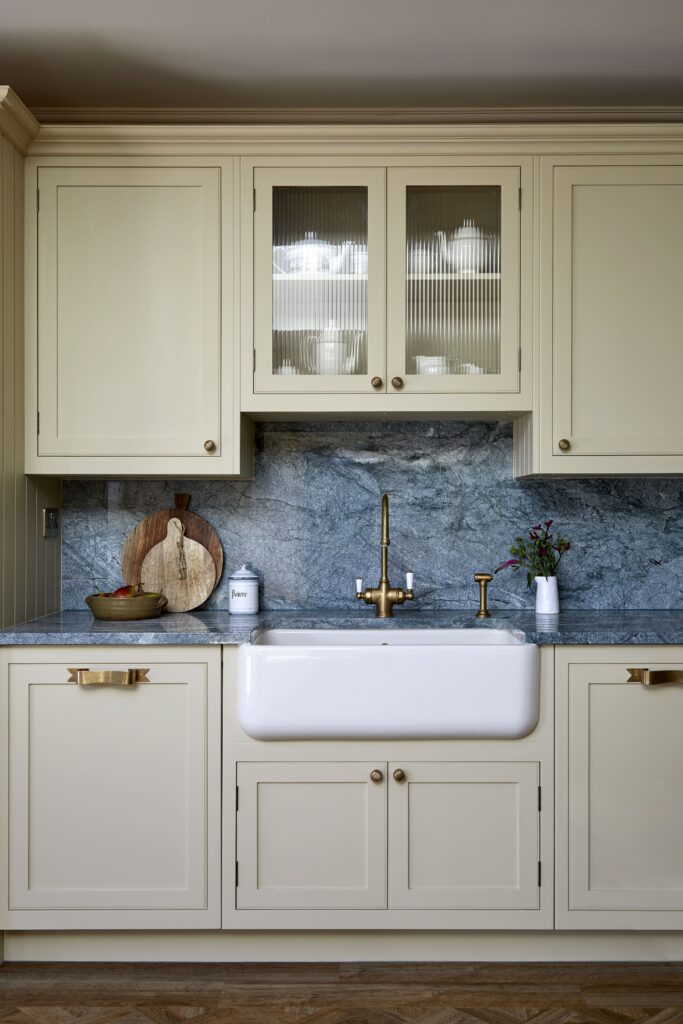
Sinks rarely get the same attention as worktops, but the material matters just as much.
Composite sinks, often made from granite or quartz particles, are hardwearing, easy to clean and available in a range of colours to match the rest of the kitchen.
Stainless steel remains a dependable choice for a sleek, modern look, particularly when paired with an integrated drainer.
For something with more traditional character, a ceramic Belfast sink suits farmhouse and Shaker style kitchens well, although it does need a little more care to avoid chipping.
Flooring That Complements a Modern Kitchen
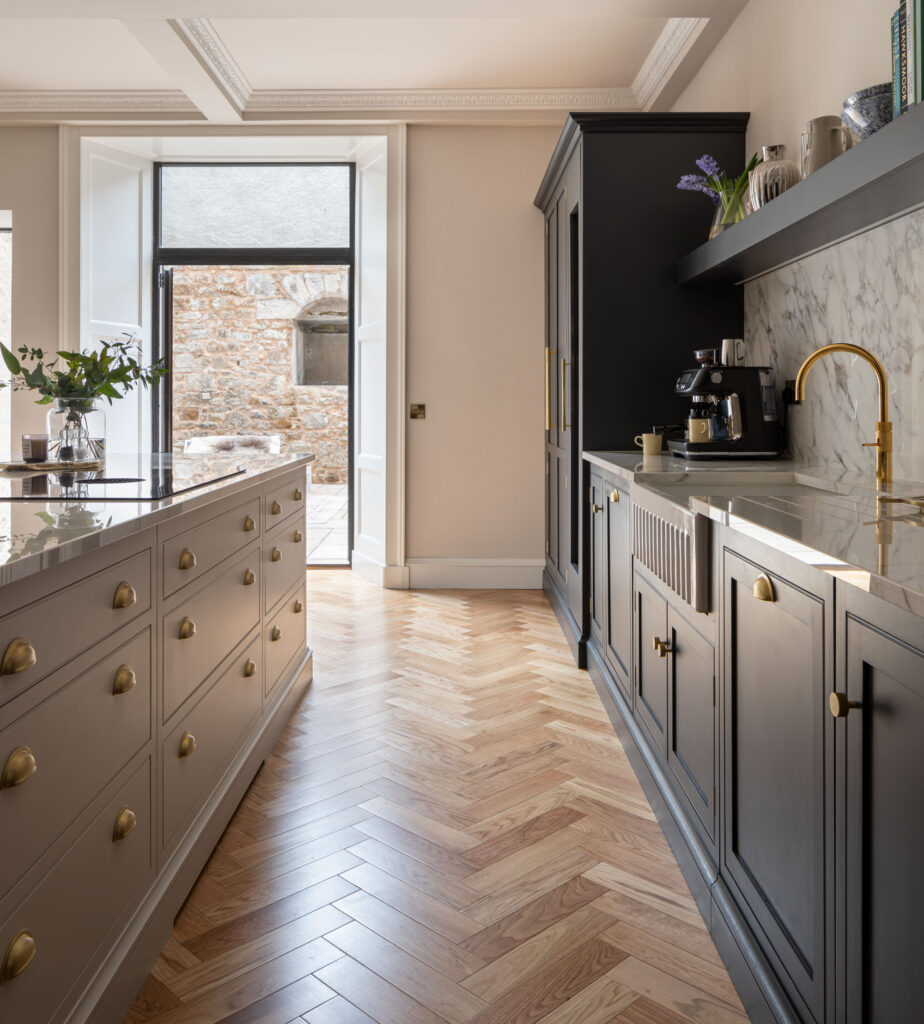
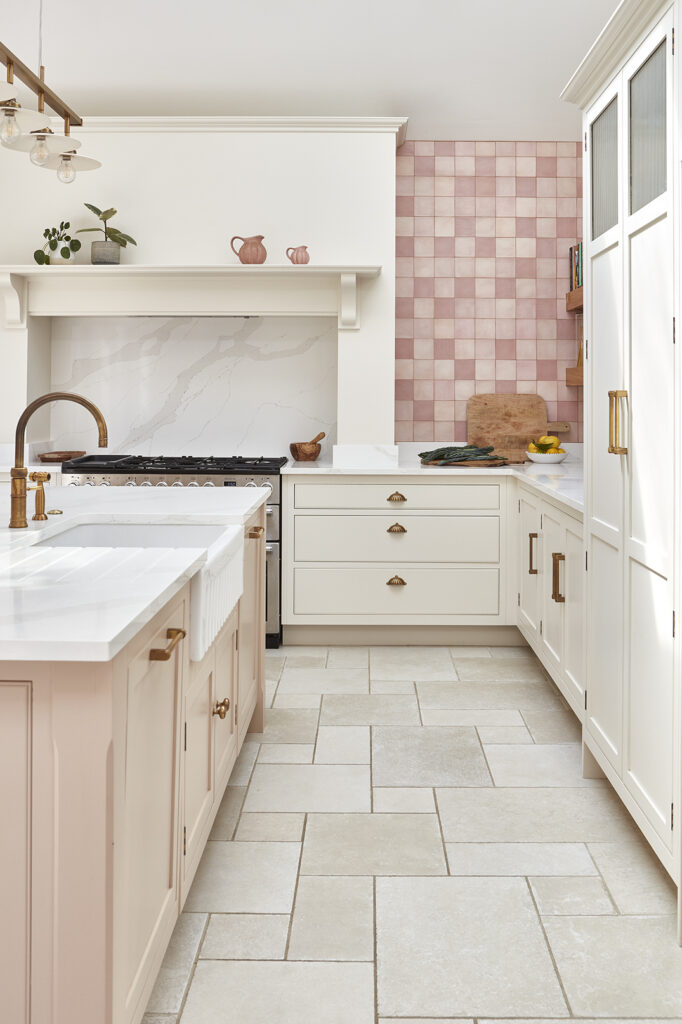
Flooring needs to handle spills, footfall and the occasional dropped pan, while still tying the whole room together.
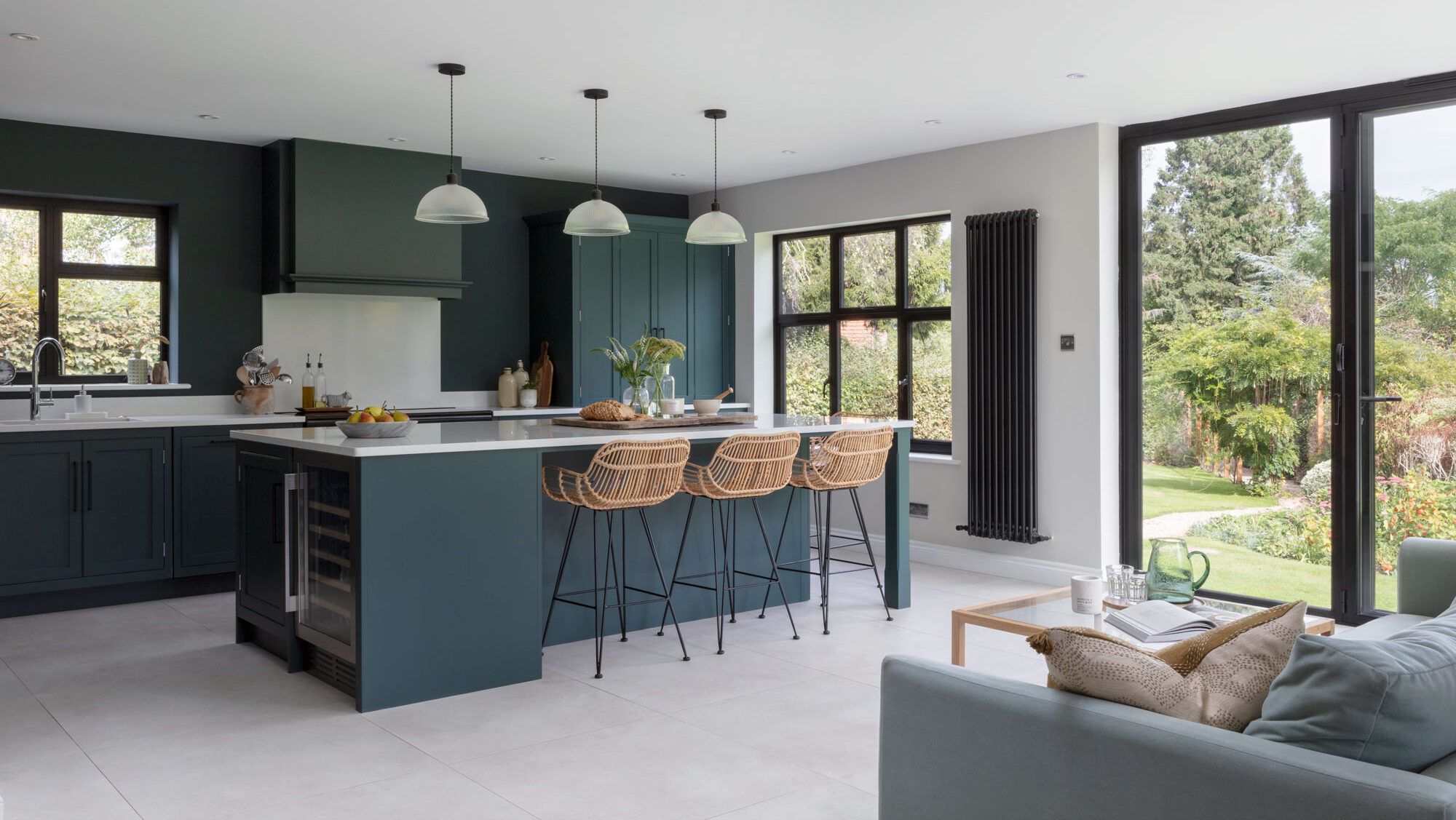
Large format porcelain tiles are a strong choice for modern kitchens, minimising grout lines for a clean, continuous floor.
Engineered wood is another option worth considering. It offers the warmth of natural timber with better moisture resistance than solid wood, making it a practical fit for open plan kitchen diners.
Designer Josh suggests options for every style and home:
“Porcelain tiles with underfloor heating offer longevity and comfort, while luxury vinyl tile (LVT) is a practical alternative if you’re looking for the warmth and appearance of wood with added durability.“
Splashbacks: Tile, Quartz and a Few Other Options
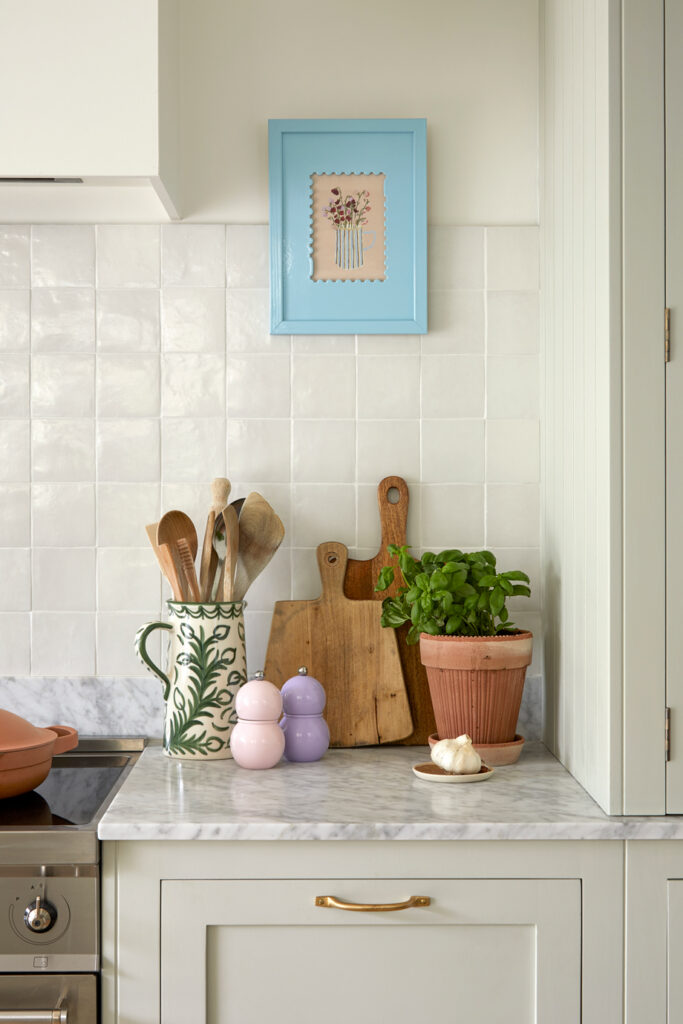
A splashback is one of the easiest ways to add character to a kitchen, and tile remains the most versatile choice.
Hand painted or natural stone tiles bring texture and a sense of craft, and work especially well as a feature behind a range cooker or sink.
Quartz is the other strong contender, particularly when matched to the worktop for a continuous, seamless look. It’s non porous and easy to wipe clean, which makes it a practical choice behind a hob.
Glass reflects light well and suits a sleeker, ultra modern scheme, particularly in smaller kitchens. Metal splashbacks, usually stainless steel, bring an industrial edge.
Sustainable Kitchen Materials Worth Considering
Sustainable kitchen materials are no longer a niche concern – many homeowners are conscious of how material can impact longevity and sustainability.
Engineered stone made with recycled content is now widely available, offering the same durability as standard quartz with a lower environmental footprint.
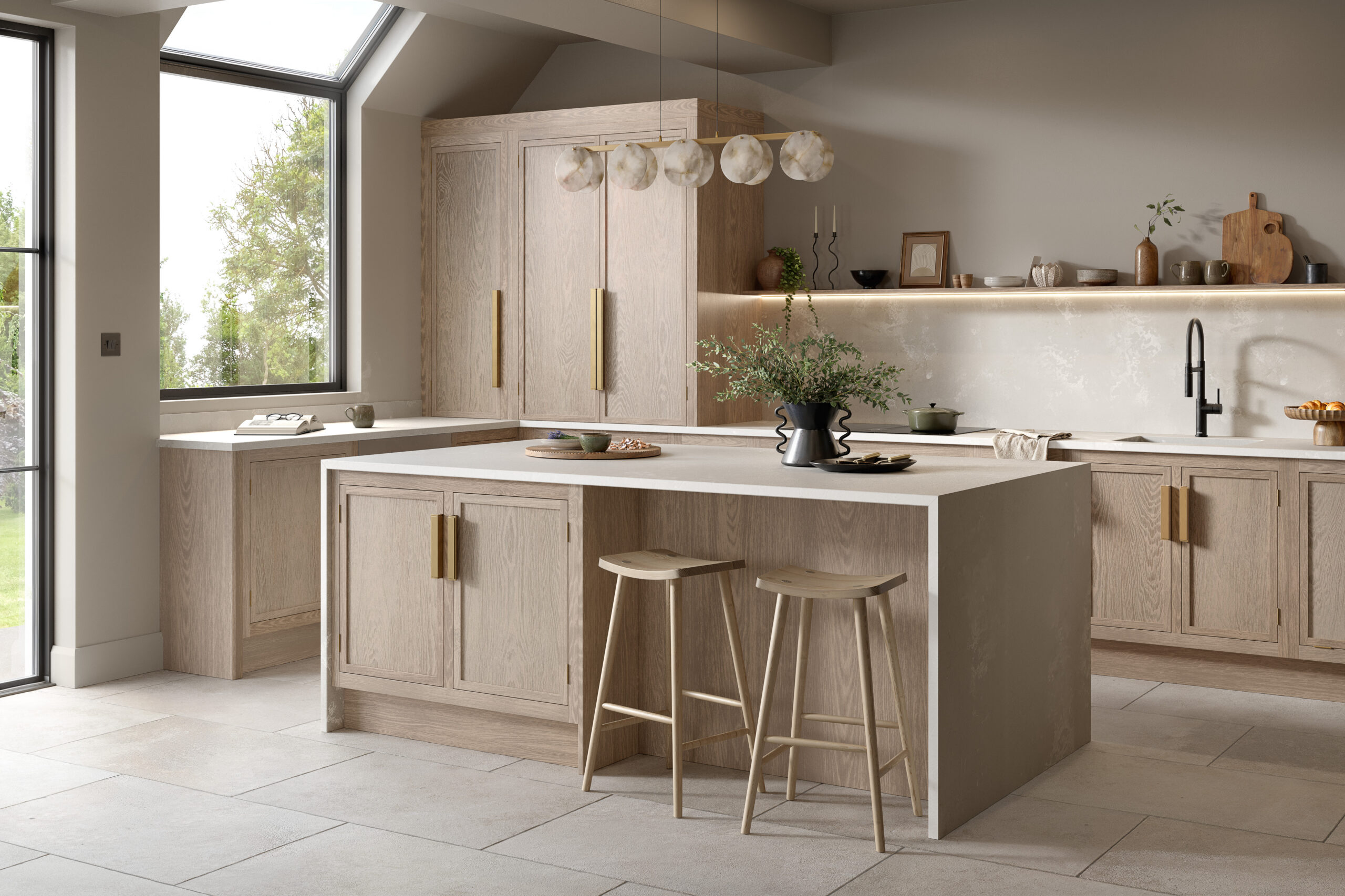
Responsibly sourced timber is another option, particularly when paired with finishes designed to be repaired rather than replaced.
This is where bespoke kitchens have a genuine advantage. A well made, solid kitchen built to last decades is, in itself, a more sustainable choice than furniture designed for a shorter lifespan.
Harvey Jones designer Sally explains the impact of quality materials:
“Longevity comes from choosing quality materials. Materials such as stone, brass, wood etc are always going to be staples as they are a durable quality. Plus, being natural materials, they rarely date.“
How to Combine Materials Without Overcomplicating It
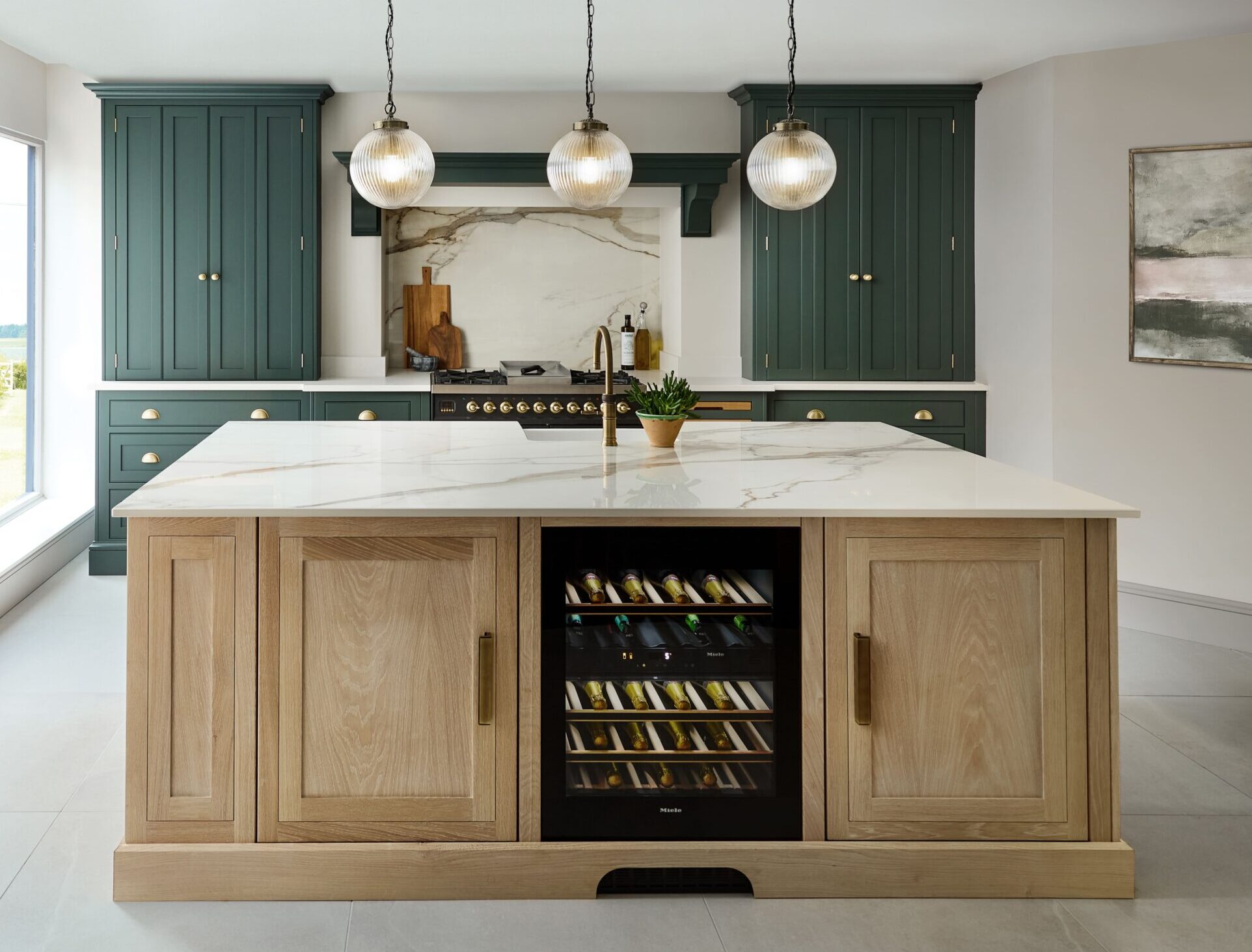
Mixing materials is one of the easiest ways to add interest while remaining conscious of style and budget.
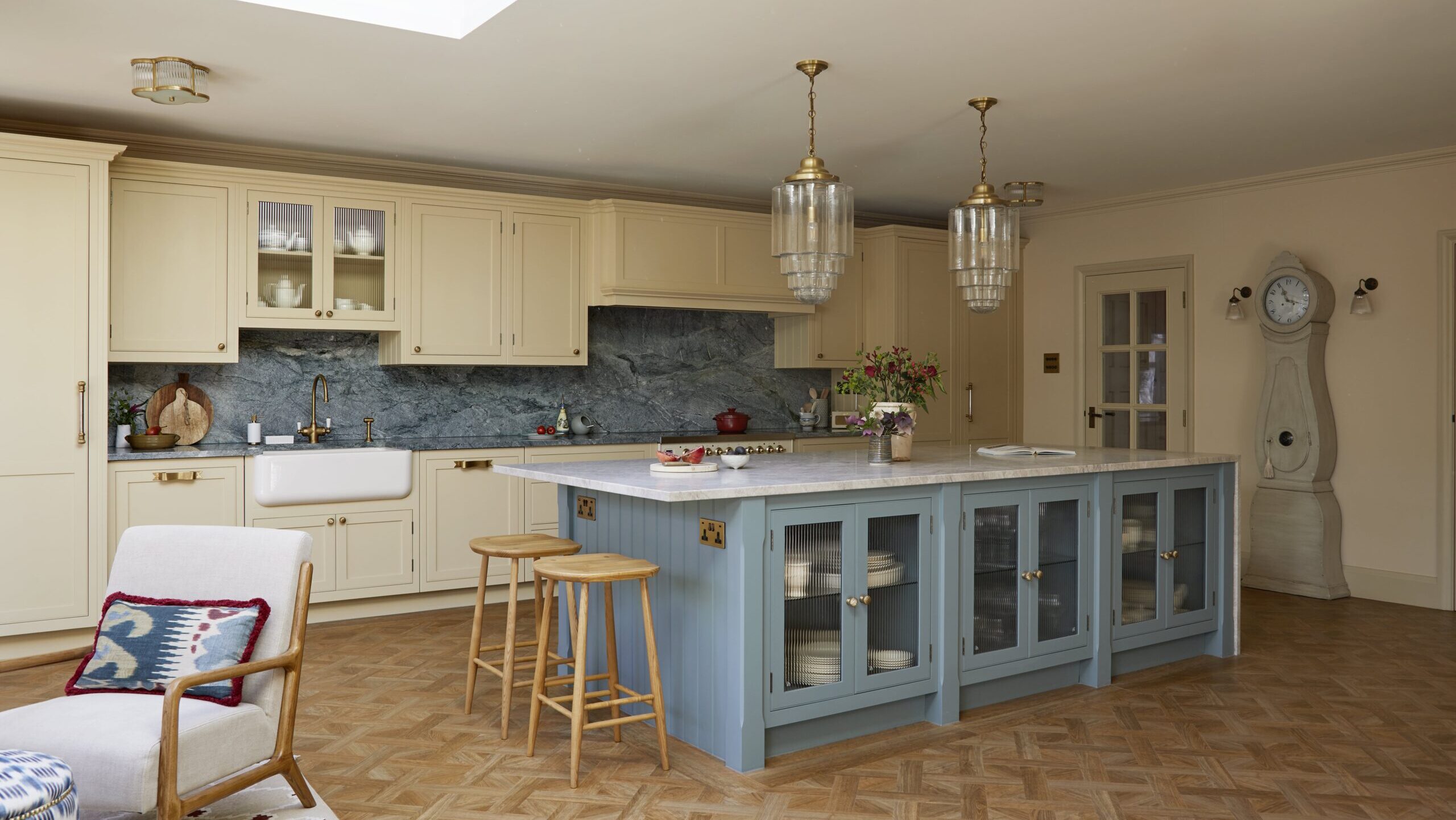
A common approach is to place hardwearing surfaces like quartz or composite around sinks and hobs, where they will be used most, and bring in warmer materials like wood or painted cabinetry elsewhere.
A useful rule of thumb is to limit a kitchen to three or four main materials across cabinetry, worktops, flooring and hardware. This keeps the scheme feeling considered rather than busy, whatever combination you land on.
Ready to Plan Your Dream Kitchen?
There is no single best material for every kitchen. The right choice depends on how you live, how much maintenance you are willing to take on and the look you want to achieve.
At Harvey Jones, every kitchen is built around how our clients actually use their space, then finished with materials chosen to last. Book a design appointment to discover your dream kitchen materials.
FAQs about The Best Materials for Modern Kitchens
What is the best material for modern kitchen cabinets?
Painted MDF or solid wood are the most popular choices for modern kitchen cabinets. Painted MDF offers a smooth, seamless finish that suits handleless designs, while solid wood adds natural warmth and luxury without losing a clean, contemporary silhouette.
What material is not recommended for kitchens?
We generally don’t recommend untreated solid wood worktops near sinks and hobs, as they can suffer from water damage and warping without regular oiling. Highly porous natural stones, like marble, can also stain easily if not properly sealed.
What are high end kitchen cabinets made of?
Cabinetmakers typically use solid wood and traditional joinery techniques to create high-end kitchen cabinets. Hand painted finishes and made to measure construction are common hallmarks of luxury bespoke kitchens.
What is the highest quality material for kitchen cabinets?
Solid wood, particularly oak or walnut, is widely regarded as the highest quality material for kitchen cabinets due to its durability and ability to be refinished over time. Premium plywood is a strong alternative for cabinetry internals.
What kitchen material is scratch resistant?
Quartz and porcelain are among the most scratch resistant kitchen materials, making them popular choices for worktops in busy households. Stainless steel also resists scratching well, though it can show marks over time with heavy use.
Discover real, bespoke kitchen & home inspiration.