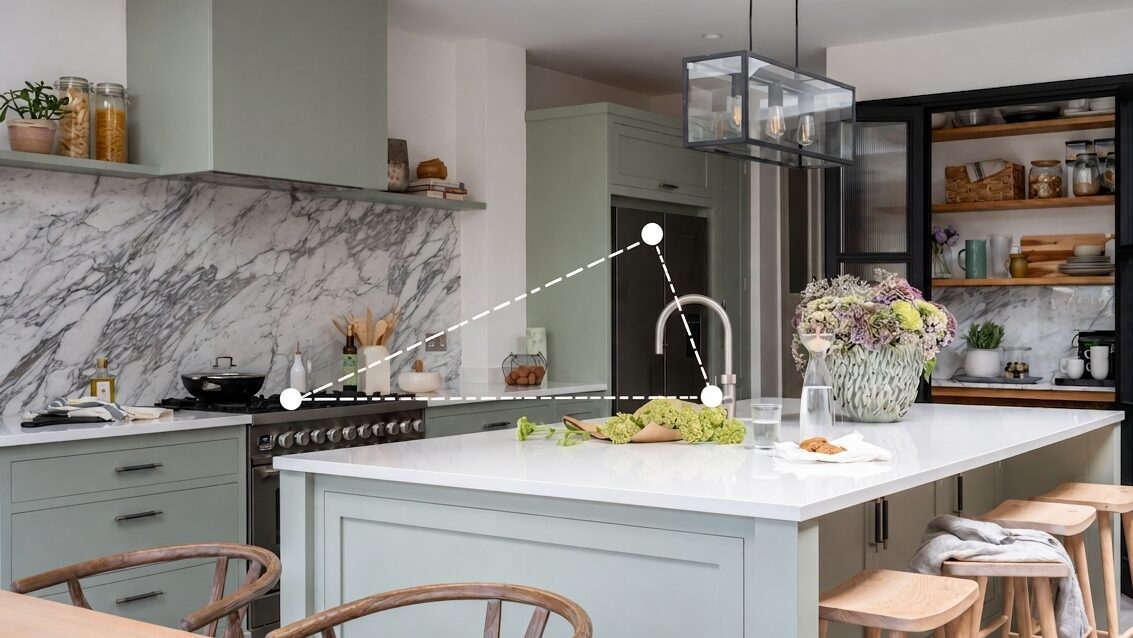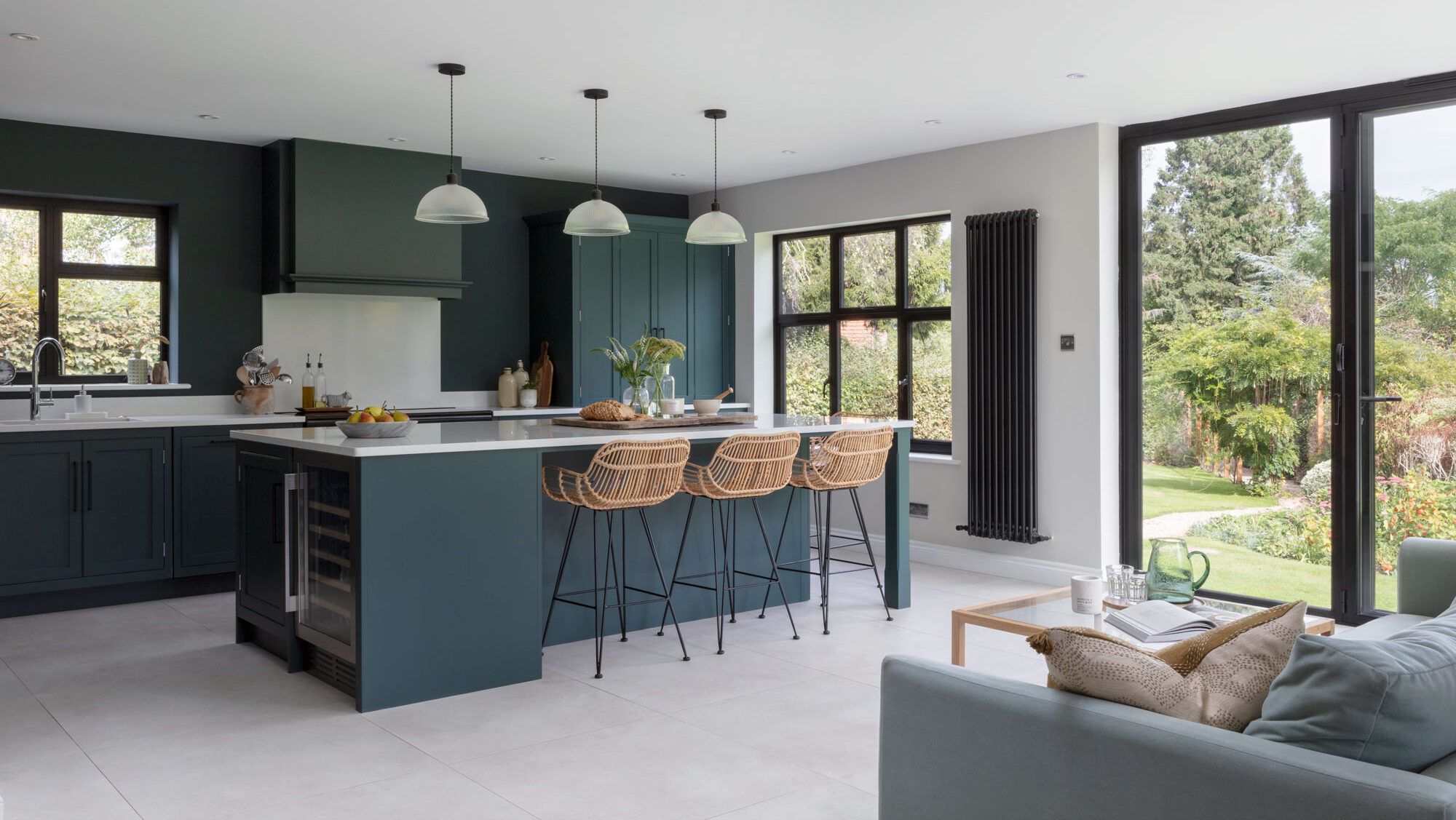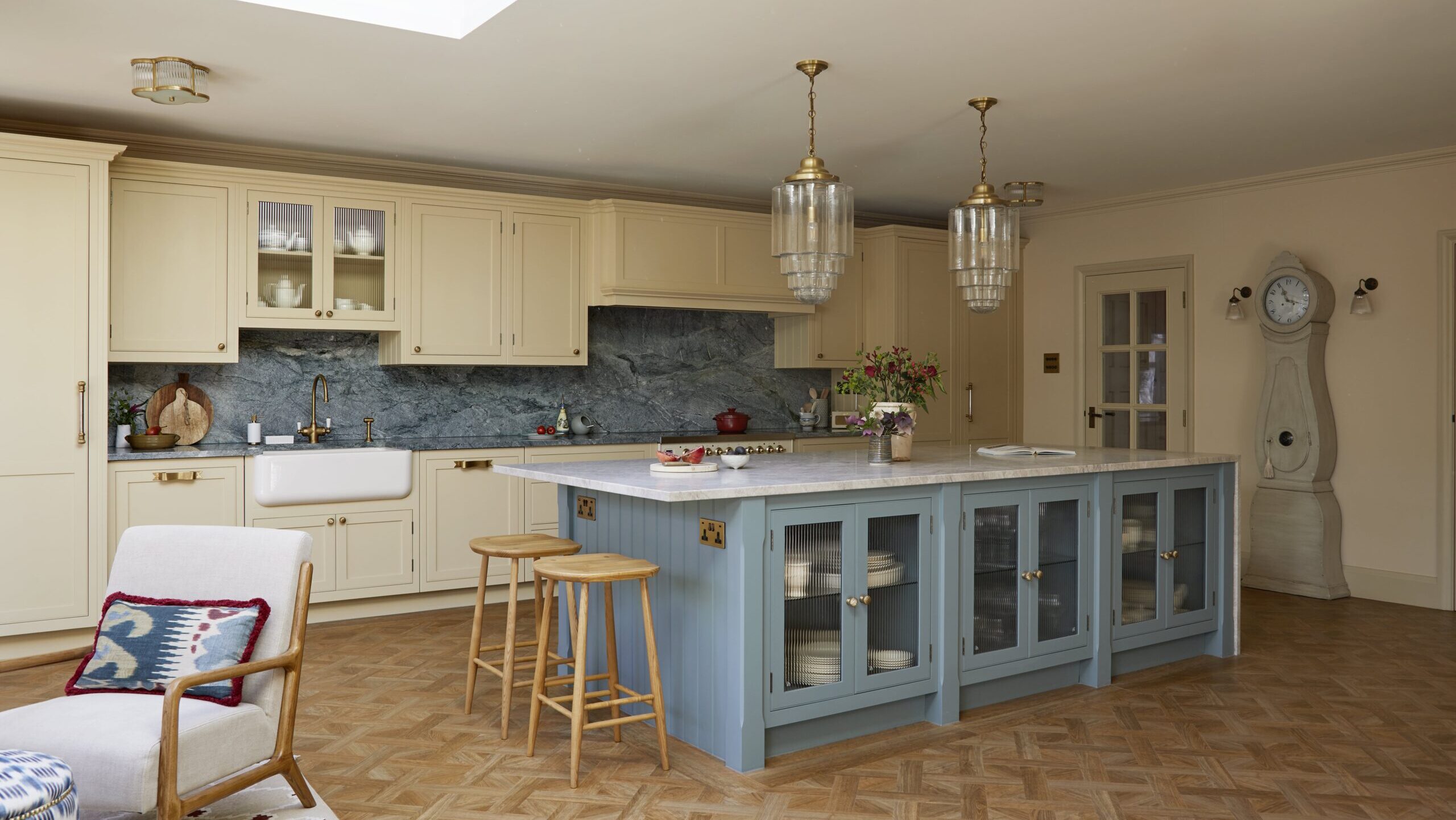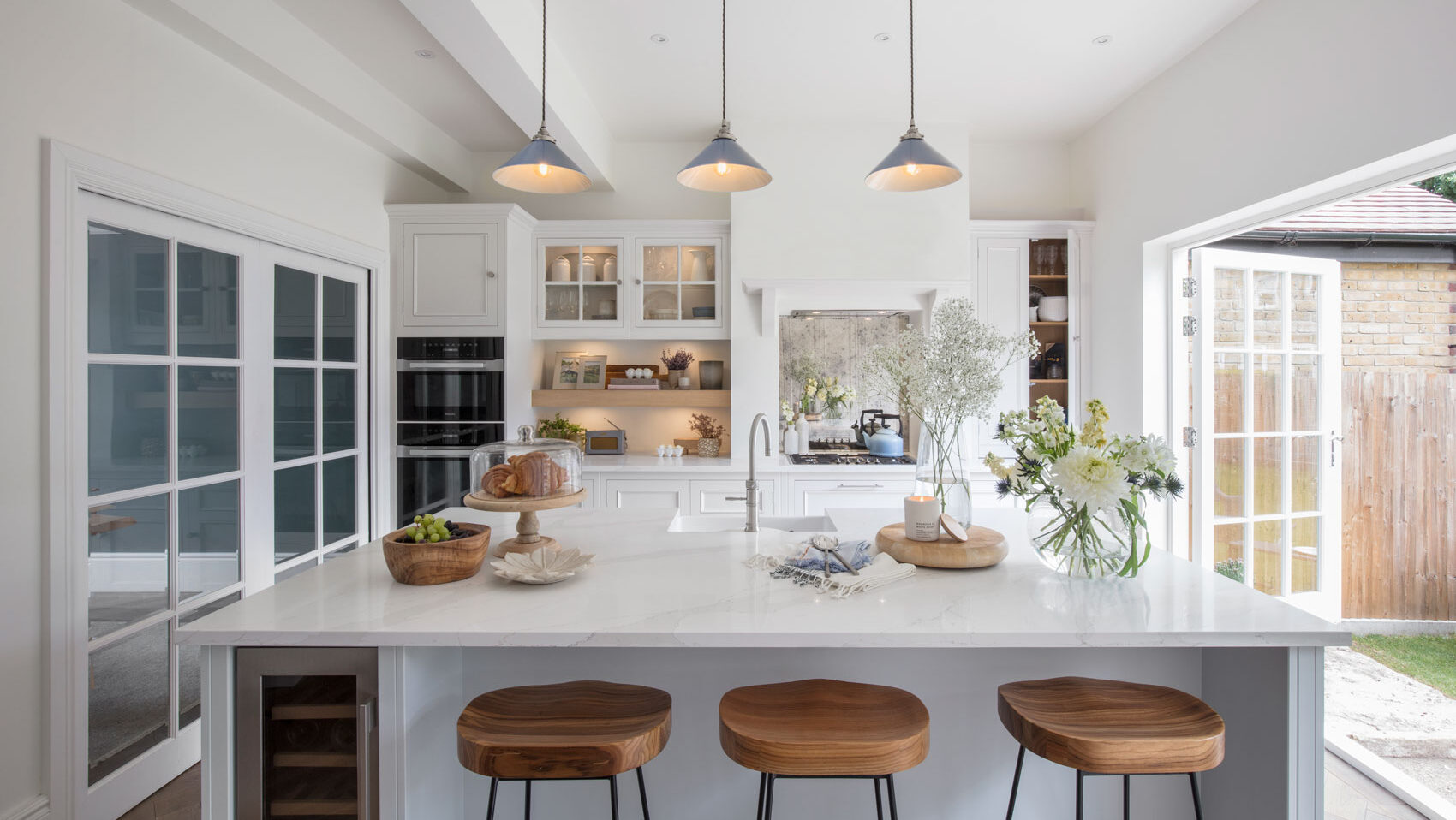
To choose kitchen lighting well, layer three types of light: ambient (overall room illumination), task (focused work areas), and accent (atmosphere and visual interest). A single ceiling fixture creates shadows and glare, while a layered plan ensures your kitchen is safe, functional, and beautiful. This guide covers every fixture type, technical specification, and design choice you need to plan your lighting scheme.
No matter how beautiful your bespoke kitchen is, the overall atmosphere could be hugely diminished if the lighting isn’t right. Get it wrong, and the entire room could look dingy, be hard to work in, and contain areas that are too dark for regular use.
When we design luxury kitchens for our clients, lighting is often a last thought, but it’s key to creating a bright, welcoming space.
We’ve outlined everything you need to know about kitchen lighting, ready to design your dream kitchen.
Discover real, bespoke kitchen & home inspiration.
Why Layered Lighting Matters for Your Kitchen
Choosing kitchen lighting is mostly about layering light, so the space is practical for cooking but still comfortable for dining and socialising. A single ceiling light rarely works well on its own.
Your kitchen is a high-traffic workspace where you prepare food, clean up, and often entertain. This means your lighting needs to serve two jobs at once: provide bright, focused light, and create warmth and atmosphere. Layered lighting achieves both.
Expert kitchen designer, Josh, explains the importance of layering:
“The key is layering different types of lighting. Practical task lighting ensures the kitchen works day to day, while softer ambient lighting helps create the right mood. Many modern systems can also be adjusted after installation, allowing you to fine-tune the colour temperature and ambience to suit different occasions.”
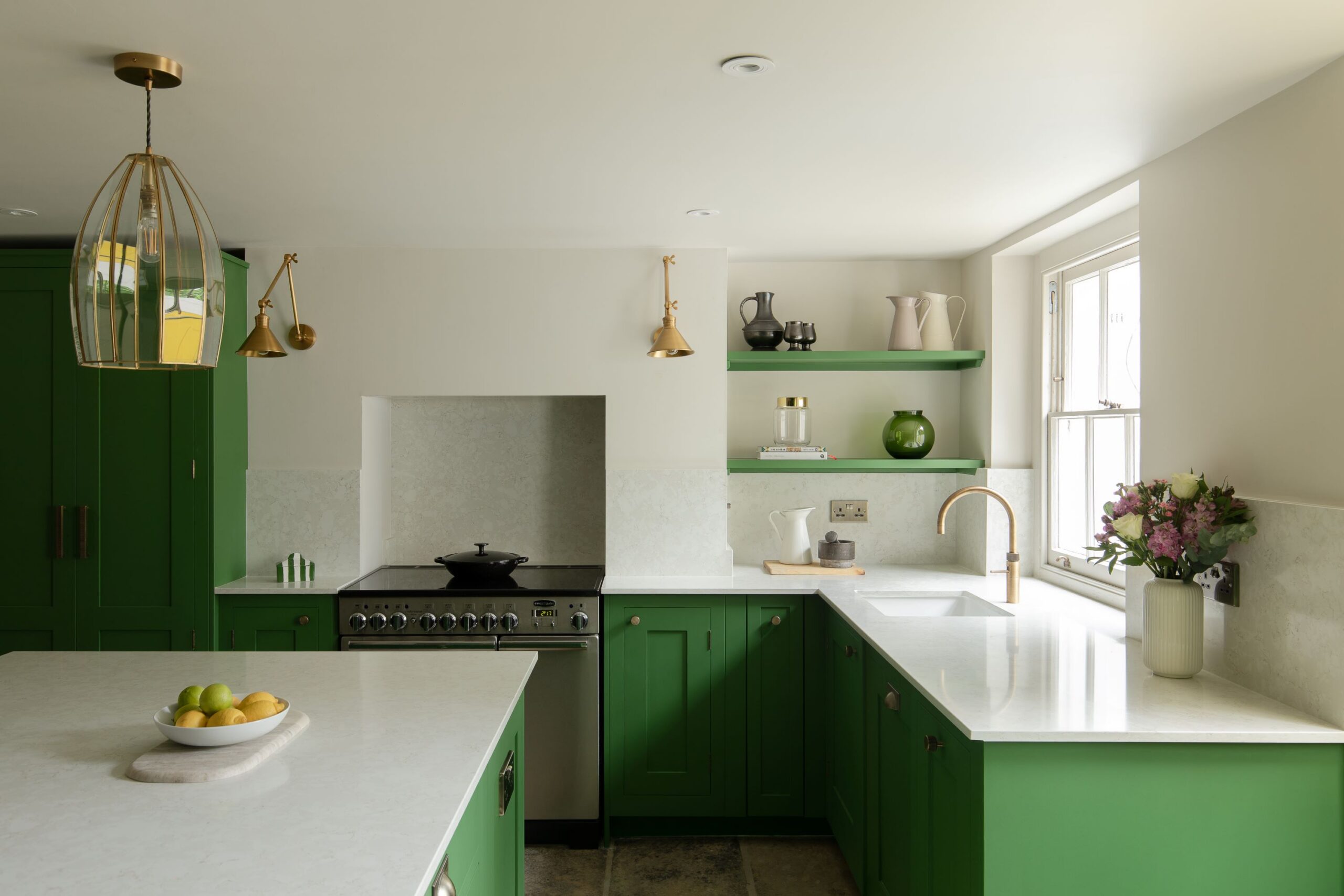
The Three Layers of Kitchen Lighting Explained
A successful kitchen lighting design relies on blending three main types of light. Each layer serves a specific purpose and works together to make the space highly functional, safe and visually appealing.
You can also divide your kitchen into different areas to decide what lighting is needed for each zone. Following these three rules ensures every work area is properly lit and every social space has the right atmosphere.
Ambient Lighting: The Foundation
Ambient lighting provides the base layer of overall illumination across your entire kitchen. It allows you to navigate the room safely and sets the general brightness level. Ambient lighting fills the space with general warmth and ensures even coverage without harsh shadows.
- Recessed Downlights: Lie flush against your kitchen ceiling to provide practical light for the whole room. These are ideal for all kitchen styles, traditional or modern, because they blend seamlessly into the space.
- Flush Mount and Semi-Flush Fixtures: For spaces without room for recessed ceiling lights, a sleek flush mount can effectively diffuse light across the room. These sit close to the ceiling and are particularly useful in kitchens with lower ceiling heights where pendant lights might feel cramped.
- LED Panels: Modern LED panels offer clean, even illumination across large areas. They’re especially effective in contemporary kitchens and can be dimmed to adjust brightness throughout the day.
Task Lighting: Safety and Function
Task lighting is the most critical layer in a kitchen. This is bright, focused light placed directly over work areas like countertops, sinks, and hobs. We always prioritise task lighting in the design process, because beautiful kitchens must also be functional for everyday life.
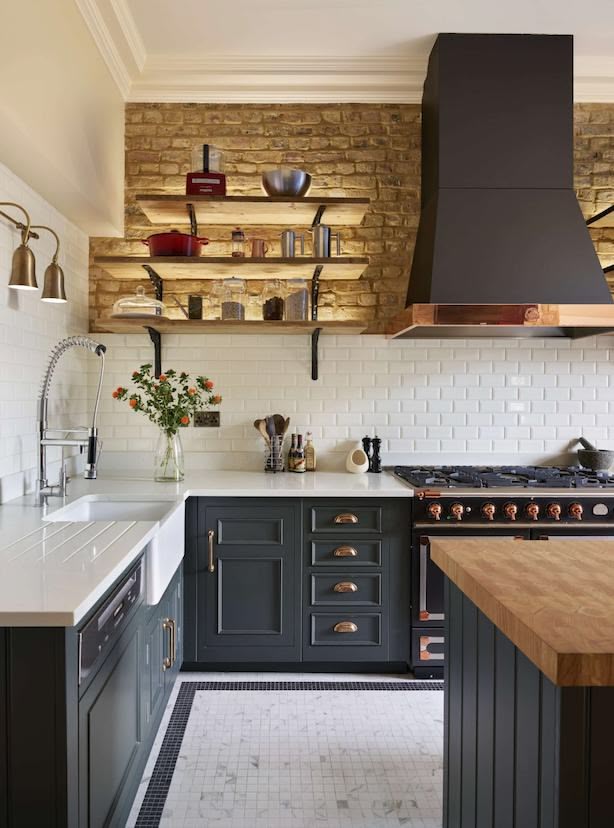
- Under-Cabinet Lighting: Under-cabinet LED strips are one of the most effective task lighting solutions. Mount them underneath upper wall cabinets to eliminate shadows on countertops when you’re cooking. LED strips are contemporary, easy to clean, and long-lasting.
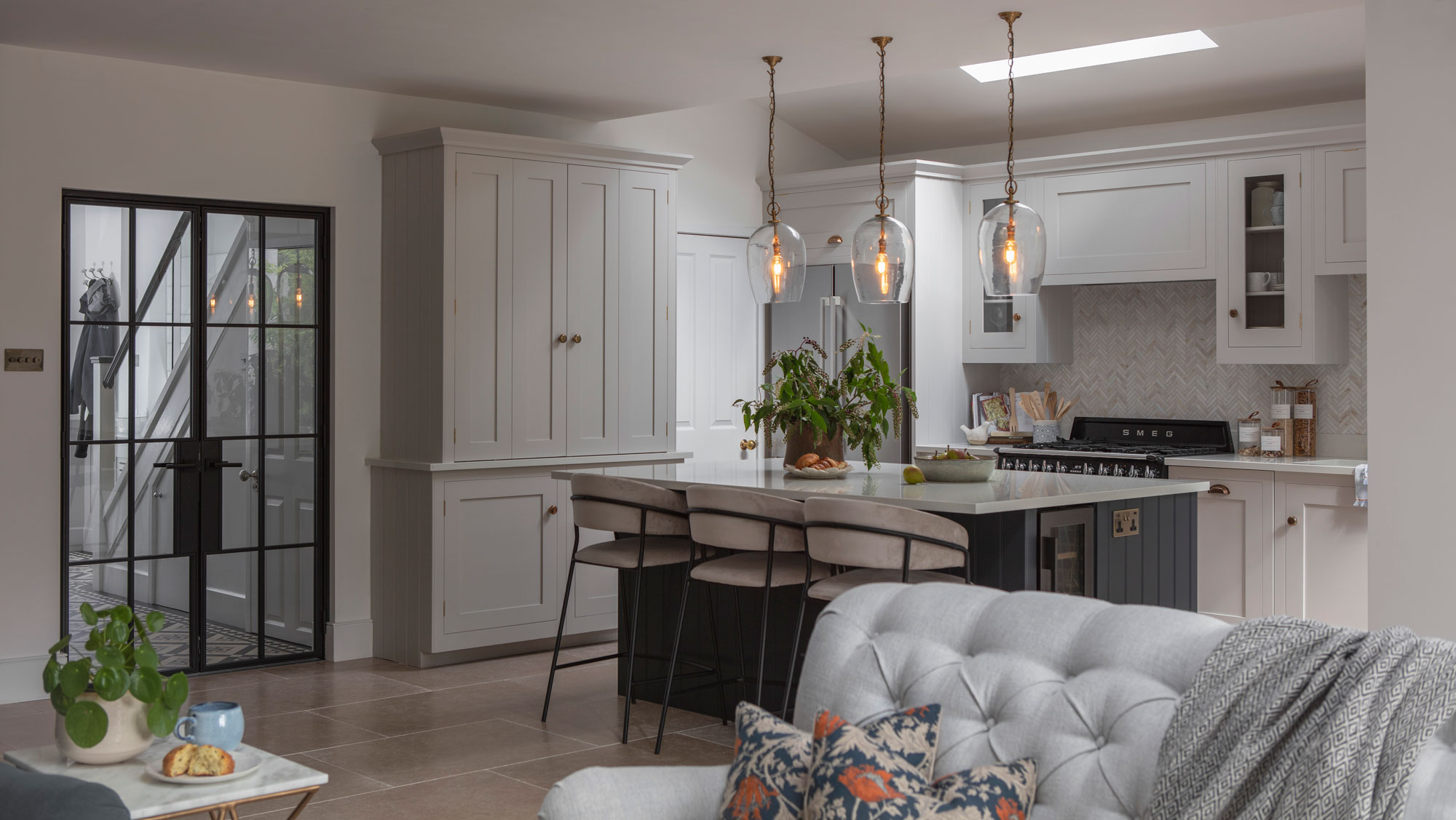
- Island and Sink Pendants: Hang 2 to 3 pendants over an island, or a single statement light above the sink. Pendants work brilliantly above kitchen islands and dining tables as they offer focused lighting and serve as a design feature.
- Spotlights Over Hobs and Prep Zones: Kitchen spotlights are mounted onto your ceiling with the beam focused on a work zone. Install a directional light directly above the kitchen sink, or an extractor hood with built-in task lights above your hob for both safety and visibility during cooking.
Accent Lighting: Atmosphere and Design
Accent lighting adds depth, dimension and visual interest to a kitchen by highlighting architectural features, decorative items or specific design elements.
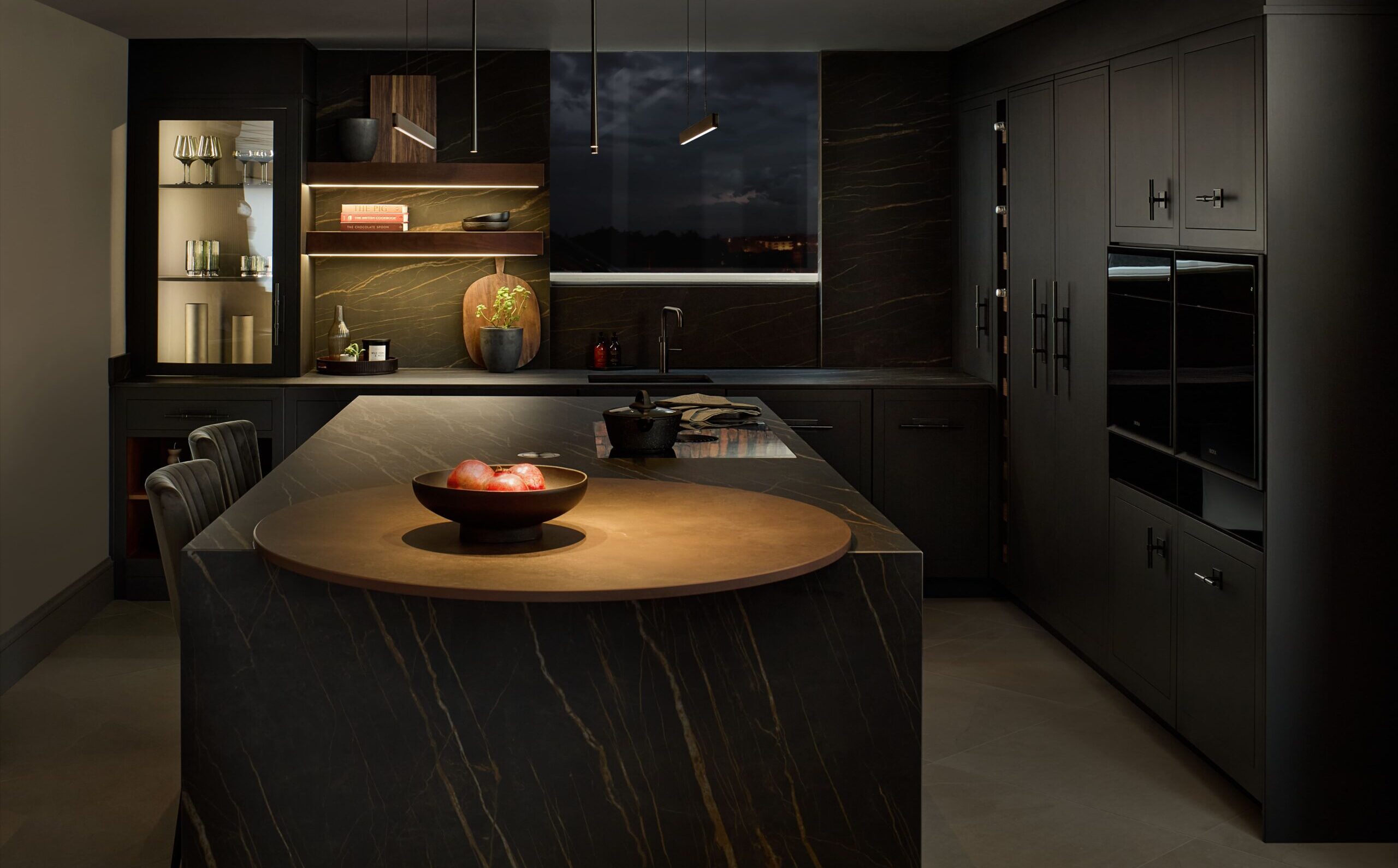
- In-Cabinet and Glass-Door Lighting: Light up glass-door cabinets showcase dishware or highlight open shelving. It adds a luxury kitchen feel and makes the space feel more refined throughout the evening.
- Toe-Kick and Plinth Lights: Kitchen plinth lights are a detail commonly used to accent specific elements of the room, like the border of an island. Place flexible LED tape along the floor plinths or inside them to create a soft, modern accent glow.
- Over-Cabinet Uplighting: Uplighters or striplights in the gaps between wall cabinets and the ceiling give your room a subtle glow in the evening, adding depth without functional glare. It’s particularly striking in kitchens with high ceilings or architectural detail.
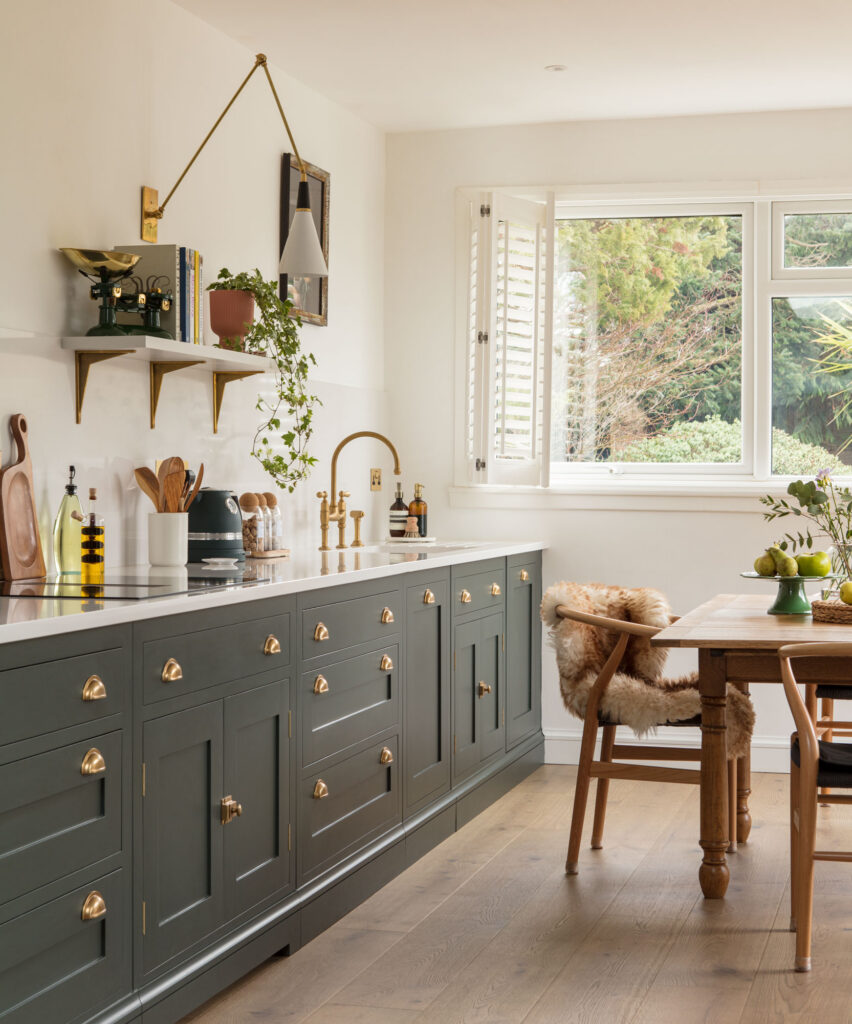
- Wall Lights and Feature Pendants: Wall lights beside mirrors or in dining zones add a touch of elegance and help differentiate relaxing areas from work zones. These are often the finishing touch that makes a kitchen feel complete.
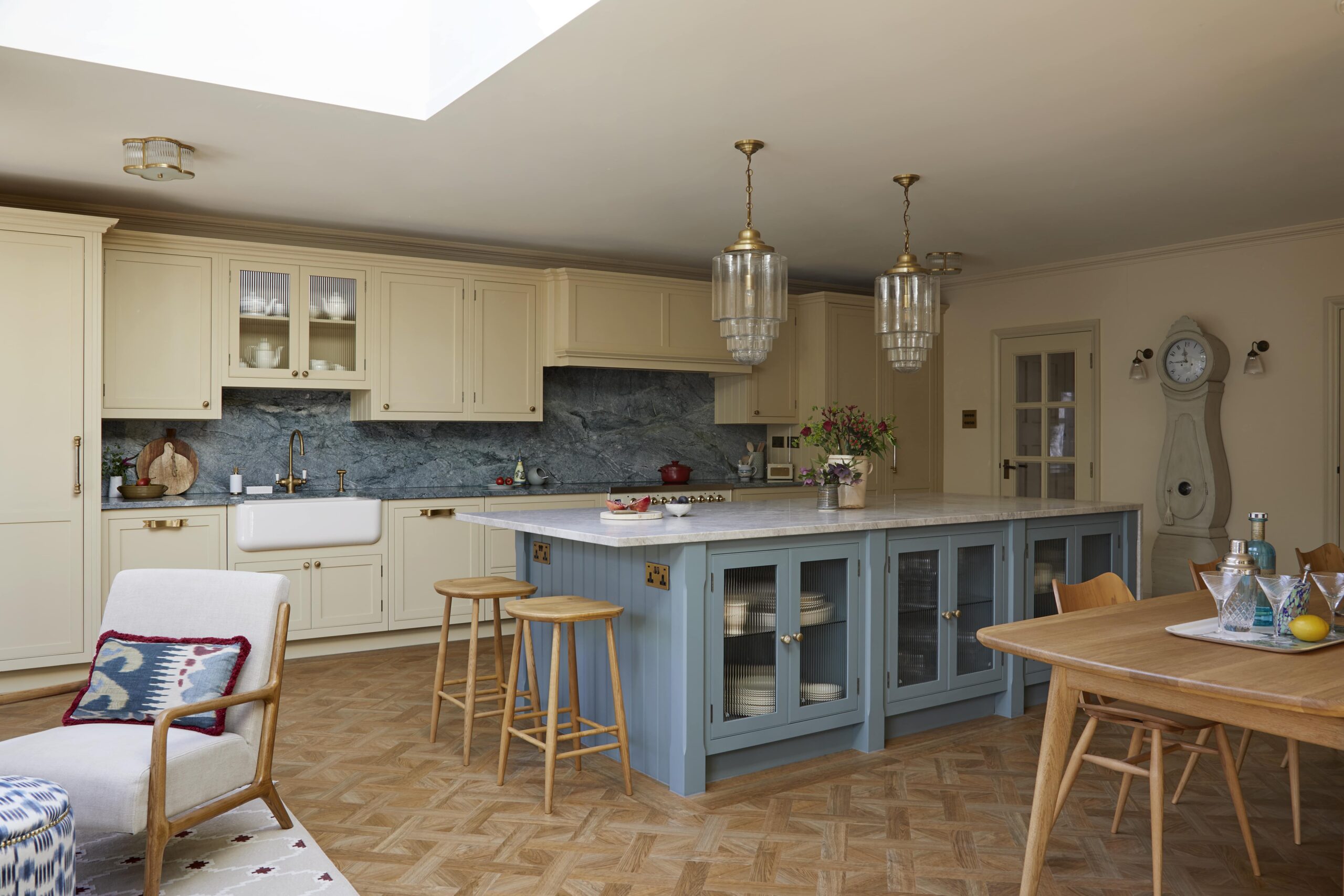
Kitchen Lighting Specifications to Consider
Colour Temperature Matters Most
The colour of your light has the biggest impact on how your kitchen feels.
- 2700K-3000K creates a warm, cosy atmosphere suited to dining areas and traditional kitchens.
- 3500K offers a balanced, natural look that works well in most kitchens.
- 4000K provides a brighter, crisper light that suits food preparation areas and contemporary spaces.
For most kitchens, a combination of warmer lighting in social areas and cooler lighting in task zones creates the best balance.
Choose Dimmable Lighting
Dimmers allow your kitchen to adapt throughout the day.
Bright lighting is useful when preparing meals, while softer lighting creates a more relaxed atmosphere for dining and entertaining. Wherever possible, choose dimmable fittings and control different lighting layers separately.
Get Pendant Placement Right
Pendant lights should feel balanced visually while providing useful illumination.
Our bespoke kitchen designers follow this general rule:
- Hang island pendants 75-90cm above the worktop
- Leave enough space between fittings to avoid overcrowding
- Ensure pendants don’t interrupt sightlines across the room
Your designer can help fine-tune placement based on ceiling height and island size.
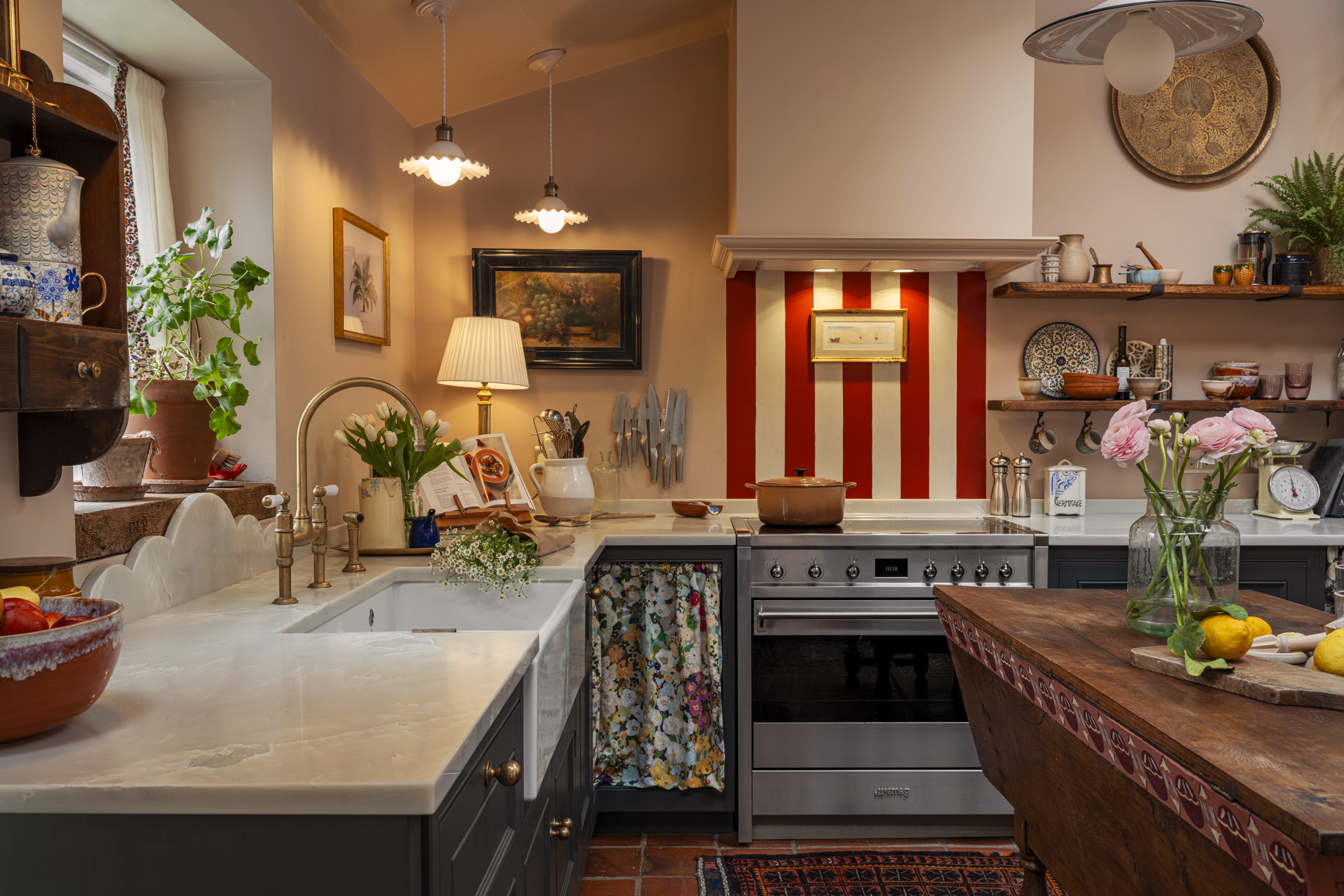
How to Create Kitchen Mood Lighting
Mood lighting transforms your kitchen from a purely functional workspace into a welcoming, social space.
While task and ambient lighting handle the practical side, mood lighting is what makes your kitchen feel like the heart of the home during evenings and entertaining.
The key is layering softer, dimmable lights that you can adjust to suit the occasion. At Harvey Jones, we often recommend combining several elements to create a rich, atmospheric feel without glare or harsh shadows.
Josh explains how he tailors this to how you live:
“Lighting should reflect how you use the space. Pendant lights work particularly well in open-plan kitchens and create a focal point for entertaining, while practical areas such as an island need dedicated task lighting. We also often incorporate under-cabinet lighting to provide both functionality and atmosphere.”
- Use warm colour temperatures in social zones: Install warm white lights in dining areas, above islands where people gather, and in any zone where you want to encourage relaxation.
- Add accent lighting in unexpected places: In-cabinet lighting, plinth lights, and uplighting between wall cabinets and ceiling create depth and visual interest. These elements are barely noticeable during daytime but transform the kitchen atmosphere in the evening.
- Install dimmer switches on all social lighting: This is non-negotiable for mood. Being able to lower ceiling lights from 100% to 30% when entertaining creates instant intimacy. Pair this with separately switched under-cabinet or accent lighting so you can create different scenes: bright cooking mode, entertaining mode, and late-night wind-down mode.
Kitchen Lighting Ideas for Small Kitchens
Small kitchens present a unique lighting challenge. You need bright, functional task lighting to work safely in a compact space, but you also need to avoid making the kitchen feel cramped or cave-like under harsh overhead light.
At Harvey Jones, we approach small kitchen lighting differently from larger spaces. The goal is to create the illusion of more space while ensuring every inch is well-lit for practical use.
- Prioritise recessed downlights and flush mounts
- Use under-cabinet lighting as your hero task light
- Use cooler colour temperatures in practical areas
- Layer the lighting with simple and hidden fixtures
- Maximise natural light
- Consider smart LED bulbs
Complementing Your Kitchen Style
The key to choosing the best kitchen lighting ideas is making sure your it’s appropriate for your aesthetic.
Shaker style kitchens are easily enhanced with simple layered lighting techniques.
If you prefer a more traditional look, our Original collection works beautifully with statement pendants, warm finishes like copper and brass, or soft uplighting.
Minimalist designs, such as our Linear and Linear edge collections, are enhanced with simple recessed fixtures and strip lighting that seamlessly blends in.
Don’t Forget About Natural Light
Assess how much natural light you have in your kitchen before adding any fixtures. If there isn’t much, there are plenty of ways to instantly brighten up your kitchen, such as introducing skylights or French doors and windows.
Monitor the natural light throughout the day and through the seasons, as it may change considerably from morning to night or summer to winter, particularly if you have an east or west-facing kitchen.
Once you know how much natural light you’re working with, it’ll be easier to spot where you need artificial solutions.
Discover Beautiful Kitchen Lighting Ideas
Lighting is one of the most powerful design tools in your kitchen. It creates atmosphere, improves functionality and enhances the craftsmanship of your cabinetry.
By layering ambient, task, and accent lighting thoughtfully, you create a space that’s beautiful and relaxing but still highly efficient for cooking and entertaining.
Ready to plan your lighting scheme? Request an appointment with your local kitchen designer to begin your journey.
FAQs about Kitchen Lighting
How do I choose the right kitchen lighting?
Layer three types of light: ambient (overall illumination), task (focused work areas), and accent (atmosphere). Plan each zone separately, control them independently, and use dimmers for flexibility.
What is the three-layer lighting system?
Ambient lighting provides overall room illumination. Task lighting offers bright, focused light for food prep and cooking. Accent lighting adds atmosphere and highlights design features. Together, they create a functional and beautiful kitchen.
What is the rule for kitchen lighting?
Aim for 70 to 80 lumens per square foot in work areas and 30 to 40 in dining zones. Use one fixture per square metre as a starting point, adjusting for ceiling height and wall colour. Control each layer separately.
What colour temperature is best for kitchens?
Cool white to neutral white (3000K to 4000K) works best for task areas, keeping food colours vibrant and prep zones clear. Use 2700K to 3000K in dining areas for warmth. Dimmable lights let you adjust throughout the day.
What is the best lighting style for a kitchen?
The best style complements your cabinetry and aesthetic. Minimalist designs suit recessed fixtures and strips. Traditional kitchens suit statement pendants and warm finishes. Modern kitchens benefit from sleek LED downlights and linear fixtures. Ensure fixtures match your overall design vision.
What’s the correct height for pendant lights over an island?
Hang pendants 75 to 90 cm (30 to 36 inches) above the countertop. This avoids blocking sightlines while providing focused task light.
How do I light a small kitchen with low ceilings?
Choose slim, unobtrusive fixtures like flush mounts and recessed downlights. Avoid large, eye-catching pendants that can make the space feel cramped. Use recessed lights spaced 1.5 to 2 metres apart for even coverage. Under-cabinet lighting brightens work zones without drawing attention upward.
What are the best lighting options for small kitchens in the UK?
Recessed downlights, slim flush mounts, and under-cabinet LED strips are ideal for small spaces. Avoid large pendants. Use bright, cool-white light (4000K) to make the space feel larger. Include plinth lighting for subtle ambiance without taking up visual space.
Do you have a guide to kitchen task lighting placement?
Place under-cabinet strips toward the front of cabinet undersides to light countertops, not back walls. Mount spotlights directly above sinks and hobs. Hang island pendants 75 to 90 cm above the countertop. Ensure task lights are on separate switches from ambient lighting.
What are the best types of kitchen lighting for cooking and dining areas?
Cooking areas need bright task lighting like under-cabinet strips and spotlights over hobs (4000K, 70+ lumens per sq ft). Dining areas benefit from dimmable pendants or flush mounts in warm white (2700K to 3000K) at 70 to 85 cm above the table. Separate switches allow you to adjust each zone independently.
What is the current trend for kitchen lighting?
Current trends favour layered lighting systems, dimmable LED fixtures, and smart controls. Minimalist recessed downlights remain popular in modern kitchens, while statement pendants in brushed brass, matte black, or sculptural styles are trending for islands and dining areas. Accent lighting like in-cabinet and plinth LEDs are increasingly common for luxury, atmospheric kitchens.
Do I need dimmers in a kitchen?
Yes. Dimmers allow you to shift from bright prep work to intimate dinner hosting. They extend bulb life, reduce energy use, and give you complete control over kitchen mood and brightness. Wire dimmers on ambient and accent layers especially.
Discover real, bespoke kitchen & home inspiration.