An organised kitchen isn’t just visually pleasing – it can save you time, reduce daily stress, and make meal preparation more enjoyable.
Knowing how to organise kitchen cupboards effectively comes down to one core principle: store things where you use them, and keep what you reach for most within easy reach.
At Harvey Jones, we understand that well-thought-out storage solutions are the foundation of a functional kitchen. Whether you’re reorganising existing cupboards or planning a new bespoke kitchen, these ten steps will help you create a space that works as beautifully as it looks.
Discover real, bespoke kitchen & home inspiration.
How to Organise Kitchen Cupboards: The 10 Core Steps
1. Declutter First
Before you reorganise anything, clear out what doesn’t belong. Go through every cupboard and remove expired food, cracked or duplicated dishware and specialist gadgets you haven’t used in over a year.
Work methodically, one cupboard at a time. This makes the process manageable and ensures nothing gets moved from one chaotic space to another.
2. Create Kitchen Zones
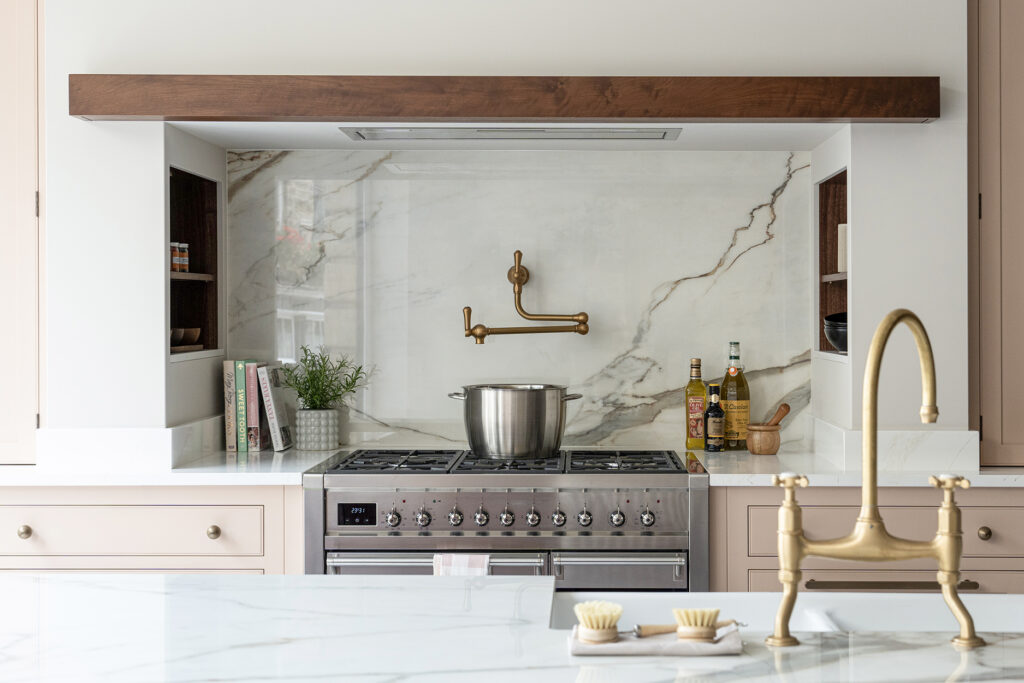
Zoning is one of the most effective ways to organise a kitchen. The principle is simple: store items close to where you use them. Keep spices and oils next to the hob, prep knives and cutting boards near your main countertop and plates and bowls near the dishwasher.
Assigning cupboards based on kitchen tasks reduces unnecessary movement and keeps your workflow logical. When everything has a zone, restocking is faster and finding things becomes instinctive.
In bespoke kitchens, zoning is built into the design from day one.
3. Group by Purpose
Storing items based on their function can streamline your kitchen use. For example, you may keep baking supplies like flour, sugar and measuring tools together in one cupboard. You might then dedicate another section to cooking essentials such as oils, spices and utensils.
By grouping items logically, you’ll always know exactly where to find what you need, and it makes restocking easier too.
Bespoke storage features like spice racks, cutlery dividers and wine storage help to separate items and maintain a streamlined aesthetic.
4. Categorise by Type
In the same way that you can group items by purpose, you can also organise your kitchen cupboards by categorising by type. This means keeping physically similar items together – pans in one section, Tupperware in another, and so on. This avoids the frustration of rummaging through a mix of unrelated items.
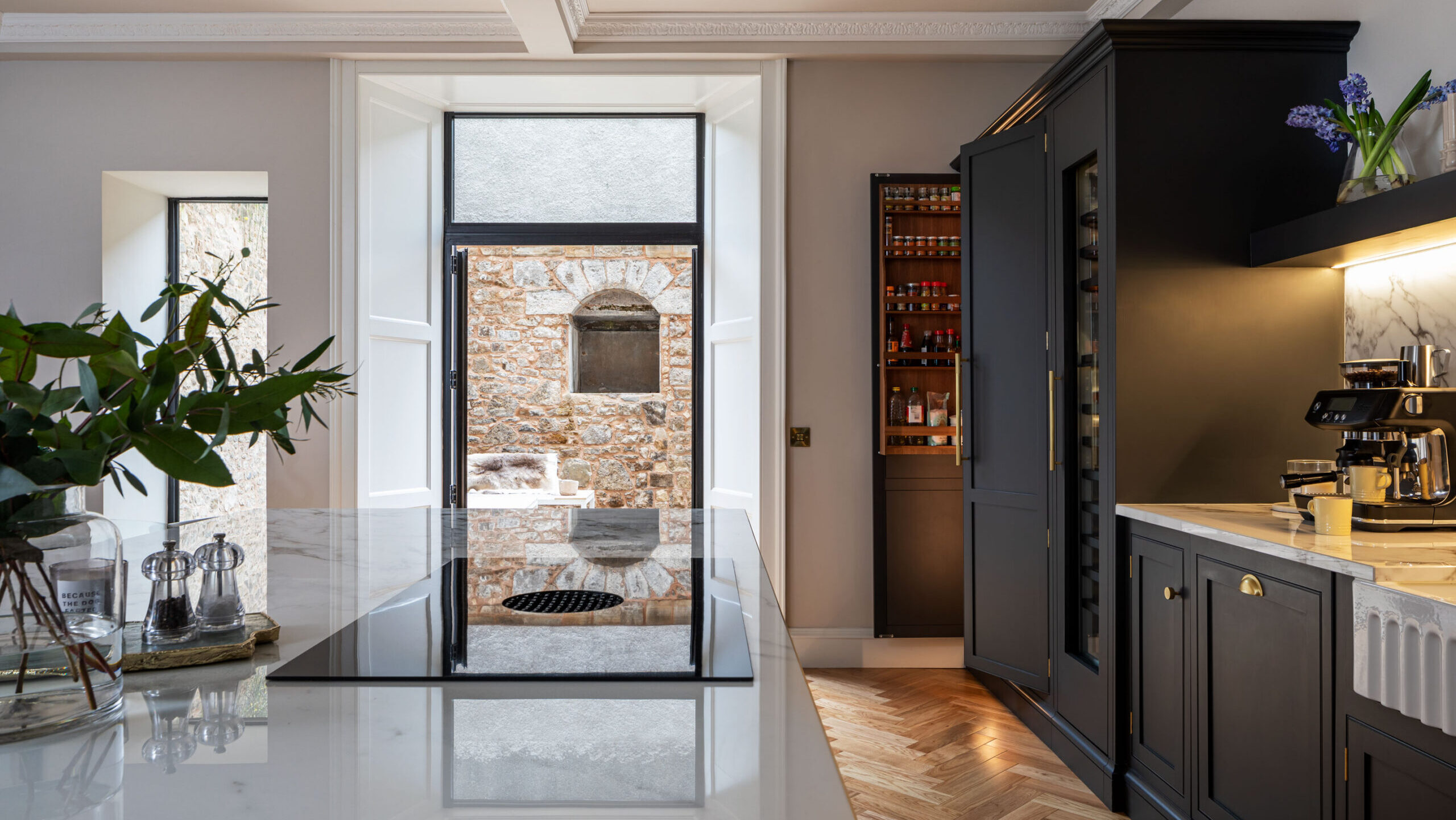
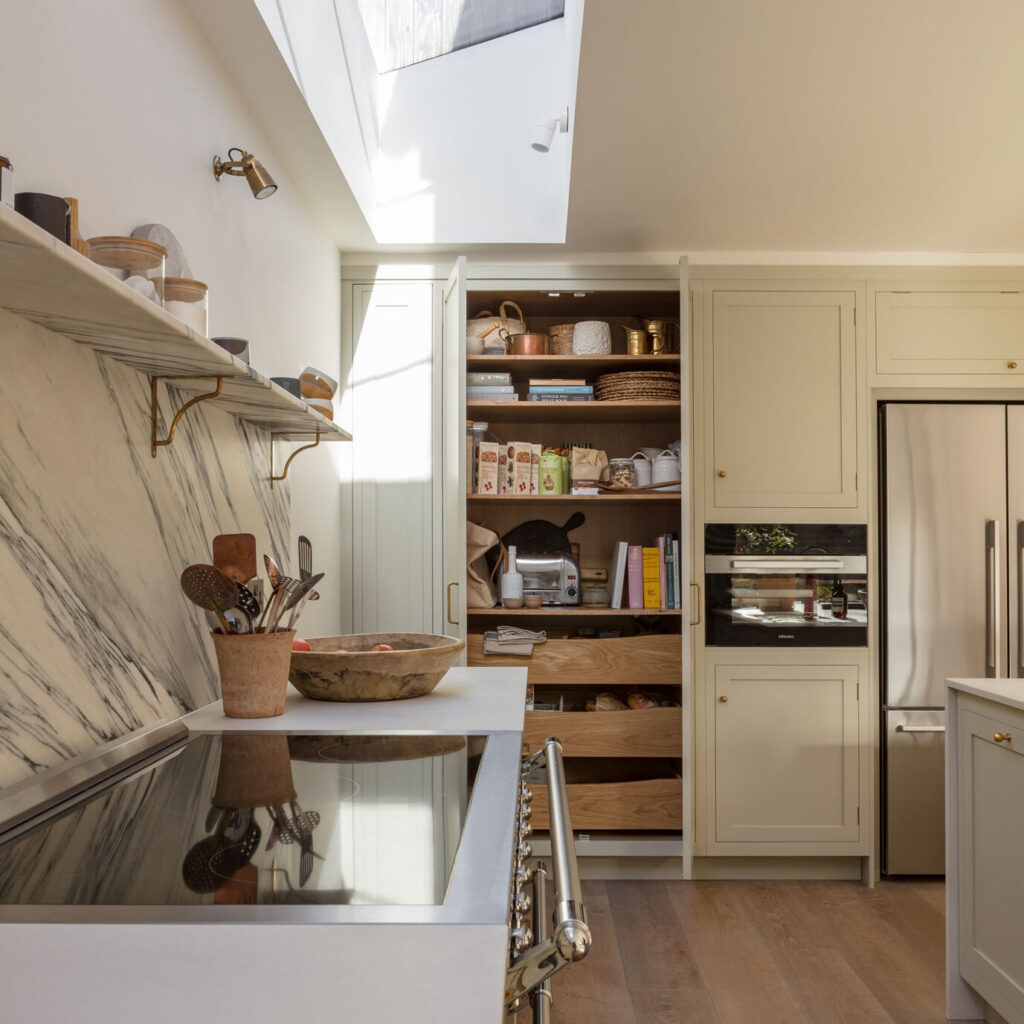
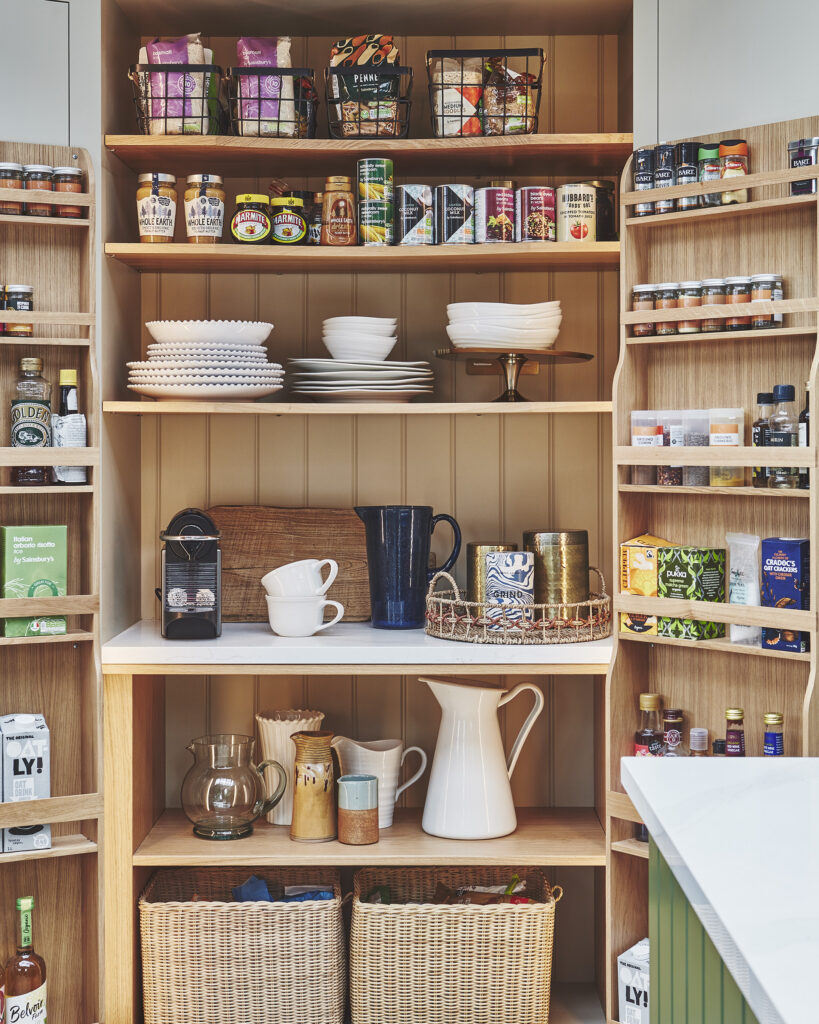
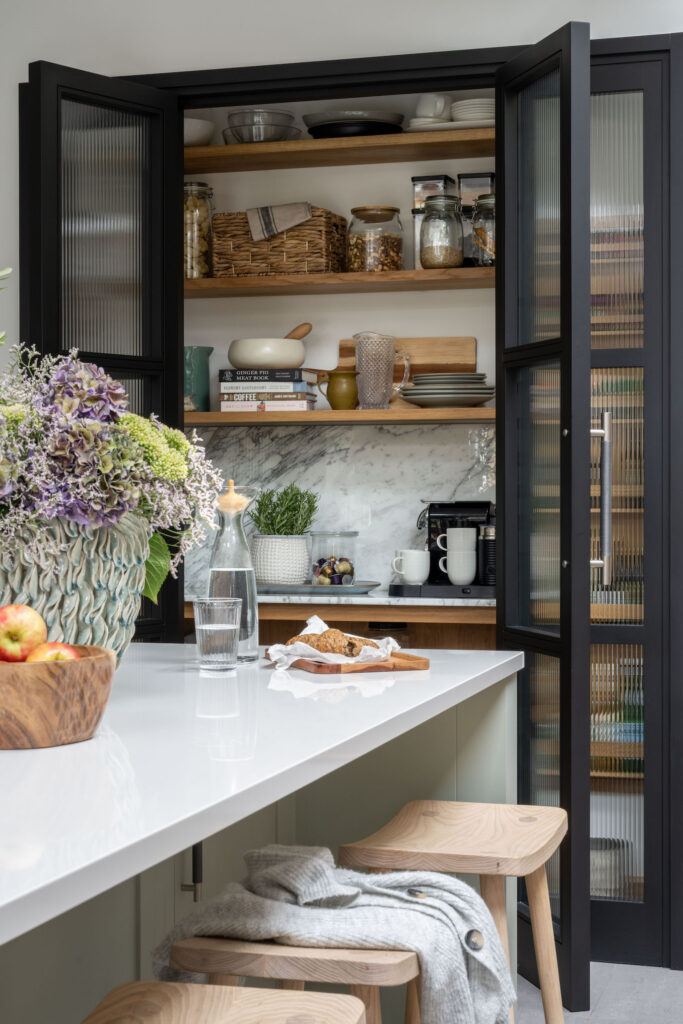
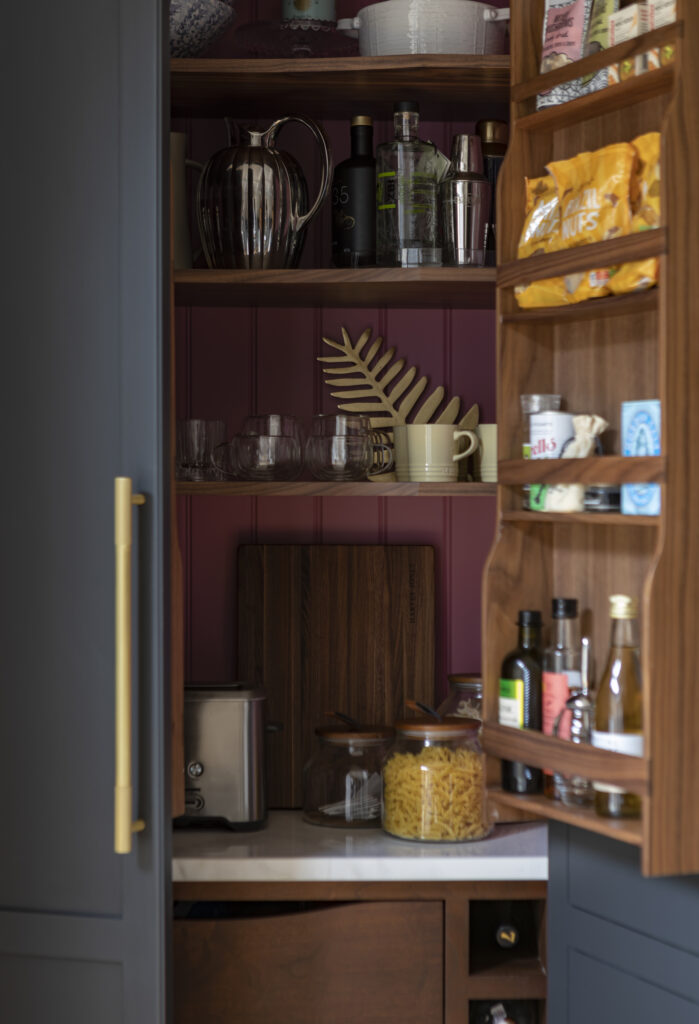
Choose dedicated storage solutions tailored towards keeping specific items. Our clients often opt for a bespoke kitchen larder solution for this purpose, with shelving specifically designed to hold different types of items.
5. Keep Frequently Used Items Within Easy Reach
Reserve the most accessible shelves for everyday essentials such as plates, bowls, and mugs. Store less-used items, like specialised equipment and festive dishes on higher or lower shelves, or in a pantry.
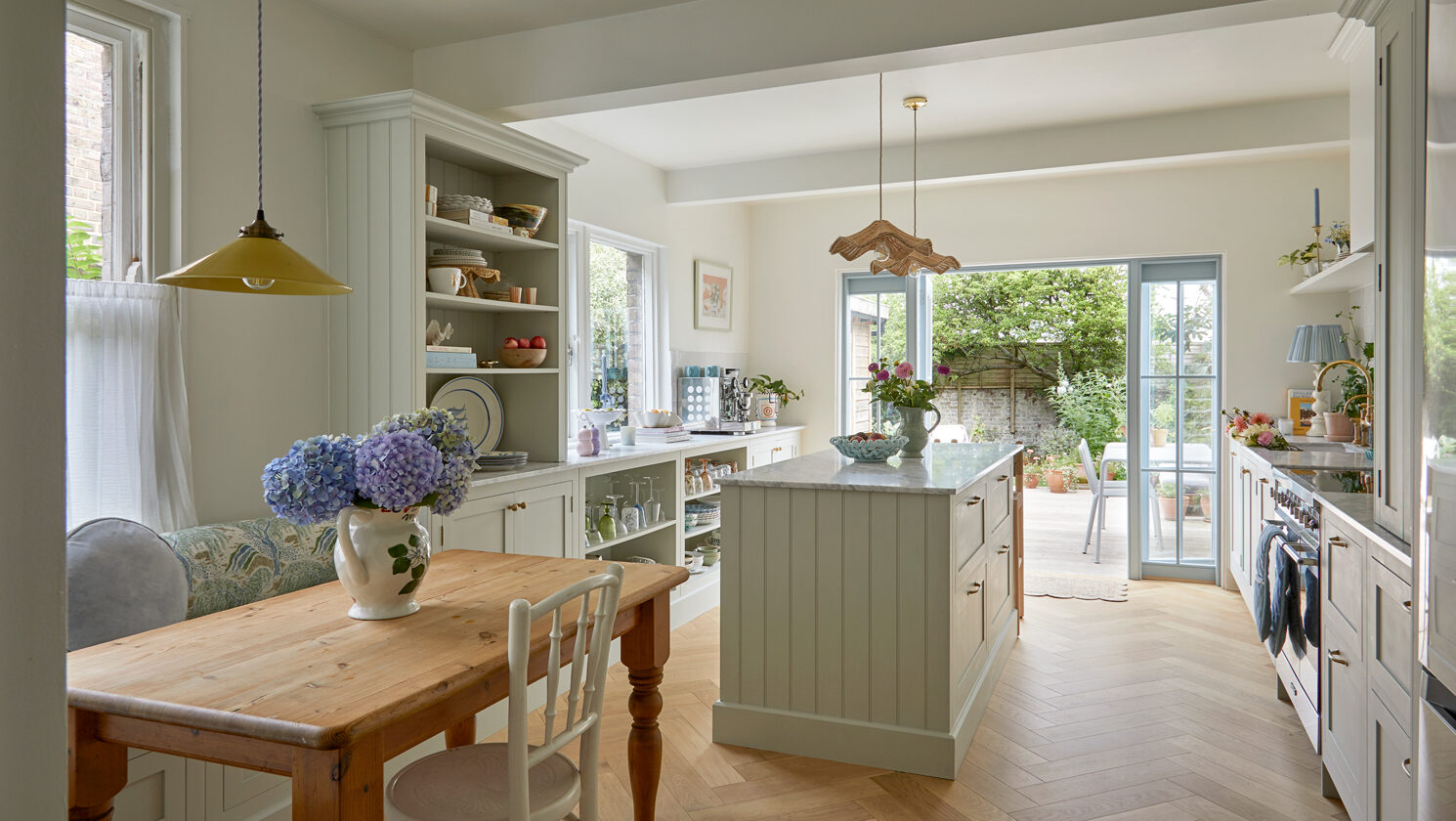
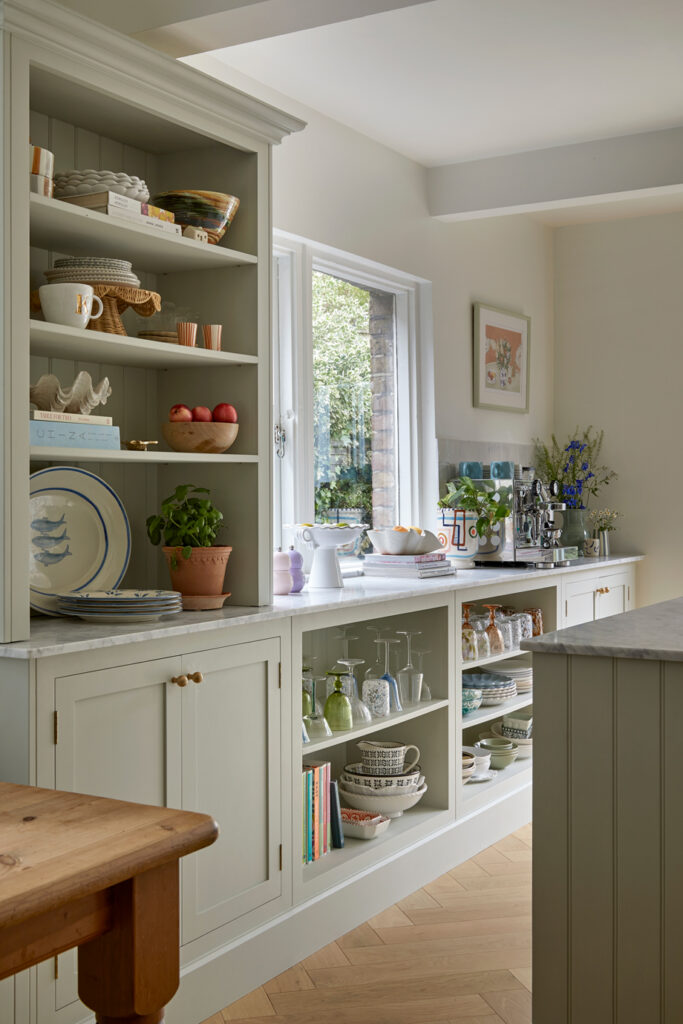
One of the best storage options for frequently used items is open shelving. It’s a simple yet effective way to keep items within easy reach, and display ceramics, cook books and artwork.
6. Utilise Cupboard Doors
Cupboard doors are often seen solely as a practical mechanism to hide interior cabinet space. However, they themselves can be used for storage.
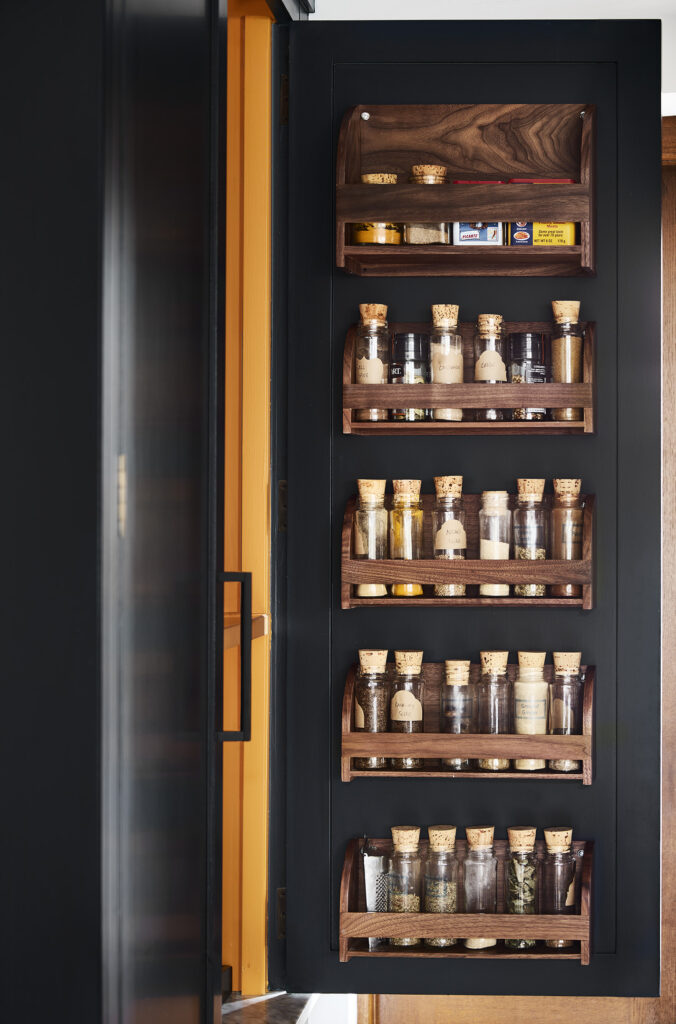
Adding hooks or rails to the inside of doors allows hanging storage for items like aprons, measuring cups, pot lids and even spice racks.
Following this method creates additional storage space without encroaching on the shelves within. For a seamless look, handmade kitchens can include built-in door organisers to keep everything tidy and hidden.
7. Label Shelves and Containers
There’s a reason this method is still a firm favourite for organisation. Storing dry goods inside clear containers allows for quick identification and implementing a shelf life organisation system. Labels on shelves or pots further streamline your kitchen flow.
These measures are especially useful in households where multiple people use the kitchen. They prevent items from becoming lost if placed incorrectly, maintaining order and structure.
8. Add Lazy Susans for Corner Cabinets
Corner cupboards are notorious for becoming black holes of forgotten items. A Lazy Susan can solve this problem by allowing you to rotate and access items quickly and easily.
It allows you to keep track of expiry dates on less used items easily, and adds storage to an otherwise unused area of your kitchen.
There are many alternative kitchen corner solutions available, from pull out mechanisms to curved cabinets, suited to virtually any lifestyle.
9. Incorporate Drawer Inserts and Deep Drawer Organisation
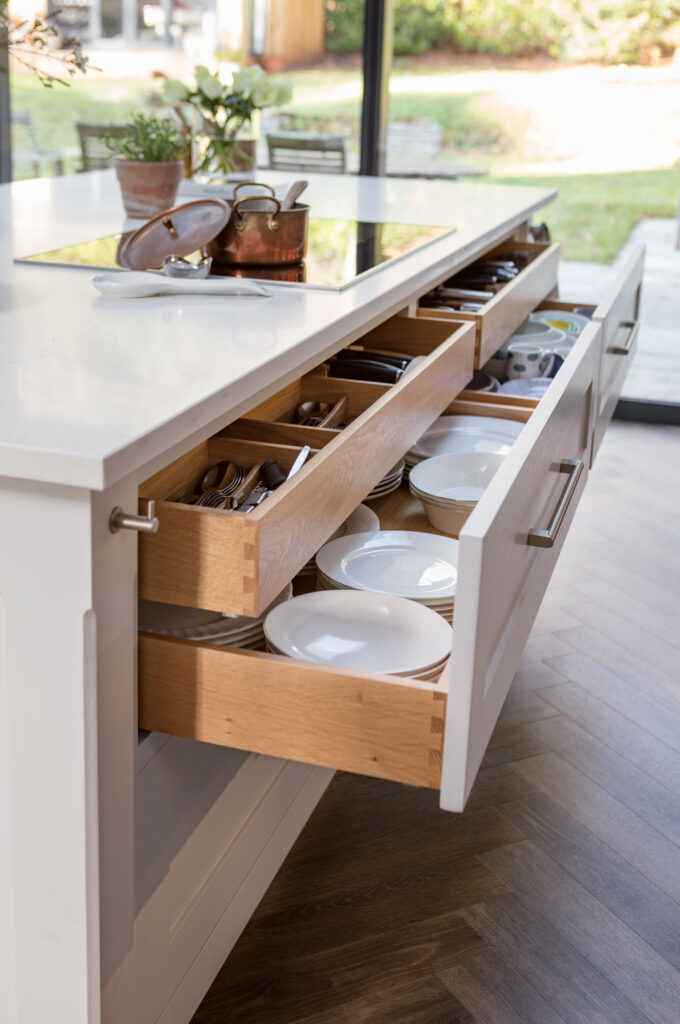
Drawer inserts are an ideal asset to help you organise your kitchen items. They can be integrated into the drawers, with custom dividers to ensure cutlery and utensils stay in perfect order.
Harvey Jones designer, Sarah McNeill, explains how bespoke drawer inserts elevate a kitchen:
“Well thought out drawer internals make an everyday kitchen feel that bit more exclusive; especially utensil/spice storage so everything feels easy and accessible.“
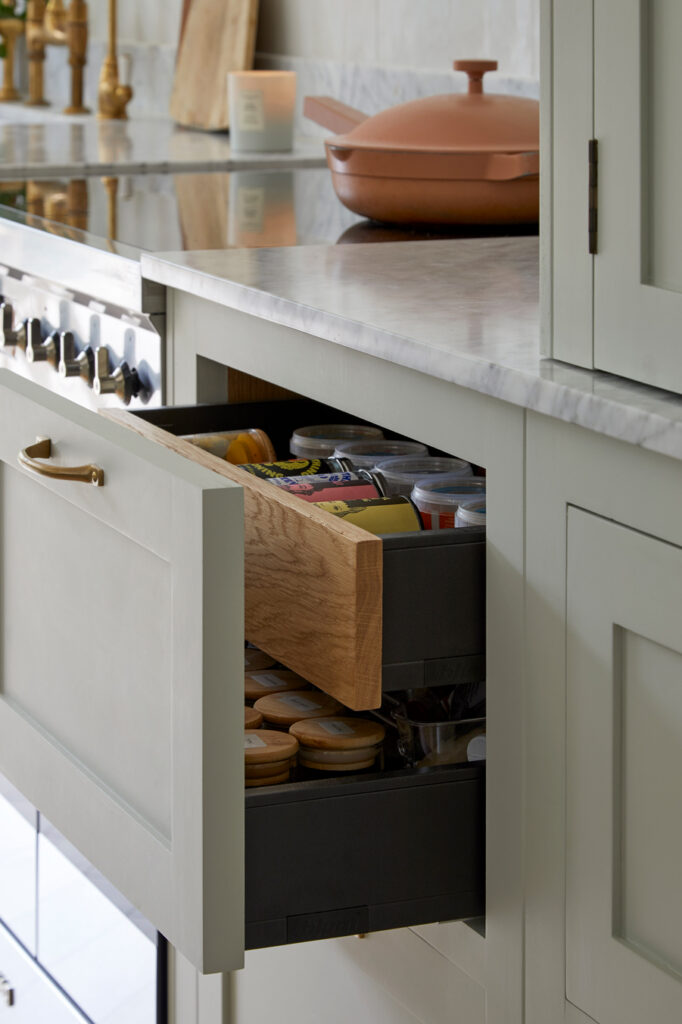
Deep kitchen drawers deserve particular attention. Compartmentalised pull-out drawers are especially effective here – they use the full drawer depth, keep all items visible and allow you to organise exactly how you want.
Should you choose to incorporate drawer inserts into your kitchen, consider a bespoke solution. This means you can choose from a variety of materials, all tailored to your exact storage needs.
10. Make Use of Vertical Space
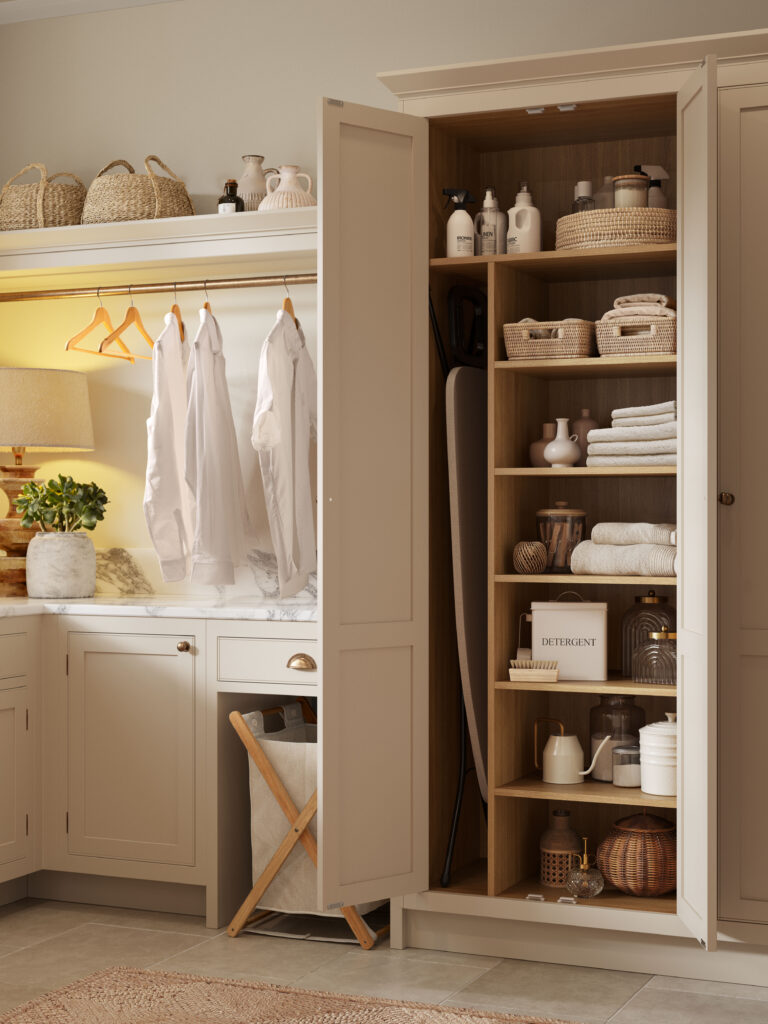
Many kitchen cupboards have unused vertical space that goes to waste, especially taller cabinets. These can be optimised with solutions such as shelf risers, stackable containers or under-shelf baskets.
Vertical storage solutions are perfect for doubling storage in tall cupboards and keeping smaller items organised.
In a fully bespoke kitchen, adjustable shelving systems are designed down to the millimetre to ensure every inch of your cupboard is utilised efficiently.
Built-In Solutions That Make Organisation Effortless
The best way to organise kitchen cupboards long-term is to design organisation directly into the cabinetry. Retrofit solutions help, but bespoke built-ins eliminate the problem at source.
Pull-Out Shelves and Drawers
Deep cabinets can make it difficult to access items at the back. Pull-out shelves or drawers transform these spaces into easily accessible storage zones. These solutions are ideal for storing heavy pots and pans or organising smaller items cleanly.
Alternatively, include run-end storage that works particularly well at the end of islands and upper cupboard runs.
Integrated Bin Cupboards
Although practical, bins aren’t the most aesthetically pleasing kitchen features.
Integrated bin cupboards keep waste and recycling out of sight while freeing up floor space, giving you more room to move seamlessly around the kitchen.
For added convenience, place integrated bin cupboards placed near food preparation areas.

How to Decide Where to Put Things in Kitchen Cabinets
The best approach is to map every item to its point of use. Ask yourself: where do I actually use this?
Spices and oils belong next to the hob. Mugs and glasses belong near the kettle and sink. Prep boards and knives belong at the main countertop. Items used daily go at eye or waist level. Seasonal and occasional pieces go on higher shelves or in deeper storage.
A simple rule: the more often you use something, the more accessible its home should be. Apply this consistently across every cupboard and the rest of the layout falls naturally into place.
Organise for Life with Harvey Jones
A well-organised kitchen starts with thoughtful planning and practical solutions tailored to your lifestyle.
Whether you’re reorganising existing cupboards or looking towards a new kitchen, Harvey Jones can provide expert advice to make the most of your space. Ready to elevate your kitchen storage? Book a free design consultation.
FAQs about Organising Kitchen Cupboards
How do you decide where to put things in kitchen cabinets?
Store items at their point of use. Keep cooking essentials like oils and spices next to the hob, plates and bowls near the dishwasher and prep tools at your main countertop. Everyday items go at eye or waist level. Seasonal and rarely used items go on higher or lower shelves. The principle is simple: the more often you use something, the more accessible its storage should be.
What is the best way to organise kitchen cupboards?
The most effective approach combines zoning, purpose-based grouping and built-in storage solutions. Start by decluttering, then assign cupboards based on kitchen tasks, keep frequently used items at easy-reach height and use drawer inserts, pull-out shelves and door organisers to maximise every available space.
How do I arrange kitchen cupboards for maximum efficiency?
Arrange cupboards so that your workflow is as short as possible. Zone items by where they’re used, place everyday essentials at eye level and use vertical space with risers and stackable containers. In corner cupboards, a Lazy Susan prevents items from getting lost. In deep base cabinets, pull-out shelves bring everything to the front.
What are the 10 steps to organising kitchen cabinets?
The ten core steps are: (1) declutter first, (2) create kitchen zones, (3) group by purpose, (4) categorise by type, (5) keep frequently used items within easy reach, (6) utilise cupboard doors, (7) label shelves and containers, (8) add Lazy Susans for corner cabinets, (9) incorporate drawer inserts and deep drawer organisation and (10) make use of vertical space.
How do you organise deep kitchen drawers?
Use compartmentalised dividers to section the full depth of the drawer. Vertical dividers work well for pan lids and baking trays. Transparent stackable inserts are ideal for smaller items like spice packets and herbs. The goal is for every item to be visible and accessible without digging – deep drawers organised well are some of the most functional storage in a kitchen.
How do I layout my kitchen cupboards?
Start by mapping your kitchen into zones based on task: cooking zone near the hob, prep zone at the main countertop, cleaning zone near the sink and dishwasher. Assign cupboards within each zone to the relevant items. Then layer in frequency of use – daily items at easy reach, occasional items higher or lower. Finally, use built-in solutions like pull-out shelves and drawer inserts to maximise the space within each cupboard.
Should I organise kitchen cupboards by purpose or by type?
Both approaches work and they complement each other. Grouping by purpose – keeping all baking supplies together, for example – helps when you’re following a recipe. Grouping by type – all pans together, all Tupperware together – makes it easier to locate specific items quickly. In practice, most well-organised kitchens use a combination of both.
Which companies offer custom kitchen cupboard storage solutions?
Harvey Jones designs and handcrafts bespoke kitchens with storage built around your specific layout and lifestyle, including drawer inserts, pull-out shelves, integrated bin cupboards, pantry larders and run-end storage systems. Other options include larger kitchen retailers who offer modular storage add-ons, though these tend to work within fixed cabinet sizes rather than being truly bespoke.
Discover real, bespoke kitchen & home inspiration.