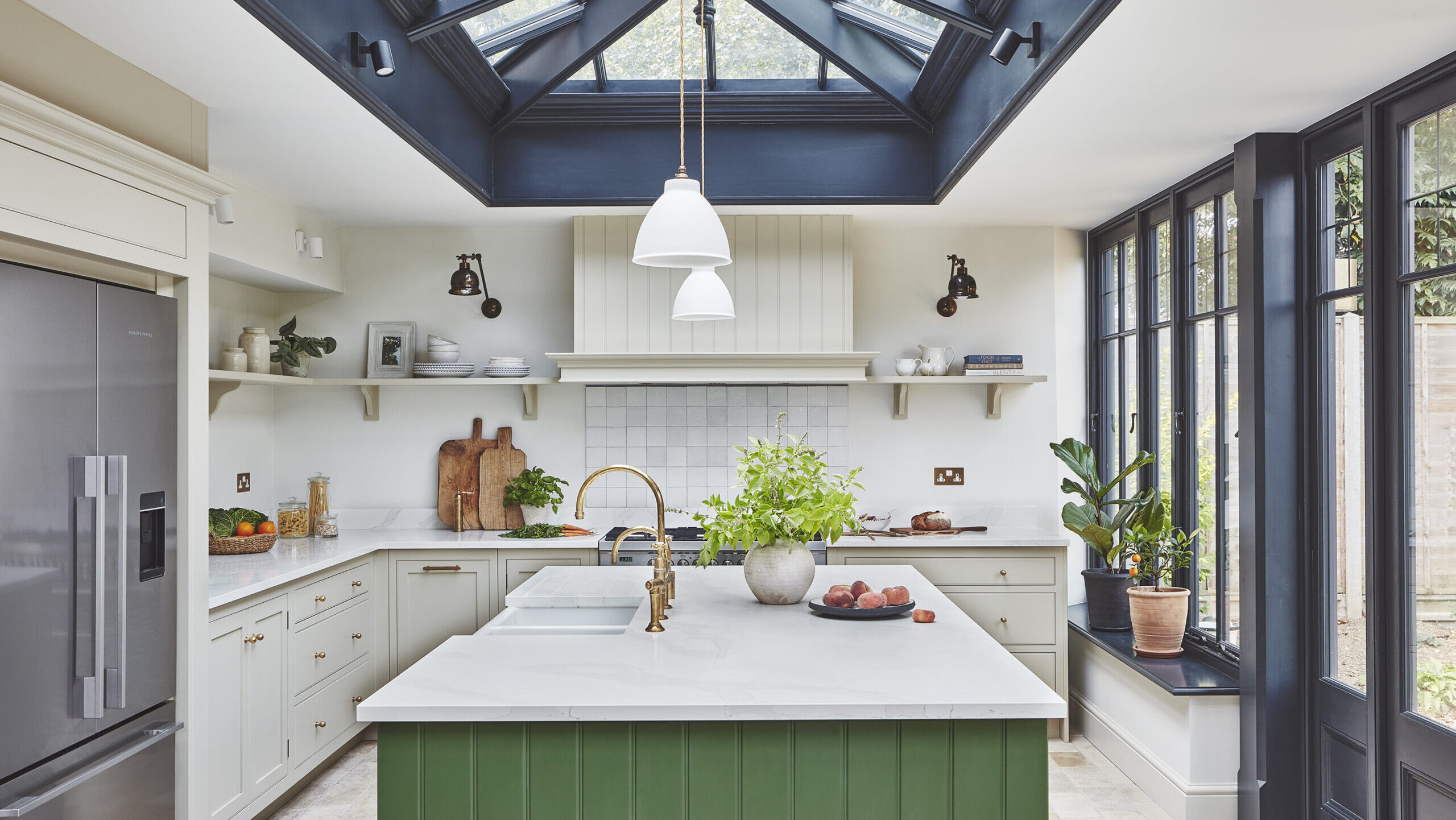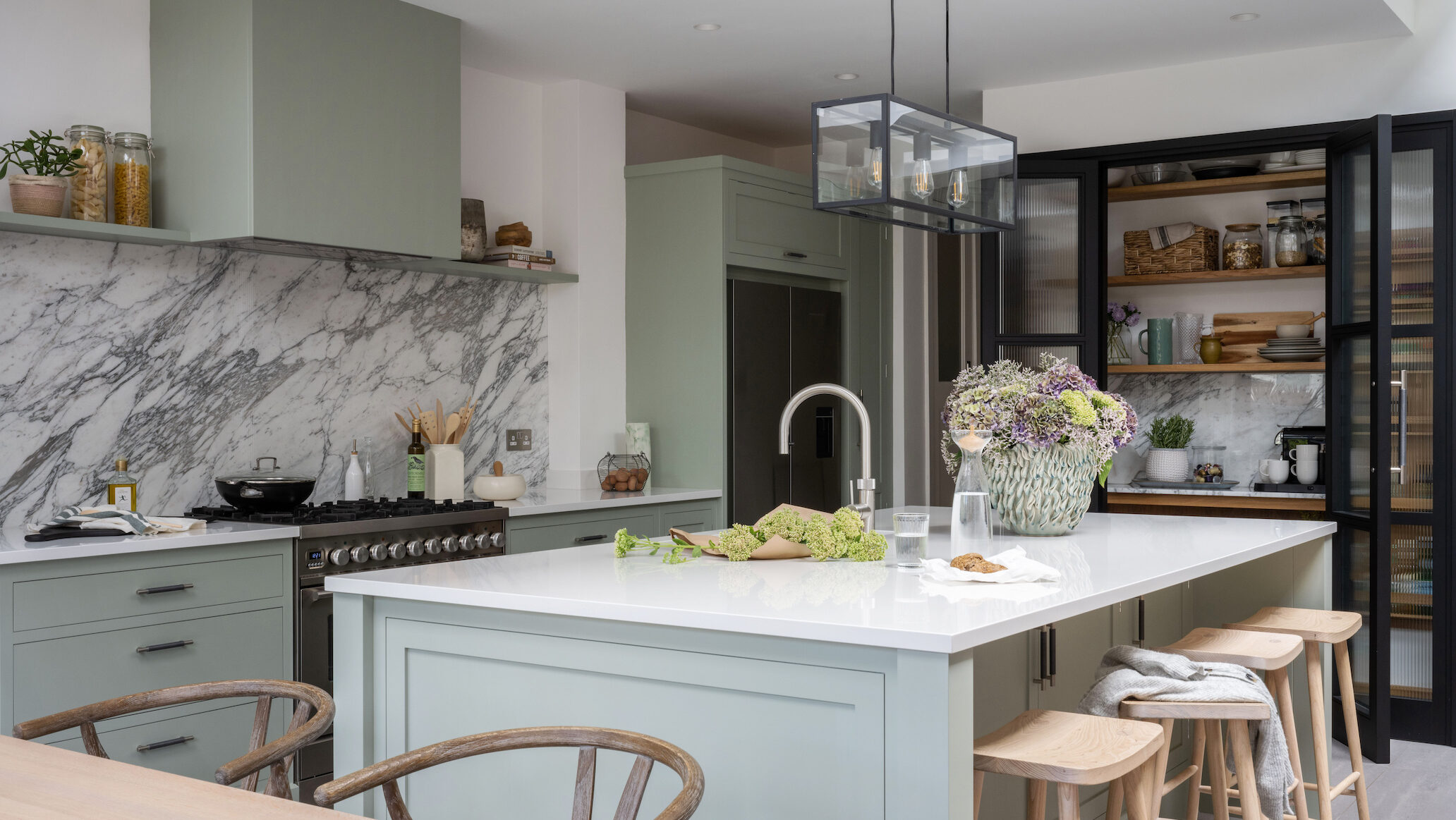
Sage green has earned its place as one of the most considered choices in bespoke kitchen design. It sits between a neutral and a colour – calm without being cold, characterful without demanding attention.
It works across kitchen styles too. A sage green Shaker kitchen reads as quietly traditional. Paired with sleek hardware and stone, the same tone feels entirely modern.
This guide covers everything you need to design a sage green kitchen well – from choosing the right shade and cabinets to worktops, tiles, wall colours and accessories.
Discover real, bespoke kitchen & home inspiration.
Is Sage Green a Good Colour for a Kitchen?
According to Houzz trends study, green is one of the most popular kitchen colours, taking second spot after blue, with 17% of renovations opting for green kitchens.
Part of the appeal is how forgiving it is. Sage softens a space without dulling it. Where a stark white kitchen can feel cold and a deep forest green can feel bold, sage settles comfortably in between.
It’s also practical. Sage reads well in both natural and artificial light, and it ages gracefully – it’s unlikely to feel dated in the way a more fashion-forward colour might.
Getting the Shade Right First
“Sage” is used loosely, and the differences between shades matter more than people expect. In broad terms, sage sits between green and grey – muted, softened, with a slightly dusty quality. But within that, there’s real variation.
- Classic sage is soft and greyed, calm and understated. It’s the easiest to pair and the most widely used.
- Deeper, richer sage has more green in it and a stronger presence. It works well in larger kitchens or where you want real depth particularly beautiful against pale stone worktops.
- Blue-leaning sage feels fresher and more contemporary. It suits modern kitchen designs and works well where there’s good natural light to bring the tone to life.
The light in your room plays a big role in how any shade reads day to day. Always view samples in your own space before committing.

The Case for Sage Green Cabinets
Cabinets are where sage green makes the greatest impact – and where Harvey Jones bespoke kitchens really come into their own. A hand-painted finish gives sage depth and texture that a standard factory finish simply cannot replicate.
A sage green Shaker kitchen is a particularly natural combination. The panelled door profile adds warmth and structure, and the colour softens what might otherwise be a very traditional aesthetic into something more contemporary and liveable.
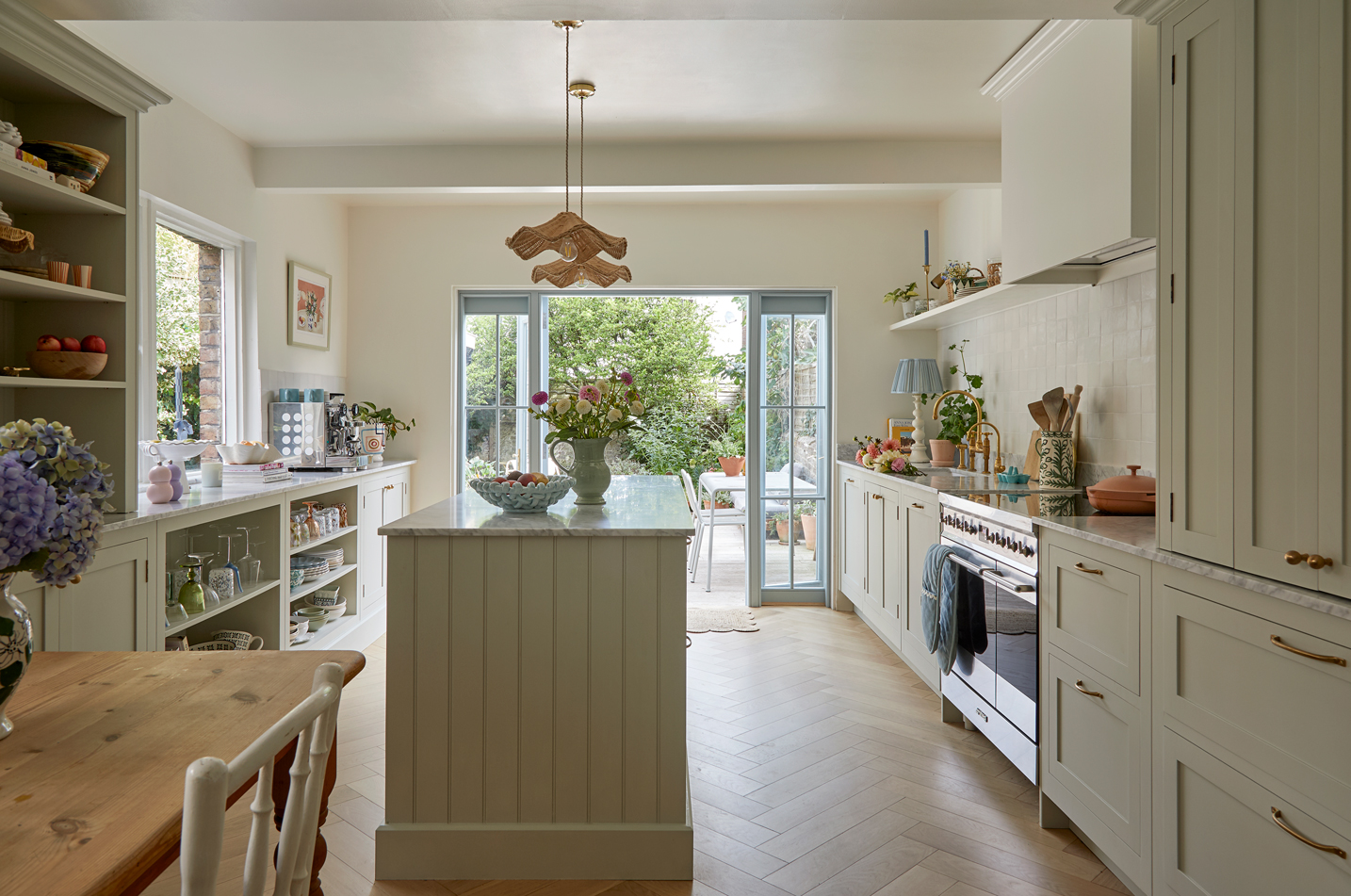
For a balanced scheme, consider a two-tone approach: sage green on the lower cabinets and island, with lighter neutrals above. This grounds the space without overwhelming it and has become one of the defining looks in modern bespoke kitchen design.
Sage Green Walls – An Alternative to Cabinets
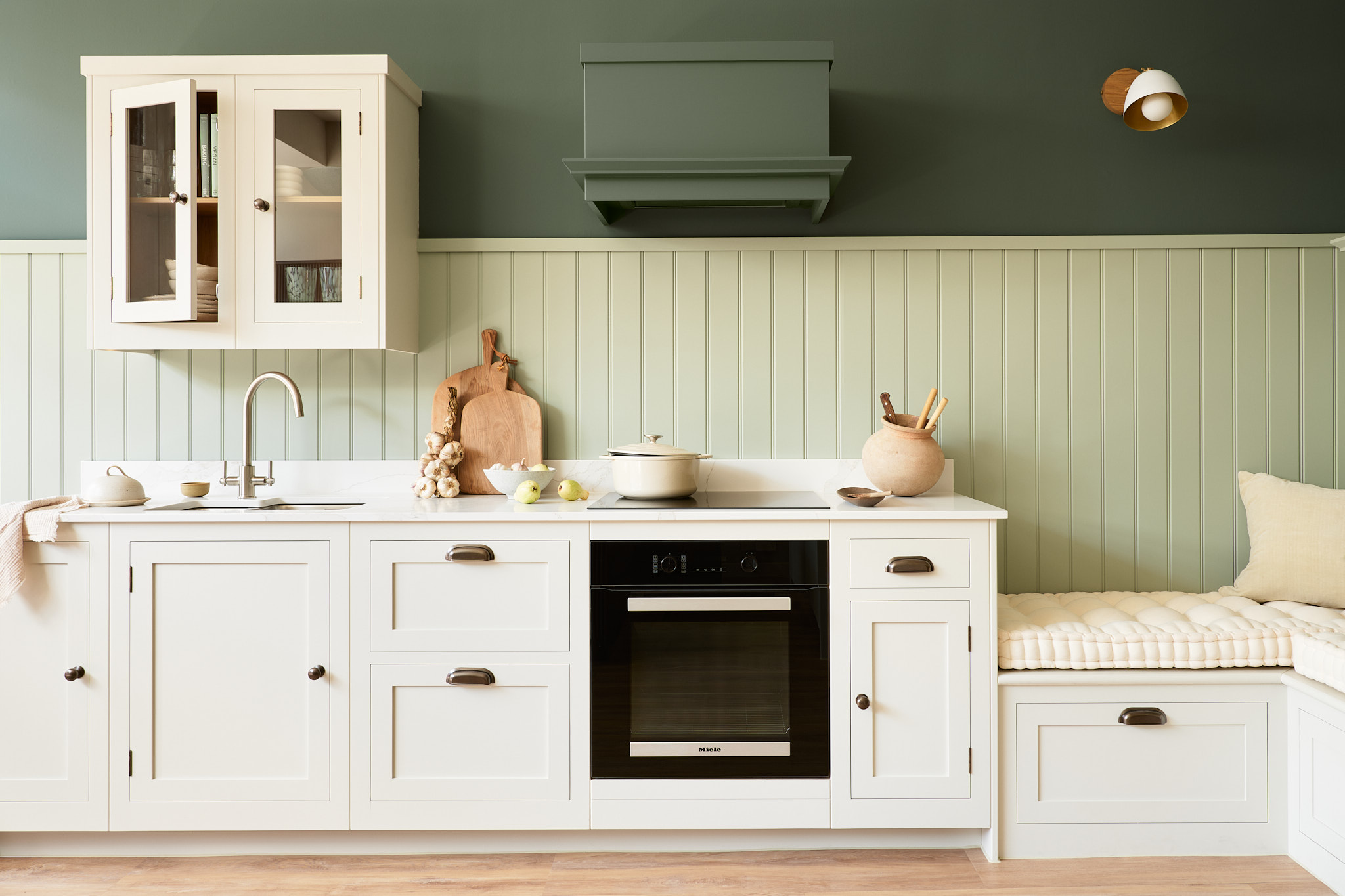
Not every sage green kitchen needs sage green cabinets. Painting the walls in sage while keeping cabinetry in cream or warm white is a softer, more flexible approach – and it addresses a question many homeowners ask: can you have a cream kitchen with sage green walls?
The answer is yes, and it’s one of the most elegant combinations available. Warm cream cabinetry against sage walls creates a layered feel that sits naturally in period homes and open-plan spaces alike.
For a bolder move, consider colour drenching: running sage across walls, ceiling and cabinetry for an immersive, enveloping feel. This works especially well in smaller kitchen spaces where a single unified tone can feel cohesive rather than cramped – offset it with light worktops and warm flooring to keep it feeling open.
Colours That Earn Their Place Alongside Sage
Sage green is one of the most pairable kitchen colours available. These combinations consistently work well.
- Cream and warm white are the natural partners. They add warmth without competing, and the contrast is soft enough to feel considered rather than stark. This pairing suits both traditional and modern sage green kitchens.
- Warm wood sits instinctively alongside sage. Lighter oak creates a relaxed, Scandinavian-influenced feel. Darker timber like walnut adds depth and a slightly richer character to the same cabinetry.
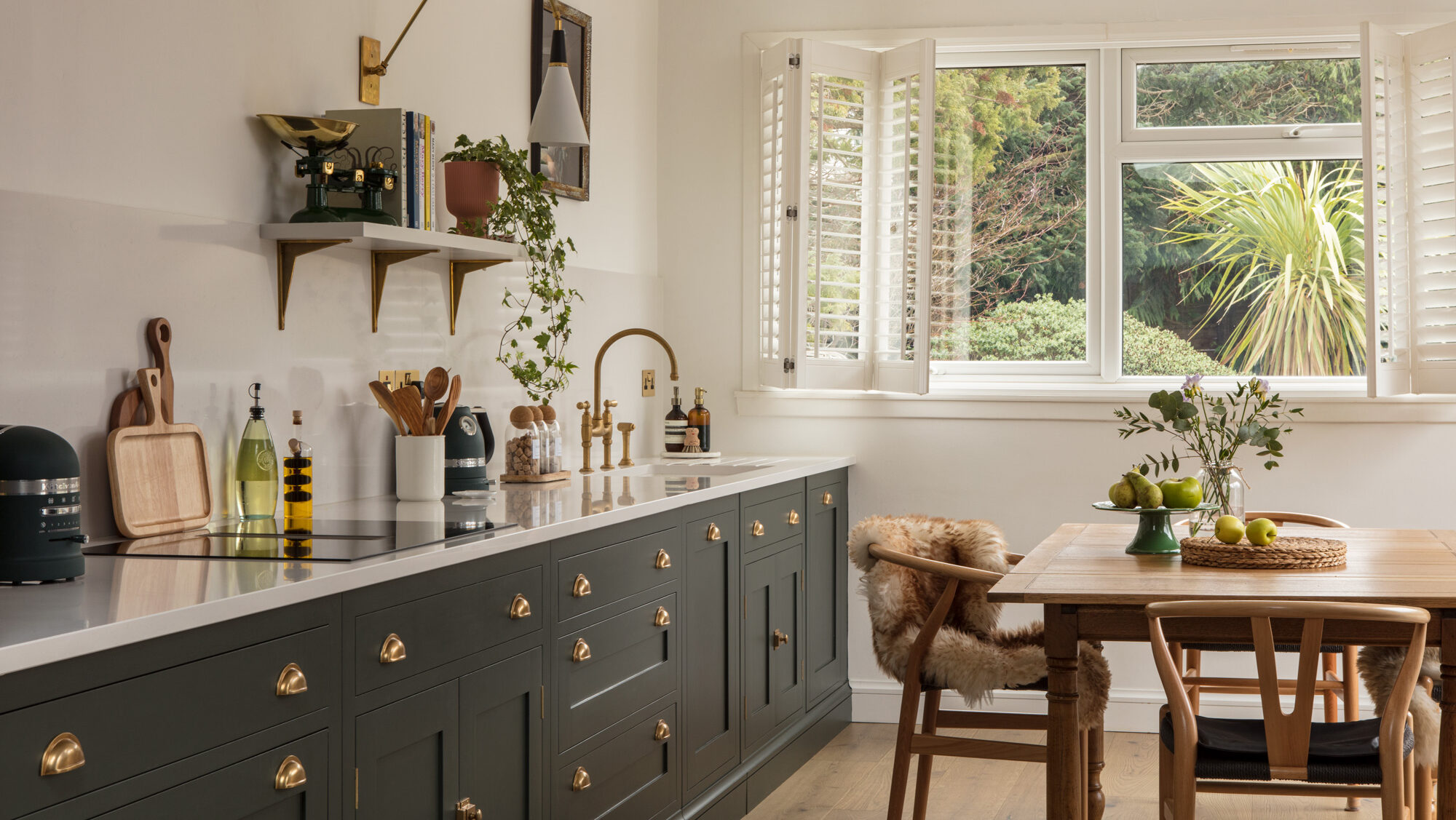
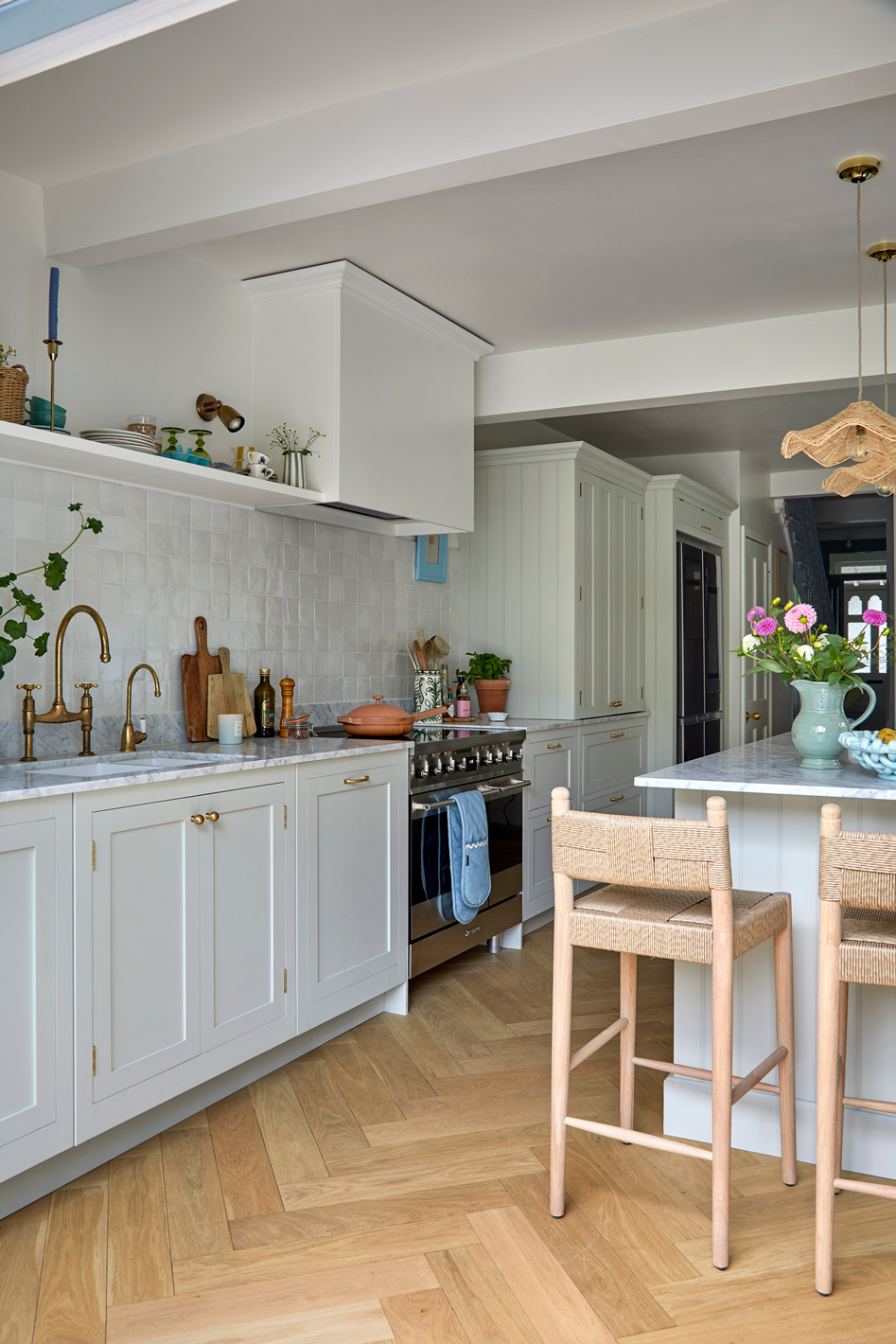
- Brass and aged gold bring out the warmth in sage and give the kitchen a richer, more inviting quality. This is the hardware choice that elevates a sage green Shaker kitchen.
- Navy works well as a bold contrast accent – an island in a deeper tone, or open shelving against sage walls. It adds definition without interrupting the calm of the overall palette.
Cooler tones – bright white, chrome, concrete – work by pushing the scheme towards something more contemporary and sharper-edged. Opt for cooler accents and handleless cabinetry to create an ultra modern design.
Choosing the Right Worktop in a Sage Green Kitchen
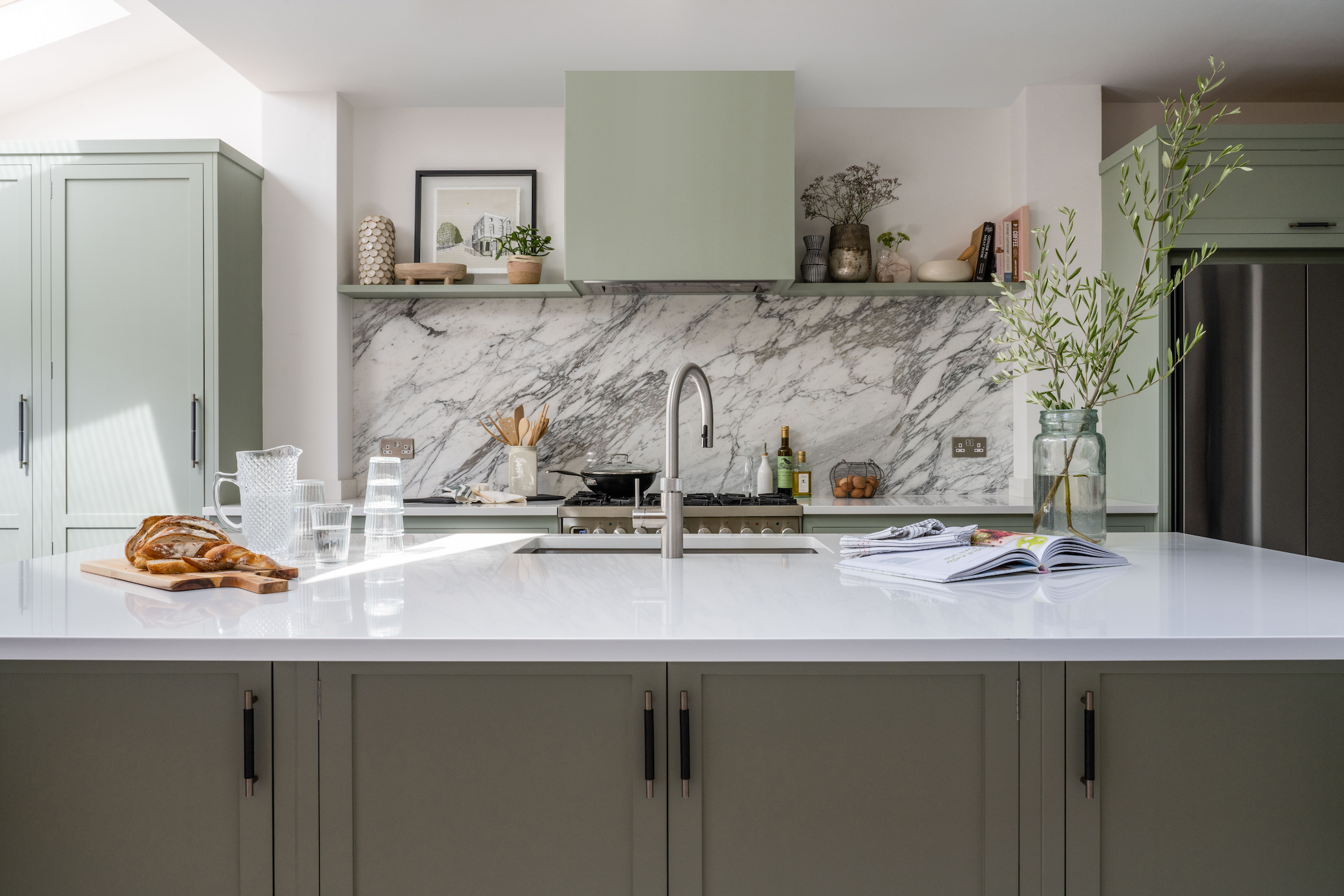
Kitchen worktops majorly influence on how a sage green kitchen feels overall. Three materials work particularly well.
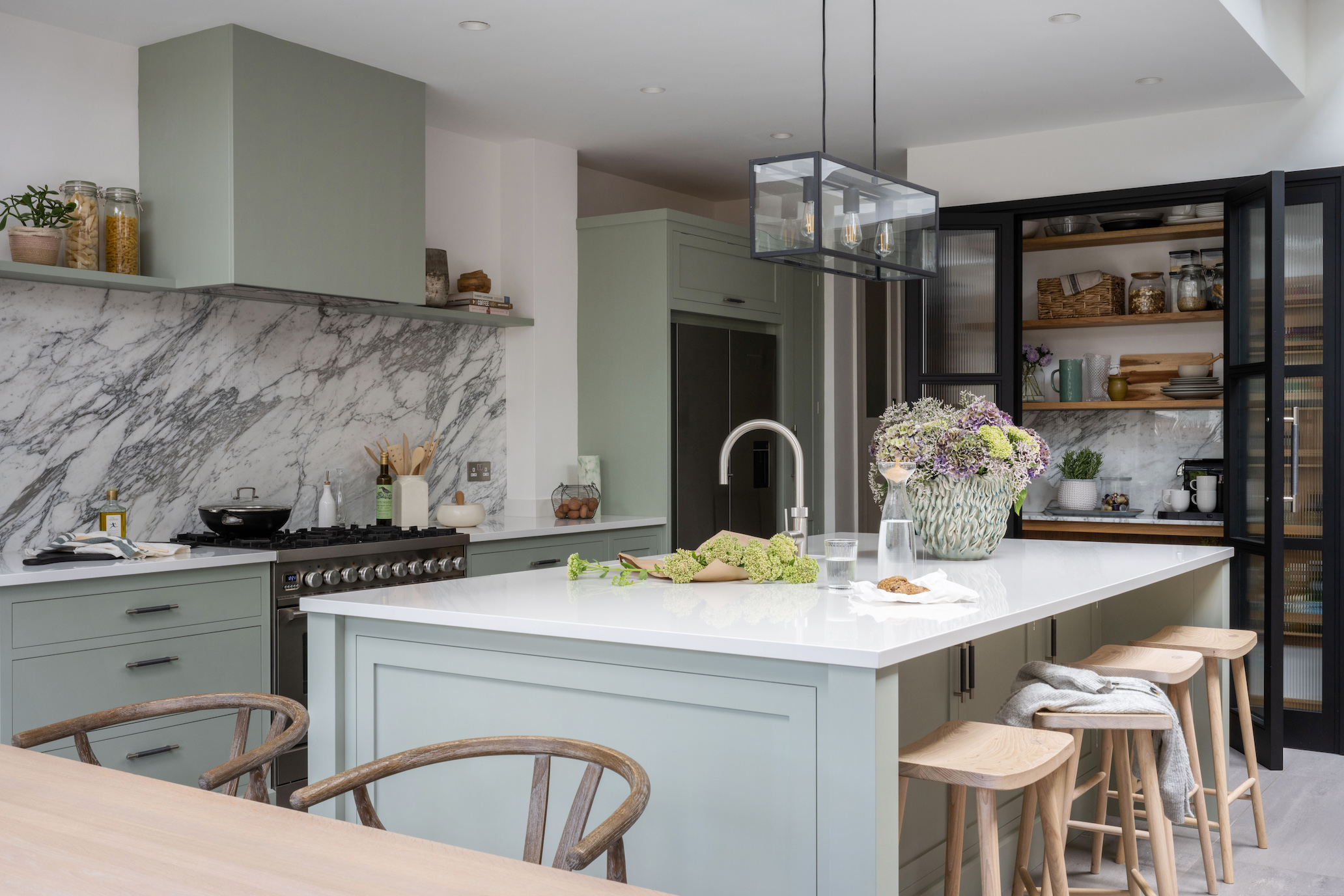
- Pale marble or quartz creates a fresh, classic combination. White or light grey marble with soft veining sits beautifully against sage cabinetry and keeps the space feeling bright.
- Timber introduces warmth and texture. Oak worktops alongside sage cabinets are a natural match – relaxed, tactile and genuinely beautiful in everyday use. Therefore, they suit both shaker and more contemporary kitchen styles.
- Darker stone like heavily veined marble, honed granite or a rich quartzite creates deep contrast and gives luxury kitchens a more architectural, considered quality.
Tiles That Complement Without Competing
The right tile choice reinforces the calm character of a sage green kitchen. The wrong one fights it.
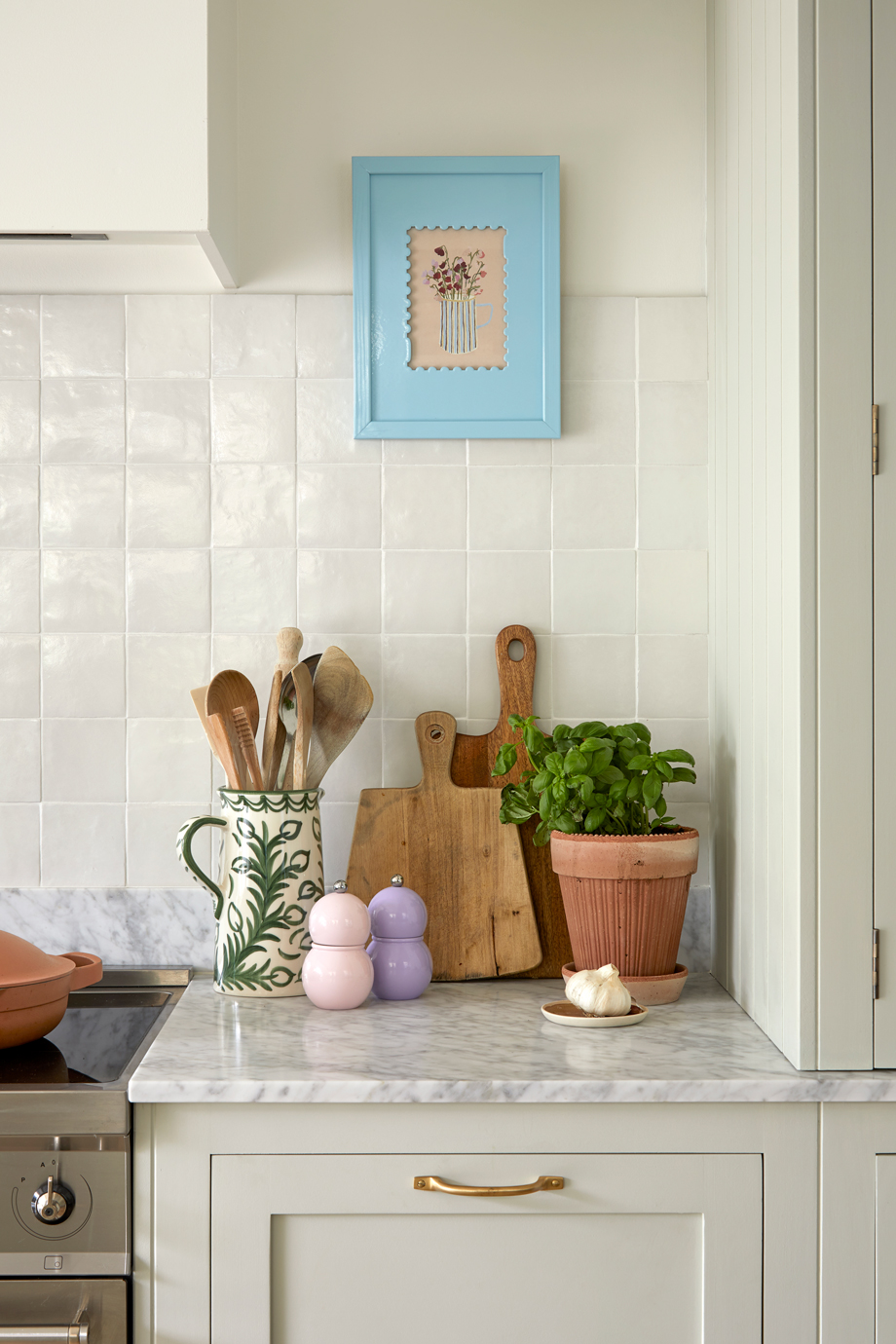
Cream or white metro tiles are a reliable choice for a splashback – clean, timeless and versatile across both traditional and modern schemes.
Zellige tiles in warm cream or terracotta tones add handcrafted texture and a sense of depth. The slight irregularity of zellige surfaces catches the light in a way that flatters sage green particularly well.
For a more understated luxury kitchen approach, stone-effect wall tiles in soft grey or limestone tones sit quietly alongside sage without drawing the eye away from the overall scheme.
If your cabinetry is the statement, keep tiles considered. If walls are where you want interest, a bolder tile against more neutral cabinetry gives you the same visual impact with more flexibility.
Hardware and Accessories – Where the Scheme Comes Together
Because sage is subtle, the details around it become more noticeable. Josh, a Harvey Jones bespoke kitchen designer, explains:
“Sage green works beautifully when it’s balanced with warmer materials like brass hardware and natural wood. A sage green island paired with timber flooring or oak accents can feel really calm and inviting, but natural light is important too, as the overall scheme should always respond to the space it’s in.“
Brushed brass or warm gold handles bring out the warmth in sage and give the kitchen a slightly richer, more inviting feel. This is one of the most popular (and beautiful) pairings in bespoke kitchen design.
Brushed nickel or chrome creates a cleaner, sharper look that works well in modern sage green kitchens where the aesthetic is more pared back.
For accessories, lean into natural materials: terracotta planters, linen textiles in warm neutrals, ceramic bowls in muted earth tones. These reinforce the organic quality of sage without making the space feel themed.
Sage Green Across Different Kitchen Styles
Sage green Shaker kitchen: The combination most people picture – and for good reason. Panelled Shaker doors in sage with brass hardware, a marble or timber worktop and warm wood flooring is a genuinely enduring scheme. Therefore, it works as well in a country farmhouse as it does in a London townhouse.
Modern sage green kitchen: Slim-profile or handleless cabinetry, a stone worktop and sleek integrated appliances. The blue-leaning, fresher sage tones tend to suit this approach. Keep accessories minimal to let the colour do the work.
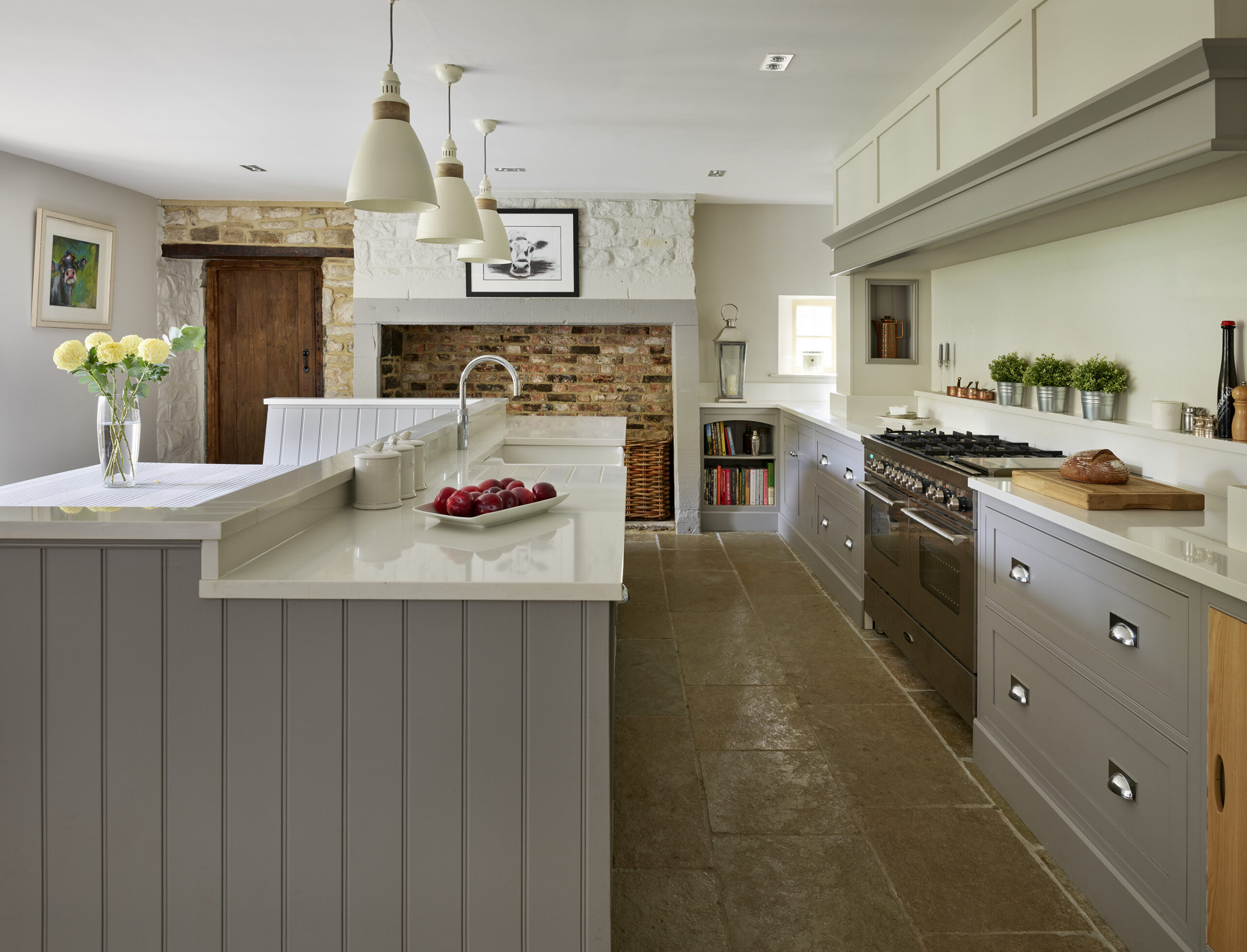
Country or farmhouse style: Classic sage with cream walls, a Belfast sink, open shelving and a range cooker. Copper or lacquered brass accents add a rustic warmth that complete the aesthetic.
Ready to Design Your Sage Green Kitchen?
Sage green is one of the most rewarding kitchen colours to get right – calm to live with, beautiful to look at and adaptable enough to suit almost any home and style.
The key is in the decisions: the right shade, the right worktop, the right finish on the cabinetry.
At Harvey Jones, every kitchen is hand-painted and crafted bespoke to your home. Our designers work with you to find the combination of colour, material and style that suits your space and how you live in it.
FAQs about Sage Green Kitchens
What colour is best paired with sage green in a kitchen?
Cream, warm white and natural oak are the most versatile pairings for a sage green kitchen. Brass hardware adds warmth and depth, while navy works well as a contrasting accent on an island or shelving unit.
What is the best worktop for a sage green kitchen?
Pale marble or quartz keeps the scheme feeling fresh and classic. Timber – particularly oak – adds warmth and suits both Shaker and contemporary styles. For more contrast and drama, a darker stone worktop works particularly well alongside deeper sage tones.
Is sage green a good kitchen colour?
Yes. Sage green is calming, versatile and works well across traditional and modern kitchen designs. It performs well in different light conditions and pairs naturally with a wide range of materials. According to Houzz, green has become the 2nd most popular kitchen colour.
What accessories work with a sage green kitchen?
Natural materials work best: brass or warm metallic hardware, terracotta ceramics, linen textiles and wooden accents. Plants, therefore, reinforce the organic feel of the colour naturally.
What tiles complement a sage green kitchen?
Cream or white metro tiles are a classic choice. Zellige tiles in warm tones add artisan texture. Additionally, stone-effect tiles in soft grey or limestone tones give a more understated, luxury feel. Keep the tile choice considered if your cabinetry is already the focal point.
Can sage green work in a small kitchen?
Yes, lighter and more muted sage tones help reflect light and keep smaller spaces feeling open. Therefore, keep worktops and walls light, use reflective finishes where possible, and choose warm flooring to stop the scheme feeling heavy.
Discover real, bespoke kitchen & home inspiration.