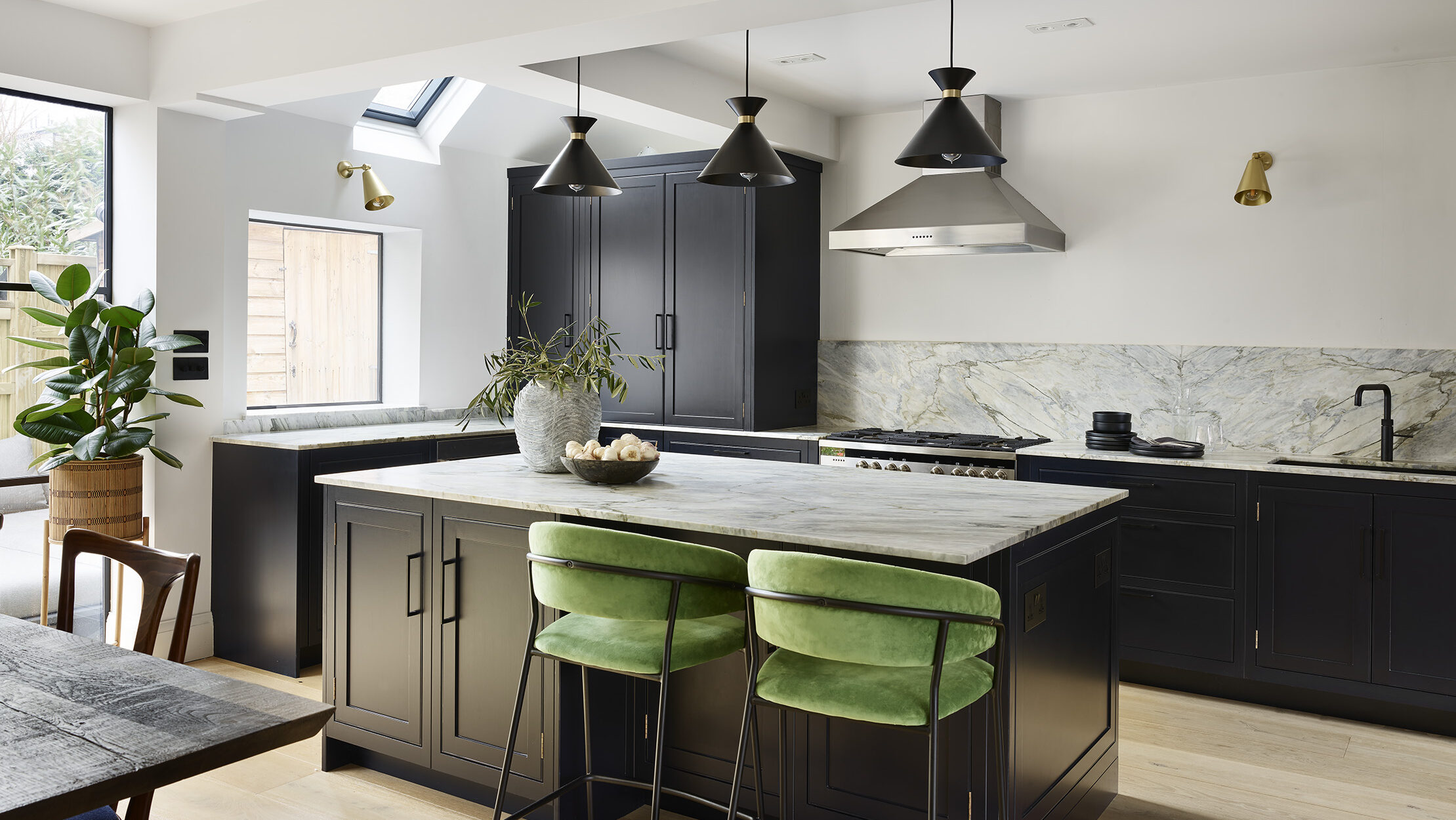
If you’re wondering how to design a functional kitchen, the key is good decisions made early – before the cabinetry is specified, before the tiles are chosen, before anything is ordered.
Most people approach a new kitchen thinking about how it will look. But the decisions that determine how it actually works happen at the planning stage.
Get those right and the aesthetics follow. Get them wrong and no amount of beautiful cabinetry will fix it. These are the five decisions that matter most, according to our bespoke kitchen designers.
Discover real, bespoke kitchen & home inspiration.
1. Choose a Layout That Suits How You Cook
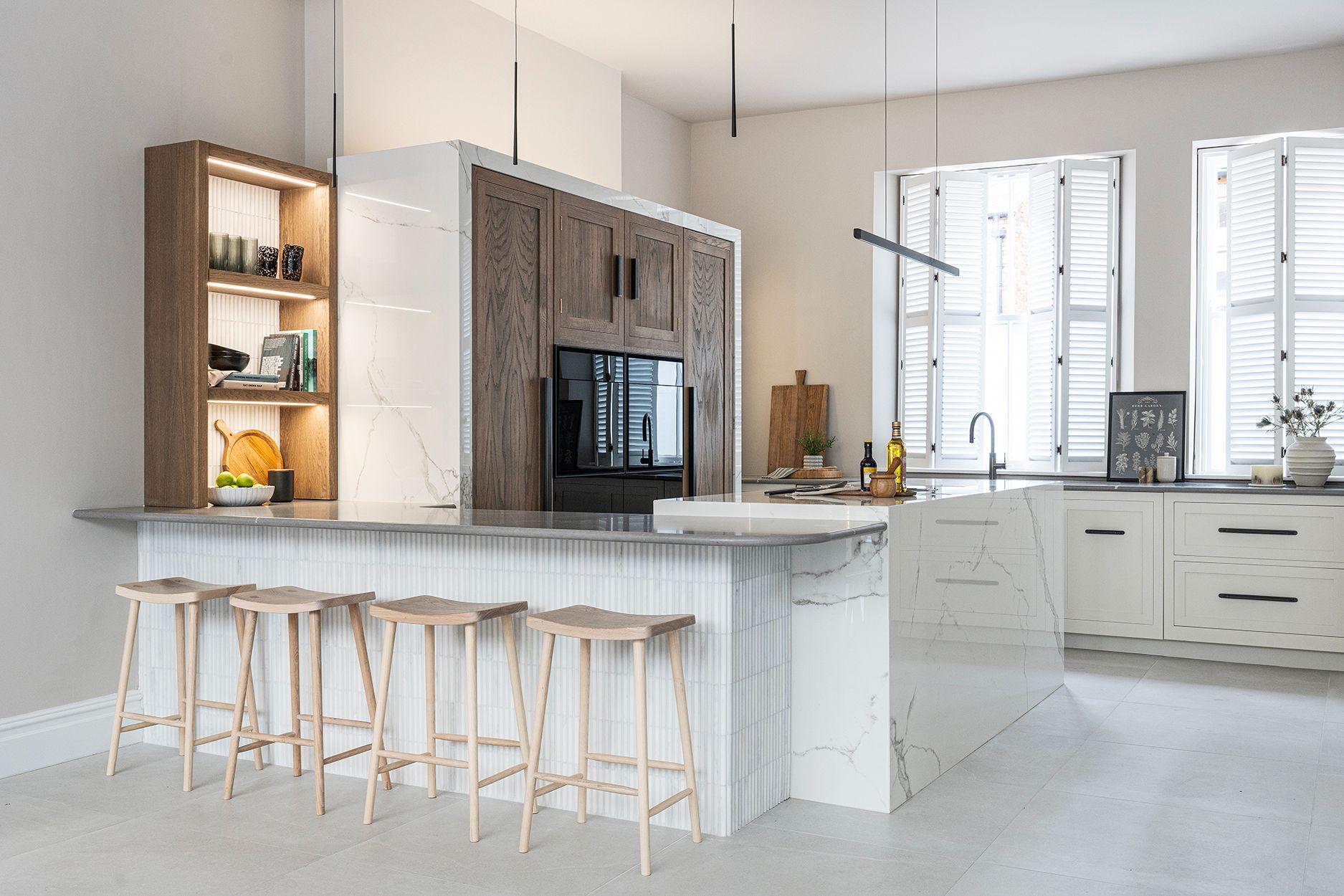
Kitchen layout planning is the foundation everything else is built on. The layout you choose will determine your workflow, your storage capacity, your appliance options and how comfortable the space is to use day-to-day. It’s worth spending real time on it.
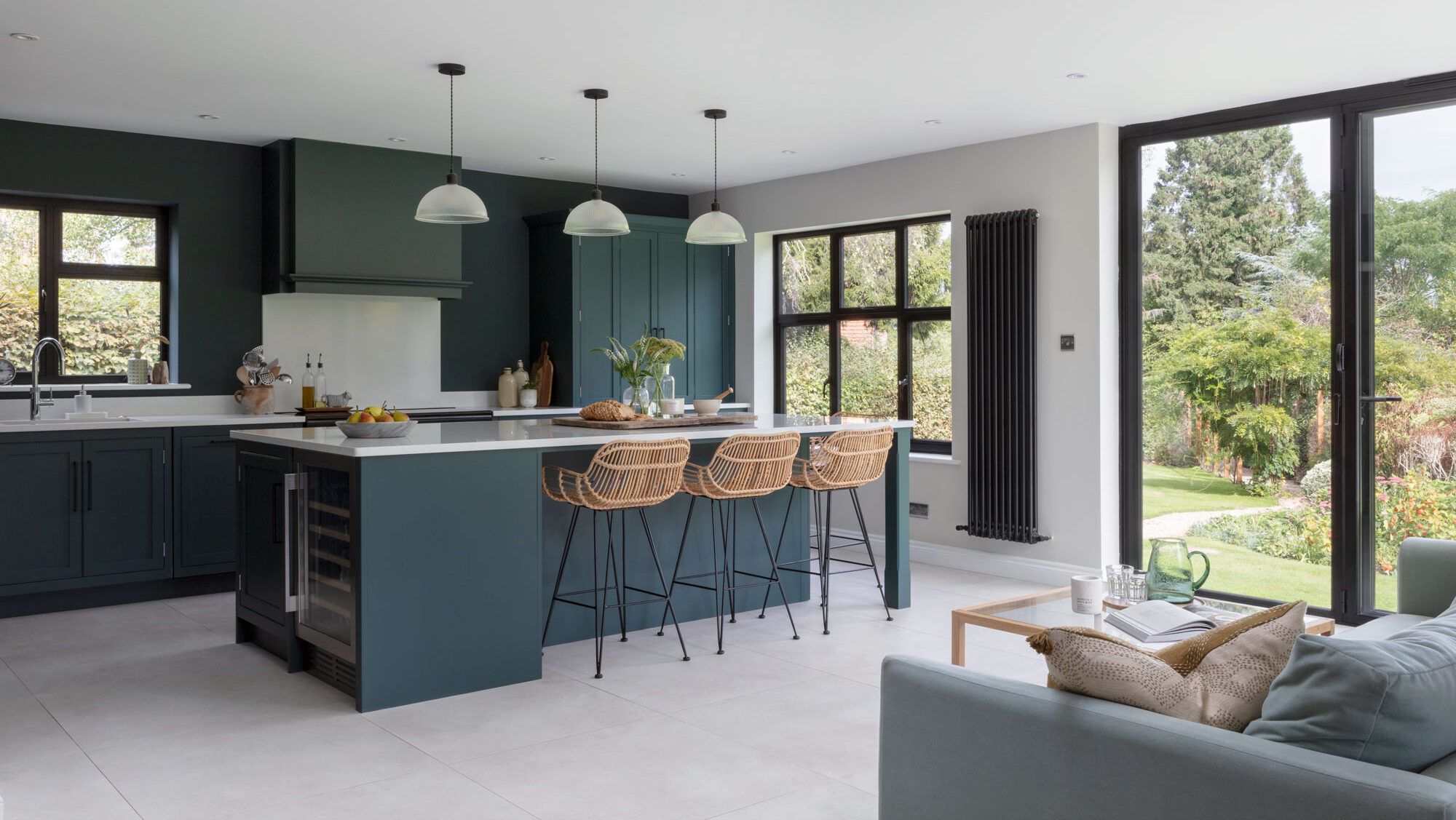
The four layouts most commonly used in bespoke kitchen design are the L-shape, U-shape, galley and island-centred plan. Each suits different room dimensions and different households.
- An L-shape works well in open-plan spaces, keeping the kitchen defined without closing it off.
- A U-shape offers generous worktop and storage runs on three sides, making it a strong choice for keen cooks who want everything within reach.
- A galley layout suits narrower rooms and can be exceptionally efficient when well planned.
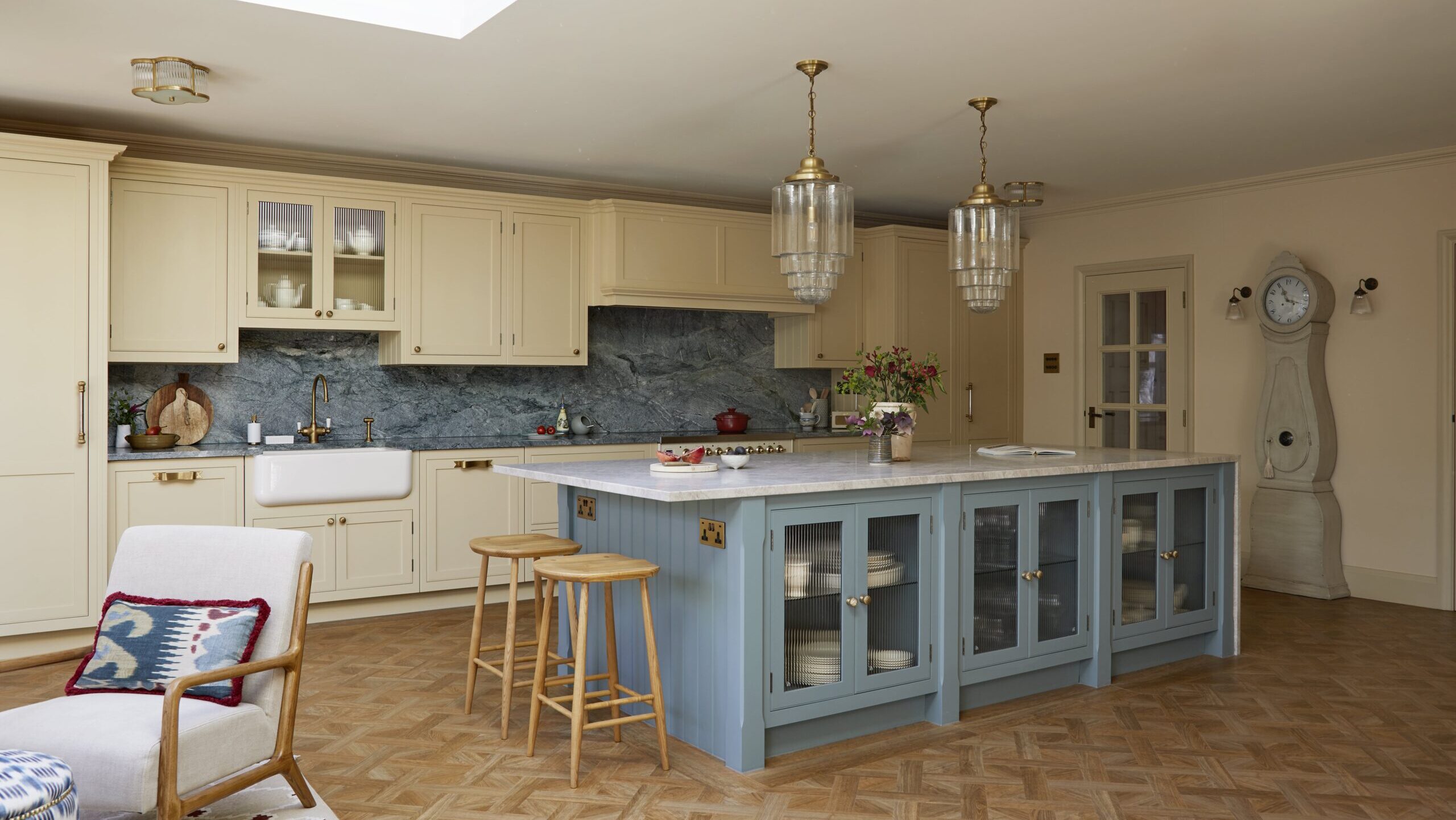
- An island-centred kitchen adds a social focal point and extra preparation space, provided there’s enough room to move around it comfortably.
In a bespoke fitted kitchen, the layout works for your specific room and your specific routine.
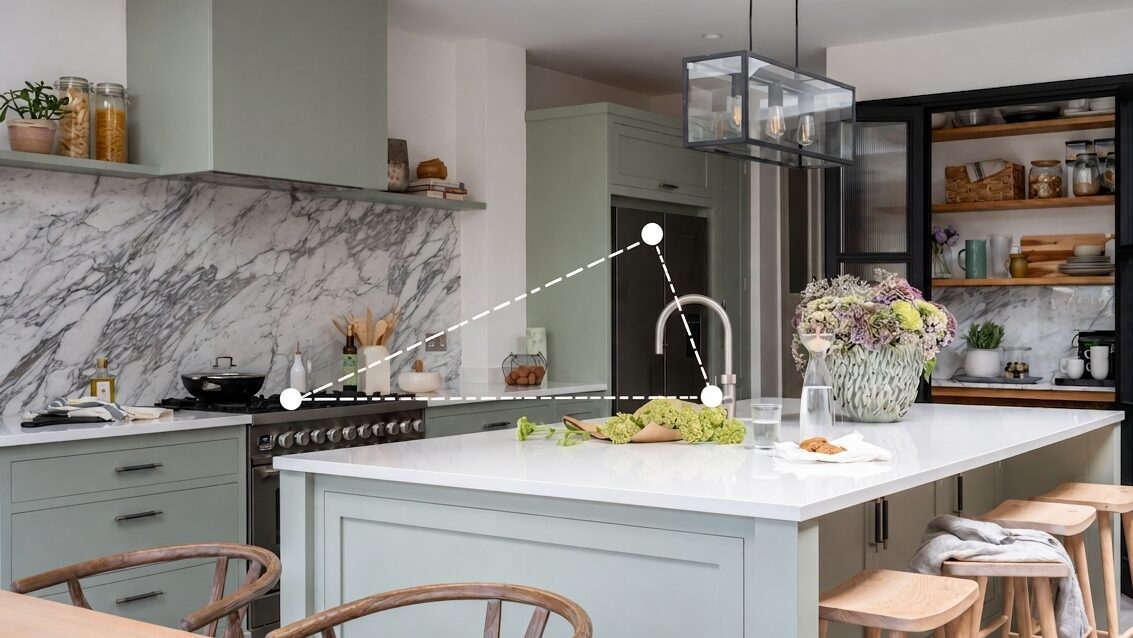
The kitchen work triangle and why it still matters
Traditionally, the work triangle connects the three points of highest activity in any kitchen: the sink, the hob and the fridge. The principle is simple – the shorter and cleaner the path between these three points, the less unnecessary movement while cooking.
Many contemporary designers now supplement the triangle with a zoning approach, organising the kitchen into distinct areas: storage, preparation, cooking, cleaning and serving.
These two frameworks work well together. The triangle anchors the core workflow, while zones accommodate multiple users and more complex routines.
2. Plan Kitchen Storage Solutions from Day One
Good kitchen storage solutions are not about adding more cupboards. They’re about designing storage around how you actually use the space.
A drawer in the wrong place, or a cabinet that’s too deep to be practical, adds square footage without adding function.
Instead, the most effective approach is to map storage to use. Pots and pans belong near the hob, while knives and prep tools belong near the worktop. Plates and cutlery belong near the dishwasher. When items live where they’re used, the kitchen becomes noticeably easier to work in.
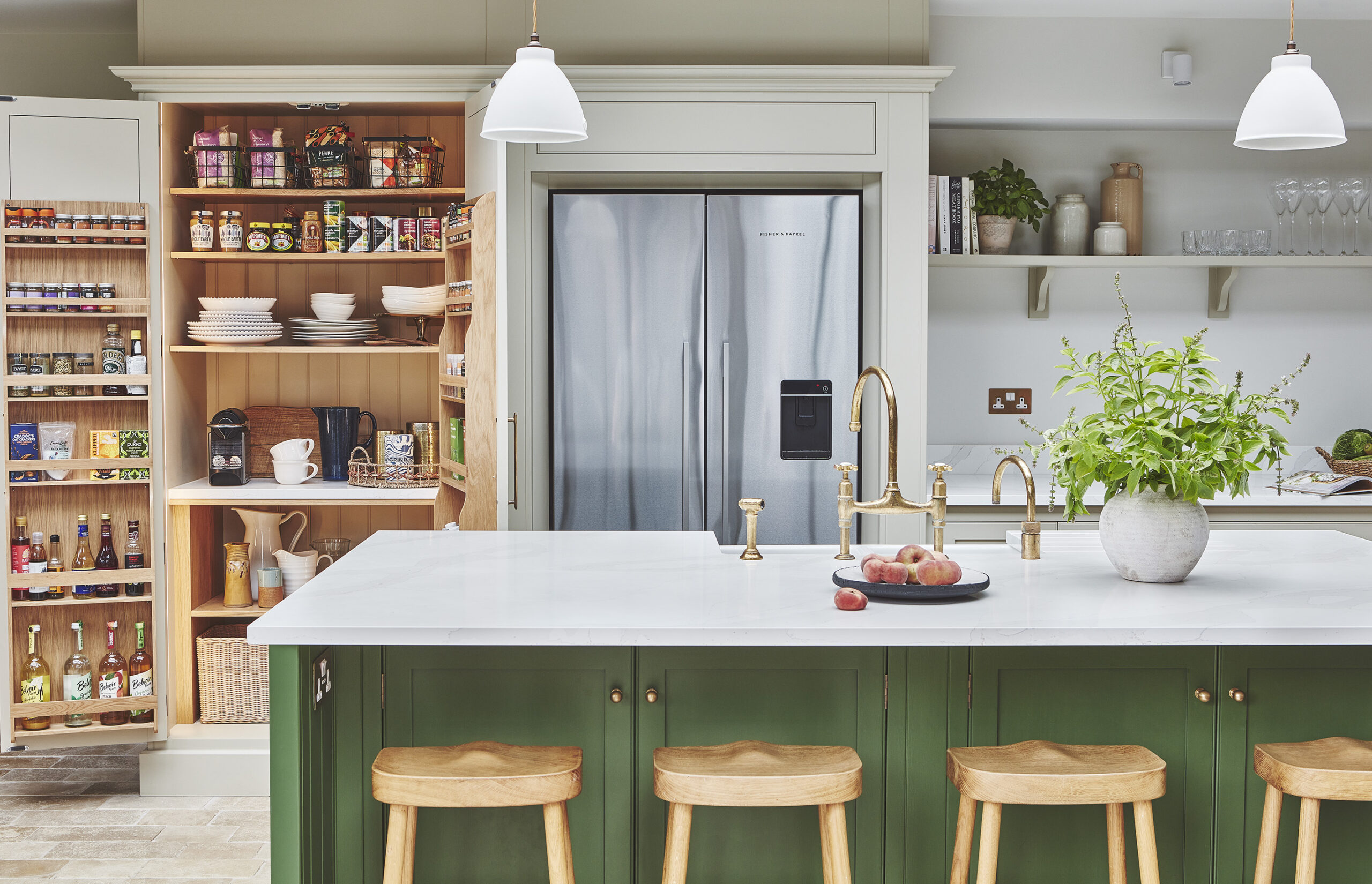
A bespoke luxury kitchen allows storage to be genuinely tailored to your household. Pull-out larder units, deep pan drawers, internal drawer organisers, spice racks integrated into a run.
Store things where you use them
The most practical storage zone in any kitchen sits between knee and eye level. This is where your everyday items should live: the things you reach for at every meal..
Meanwhile, reserve harder-to-reach spaces – high-level cabinets, deep low units, corners – for seasonal equipment, large serving pieces and items used occasionally.
An appliance garage with a retractable door keeps countertop gadgets like kettles, toasters and blenders accessible without taking up permanent worktop space.
In a high end kitchen design, storage isn’t an afterthought. It’s designed into the brief from the beginning, with every cabinet specified to earn its place.
3. Plan Appliance Placement Before Cabinetry
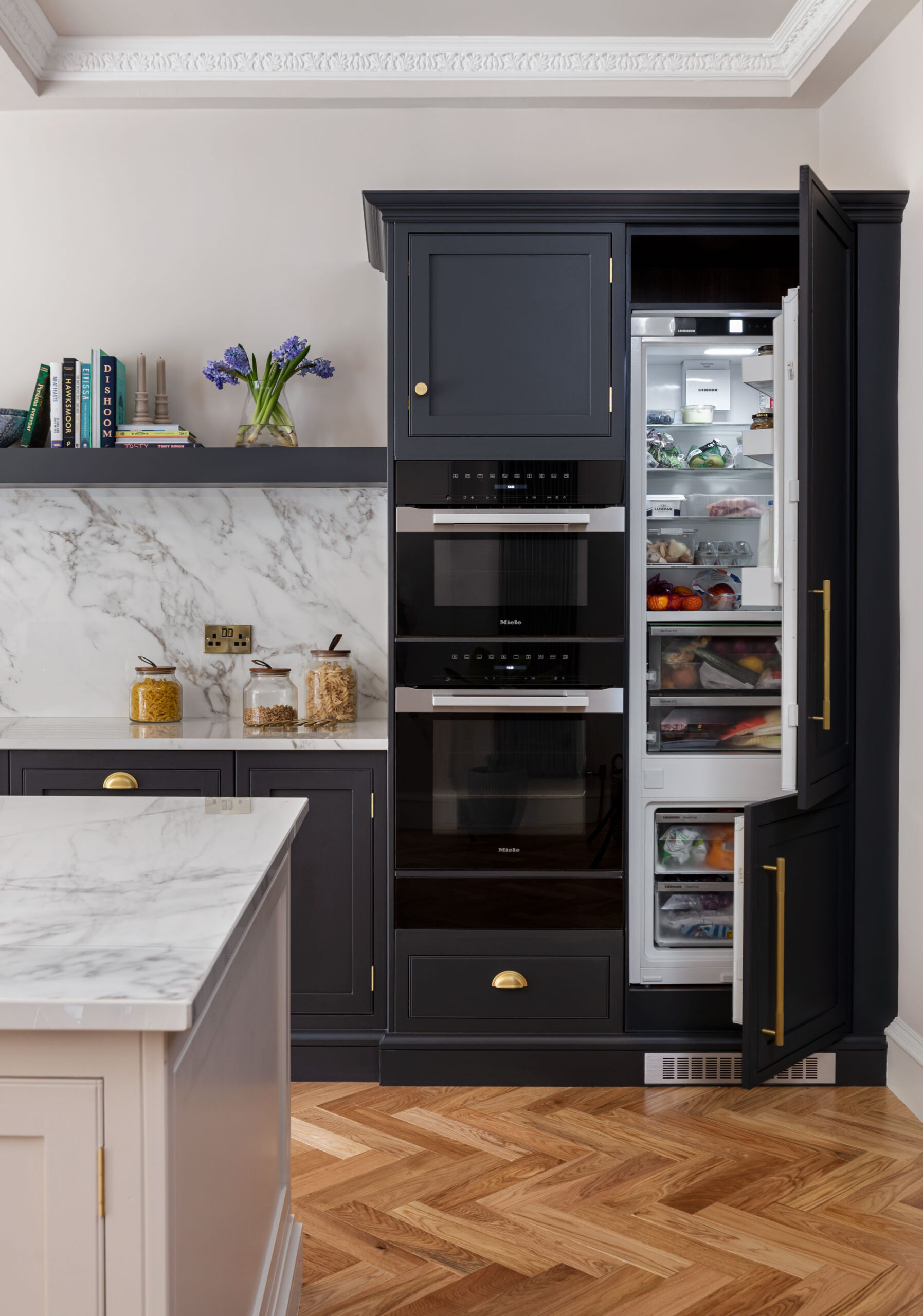
Knowing how to design a functional kitchen relies on practical kitchen appliance placement. The natural instinct is to design the cabinetry first and fit appliances into the gaps.
However, appliances should anchor the layout. Designers position the hob, oven, fridge and sink first, then build the cabinetry around them. This approach ensures adequate landing space – the clear worktop either side of a major appliance that makes cooking safe and practical.
- Alongside the hob, allow at least 30cm of worktop on either side for setting down pans and ingredients.
- Next to the sink, aim for at least 60cm on one side for rinsing and stacking.
- Next to the fridge, a small landing area makes unloading groceries considerably easier.
Equally important, extraction is another decision that’s easier to get right early. A ceiling-mounted extractor over an island, or a built-in unit over a wall hob, both require structural consideration that’s difficult to retrofit.
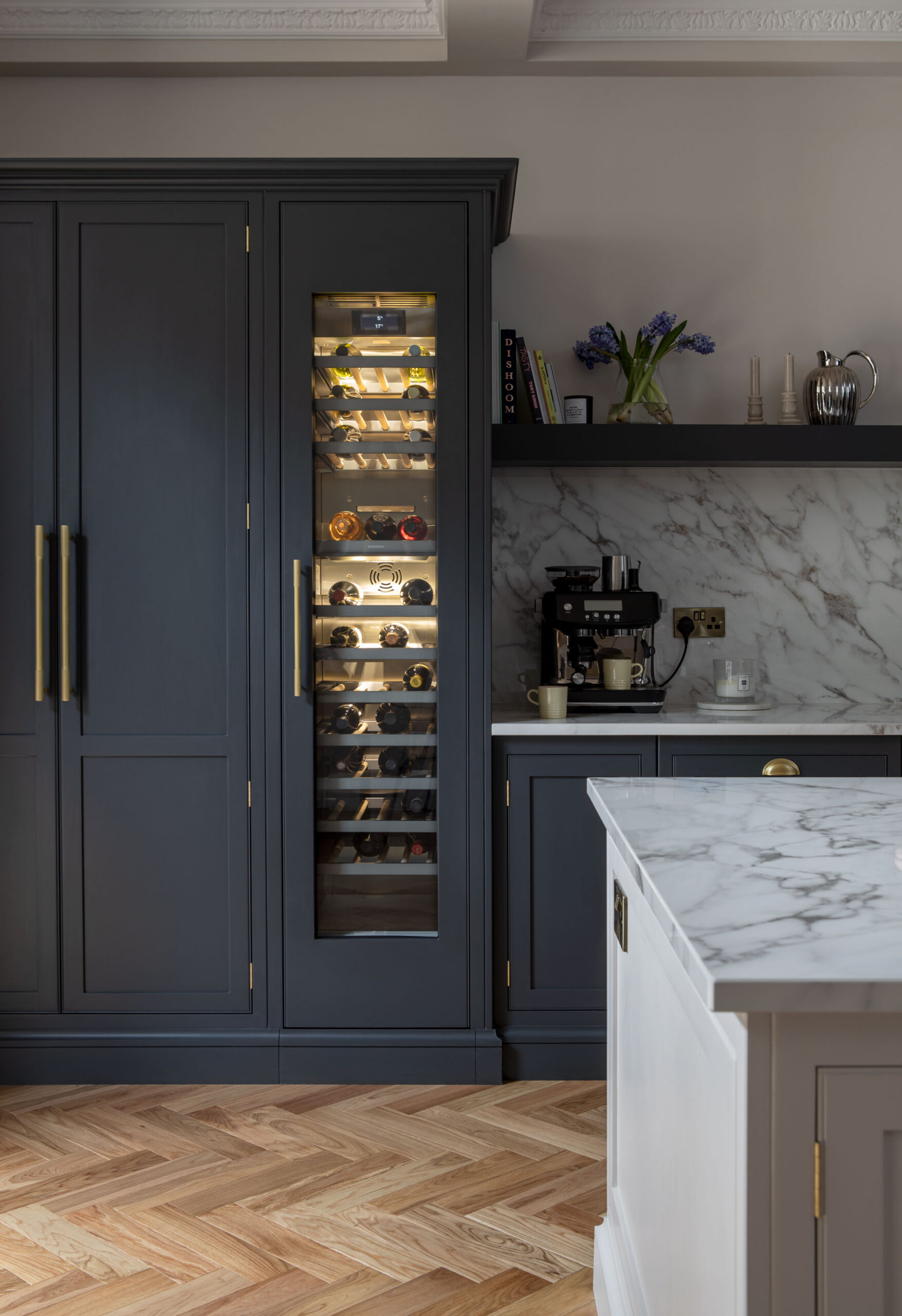
In addition, for households investing in a luxury bespoke kitchen, integrated appliances are worth considering from the start. Integrated appliances allow cabinetry to wrap around them cleanly, maintaining the visual consistency that defines a well-designed kitchen.
4. Layer Your Lighting
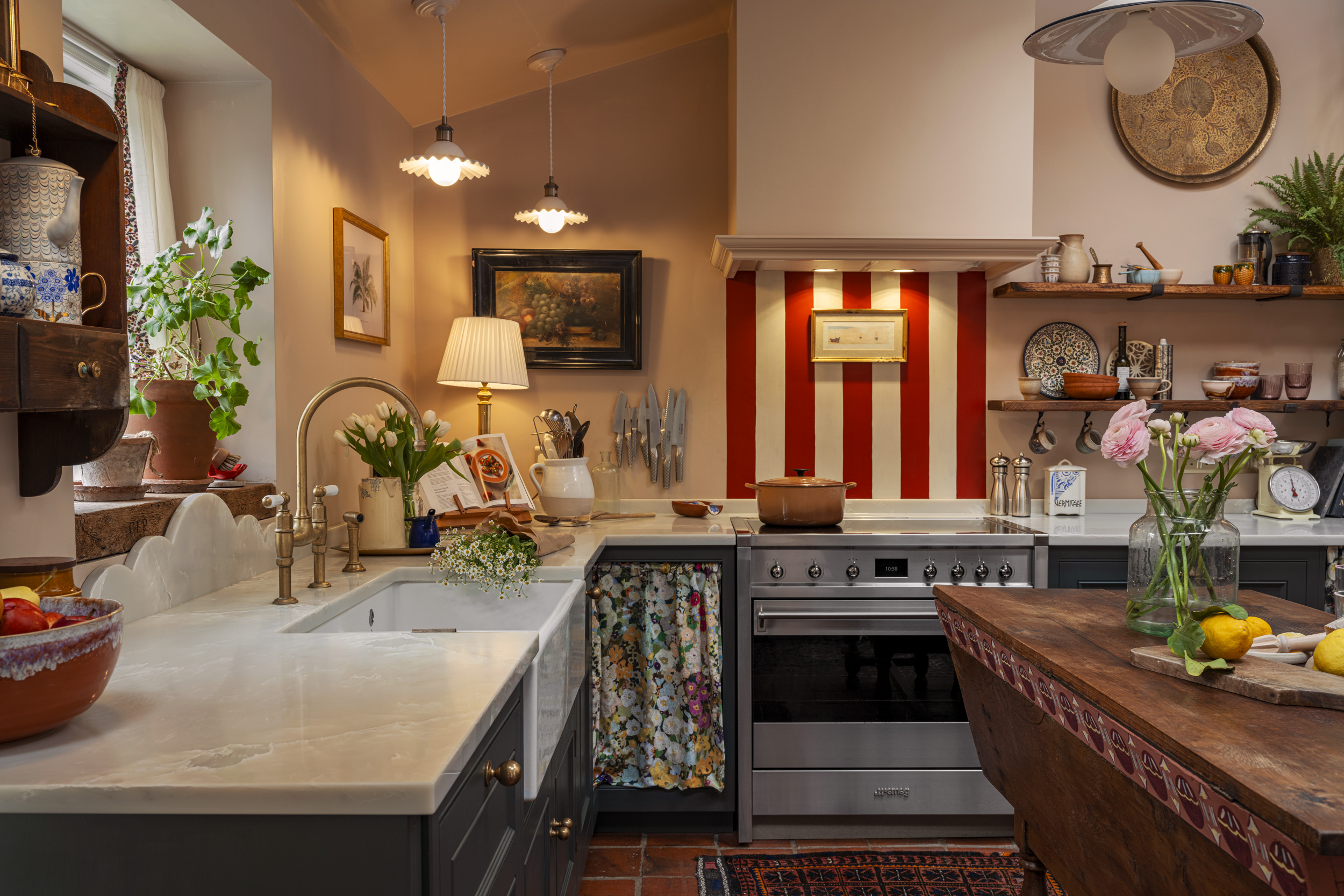
Lighting is a functional decision as much as an aesthetic one. A kitchen with poor task lighting is genuinely harder to cook in. A kitchen where all the light comes from a single ceiling fitting will have shadows exactly where you don’t want them – on the worktop, above the hob, over the sink.
In practice, effective kitchen lighting works in three layers.
Task lighting provides bright, directed light over the surfaces where you work. Under-cabinet LEDs are the most reliable way to achieve this, illuminating the worktop without shadow.
Ambient lighting gives the room its overall level of illumination. Recessed ceiling lights work well here, distributed evenly rather than concentrated in one area.
Finally, accent lighting adds depth and character. Pendant lights over an island or peninsula anchor the space and bring warmth. Internal cabinet lighting makes glazed doors feel considered rather than decorative.
In a luxury handmade kitchen, lighting is designed into the structure – not mounted onto it afterwards.
5. Designing for Tasks Beyond the Kitchen
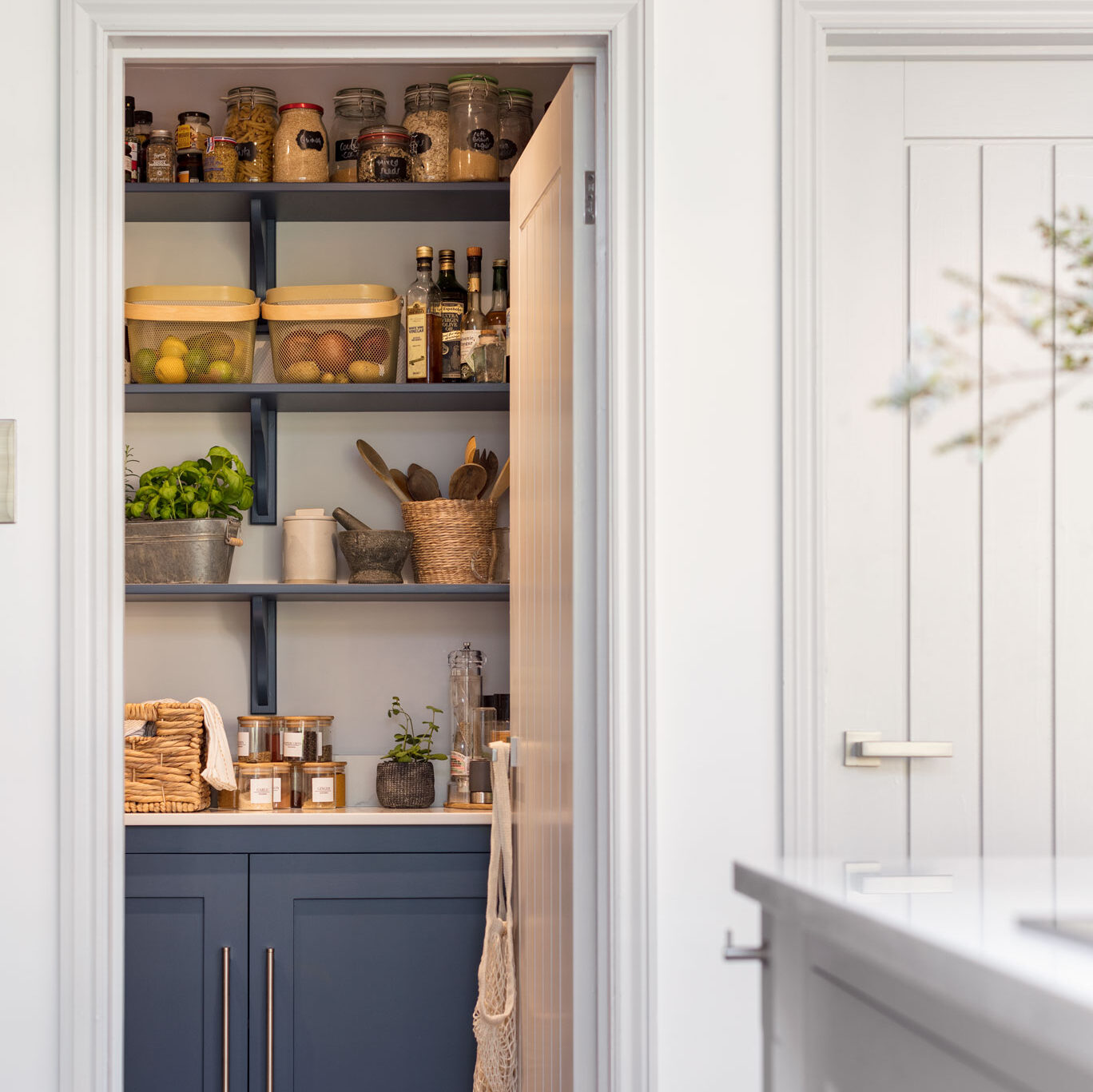
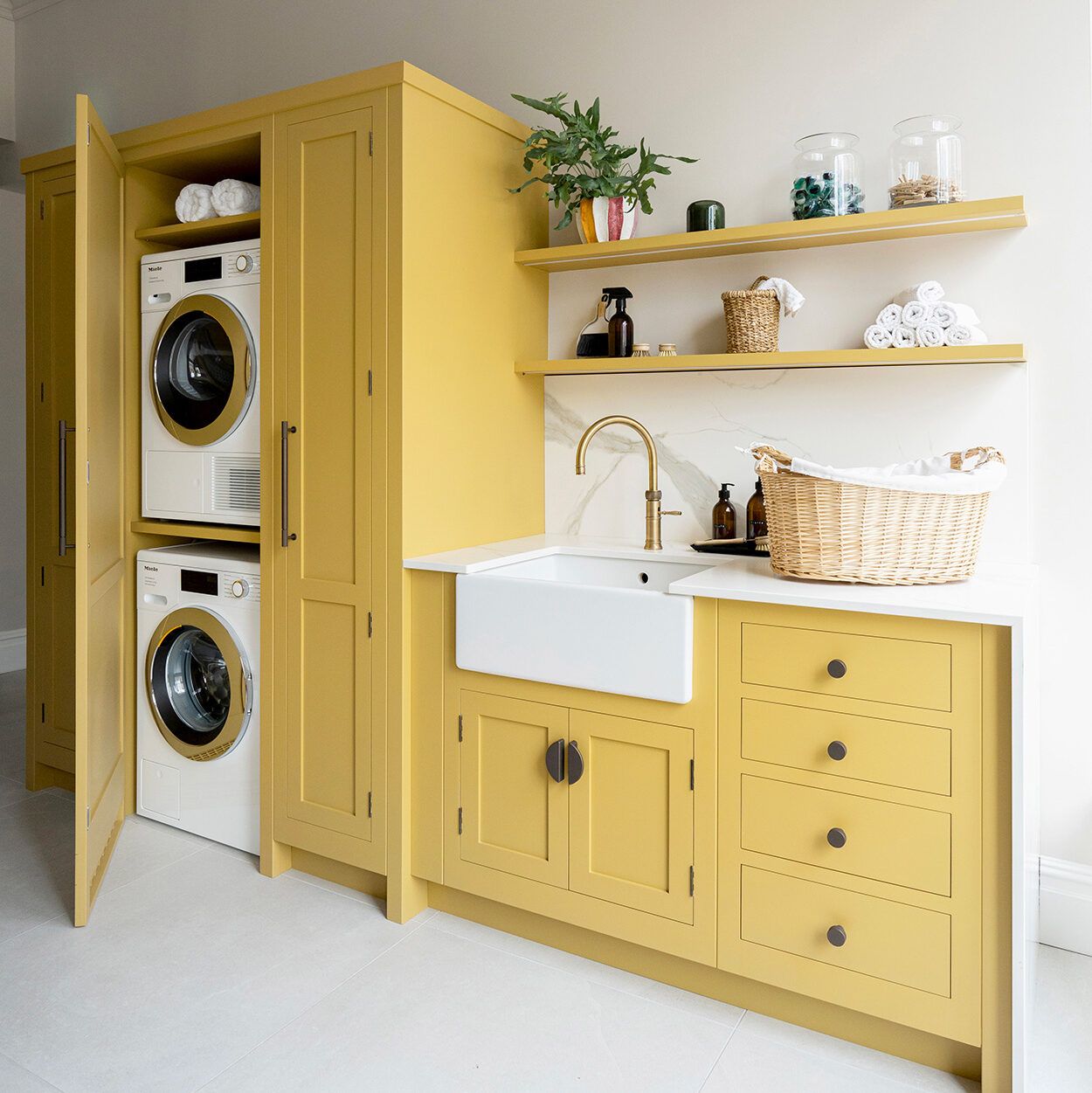
A kitchen doesn’t exist in isolation. The spaces immediately adjacent to it, such as a utility room, a boot room, a pantry, dramatically change what the kitchen itself needs to do. Planning these spaces together, rather than separately, almost always produces a better result.
- A utility room absorbs laundry, secondary storage and household admin that would otherwise occupy kitchen cabinetry and worktop space. With a utility running alongside the kitchen, the main room can focus entirely on cooking and dining.
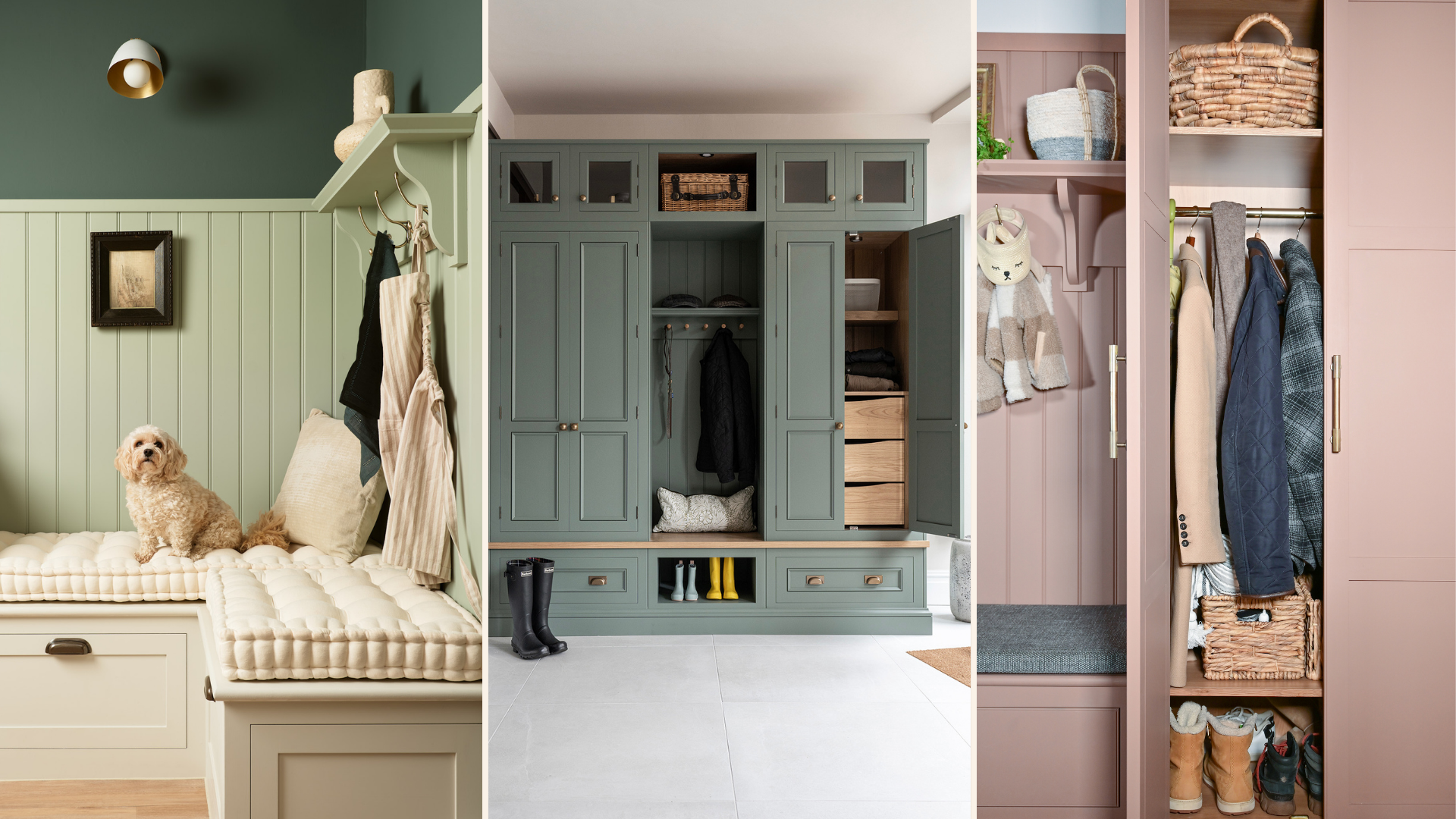
- Similarly, a boot room adjacent to a kitchen with garden or exterior access creates a practical transition zone. Dog leads, outdoor coats, muddy boots and sports kit have a home that isn’t the kitchen floor. For families, this is one of the most functional decisions a house can contain.
- Likewise, a pantry, whether a full walk-in or a tall integrated unit within the kitchen run, changes the storage layout entirely. Dry goods, small appliances and bulk buys move out of standard cabinetry and into a dedicated space that’s easier to manage.
Of course, not all spaces have the footprint to allow for additional rooms. Therefore, the kitchen has to perform multiple roles. Josh, a luxury kitchen designer, explains how to differentiate a utility within the main kitchen space:
“Colour is a simple way to distinguish a utility area from the main kitchen within the same room. Rich greens and deep blues work particularly well, giving the space its own identity while still feeling connected to the wider scheme.
Concealed cabinetry or a hidden door can also help tuck practical areas out of sight, creating a more seamless and considered finish.“
Where a Functional Kitchen Comes to Life
Knowing how to design a functional kitchen means making decisions in the right order.
Layout before cabinetry. Appliances before worktops. Storage mapped to use. Lighting designed in, not added on. And the spaces beyond the kitchen considered from the start.
Ultimately, these aren’t decisions that need to be made alone. Every Harvey Jones bespoke kitchen begins with a conversation about how you live, how you cook and what you actually need from the space.
FAQs about Functional Kitchen Design
What is the most functional kitchen layout?
The most functional kitchen layout depends on the size of the room and how it’s used. U-shaped kitchens are widely considered the most efficient for a single cook, as they keep the sink, hob and fridge within a short triangle with generous worktops. L-shaped layouts work well in open-plan spaces and suit households that want the kitchen to feel connected to a living or dining area. Island-centred kitchens offer excellent functionality in larger rooms, because they add prep space and a social focal point.
What is considered a functional kitchen?
A functional kitchen is one designed around workflow, storage and ease of movement. It has an efficient layout that minimises unnecessary steps between the key work zones, adequate worktop landing space beside major appliances, storage designed around use, good task lighting over preparation areas and enough clearance to move comfortably.
Which kitchen design is the most efficient?
Efficiency in kitchen design comes down to how well the layout supports the natural sequence of cooking. Layouts that keep these zones in a logical sequence, without major traffic routes cutting through them, are consistently the most efficient. Galley kitchens are highly efficient for a single user. Therefore, U-shaped and L-shaped kitchens perform well for households where more than one person cooks.
How do I design a functional kitchen layout for a small space?
In a smaller kitchen, layout planning becomes even more important. A galley or L-shaped layout typically works best, keeping the work triangle tight and avoiding wasted movement. Prioritise worktop continuity over additional cabinetry runs, and think carefully about appliance placement to protect as much prep space as possible.
How do I choose ergonomic kitchen storage solutions?
Ergonomic kitchen storage means storing things where they’re used and at a height that’s easy to access. Everyday items, such as cookware, crockery, frequently used ingredients, should sit between knee and eye level. Deep pan drawers are ergonomic as everything is visible. Pull-out larder units and internal drawer organisers reduce the need to reach to the back of cabinets. Reserve high-level storage for occasional-use items.
Discover real, bespoke kitchen & home inspiration.