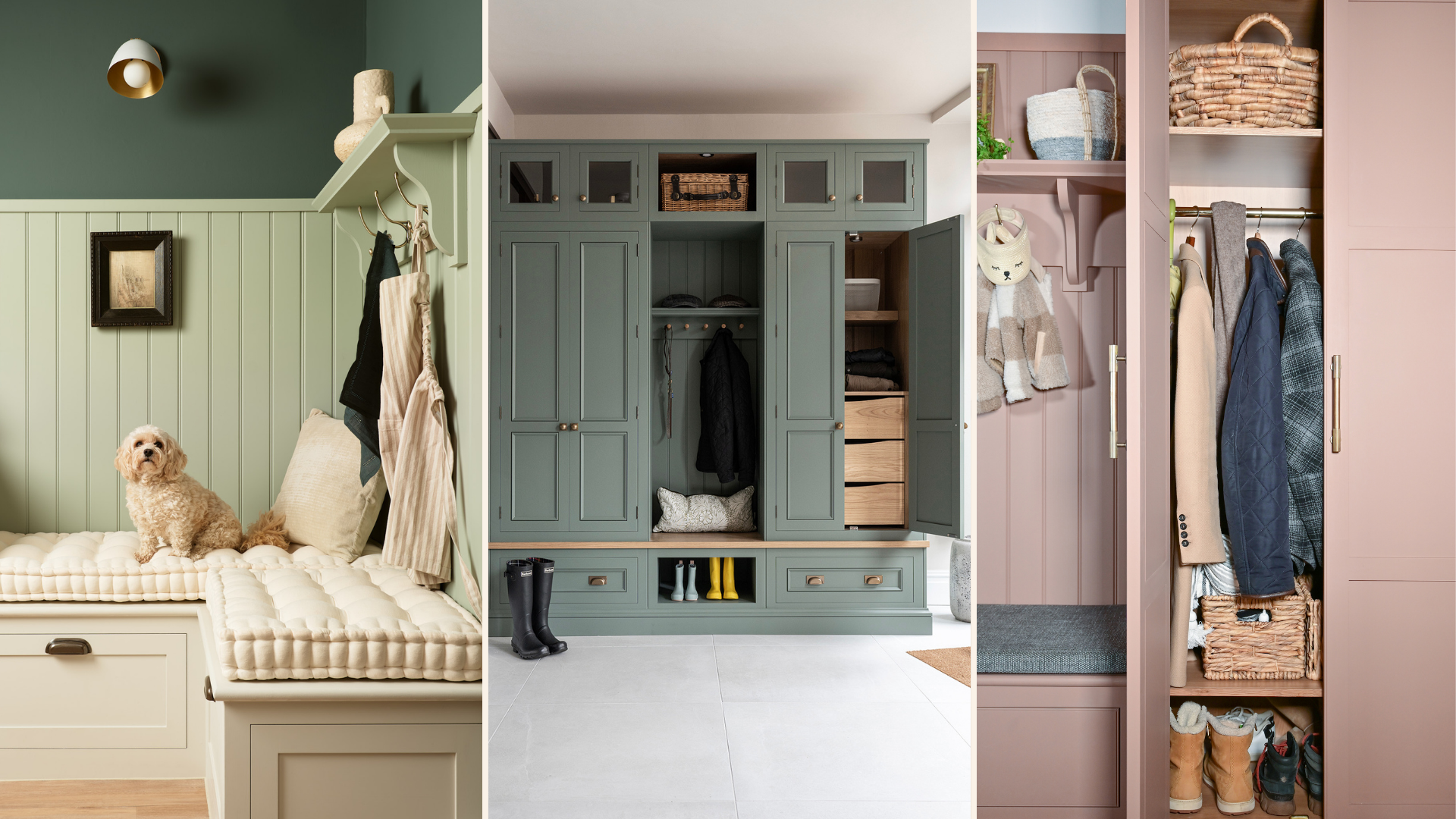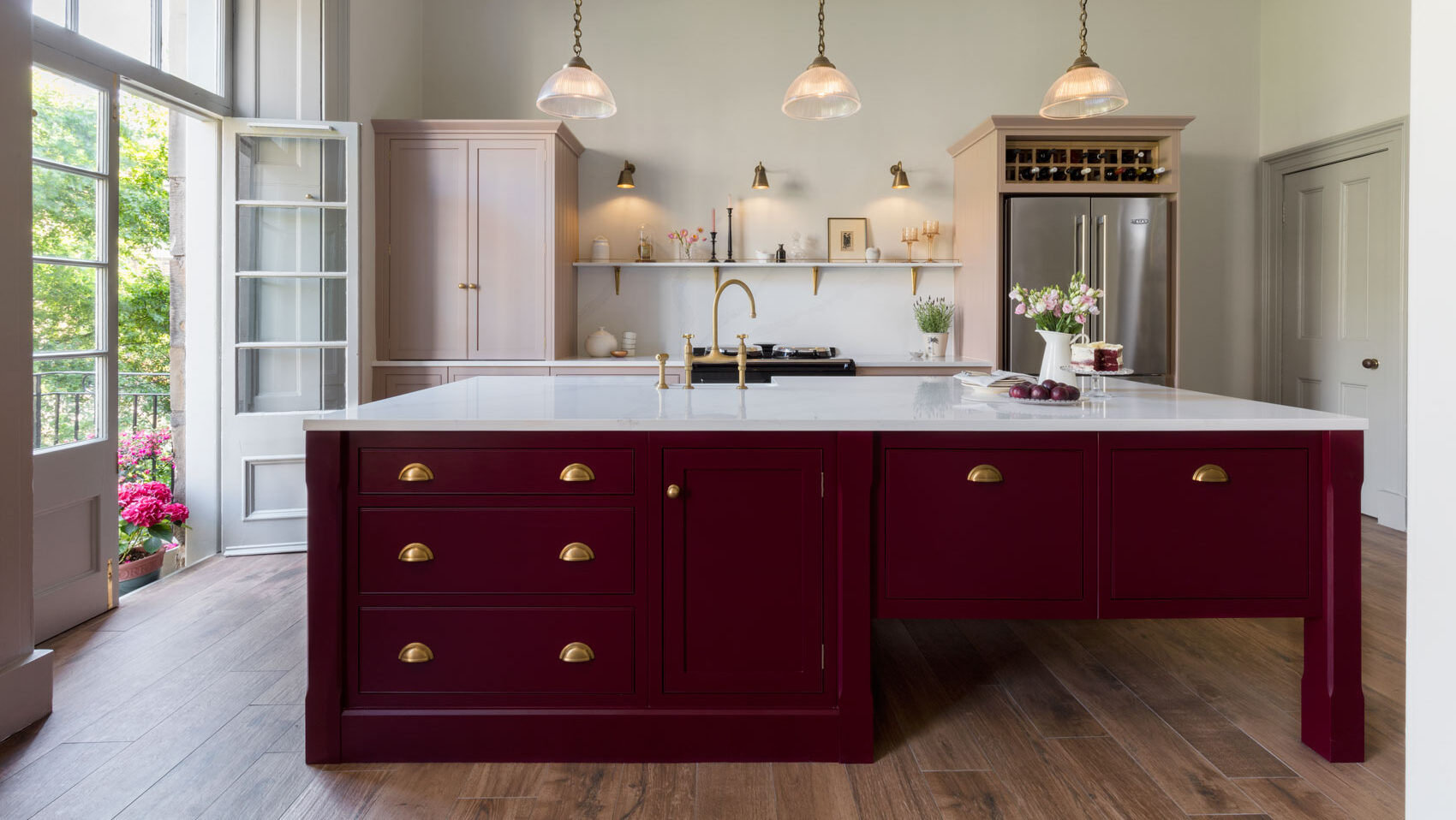
In-frame kitchens are a style of cabinetry where each door and drawer front sits inside a fixed wooden frame, rather than covering it. The result is a classic, handcrafted look that has defined British kitchen design for generations. This guide covers the pros and cons of in-frame kitchens, so you can decide if the style suits your home.
Choosing between an in-frame and a lay-on kitchen is one of the first decisions in any bespoke kitchen project. It shapes how your cabinetry looks, how it performs day-to-day, and how it ages over the years ahead.
At Harvey Jones, in-frame construction sits at the heart of our Shaker and Slim Shaker ranges. We have been building it by hand since 1977, so we know its strengths well, and where it asks a little more of your budget and your kitchen layout.
This guide walks through what an in-frame kitchen actually is, how it compares to lay-on cabinetry, and the honest pros and cons to weigh up before you commit.
Discover real, bespoke kitchen & home inspiration.
What is an In-Frame Kitchen?
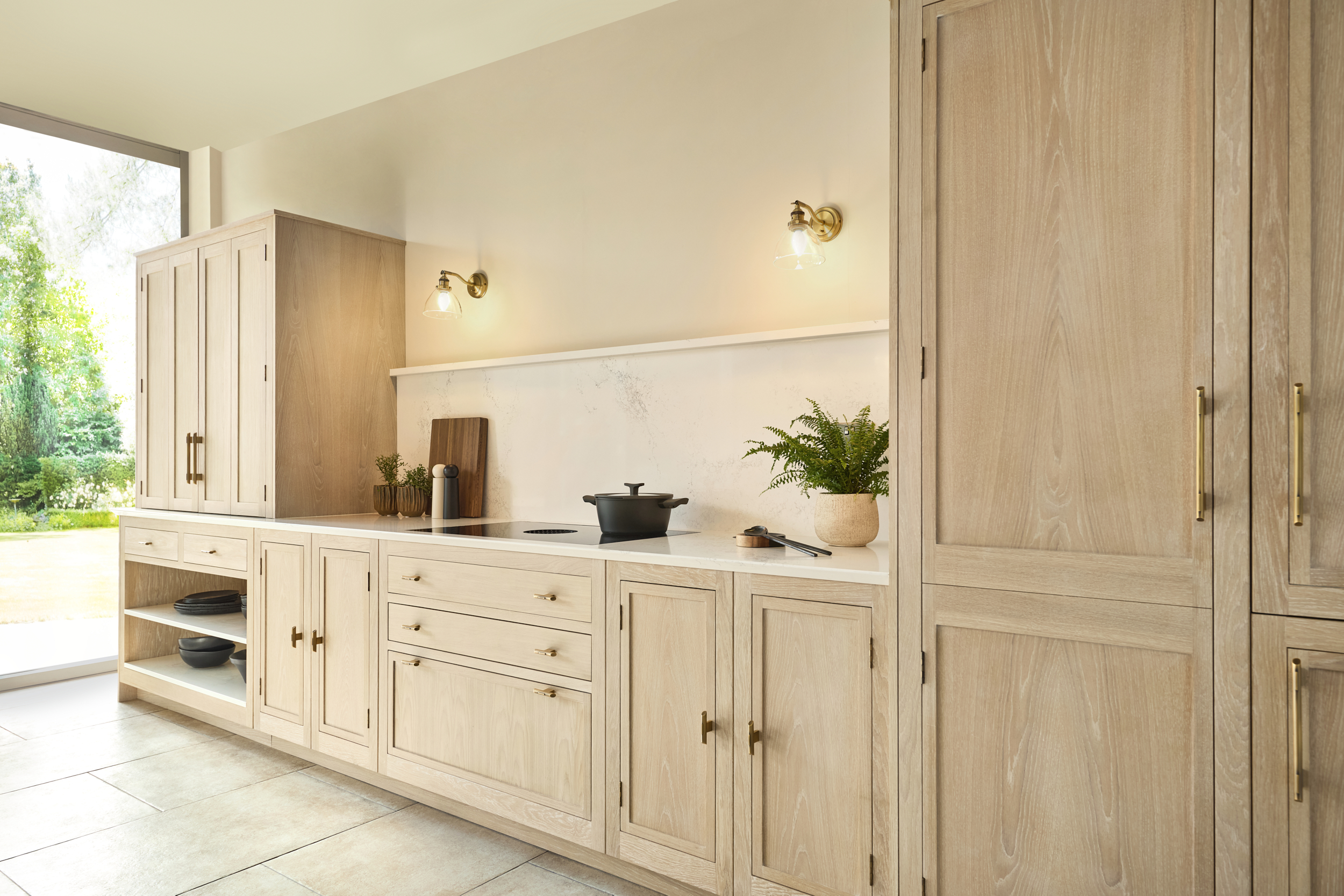
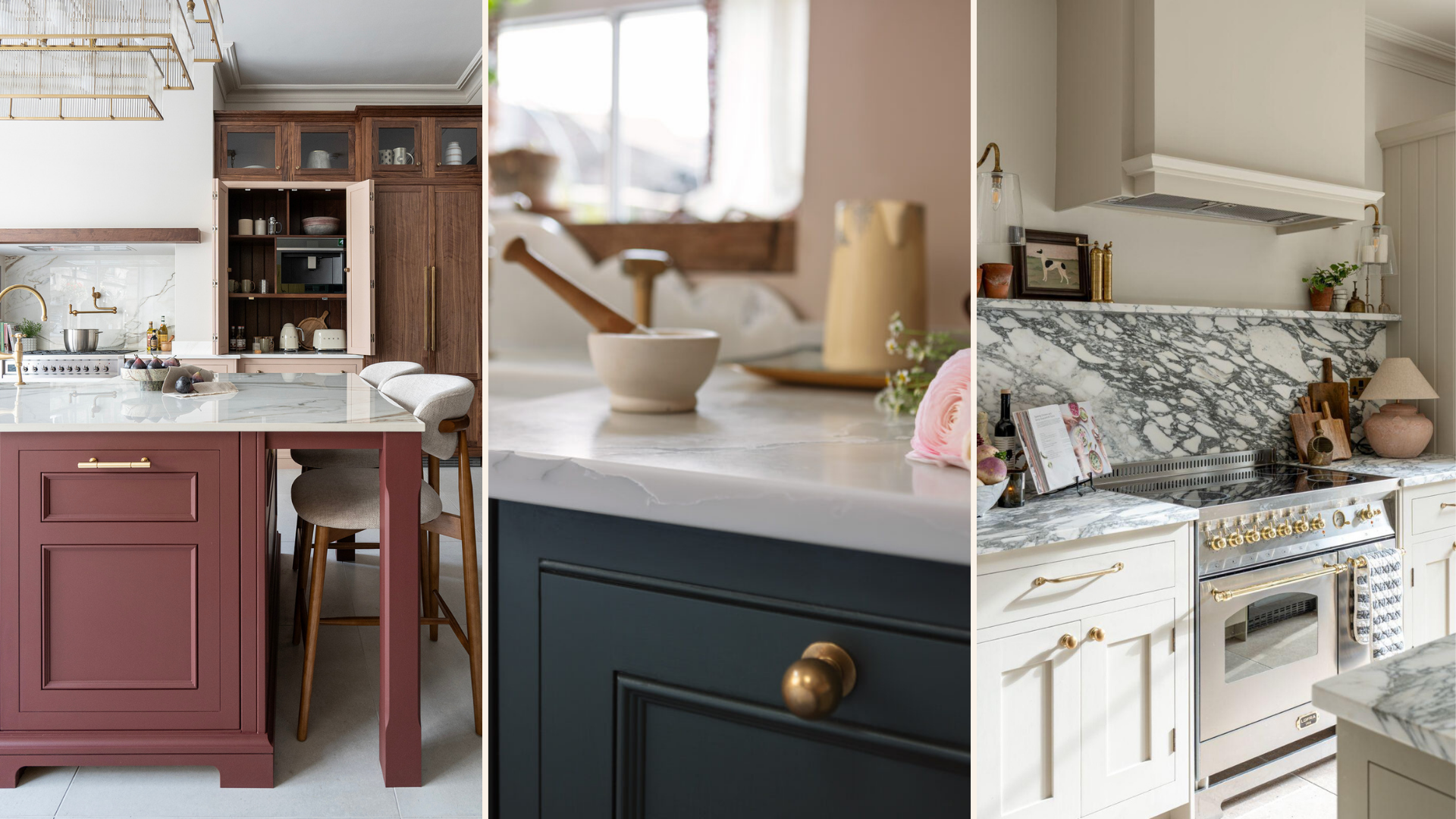
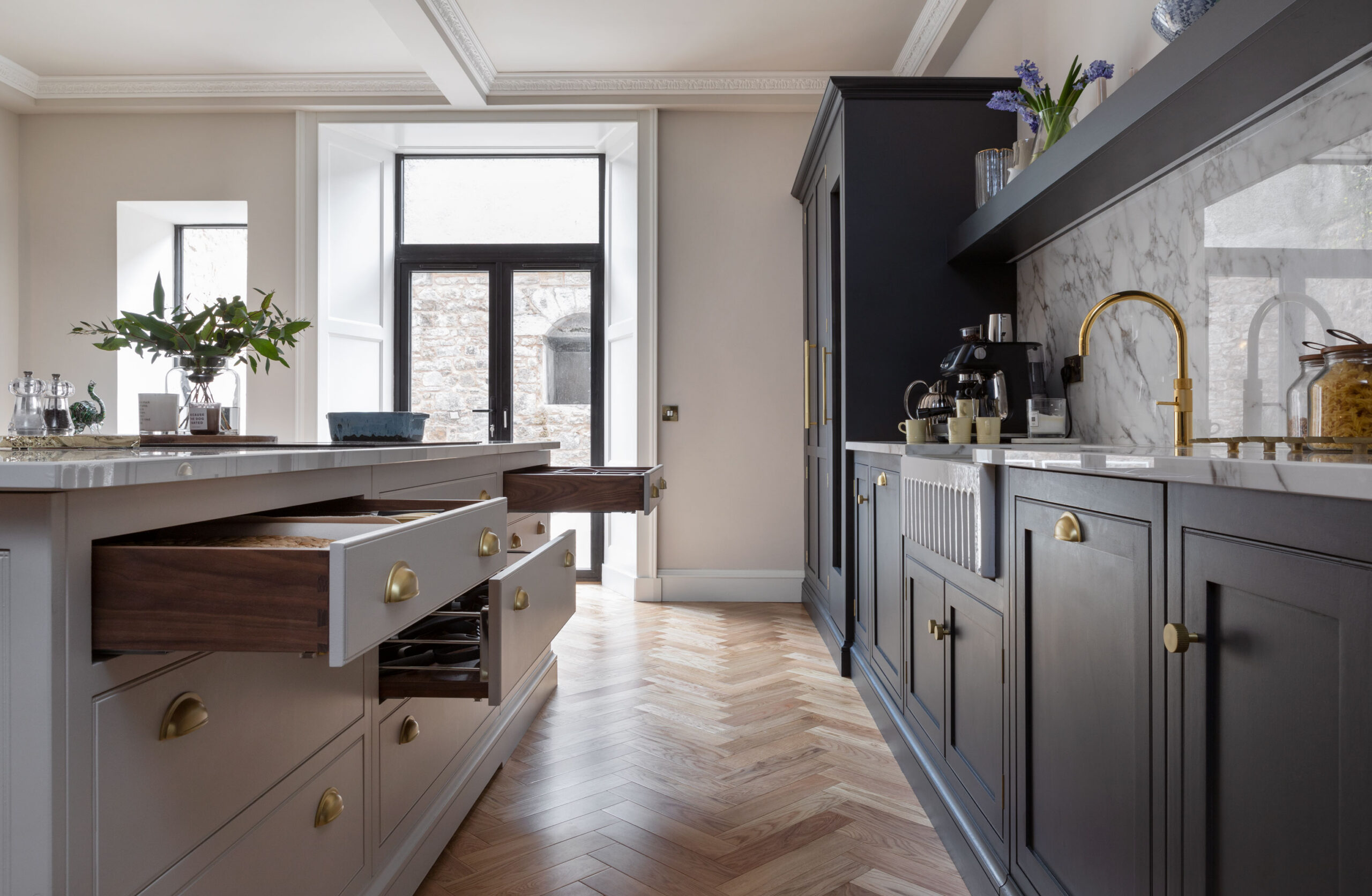
An in-frame kitchen is built with a solid wood frame fixed to the front of each cabinet. The door or drawer front sits inside that frame, flush with its edges, rather than sitting infront of cabinet box. This is different to a lay-on or overlay kitchen, where the door covers the front of the cabinet entirely and no frame is visible.
The technique has deep roots in British cabinetmaking. Furniture makers used framed construction long before fitted kitchens existed, because it strengthens a cabinet and keeps it square over time.
That heritage is part of why in-frame kitchens still read as bespoke and considered rather than mass produced. One of our kitchen designers, Rachel, explains why handmade kitchens are worth the investment:
“A handmade kitchen allows homeowners to have a bespoke, one-of-a kind design that fits perfectly and efficiently to their space and way of life. Plus, the investment in high quality materials and craftsmanship promises durability and long-term value.“
At Harvey Jones, every in-frame kitchen is made to order in our workshop, using traditional joinery and solid timber. It’s one of the reasons our bespoke fitted kitchens carry a look that off-the-shelf cabinetry cannot easily replicate.
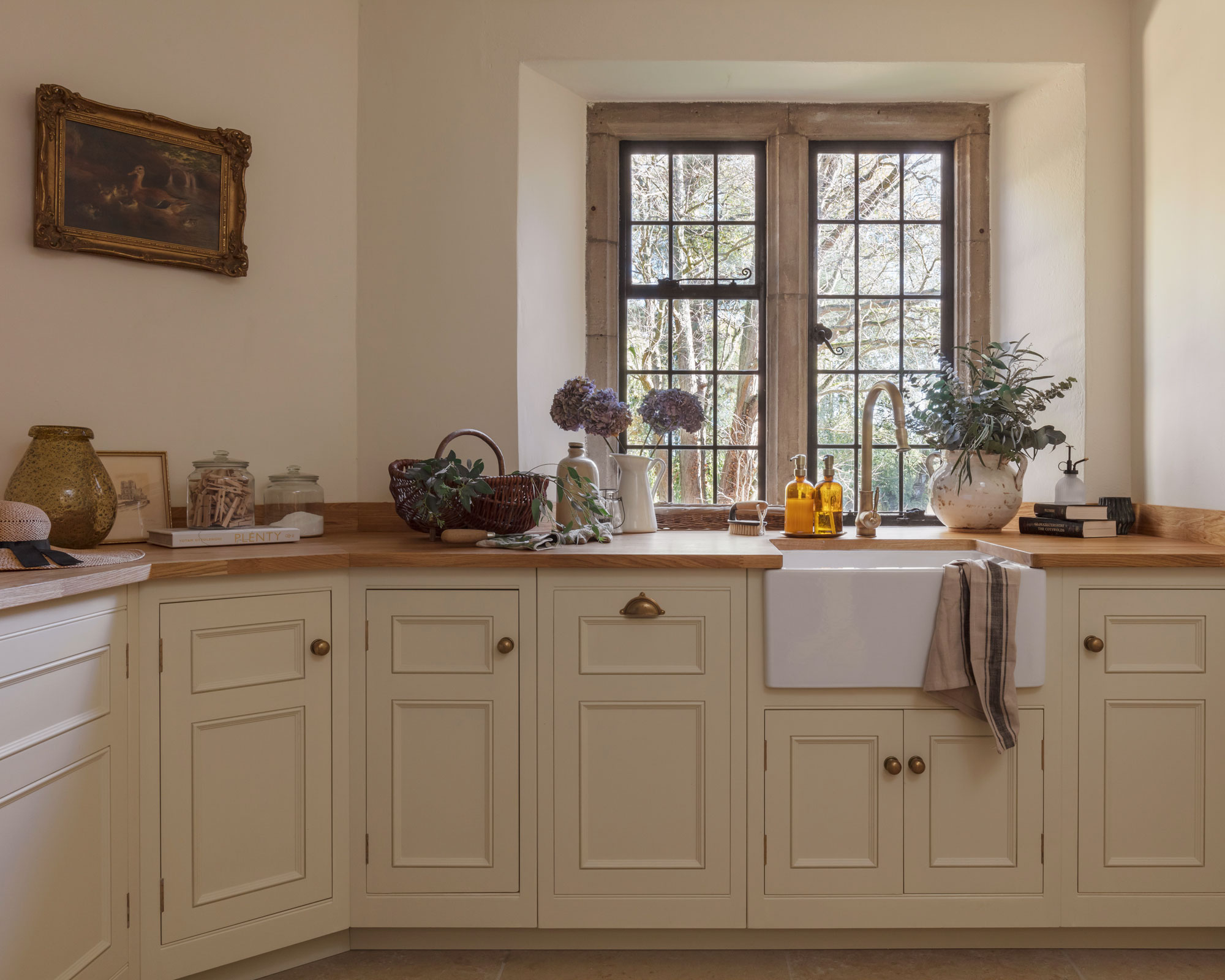
In-Frame vs Lay-On Kitchens: What is the Difference?
What is better, framed or frameless cabinets? It depends on the look and the budget you want. Neither is objectively better. In-frame kitchens tend to suit traditional, farmhouse and transitional interiors, while lay-on or handleless kitchens suit a sleeker, more contemporary space.
| In-Frame Kitchen | Lay-On Kitchen | |
|---|---|---|
| Look | Traditional, heritage, defined by a visible frame | Streamlined, with no frame on show |
| Storage | Slightly reduced by the frame, but bespoke | Maximised, full width of the cabinet |
| Price | Higher, reflecting skilled joinery | More accessible |
| Best suited to | Shaker, country and period homes | Modern and minimalist kitchens |
Are inset cabinets more high end? Generally yes. The extra joinery, material and time involved place in-frame kitchens firmly in the high end kitchen design bracket, alongside other premium finishes like solid wood cabinetry and hand painted doors.
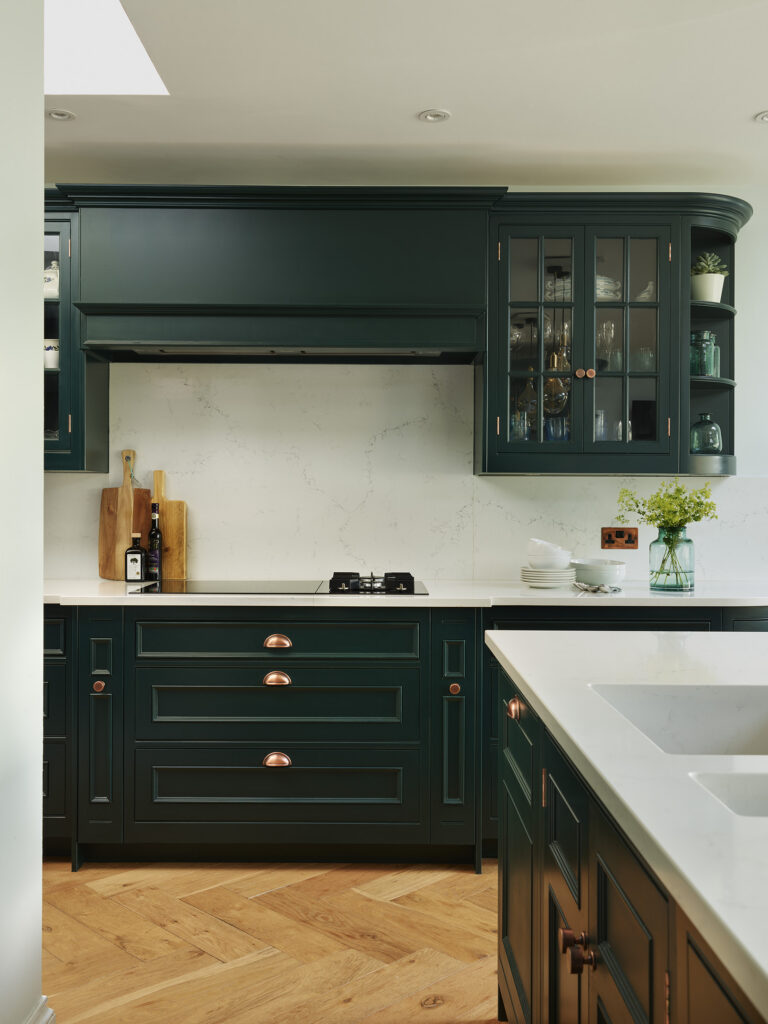
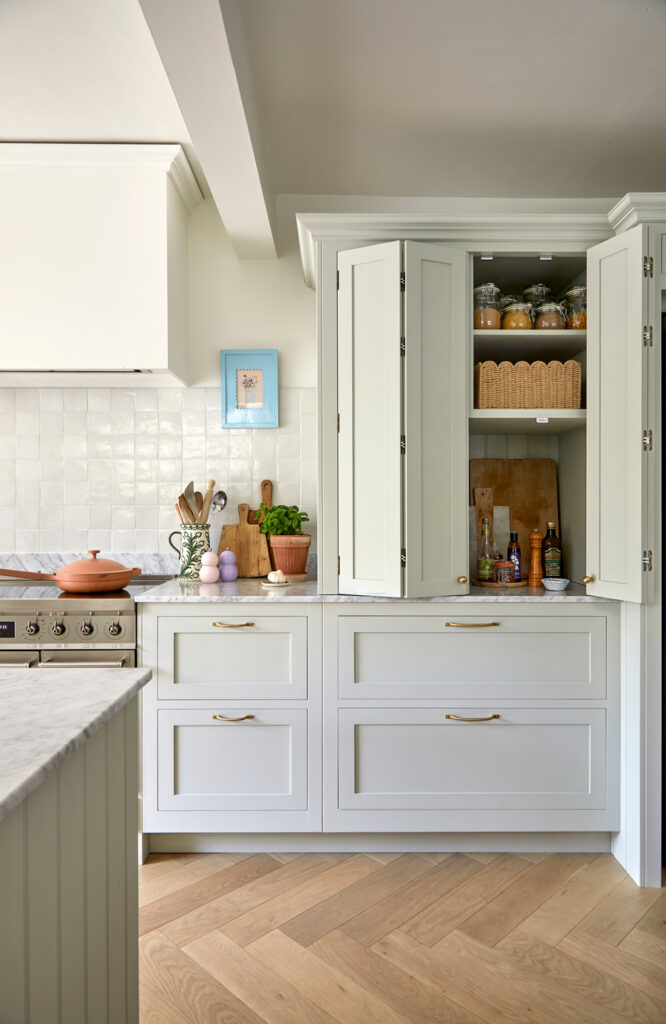
The Pros of an In-Frame Kitchen
1. A Timeless, High-End Look
The visible frame gives every door a crafted, considered appearance. This defining feature of luxury bespoke kitchens particularly complements Shaker, country and period settings, while also adapting to more contemporary interiors.
2. Exceptional Durability
Because each door hangs from a solid wood frame rather than a thinner cabinet panel, in-frame kitchens tend to hold their shape well. The frame protects the edges of the cabinet from everyday wear, which matters in a kitchen that sees daily use for decades.
3. Sag-Resistant Doors
The hinges attach directly to the solid frame instead of a softer side panel. This keeps doors hanging true for longer, with less risk of the sagging that can affect some lay-on cabinetry over time.
4. Bespoke Flexibility
Cabinetmakers almost always make in-frame cabinetry to order, so it suits unusual layouts, non-standard sizes and specific storage needs. It’s a natural fit for a bespoke painted kitchen, where every dimension is planned around the room rather than a fixed catalogue size.
5. Hinge and Hardware Choice
You can choose traditional exposed butt hinges for period charm, or concealed hinges for a cleaner line. Either way, the frame gives you more options to personalise the finished look than a flat, handleless design typically allows.
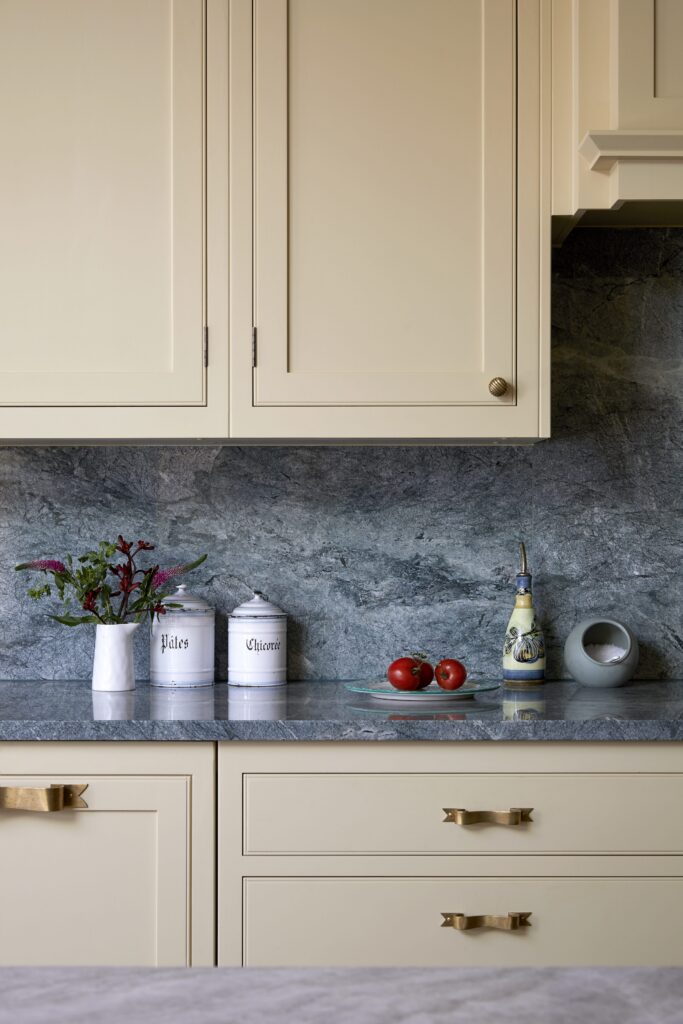
The Cons of an In-Frame Kitchen
1. Higher Quality, Higher Cost
In-frame kitchens generally cost more than lay-on alternatives. The skilled joinery, additional timber and longer build time all add up. It’s an investment in longevity and craftsmanship rather than a budget-first choice, so it’s worth weighing against how long you plan to stay in the kitchen.
2. Reduced Storage Space
Because the door sits inside the frame rather than over it, the usable opening is very slightly smaller than on a lay-on cabinet. In a compact kitchen, this can be worth discussing with your designer early on.
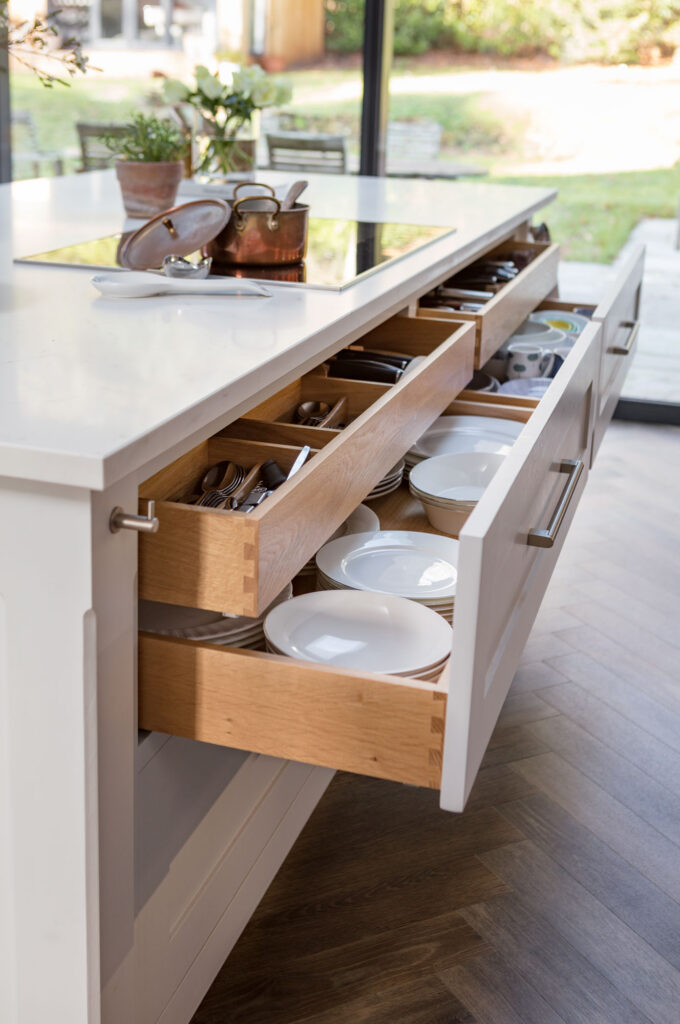
3. Smaller Drawer Capacity
Drawers follow the same principle. They sit within the frame, so drawer boxes can be a little narrower and shallower than they would be on an equivalent lay-on unit.
4. Higher Maintanence
The recessed detailing around each frame can collect dust and grease more readily than a flat, seamless front. A little more regular attention keeps it looking sharp, though many owners find this a fair trade for the character it brings.
5. Precise Installation Required
Doors need to sit accurately within the frame, with an even gap all round. This calls for skilled fitting, which is one reason we handle design, manufacture and installation as one service rather than leaving it to chance.
Charlotte, one of our expert kitchen designers, speaks about the importance of knowing how your cabinetry is made:
“Cabinetry construction is one of those things that’s overlooked during the kitchen design process – it’s not the most glamerous thing to talk about but will make a huge difference to the longevity of your kitchen!”
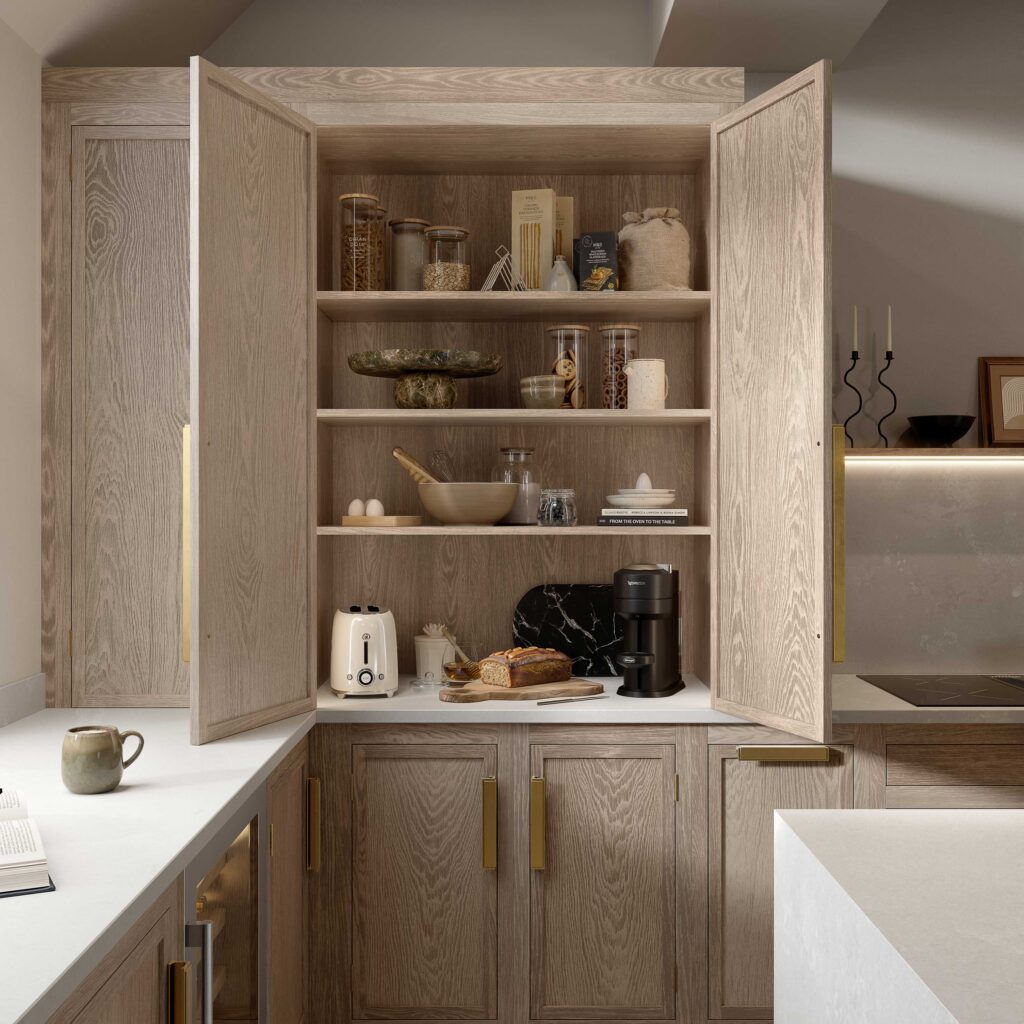
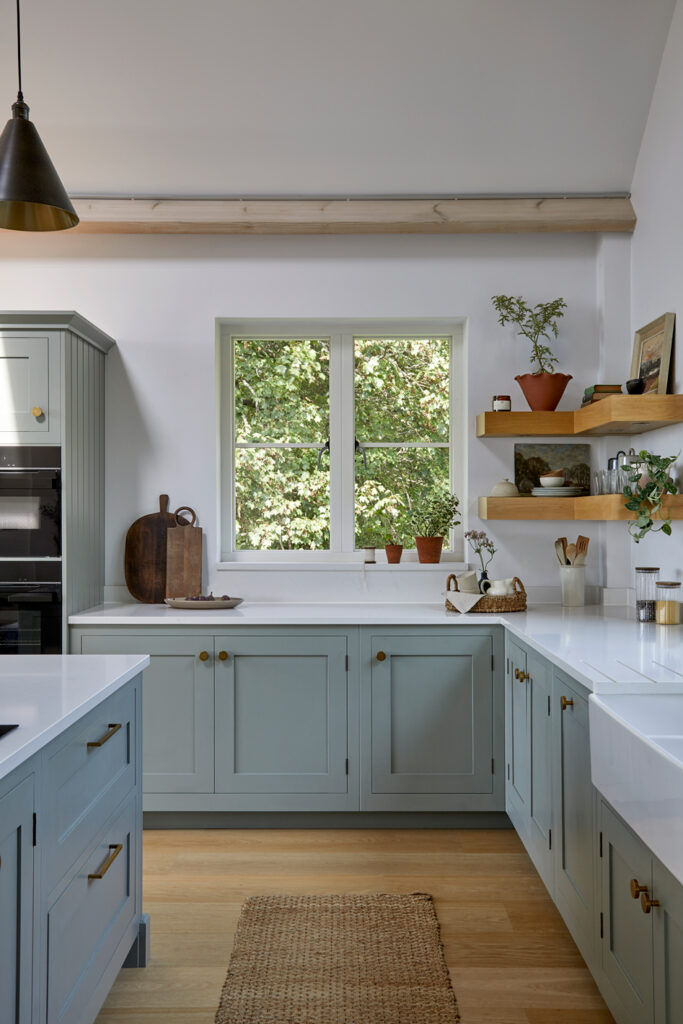
In-Frame Shaker Kitchens
The in-frame structure is what gives a Shaker kitchen its signature look. Our Shaker kitchens and Slim Shaker kitchens are both built this way, with the Slim Shaker offering a narrower frame for a lighter, more contemporary take on the same joinery.
If you are drawn to an in frame shaker kitchen specifically, discover our inspiration gallery for the full detail on real kitchen projects.
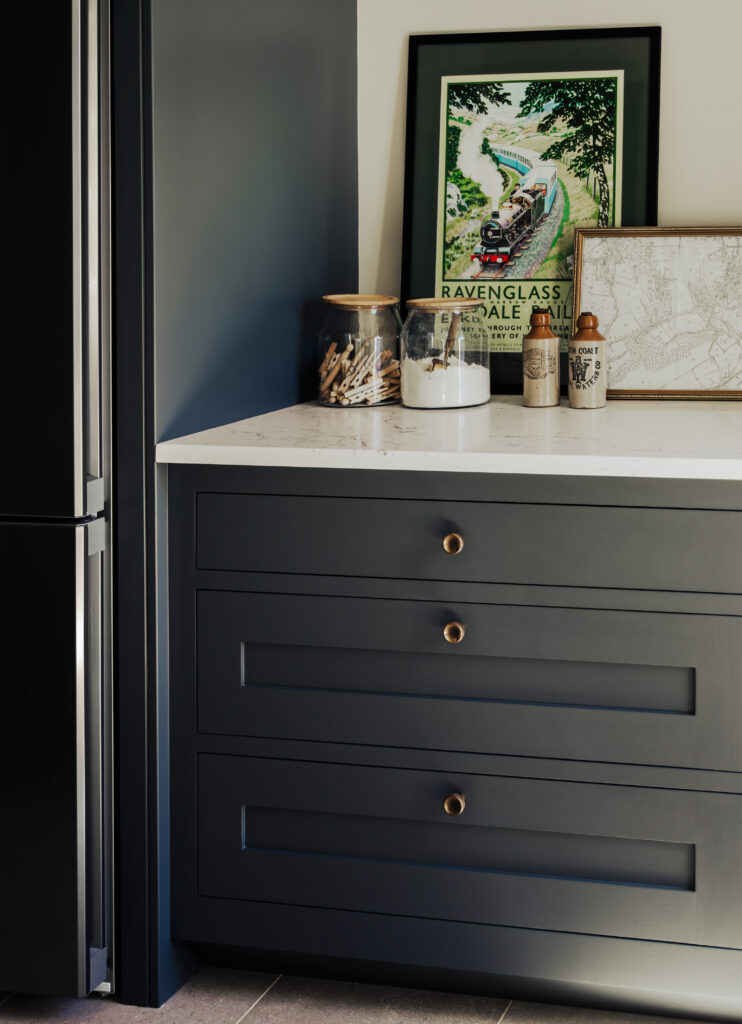
Bespoke In-Frame vs Off-The-Shelf Kitchens
An off the shelf or flat pack kitchen cannot replicate true in-frame construction at scale. The joinery involved needs skilled hands and time, which is why the style is closely associated with bespoke and handmade kitchens rather than mass production.
Here’s the same passage rewritten in active voice while keeping the meaning and tone:
Choosing bespoke also means you can tailor the frame itself, not just the paint colour. You can adjust the proportions, timber choice and hinge style to suit your room, rather than fitting your space around a standard size. A made to measure approach delivers lasting value long after installation.
Is an In-Frame Kitchen Right for You?
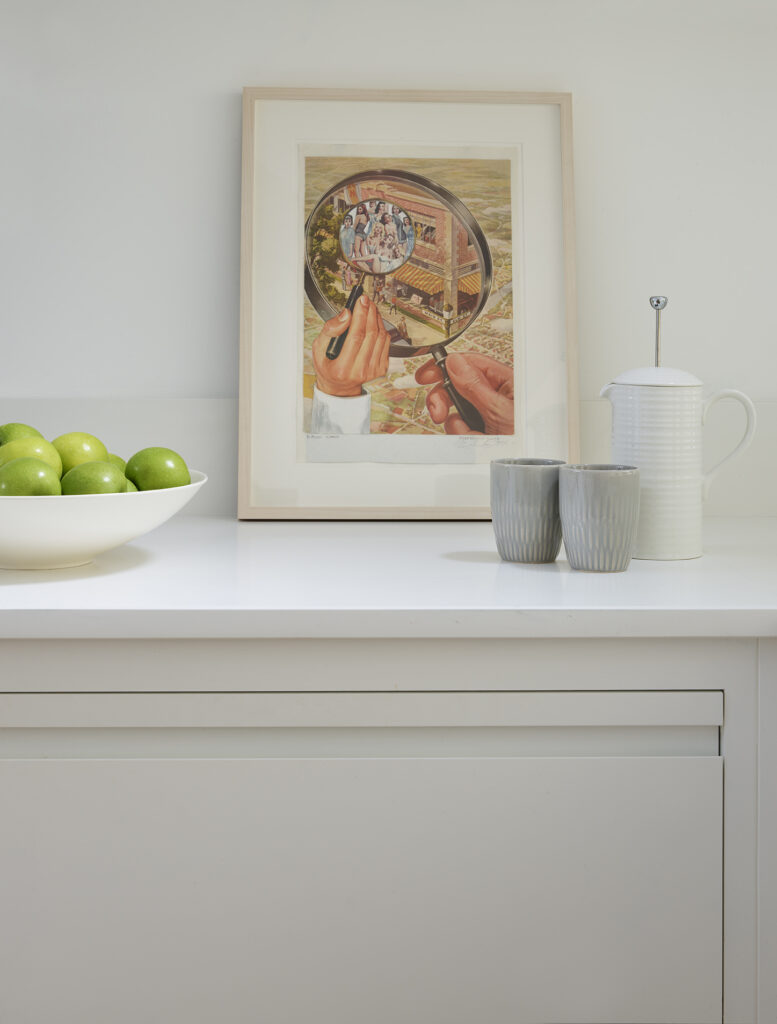
An in-frame kitchen suits you if you value a traditional, high end look, plan to stay in your home for years to come, and are happy to invest a little more for craftsmanship that lasts.
If you are working with a smaller kitchen or want to maximise every centimetre of storage, it’s worth discussing your priorities with a designer who can plan bespoke solutions.
Ready to Design a Bespoke, In-Frame Kitchen?
In-frame kitchens bring a timeless look, genuine durability and the flexibility that comes with bespoke joinery. For many homeowners planning a kitchen built to last decades rather than years, that trade-off is worth making.
At Harvey Jones, every in-frame kitchen is designed around you and handcrafted in our workshop. Request a design appointment to design yours.
FAQs about In Frame Kitchen Pros and Cons
Are in-frame kitchens worth it?
For most homeowners planning a long-term kitchen, yes. The higher upfront cost reflects genuine durability and craftsmanship, which tends to pay off over the years the kitchen is in use.
What is the difference between in-frame and non in-frame kitchens?
An in-frame kitchen has a visible wooden frame around each door and drawer, while a non in-frame or lay-on kitchen has doors that sit over the cabinet with no frame showing.
What are the benefits of in-frame kitchens compared to other kitchen styles?
In-frame kitchens offer a traditional look, strong durability and doors that resist sagging, thanks to hinges fixed into a solid wood frame rather than a thinner panel.
Can I customise an in-frame kitchen with different wood finishes and colours?
Yes. In-frame kitchens are made to order, so timber choice, paint colour and hardware can all be tailored to your home.
Where can I find bespoke in-frame kitchen designs in the UK?
Harvey Jones has been designing and handcrafting bespoke in-frame kitchens in Britain since 1977, with showrooms across the UK.
Begin your design journey and craft your dream kitchen.