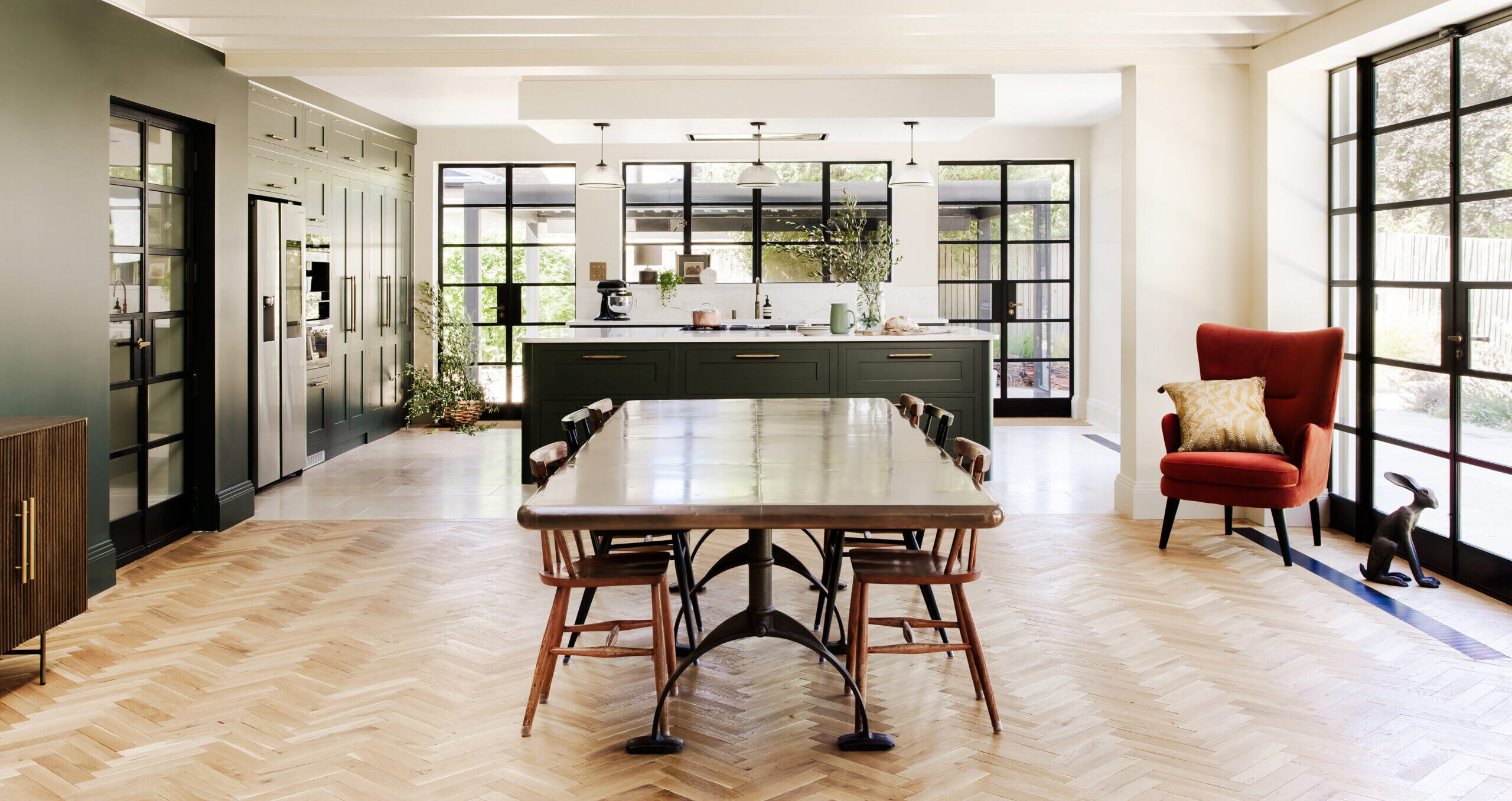
Whether you’re hosting a summer supper club in the garden or a candlelit Christmas dinner, the right entertaining kitchen layout makes all the difference. Not just in how your home looks, but in how it feels when it’s full of life.
The best hosting kitchens aren’t designed around perfection. They’re designed around flow. They should be a space that works with you rather than against you.
At Harvey Jones, our bespoke luxury kitchens are handcrafted around your lifestyle. So whether you’re a frequent entertainer or someone who simply loves having people over, this guide covers everything you need to plan a kitchen that’s genuinely made for hosting.
Discover real, bespoke kitchen & home inspiration.
Why Layout is Everything When it Comes to Hosting
A kitchen layout is more than where the oven sits or how many stools you can fit. It’s the unspoken framework that shapes how guests move through your home, how conversations flow and how relaxed everyone feels, including you.
A thoughtfully planned hosting kitchen keeps movement intuitive, zones clearly defined and the cook at the centre of the occasion rather than cut off from it.
So what layouts truly deliver when entertaining is the priority? Here’s our recommendations – suited to large open plan spaces and smaller bespoke kitchens alike.
The Best Kitchen Layouts for Entertaining Guests
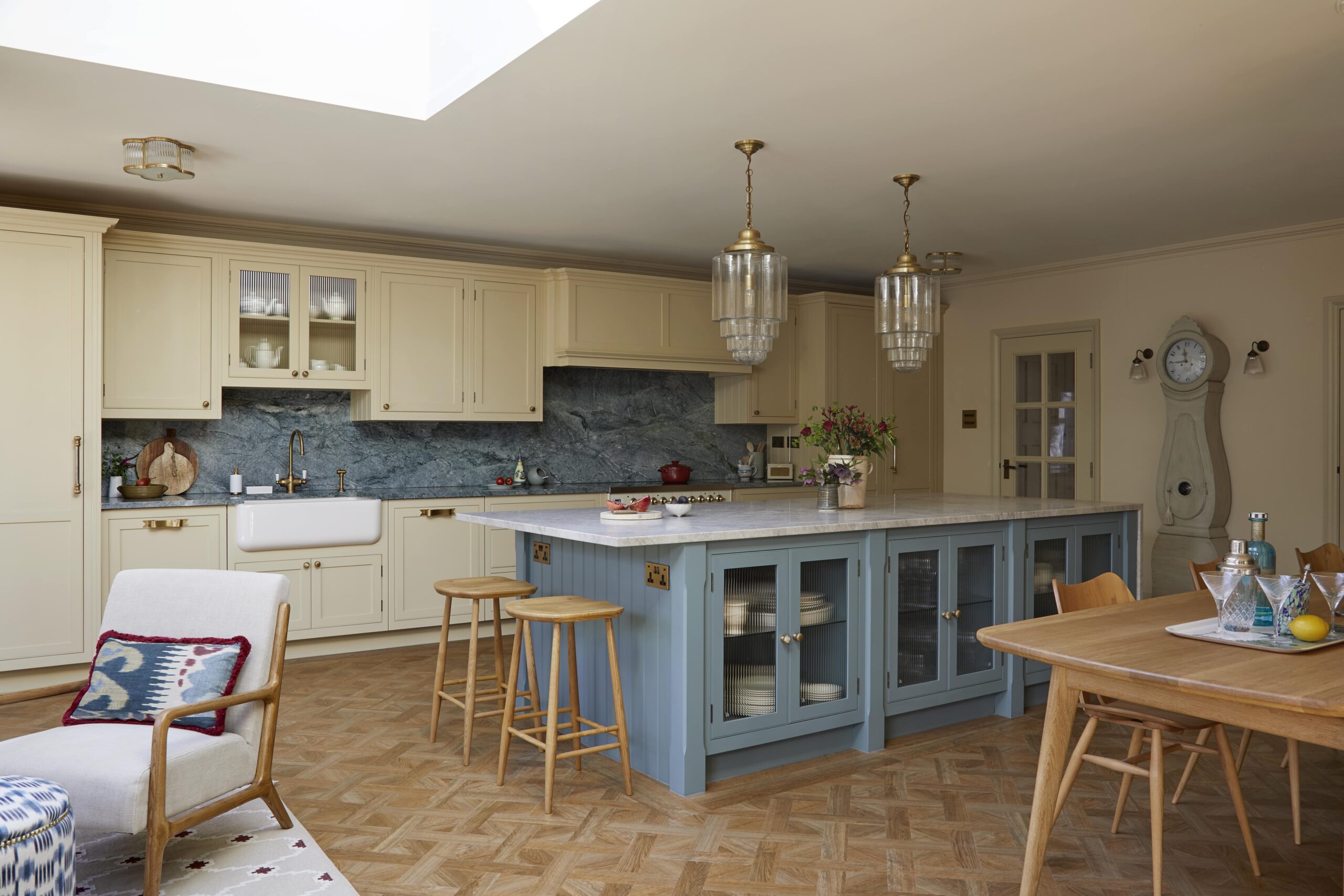
1. The Kitchen Island: Every Host’s Best Friend
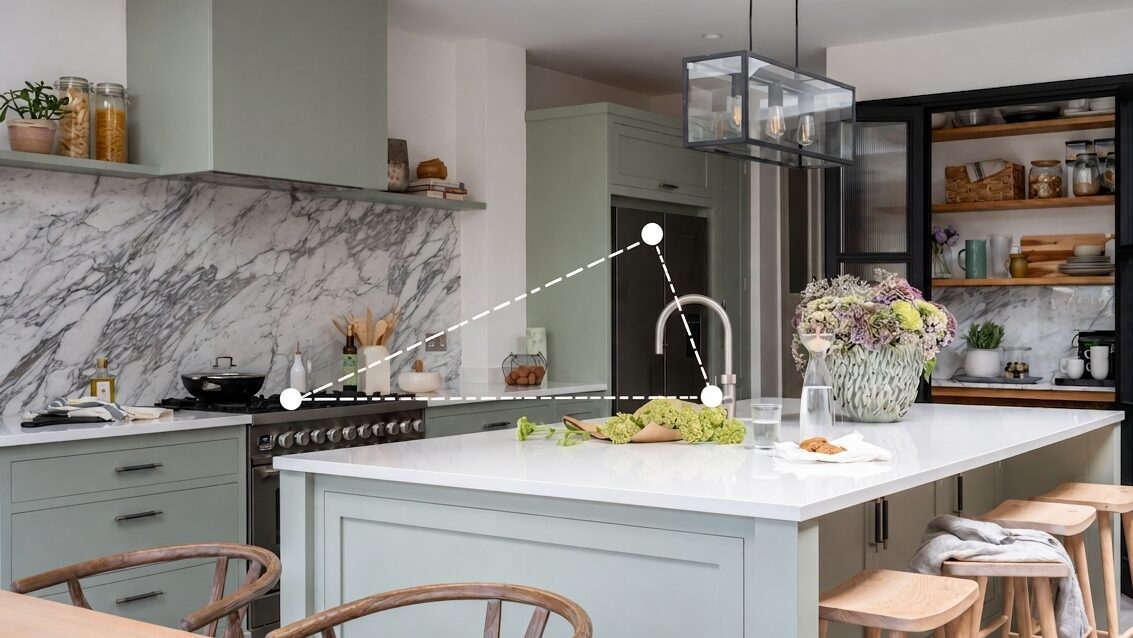
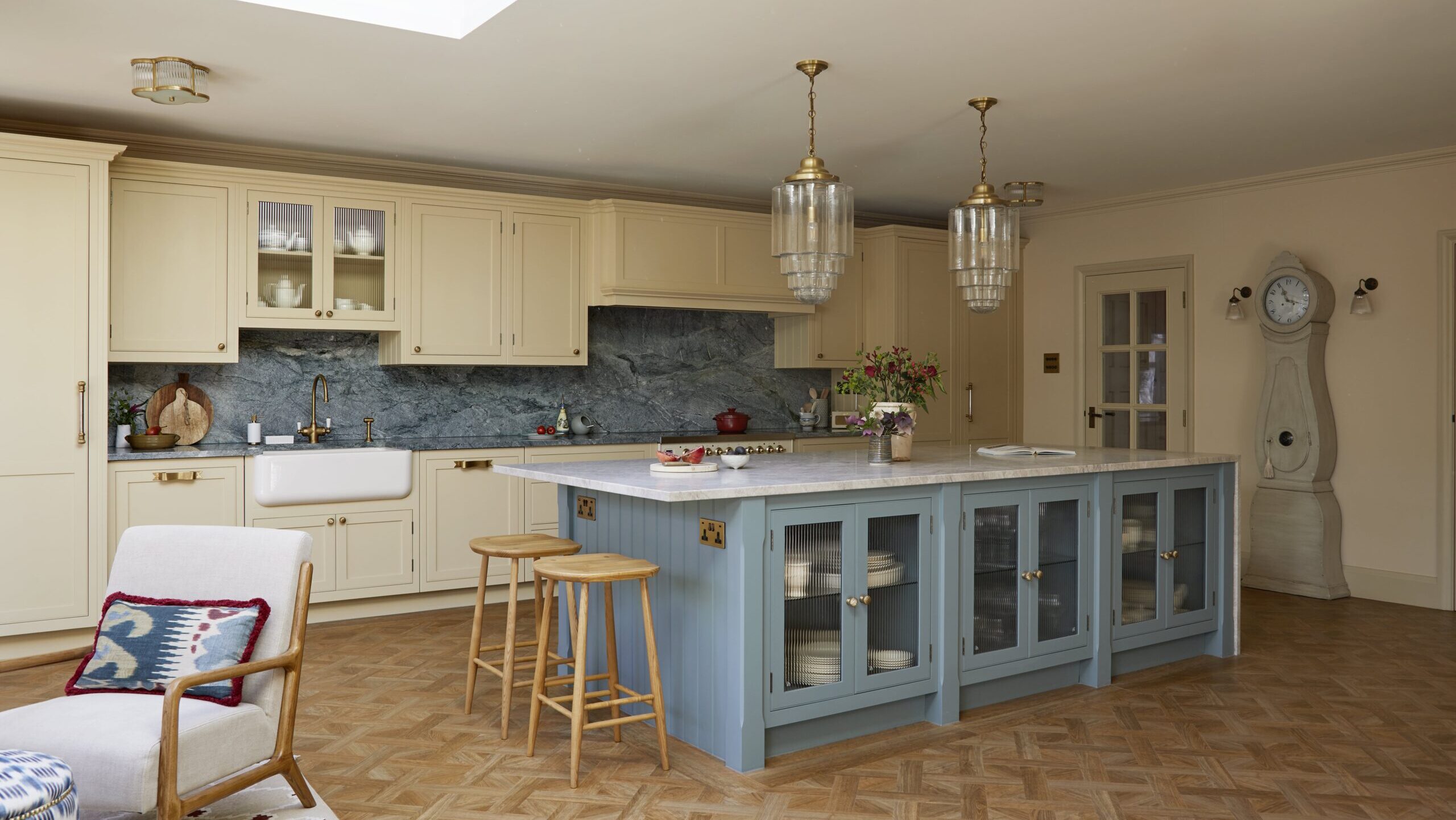
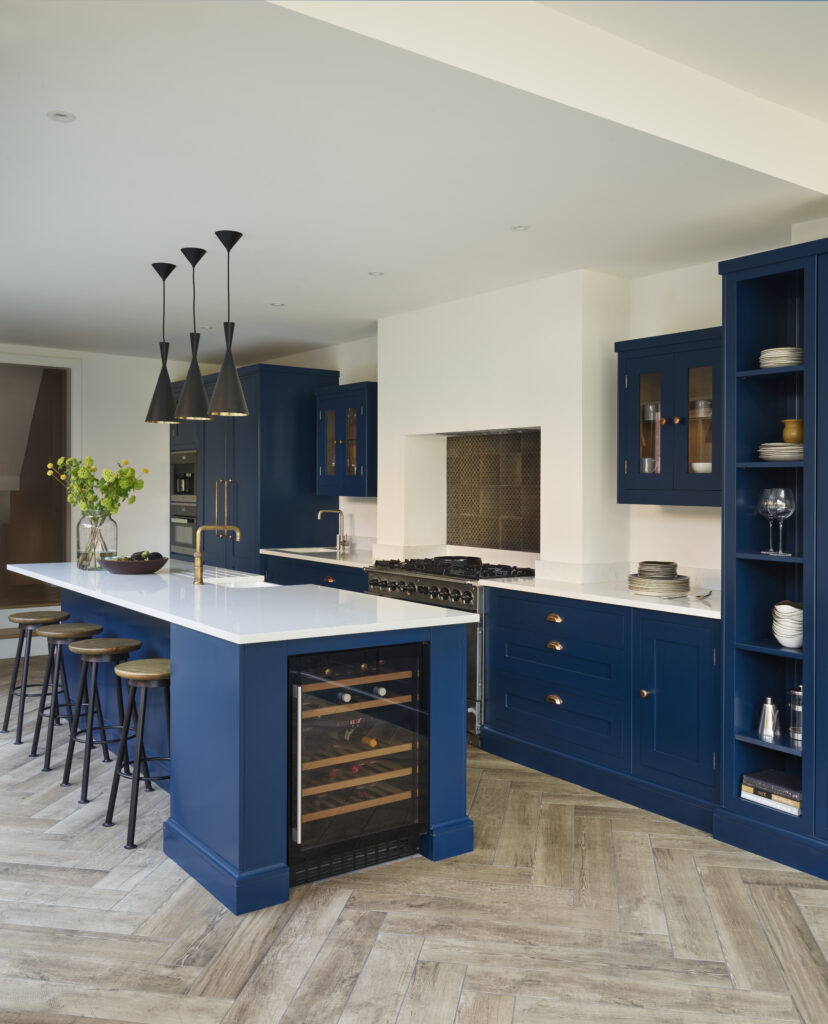
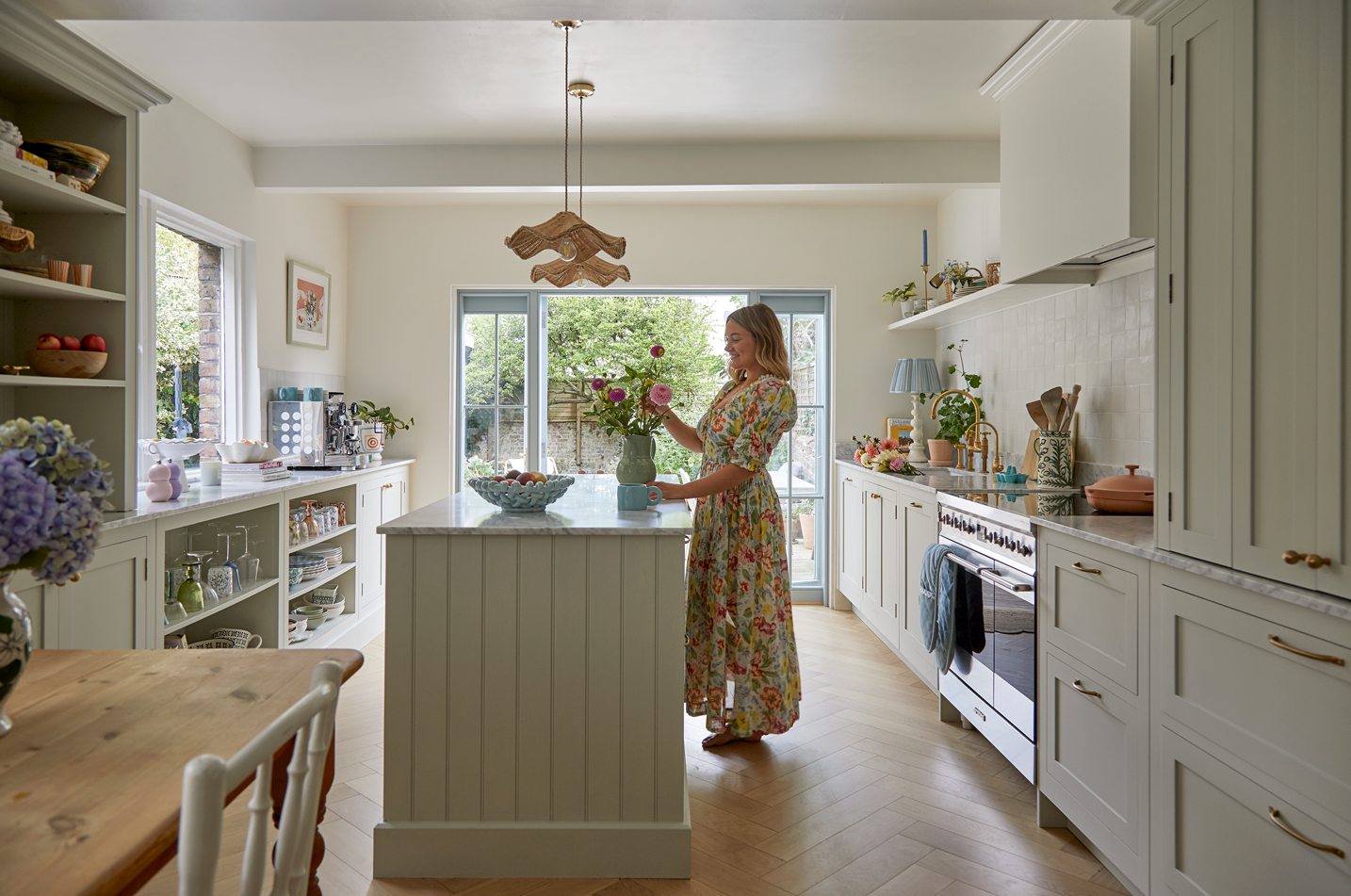
Ask any designer what single feature transforms a kitchen designed for entertaining and the answer is almost always the island. It’s the natural gathering point – the place guests drift towards for wine, conversation and the odd stolen canapé while you plate up.
A bespoke kitchen island bridges cooking and socialising without disrupting one another. With seating on one side and prep space on the other, you can finish plating up and hold a conversation. Add an integrated wine fridge, a prep sink or a built-in hob facing outward and you have a fully functioning hosting station.
For larger kitchens, a double-height island creates a natural visual divide between the chef’s zone and the guest zone. For smaller spaces, a slimmer island or peninsula delivers the same social magnetism with a lighter footprint.
As Sally Hinks, one of our expert kitchen designers, explains:
“We design islands as gathering spaces for connection, not just workstations. Think wine and workflow in one place.”
2. Open Plan Kitchen Layout: Made for the Way People Really Entertain
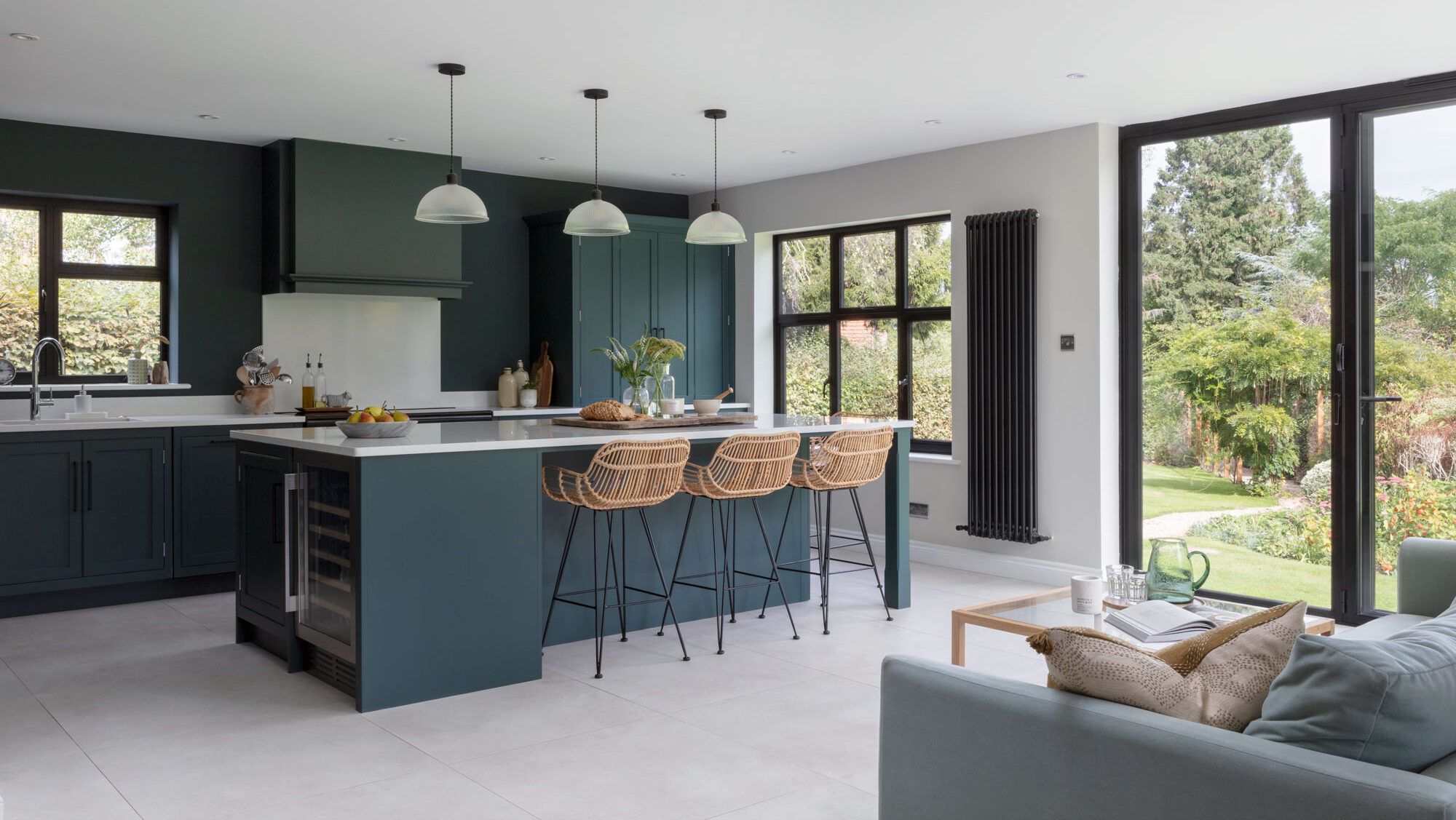
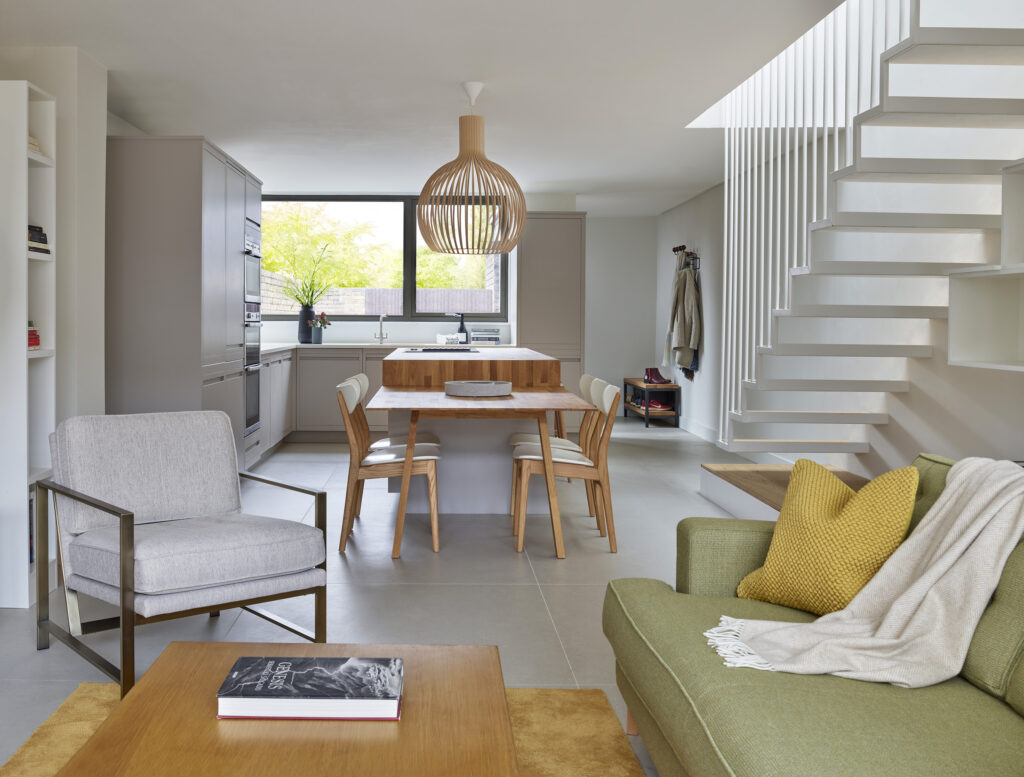
No matter where a party starts, it tends to end up in the kitchen. By merging kitchen, dining and living zones into a single connected space, an open-plan kitchen layout for entertaining removes the barrier between host and guest entirely. As Rachel, one of our luxury kitchen designers, explains:
“The best hosting spaces let people flow effortlessly. Open plan gives you that room to breathe.”
For summer hosting, the flow of an open-plan space extends naturally outdoors when paired with bifold or sliding doors.
For Christmas and winter entertaining, the same layout creates that warm, inclusive atmosphere where everyone gathers around the light and heat of the kitchen.
The key to making open-plan work beautifully is how the space is organised. With practical structure and strategic zoning, large open plan kitchens can feel both connected and cosy.
3. L-Shaped and U-Shaped Layouts: For the Home Cooks
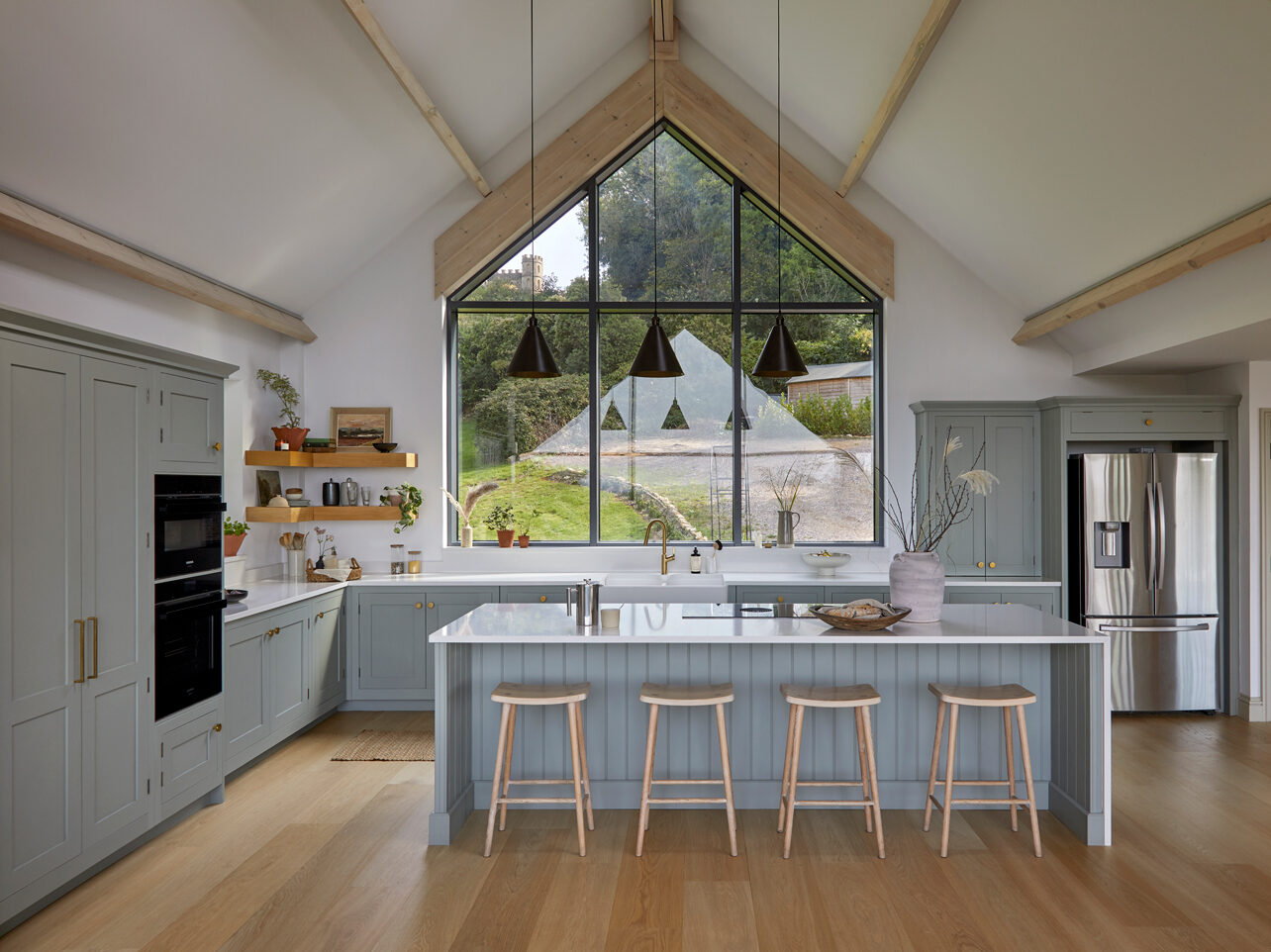
For homeowners who love cooking as much as they love hosting, L-shaped and U-shaped layouts offer something the island-centric open-plan sometimes can’t: serious prep capacity.
An L-shaped kitchen creates a natural flow between cooking, prep and plating, with one long run for appliances and another for worktop space. It opens the room up on two sides, leaving plenty of space for a dining table or a casual seating area.
A U-shaped kitchen takes this further, wrapping cabinetry around three walls to create an enclosed chef’s zone. For larger households that entertain regularly – think Sunday roasts for ten – the U-shape gives you the workspace to handle it all without the kitchen feeling overwhelmed.
Neither layout needs to feel closed off. With the right cabinetry design, sight lines can be kept open and the cook remains visible and connected to guests throughout.
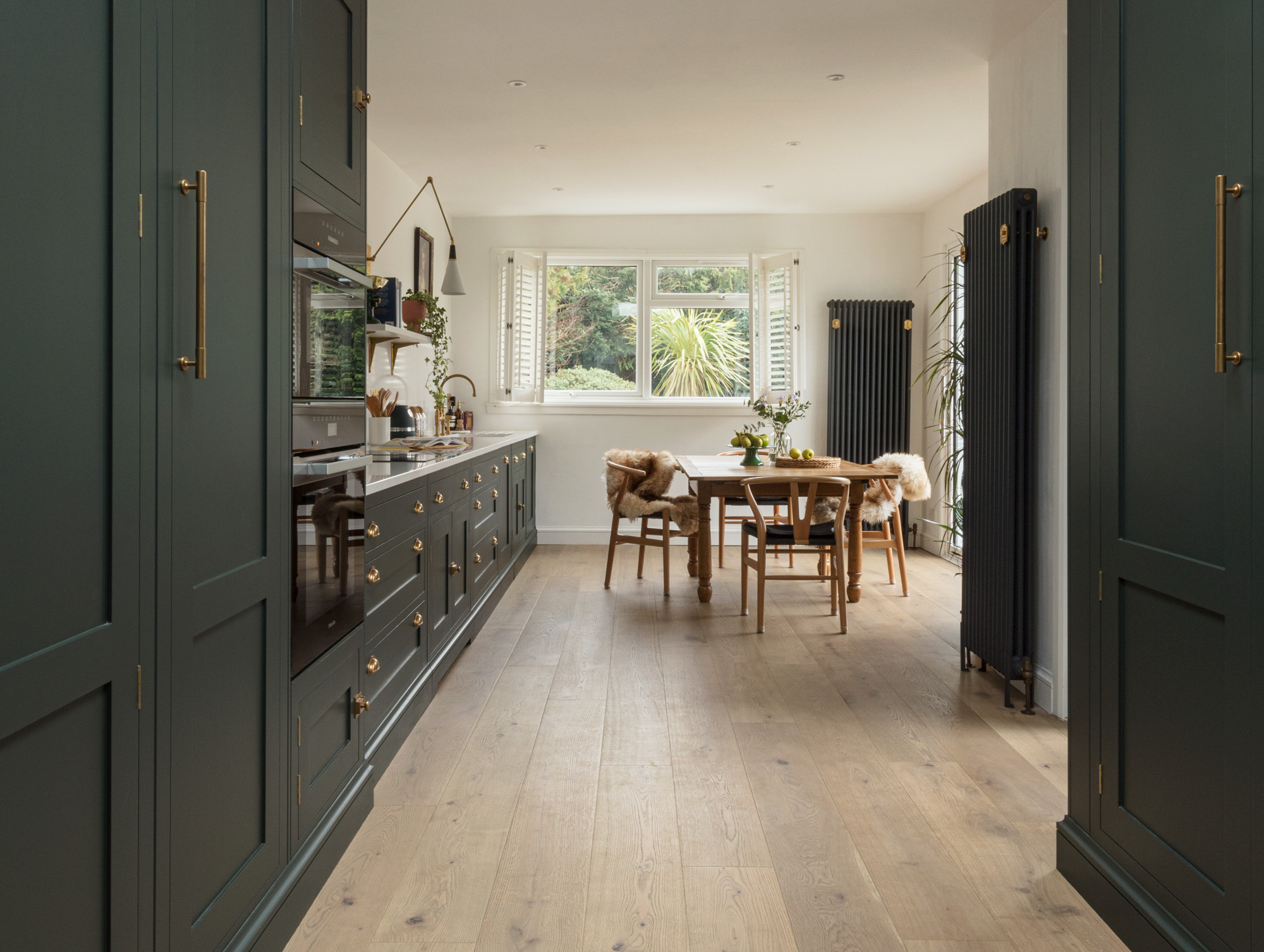
4. Galley Kitchens: Host-Friendly Solutions
The galley kitchen has a reputation for having no room for a crowd. But in practice, a well-designed galley can work as an efficient kitchen layouts for hosting.
The secret is what you do with the space beyond the galley itself. When a galley kitchen opens directly onto a dining room or living area, the combination can be incredibly effective. The cook has a clear, uninterrupted run of workspace while guests gather at the table just steps away.
For smaller homes and flats where space is genuinely tight, this approach – efficient galley plus adjacent social space – is often the most practical route to a hosting-friendly kitchen.

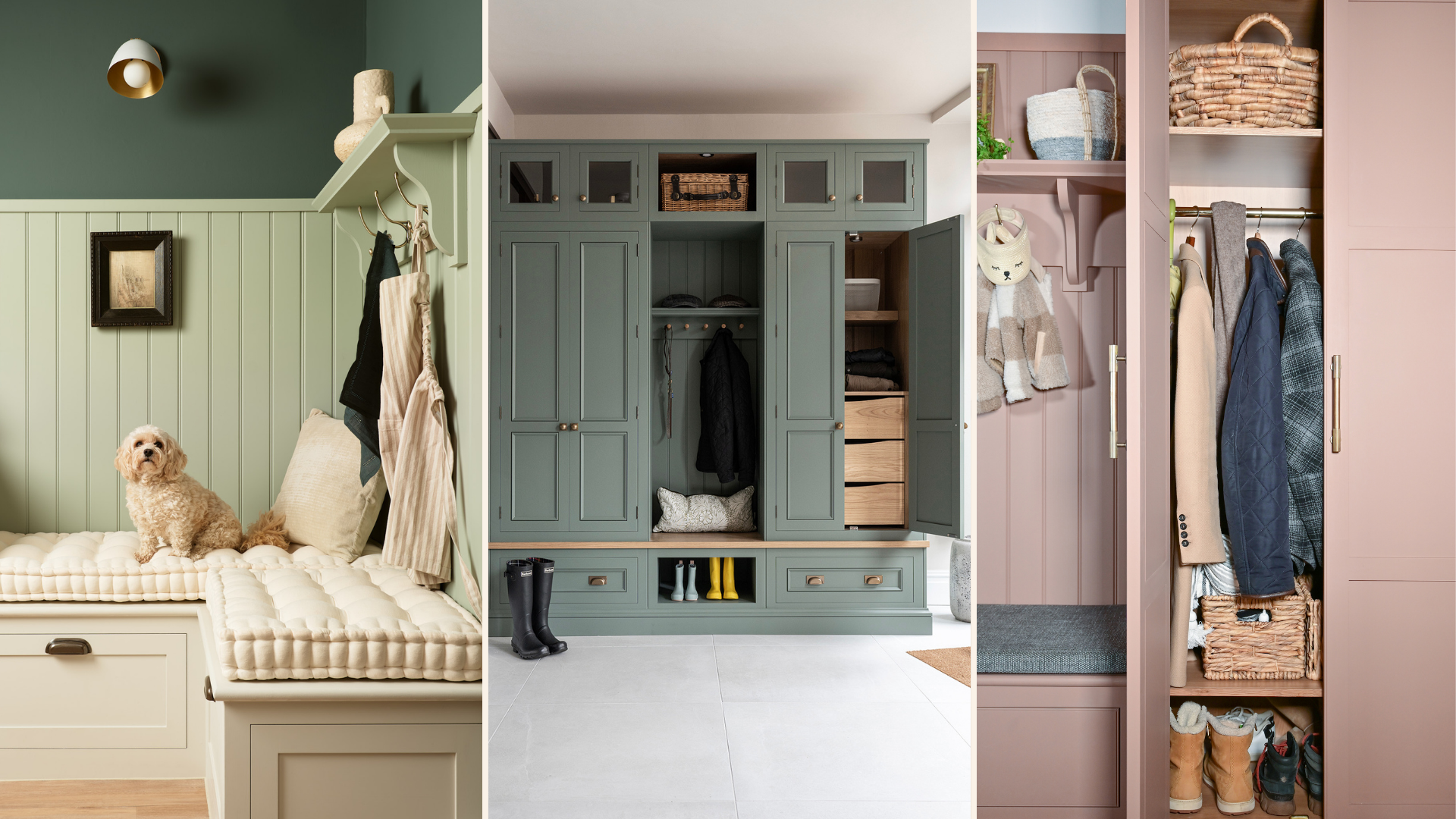
5. The Hosting Pantry: Your Secret Weapon
In a kitchen designed for frequent entertaining, a bespoke kitchen pantry transforms hosting from hectic to calm. It’s where the prep happens before guests arrive. Where spare glassware lives. Or maybe where you’ve set up a self-serve drinks station so guests can help themselves.
Today’s hosting pantry is a world away from old traditional larders. Think built-in shelving for glassware and serving platters, integrated wine fridges, hidden charging points for speakers or lighting and even a compact prep sink.
For seasonal entertaining, like Christmas dinner, a walk-in pantry comes into its own. Store bulk-bought ingredients, festive serving ware and the extra glassware you only use in December neatly, and access everything easily when you need it.
Hosting Kitchen Essentials: The Features That Make the Difference
Getting the layout right is the foundation. But the details are where a good hosting kitchen becomes a genuinely great one. Here are the features worth building into your design:
1. Integrated appliances for a cleaner kitchen
Integrated kitchen appliances are a no brainer for a hosting space. A warming drawer keeps dishes at temperature while you finish plating. A second oven doubles your capacity for dinner parties. An integrated dishwasher (or DishDrawer) lets you clear plates discreetly mid-evening without breaking the atmosphere.
2. A dedicated drinks zone
Whether it’s an integrated wine fridge in the island, a built-in bar cabinet or a separate drinks fridge in the pantry, having a dedicated place for wine, spirits and mixers keeps your main fridge accessible to you alone.
3. Generous, flexible worktop space
Marble and natural stone surfaces are a practical, luxury kitchen worktop choice as well as a beautiful one – they’re cool to the touch for pastry and easy to wipe clean between courses. More surface area means more prep capacity when you’re cooking for a crowd.
4. Layered lighting
Overhead task lighting for prep, pendant lights above the island for atmosphere and under-cabinet lighting for that warm glow that makes a kitchen feel inviting. Lighting transforms a kitchen from functional to genuinely beautiful when full of people.
5. Thoughtful seating
Consider bar stools at the island for casual drinks. Built-in banquette seating in a corner for more intimate conversation. A dining table within sight of the hob so no one feels left out while you cook. The more seating options your kitchen offers, the more naturally guests will settle in.
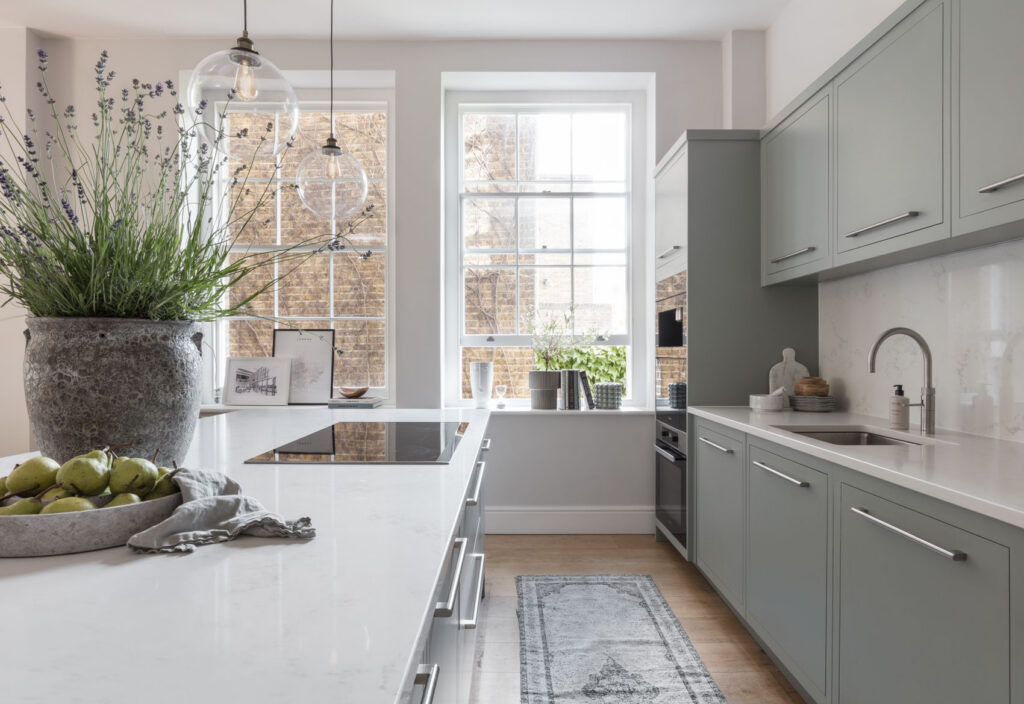
How to Host in a Small Kitchen
A small kitchen doesn’t mean a less sociable one. It means being more intentional with the design.
The most effective small hosting kitchens lean into clever storage to keep surfaces clear, choose a layout that maximises flow and use lighting and colour to make the space feel generous rather than cramped.
As Charlotte, one of our bespoke kitchen designers, explains
In small kitchens, I divide the space in to the ‘guest side’ and the ‘host side’ to separate the pathways. The ‘Guest side’ would ideally have access to seating, perhaps the fridge to get a drink or a ledge to lean on and huddle around. The ‘Host side’ would be able to access all things prep and cook related so they can be efficient in their working area.
A compact pantry or larder cupboard does the work of a full walk-in: keeping glassware, serving pieces and hosting essentials neatly out of sight until they’re needed. An extendable or drop-leaf dining table tucked against the wall creates seating for six without sacrificing everyday space.
Above all, a small kitchen that’s been thoughtfully designed by hand will always outperform a large one that hasn’t. At Harvey Jones, every bespoke kitchen design is thoughtfully curated to suit how you live and host.
Entertaining Through the Seasons: Summer to Christmas
The best hosting kitchens are designed with the whole year in mind.
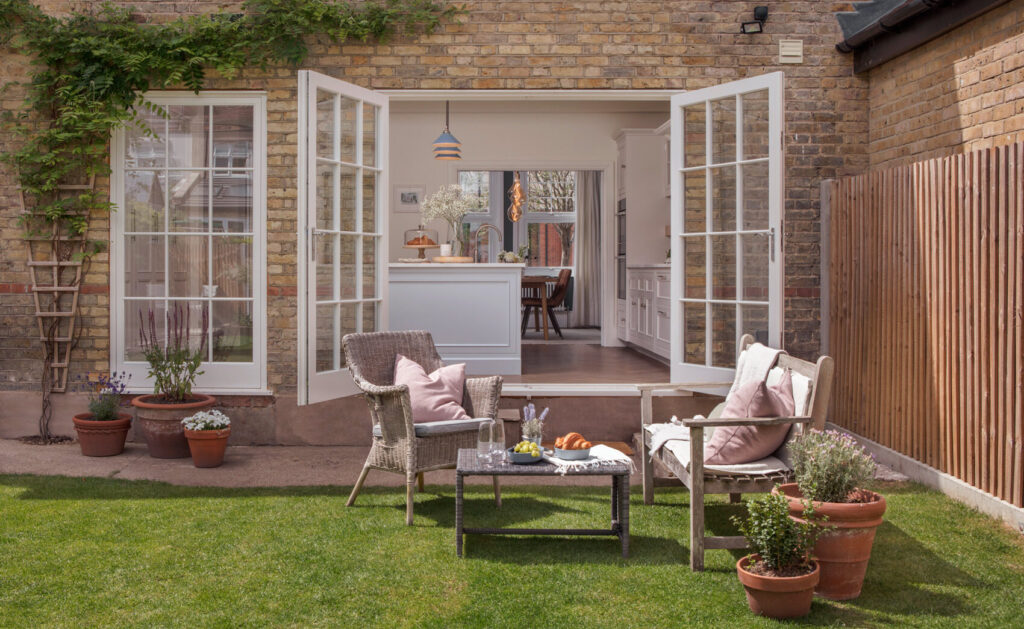
Summer entertaining calls for a connection between inside and outside. Open plan kitchens that flow onto a terrace or garden through bifold doors, sliding glass or even a wide open window make summer hosting feel effortless. A luxury outdoor kitchen extension or island brings the cooking outside entirely.
Christmas and winter entertaining is where a well-stocked pantry, a second oven and generous worktop space really earn their place. Deep navy or forest green cabinetry with aged brass handles creates that unmistakably festive warmth. A larder full of properly organised seasonal ingredients means Christmas morning is calm rather than chaotic.
Whatever the occasion, a Harvey Jones luxury kitchen is designed for life, and built for living.
Which Entertaining Kitchen Layout is Right for You?
The honest answer is: the best layout is the one that fits your household, your lifestyle and your footprint.
- Love open gatherings and long table dinners? Open-plan with a large island.
- Cook ambitious meals and need serious workspace? U-shaped or L-shaped with a pantry.
- Working with a compact footprint? A galley with smart storage and an adjacent dining zone.
- Hosting frequently through the year? Add a dedicated pantry and a second oven.
At the heart of every great entertaining kitchen is flow. When the space flows well, so does the evening. Guests stay longer, conversations go further and the occasion becomes something people remember.
Your Dream Hosting Kitchen Starts Here
At Harvey Jones, our handmade kitchens are designed entirely around your life. From the layout and storage to the lighting and finishes, every detail is considered so that when your guests arrive, you’re ready.
Frequently Asked Questions about Hosting Kitchens
What is the best kitchen layout for entertaining?
The best entertaining kitchen layout depends on your space and how you like to host. Open plan layouts with a central island are the most popular choice for frequent hosts, as they keep the cook connected to guests and create a natural flow between cooking and socialising. U-shaped and L-shaped kitchens offer more prep capacity for serious cooking. If space is limited, pair a galley kitchen with an adjacent dining area to create a highly effective layout.
How do I host in a small kitchen?
The key to hosting in a small kitchen is smart storage, a clear layout and keeping surfaces as uncluttered as possible. A compact pantry or larder cupboard keeps glassware and serving pieces out of sight until needed. A galley layout with an open dining zone beyond it creates a surprisingly effective entertaining setup. Extendable furniture and layered lighting help the space feel generous even when the footprint is modest.
What are the most popular open plan kitchen layouts for entertaining?
L-shaped and U-shaped open-plan kitchens are the most popular layouts for entertaining. Both allow the cook to face outwards towards guests, work well with a central island and can incorporate a dining zone naturally. Island-centred open plan designs, where the island acts as the visual and social focal point, are particularly sought after in bespoke kitchen design.
Where can I find examples of luxury kitchen designs for hosting?
Harvey Jones showrooms across the UK feature live, working kitchen displays designed around real hosting scenarios. Or discover our gallery of real bespoke luxury kitchens with islands, open-plan layouts and integrated hosting features. Booking a design appointment gives you the chance to discuss your specific requirements with a Harvey Jones designer in person.
How do I design an open plan kitchen layout that encourages guest interaction?
Position your hob or prep area on a kitchen island so you face outward towards guests while cooking. Keep the cooking zone clearly defined with cabinetry or a change in flooring so movement is intuitive. Add seating at the island for guests who want to stay close to the action, and zone the dining and lounging areas with pendant lighting and material choices rather than walls or screens.
What are the best integrated appliances for a kitchen designed for frequent entertaining?
A wine fridge or drinks fridge integrated into the island keeps bottles accessible without taking up main fridge space. Perhaps you’d benefit from warming drawer holds finished dishes at temperature while you complete other courses. While a second oven doubles your capacity for larger gatherings, an integrated dishwasher allows discreet mid-evening clearing. If you’d love an island hob, choose a downdraft option to keep fumes and steam out of the social space.