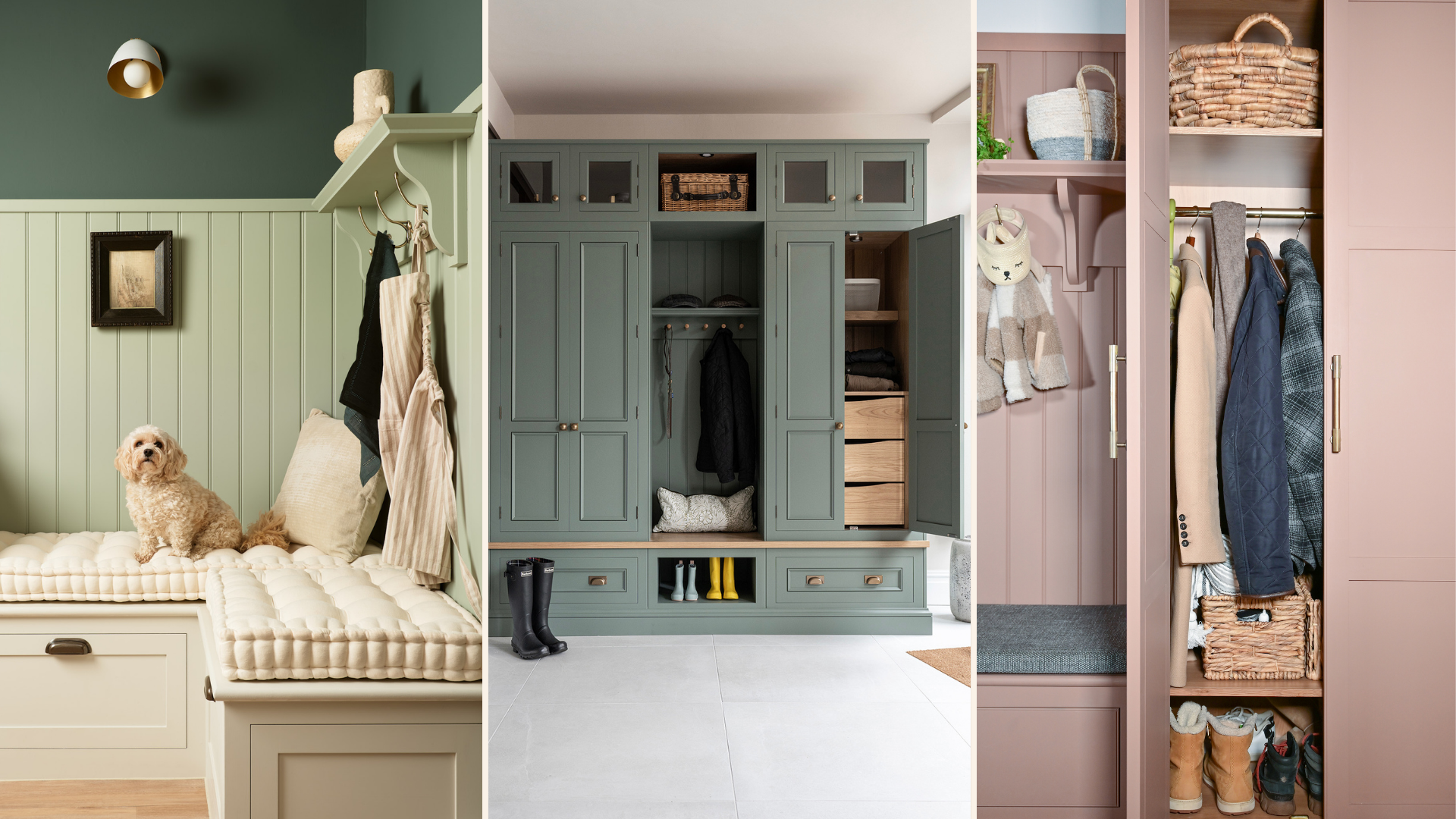
A boot room’s furniture and finishes shape how the space looks and works, from bench seating to coat hooks, panelling and flooring. Choosing bespoke boot room furniture designed around your home’s flow creates a considered entrance. It connects naturally to the kitchen next door, rather than feeling like an afterthought.
A boot room lives or dies by its furniture and finishes, not just its storage. The bench you sit on, the hooks by the door and the panelling on the walls all matter. They’re often what visitors notice first.
Getting these choices right takes some thought. Good boot room design needs to work with your home’s layout and your kitchen’s palette. It also needs to suit your family’s daily routine, not just look good in isolation.
This guide covers the furniture, flooring, lighting and finishing touches that shape a boot room. For dedicated storage and organisation ideas, our Essential Guide to Boot Room Storage Solutions covers that ground in full. Our guide to small utility and boot room ideas has tips for smaller spaces too.
Discover real, bespoke kitchen & home inspiration.
What Makes Boot Room Furniture Feel Bespoke
Off-the-shelf furniture rarely fits an awkward entrance well. Boot rooms are often narrow, sloped or oddly shaped. Standard units tend to leave gaps or waste space.
Bespoke boot room furniture is built to your exact dimensions, down to the last centimetre. Nothing feels squeezed in or left over.
It also means the furniture can match your kitchen. Many Harvey Jones clients choose boot room cabinetry in the same bespoke fitted cabinetry style as their kitchen. Handles, hardware and paint colour carry through too, so the two spaces feel like one considered scheme rather than rooms bolted together.
Material choice matters as much as layout. Painted timber wears well and can be refreshed years later. Oak brings warmth and a slightly less formal feel, particularly in a country home.
Sally, one of our expert designers based in Edinburgh, explains how custom boot rooms make a home feel luxurious:
“A space which has storage at the forefront of the design always makes a home feel luxurious. Consider practically what you need and then build in a bit more if possible. You could have an immaculate home but if you arrive home everyday to a multiple pairs of shoes or coats as the first thing you see, its disheartening.”
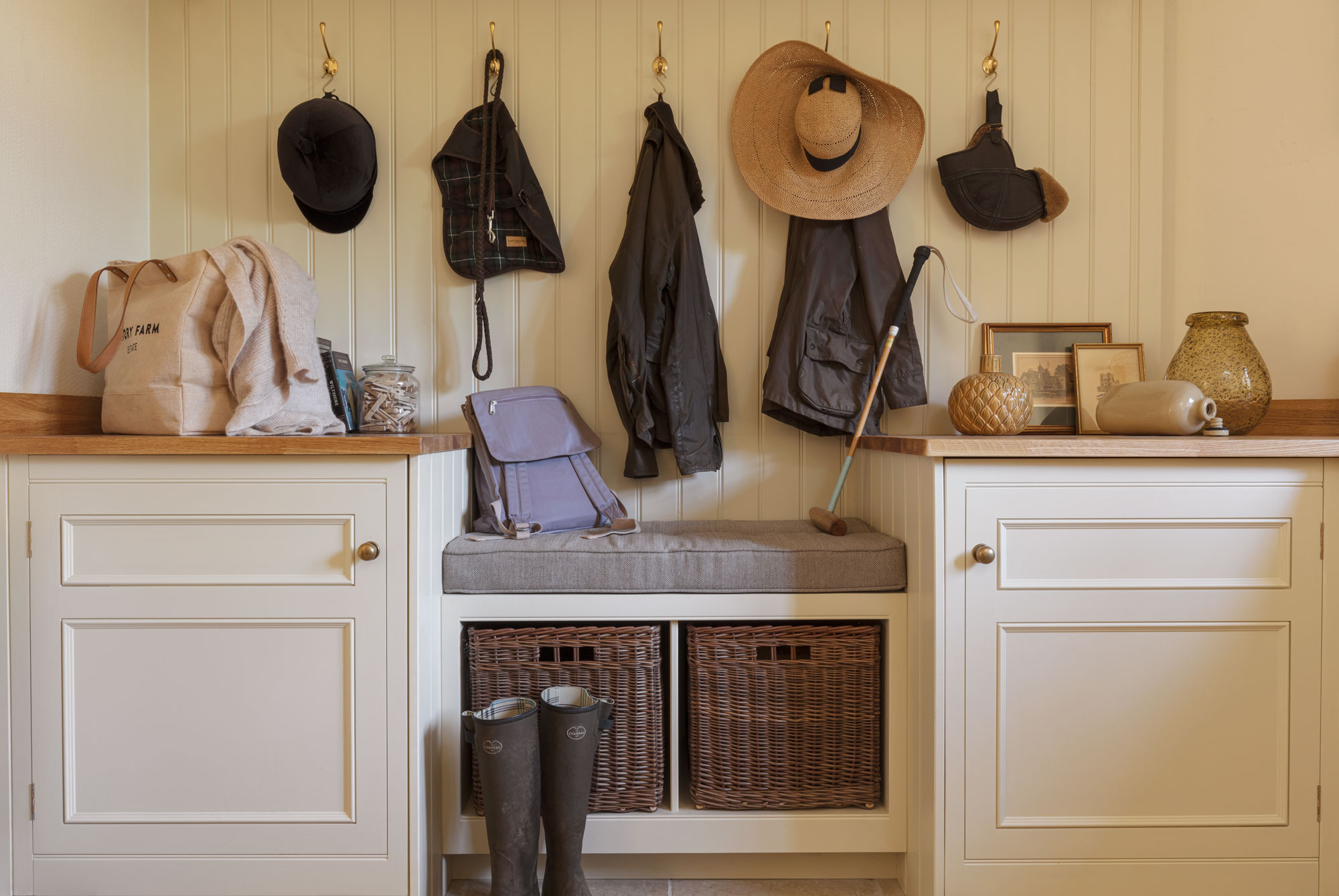
Bench Seating: The Heart of the Boot Room
A good bench does more work than any other piece in the room. It’s where boots come off and bags get dropped. It’s where the day starts and ends.
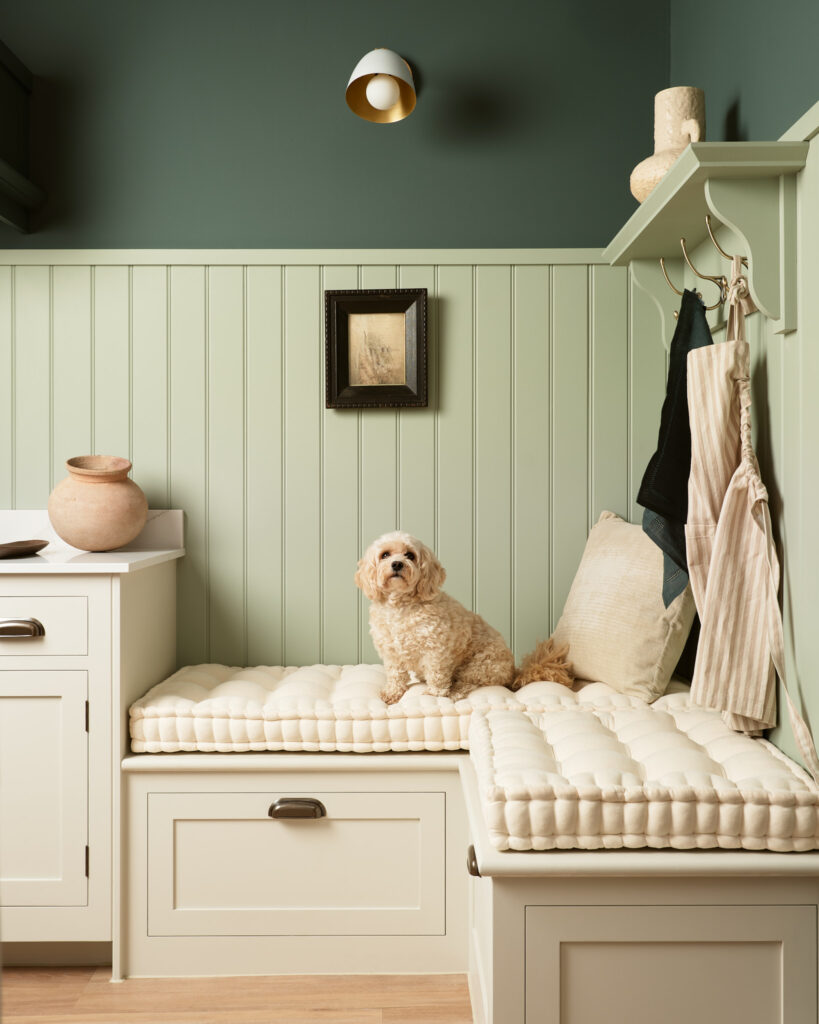
Integrated boot room bench seating, built into cabinetry with storage below, suits most family homes. It makes efficient use of a tight footprint. A freestanding bench with a solid oak or painted top gives a more furniture-led look, closer in spirit to our bespoke bench seating.
Either way, comfort matters more than style alone. So does a durable, wipeable surface, particularly in a household with children or dogs.
Depth matters too. A bench that’s too shallow feels awkward to sit on. Aim for enough room to sit side on comfortably, especially if more than one person uses the space at once.
Coat Hooks and Rails
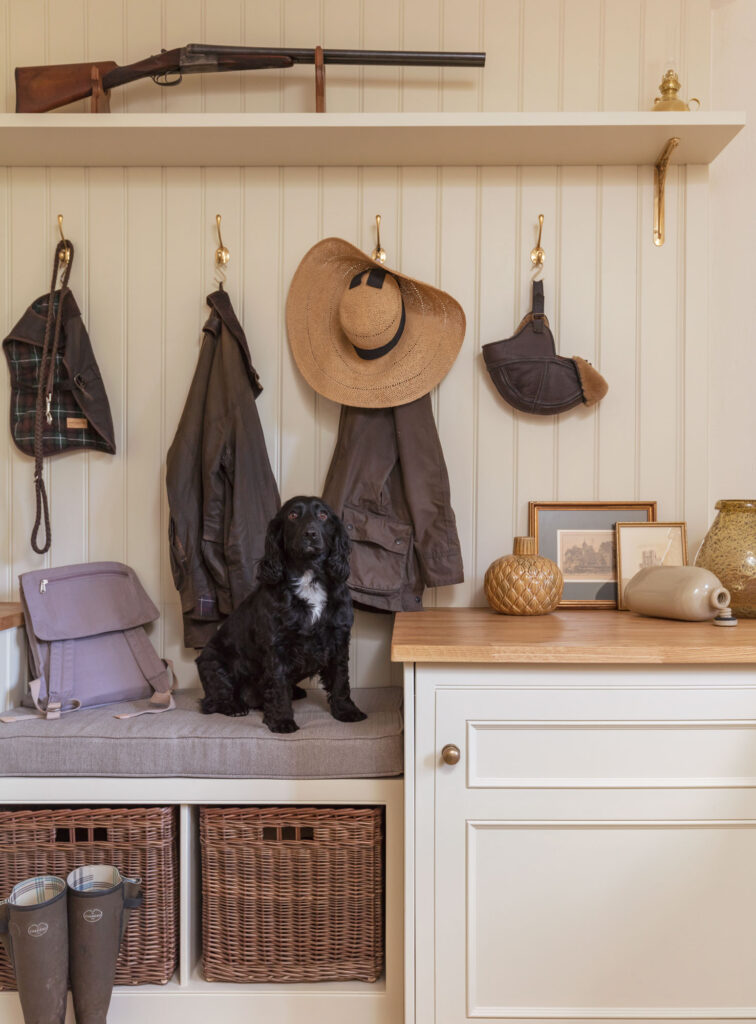
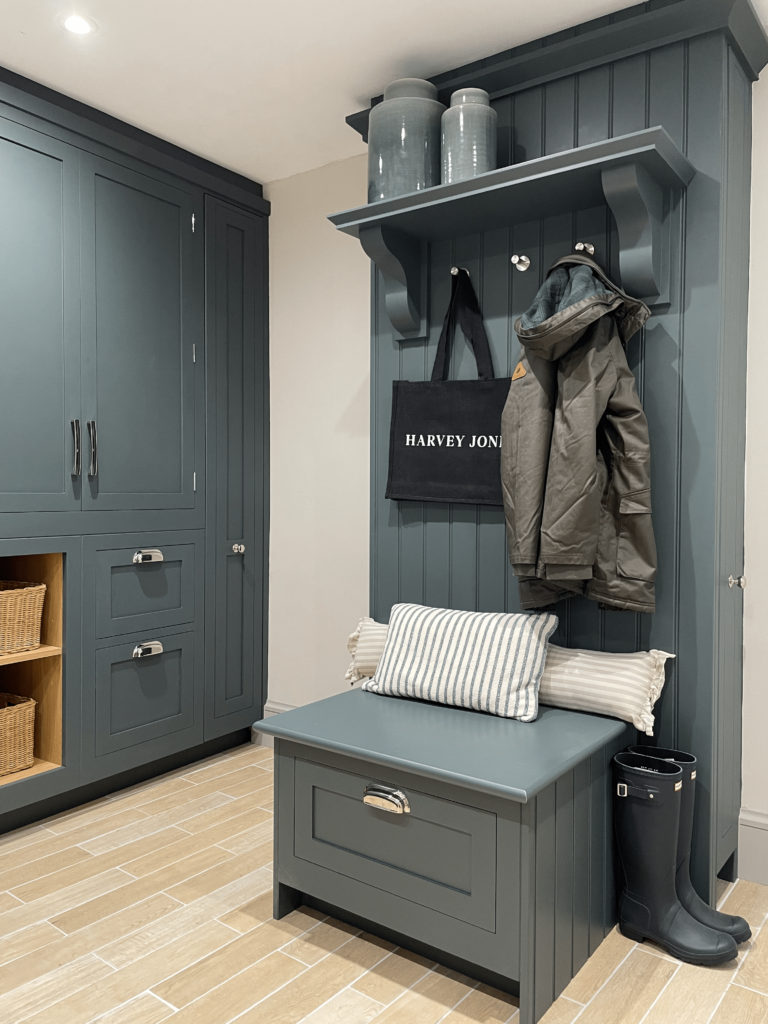
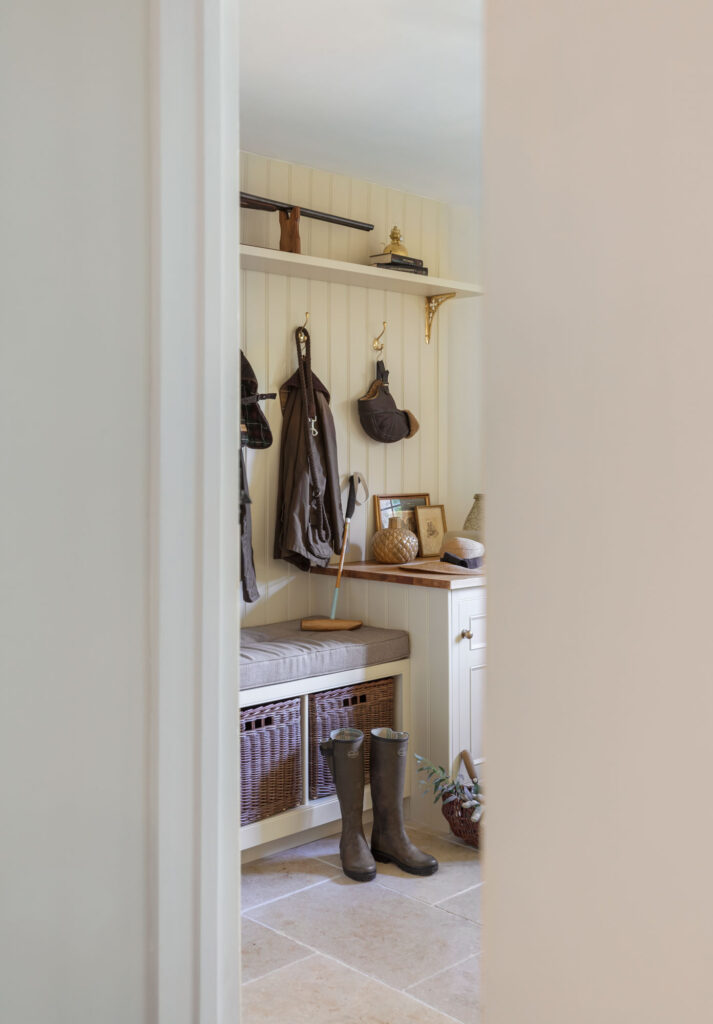
Hooks are small, but they set the tone of the whole room. Aged brass feels traditional and warm, echoing the hardware often used in luxury bespoke kitchen schemes. Matte black or bronze suits a more contemporary boot room instead.
Position boot room coat hooks at two heights where children use the space. That way, everyone can reach their own coat without help. A mix of open hooks and a rail works well for everyday coats, with fully hidden hanging reserved for coats used less often.
Spacing matters more than most people expect. Hooks set too close together mean tangled sleeves and overlapping bags. Leave enough width for a coat to hang freely, particularly near the front door where most traffic passes through.
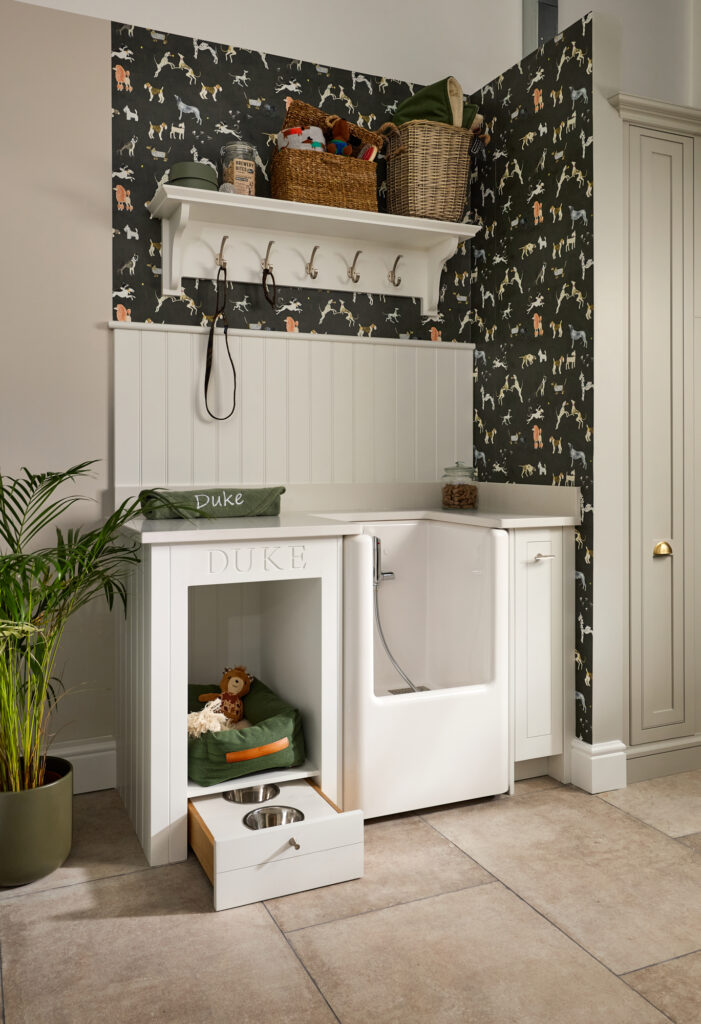
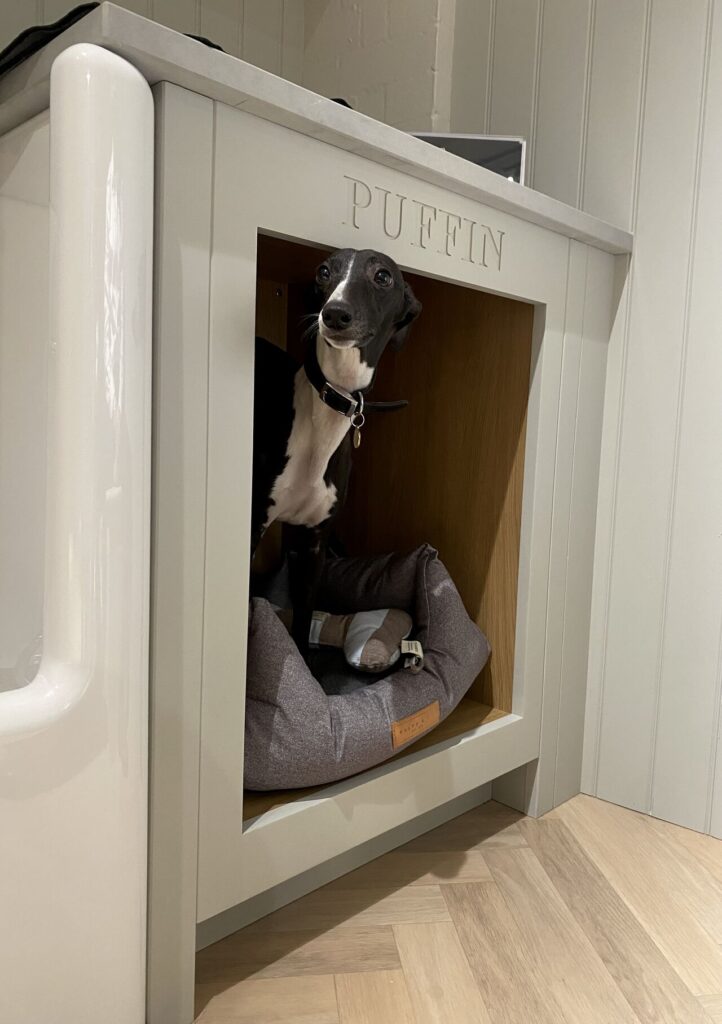
Creating a Pet Zone in Your Boot Room
For homes with pets, the boot room can do more than manage coats and muddy boots.
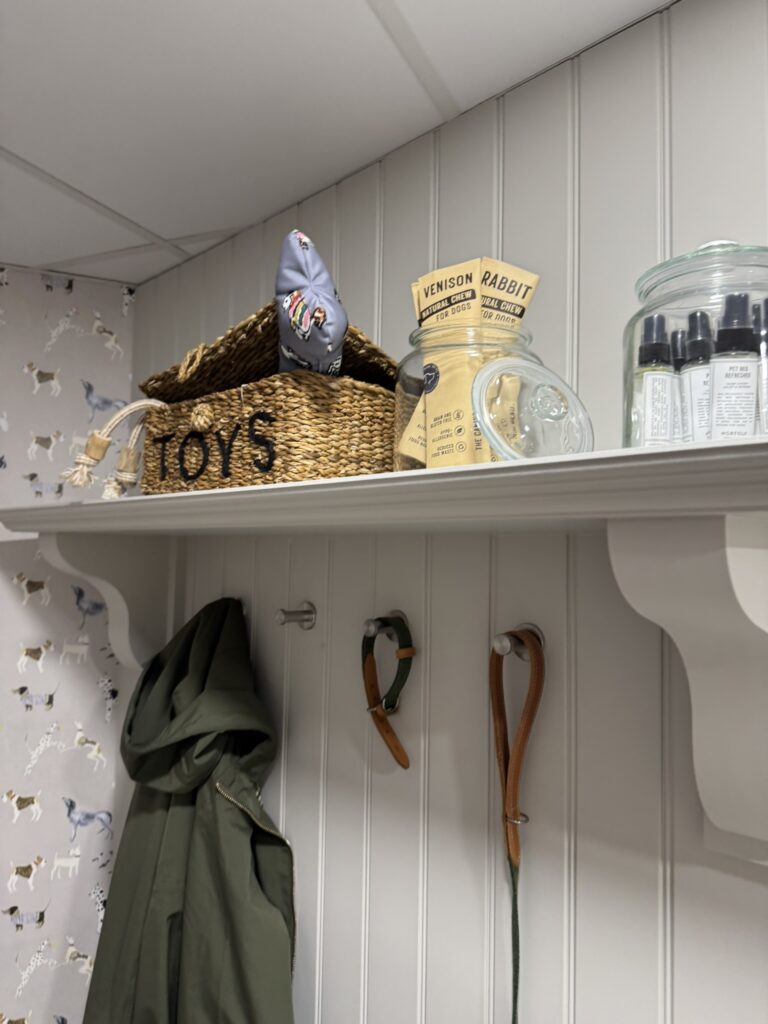
A built-in bed can create a cosy spot for your cat or dog to settle while the family comes and goes, while a dedicated feeding area keeps bowls neatly contained. If the boot room is close to the garden, a deep sink or shower can also make washing muddy paws after a walk much easier.
These details can be designed into the cabinetry from the start, keeping everyday essentials close to the door without adding clutter. For more ideas, explore our bespoke pet kitchens and pet-friendly design.
Boot Room Panelling and Wall Finishes
Tongue and groove panelling is the classic choice for a British boot room, and for good reason. It protects walls from bags, boots and muddy paws. It also adds real character to what could otherwise be a purely functional space.
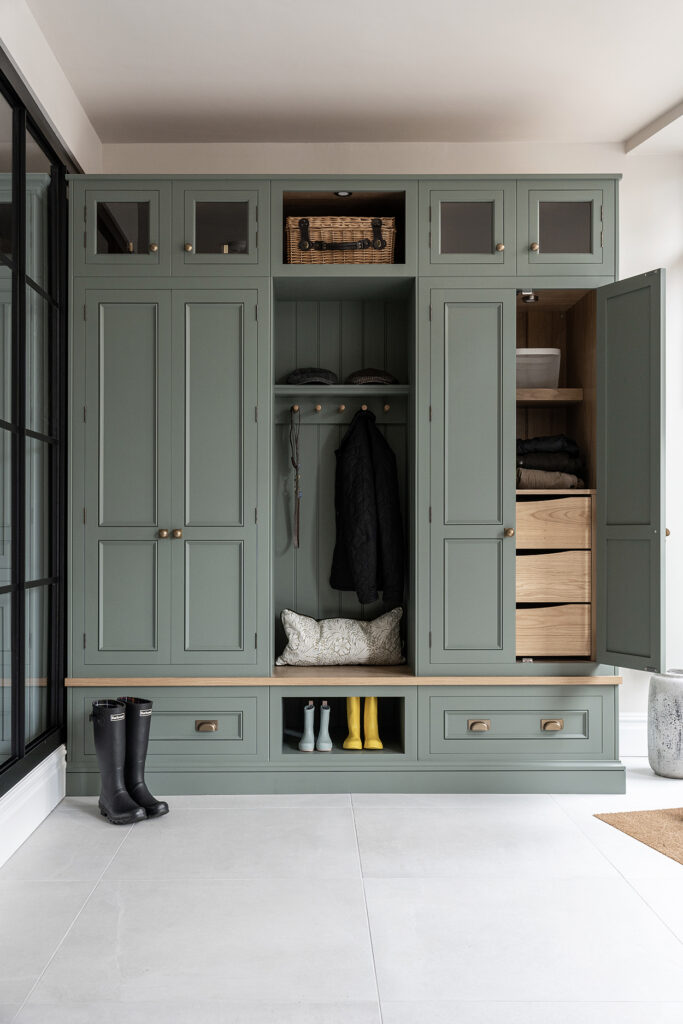
Painted boot room panelling in a deep olive, navy or soft sage works particularly well against bespoke painted kitchens elsewhere in the house. It helps the boot room feel intentional, rather than added on as an afterthought. Half height panelling with a shelf on top gives useful display space for keys, post or a favourite vase.
Full height panelling suits a more formal boot room. It works particularly well in period properties with generous ceiling heights, where a shorter run of panelling can look slightly under scaled. Discover more boot room inspiration in our gallery.
Boot Room Flooring and Tiles
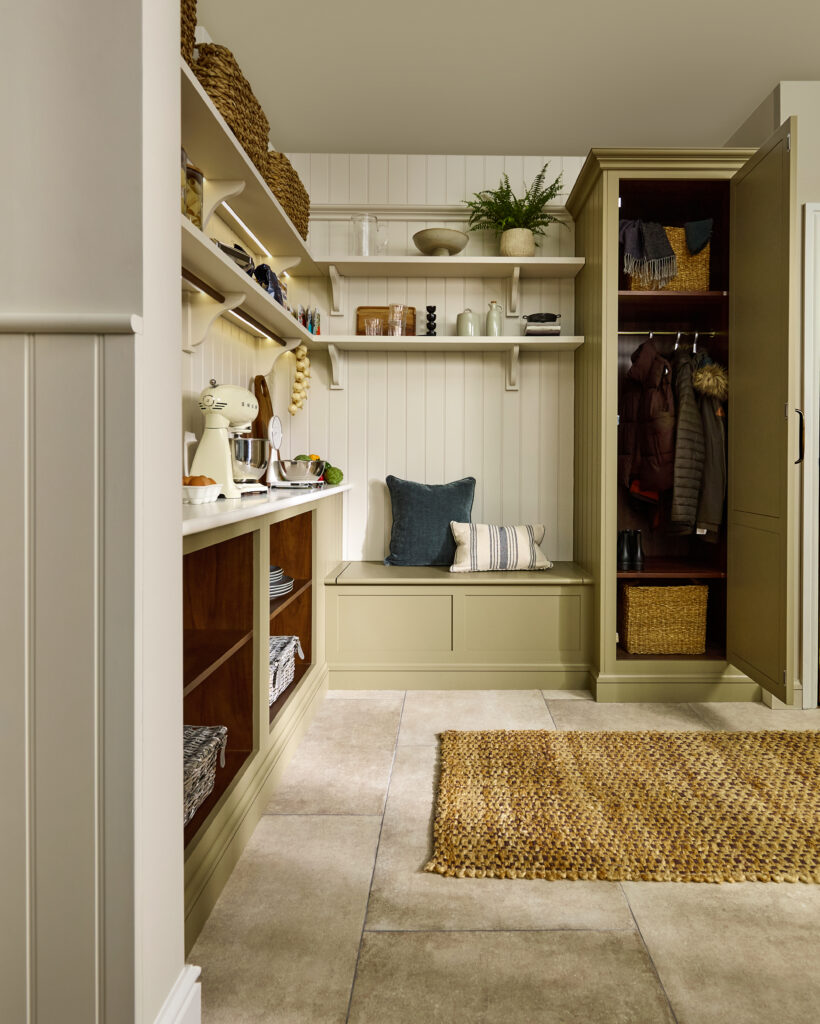
Flooring is a design decision as much as a practical one. Stone flags, quarry tiles and large-format porcelain all suit boot room flooring. Each brings texture and warmth underfoot, while standing up to daily wear from boots, paws and prams.
Boot room tiles with a little colour variation tend to disguise everyday marks better than a single flat tone. That matters in a room that sees more traffic than almost any other. Underfloor heating is worth considering too, since a boot room is often the coldest entry point into the house.
A change in flooring between the boot room and kitchen can also help define the two spaces. Even a slim strip of contrasting tile at the threshold signals a shift from practical entrance to living space.
Lighting a Boot Room Properly
Boot room lighting needs more than one source to do its job well. A central pendant sets the tone and can be a genuine style moment in its own right. Task lighting over the bench and inside cupboards makes the space properly functional.
Wall lights or under-cabinet LEDs help on darker mornings and evenings. A dimmer switch is a small addition that makes a real difference. It softens the space in the evening, while keeping it bright and practical first thing.
Choosing Your Boot Room Colours
Boot room colours work best when they take a cue from the kitchen next door and your home’s colour scheme as a whole. That might mean matching the palette exactly, or picking a bolder, contrasting tone for a smaller connected space.
Deep, heritage colours like forest green, navy and burgundy remain popular. They’re warm and forgiving of daily wear. For a lighter, more contemporary feel, soft greys and off-whites pair well with black or brass hardware, suiting high end kitchen design schemes that lean pared back rather than traditional.
Lewis, one of our expert designers based in Chester, suggests how to use bold colour in a boot room:
“A good way to keep a boot room stylish for opting for an on-trend colour. Deep Rich reds such as our ‘Claret’ has been incredibly popular. With it’s deeper, richer tones it’s a lot more forgiving with mud, dust and daily wear and tear.”
Discover beautiful kitchen design in person and speak to our experts.
Boot Room vs Utility Room: What’s the Difference
A boot room is built around arriving and leaving the house. It’s where coats, boots and bags are managed, usually near a side or garden door, and its furniture reflects that daily rhythm.
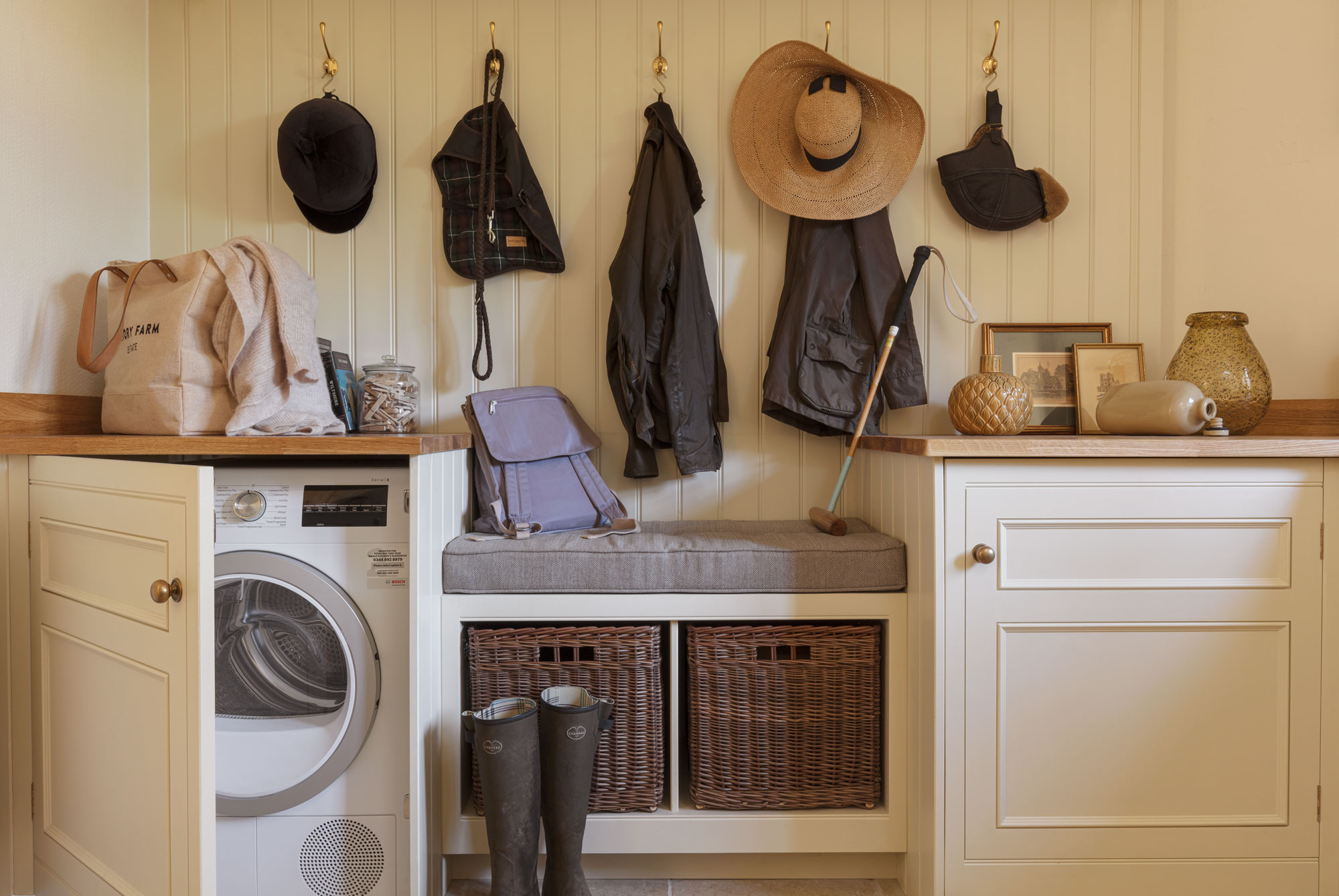
A utility room is built around household tasks such as laundry and cleaning. Many homes combine the two into one space, often known as a ‘bootility’. They serve different jobs though, so it’s worth planning furniture around whichever function matters most in your home. Our guide to utility room design and kitchen flow covers the utility side in more depth.
If space allows, keeping the two separate often works best. A boot room close to the door manages daily comings and goings. A utility room can then sit slightly further from the entrance, without slowing down the school run or dog walk.
Can a Porch Work as a Boot Room?
A porch is often the most natural spot for a porch boot room. This is especially true in period homes, where the porch already sits between the front door and the hallway.
Even a narrow porch can hold a slim bench, a run of hooks and a hardwearing floor. The furniture simply needs to be scaled to fit. That’s where bespoke boot room furniture earns its place over an off-the-shelf unit.
Does a Boot Room Add Value to Your Home?
A well-designed boot room can add appeal for buyers, particularly in family homes. Practical, well-finished spaces show that you have designed your home thoughtfully, rather than simply styled it for photographs.
Value comes down to execution. Considered furniture, quality finishes and a layout that works day to day can all contribute, while a cramped or poorly finished space can have the opposite effect.
Bringing It All Together
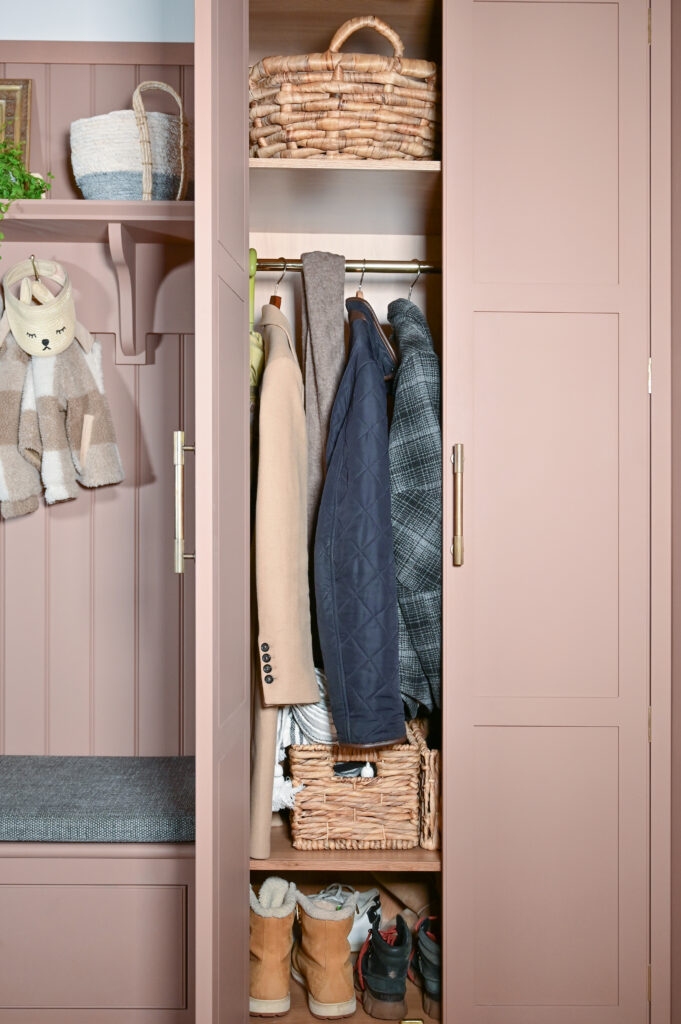
A boot room’s furniture and finishes turn a practical necessity into a genuinely welcoming part of the house. Bench seating, hooks, panelling, flooring, lighting and colour all work together. Each is worth as much thought as the kitchen it sits alongside.
At Harvey Jones, we design boot room furniture as part of the wider kitchen. Materials, colours and detailing carry through from one space to the next, so your boot room feels like it belongs to your home, rather than something added on afterwards.
Speak to a designer in your nearest showroom to understand how a boot room could take shape in your home – book a design appointment.
FAQs about Boot Room Furniture
A boot room is designed around coming and going, with space for coats, boots and bags. A utility room is built for household tasks like laundry. The two are often combined, but they serve different purposes.
A well designed boot room can add appeal for buyers, especially in family homes. Value comes from thoughtful furniture and finishes, rather than the room alone.
Yes. Even a narrow porch can work well as a porch boot room, with a slim bench, hooks and hardwearing flooring. The furniture just needs to be scaled to fit the space.
Most boot rooms benefit from bench seating, coat hooks or a rail, and some form of cabinetry. Bespoke boot room furniture allows all three to be tailored to an awkward or narrow space.
Painted tongue and groove panelling is the most popular choice, since it protects walls and adds character. It works well in either a heritage colour or a softer, contemporary shade.
Deep heritage tones like forest green and navy are popular for hiding daily wear. Softer greys and off-whites suit a more contemporary look, especially paired with brass or black hardware.
Discover beautiful kitchen design in person and speak to our experts.