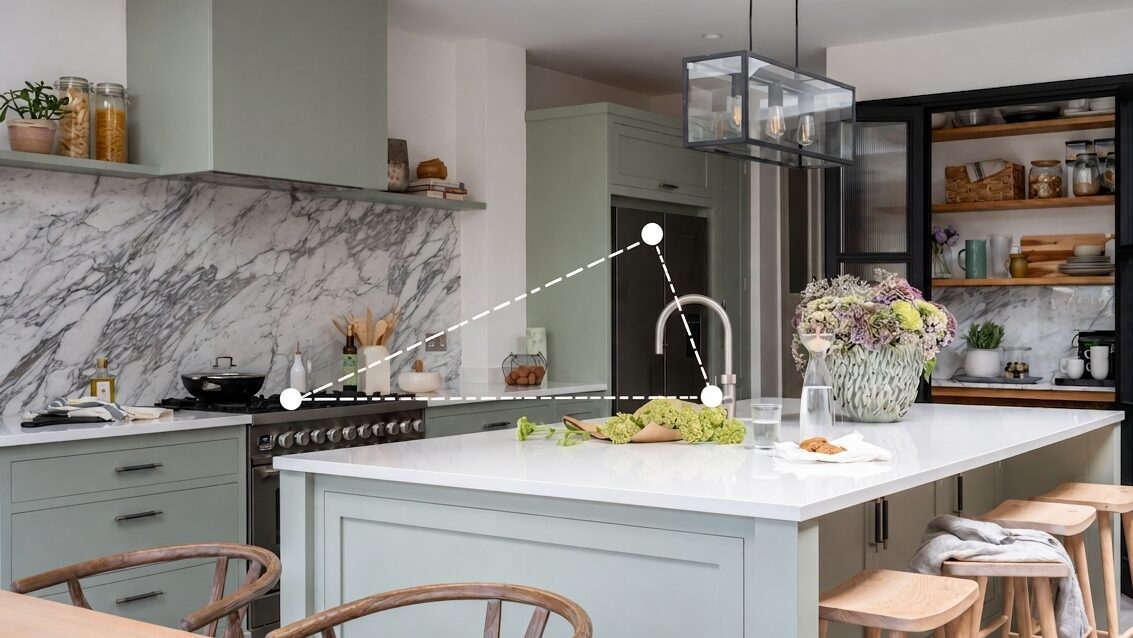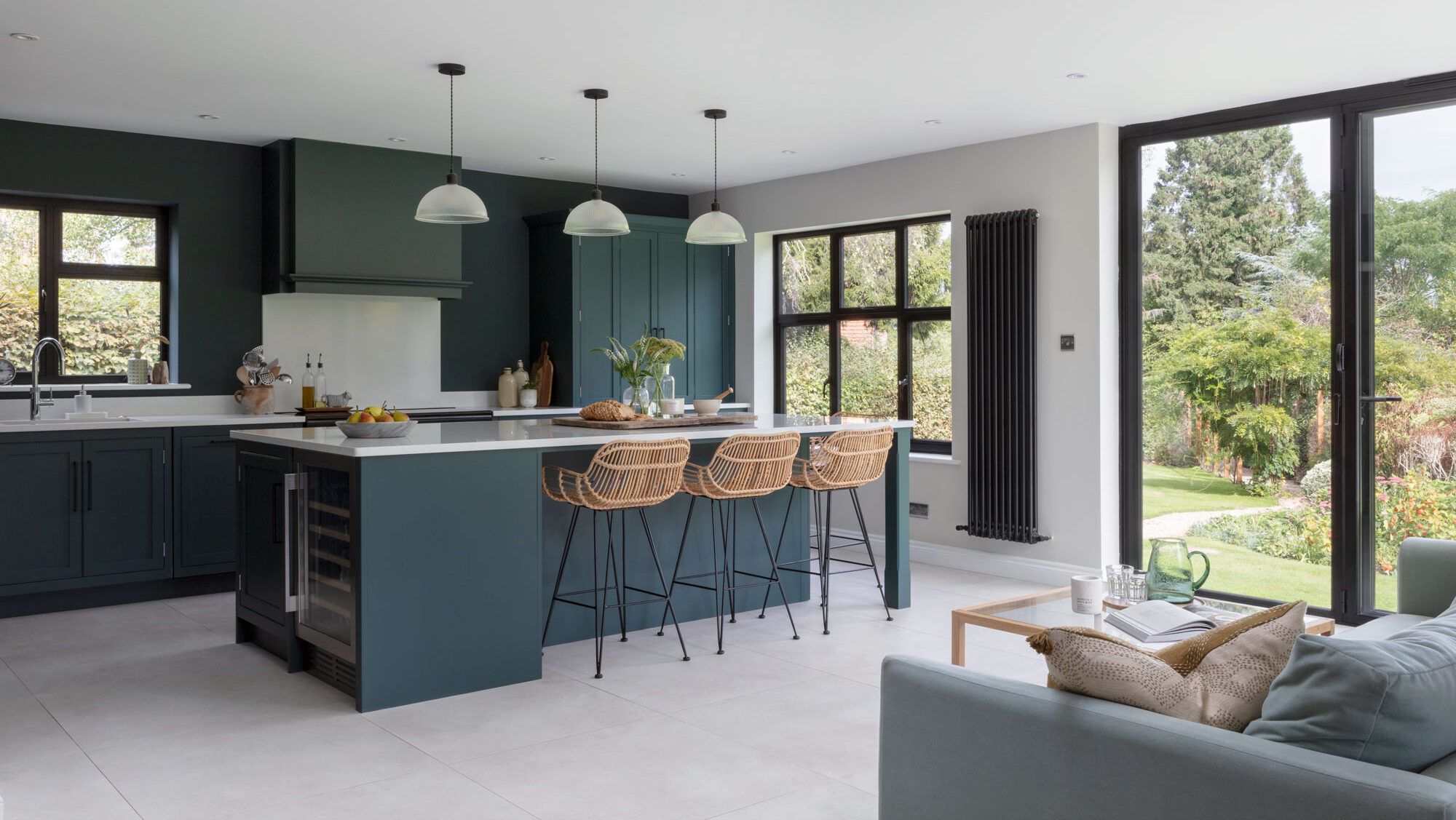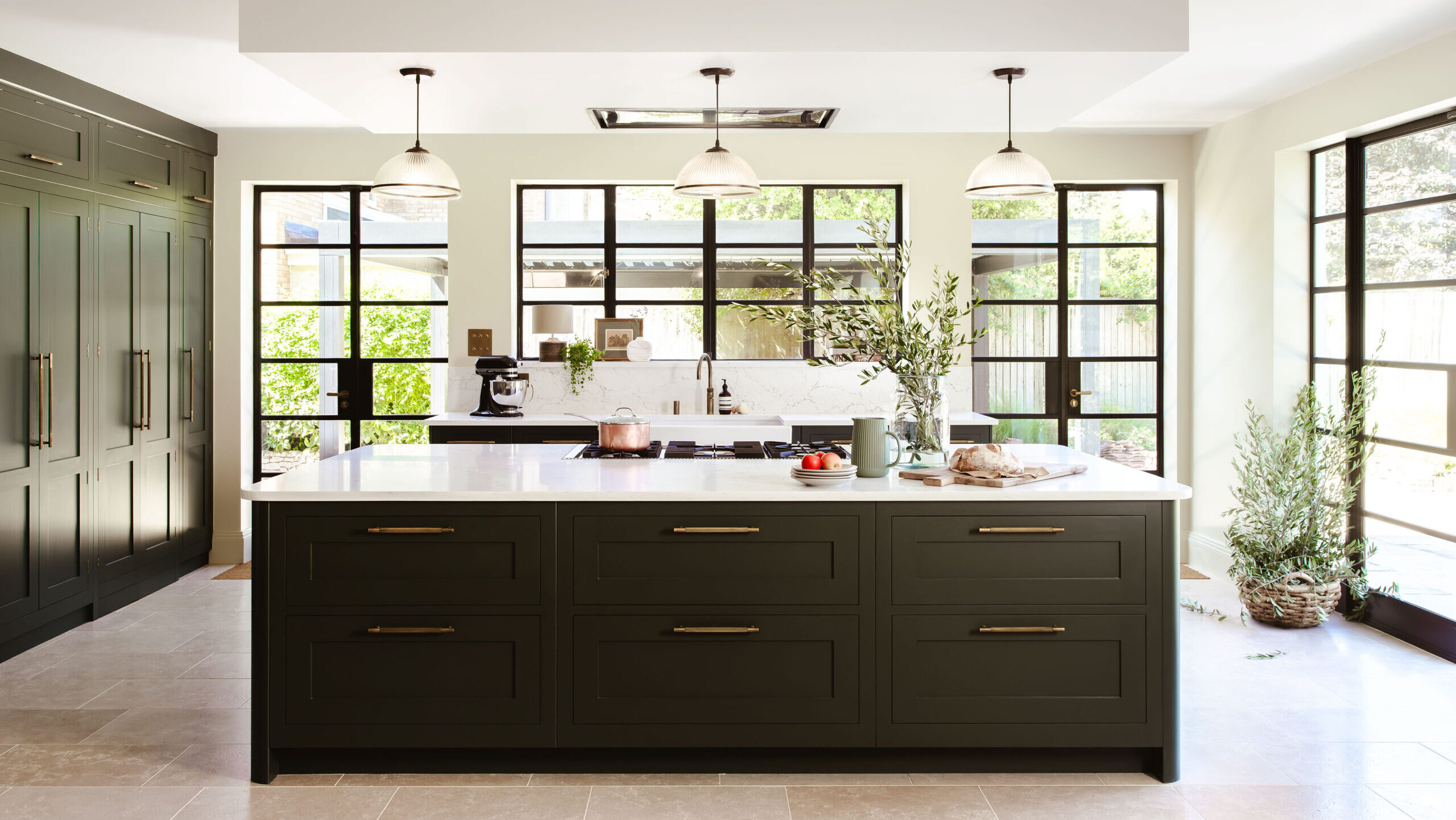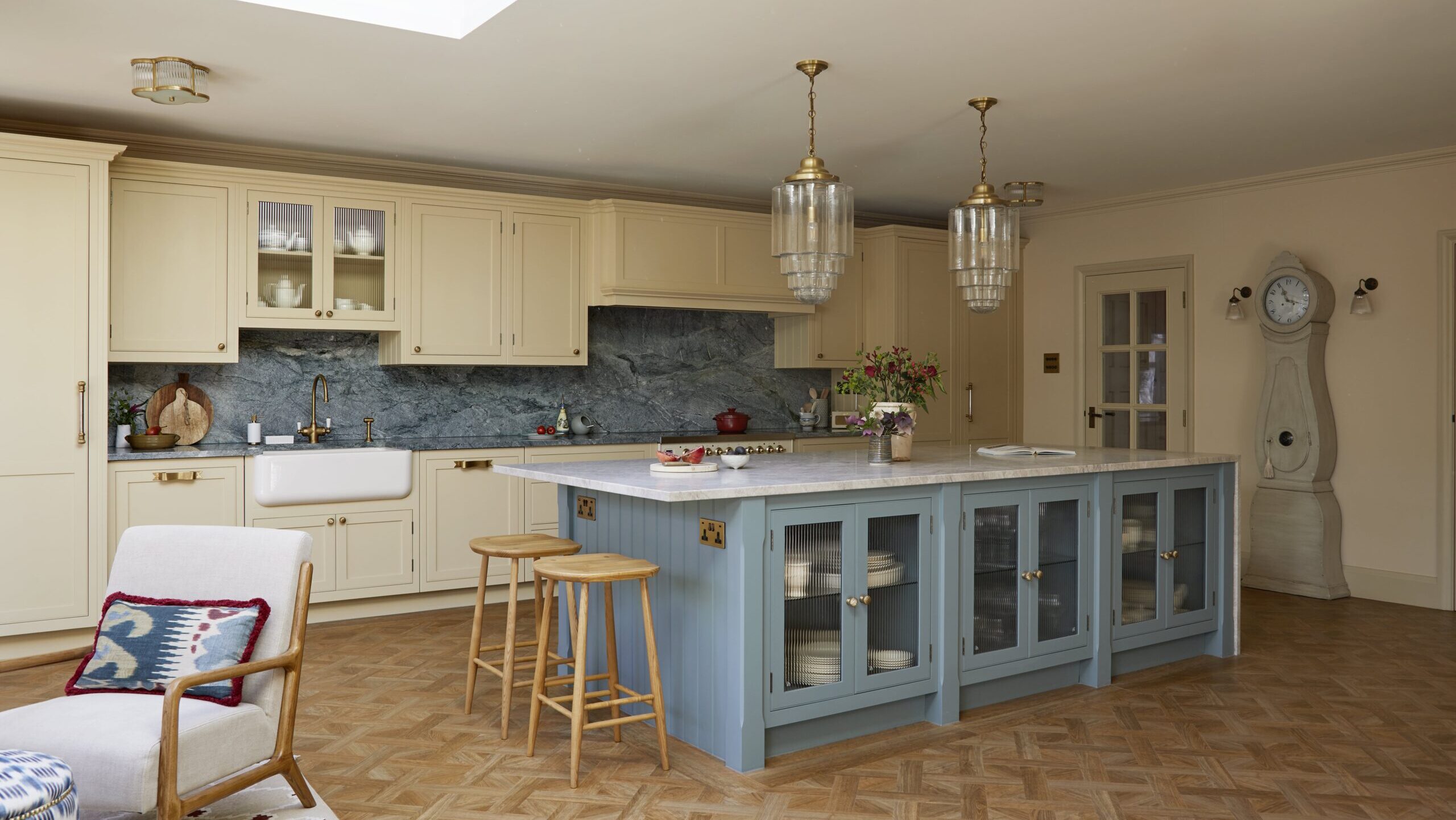
When choosing the best colours for kitchen walls, it’s easy to start with a paint chart. But the right colour depends on much more than the shade itself. Natural light, cabinetry, worktops and the character of your home all have a part to play.
At Harvey Jones, we design bespoke kitchens around the way you live, so colour is considered as part of the wider scheme. The wall colour needs to work with the cabinetry and materials, rather than being chosen once everything else is finished.
Here’s how our designers approach the decision, and what to think about before you commit to a colour.
Discover real, bespoke kitchen & home inspiration.
What Should You Consider Before Choosing a Kitchen Wall Colour?
Start with the room itself. The direction your kitchen faces will affect how colours appear throughout the day. So will the size of the room, the amount of natural light and the finishes you’ve chosen for the cabinetry and worktops.
Then think about how you want the kitchen to feel. Do you want a light and relaxed space, or something with more depth and character? Perhaps you’re looking for a colour that connects the kitchen to an adjoining dining or living area.
These questions will usually narrow down your options before you even start looking at individual paint colours.
How The Direction of Your Kitchen Changes a Colour Choice
Aspect is one of the simplest ways to narrow down your options, particularly if you’re choosing between several similar shades.
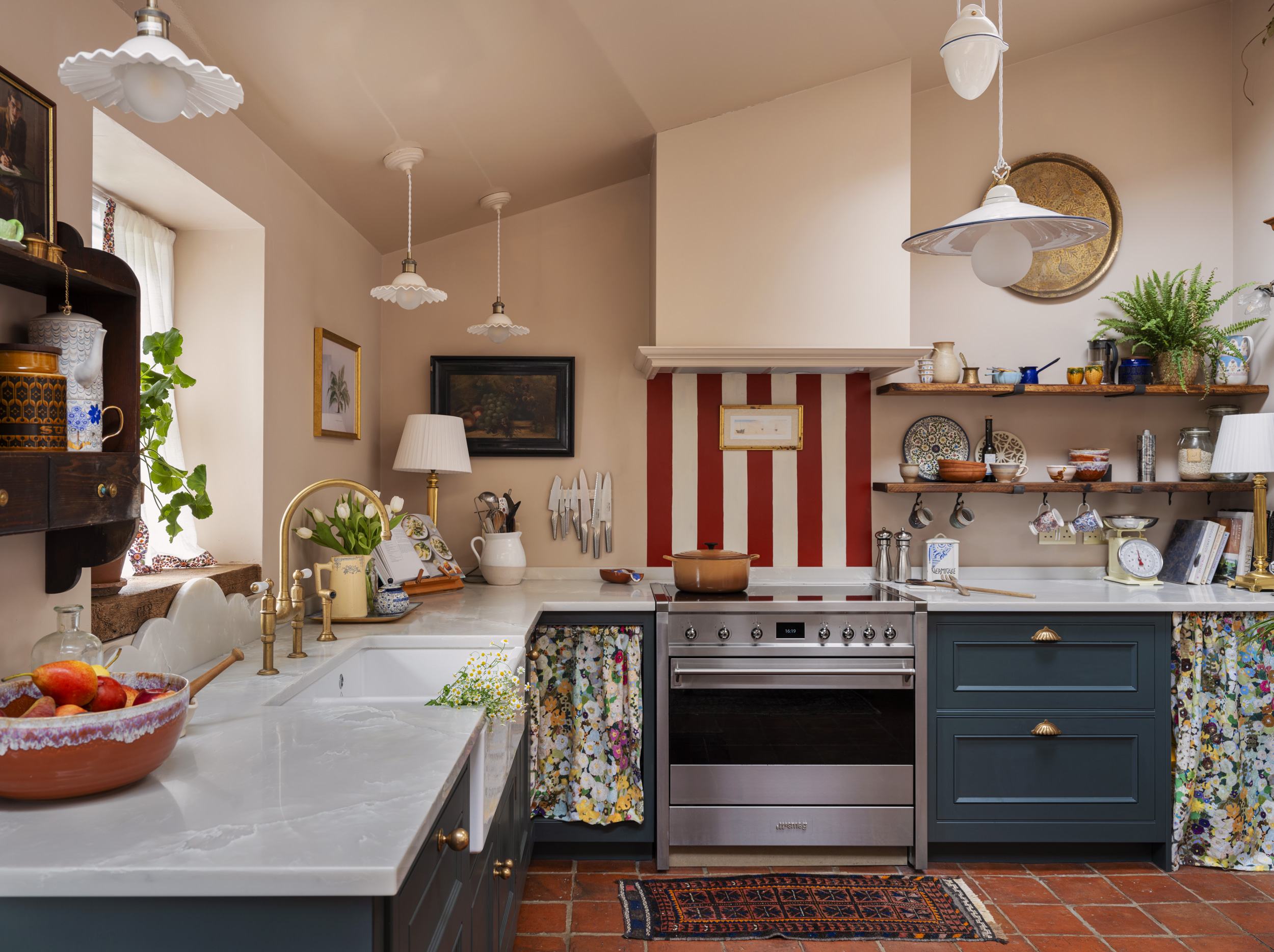
North-facing kitchens
North-facing kitchens generally have cooler, softer light. If you’ve chosen a very crisp white, it can sometimes appear grey or blue once it’s on the wall.
A warmer white or neutral can help keep the room feeling welcoming. If you want to introduce more colour, earthy greens, warm taupes and deeper shades can work well too.
Don’t feel you have to keep a north-facing kitchen pale, though. A richer colour can give the room plenty of character, particularly when balanced with lighter cabinetry or worktops.
South-facing kitchens
South-facing kitchens tend to receive plenty of warm natural light, so they’re well suited to a broader range of colours.
Cooler shades can help balance the warmth of the room. Soft blue, muted green and cooler neutrals are all worth considering. If your cabinetry is already colourful, you may prefer a quieter wall colour that allows it to remain the focus.

East and west-facing kitchens
East and west-facing rooms need a little more attention because the light changes considerably throughout the day.
Think about when you use your kitchen most. If mornings are when the room is busiest, look at your samples in the morning light. If it’s mainly used for cooking and entertaining in the evening, check them then too.
How to Match Wall Colour to Your Kitchen Cabinets
There are plenty of colours that go with kitchen cabinets, but you don’t need to find one exact shade that works with everything.
A warm white beside a warm painted cabinet will create a softer relationship than a bright, cool white. Equally, a muted colour can add contrast without competing with the cabinetry.
With a luxury bespoke kitchen, you also have more freedom to play with the relationship between different finishes. A painted island could sit against a softer wall colour, while timber cabinetry could be paired with a muted green or warm neutral.
Sally, one of our expert designers in Edinburgh, explains how to play with colour in a kitchen design:
“It always sensible to keep any colour pops to things you can easily change in future, like paint or wall finishes. If you keep worktops and cabinetry neutral, they are unlikely to date so you can easily rework the other elements freely.“
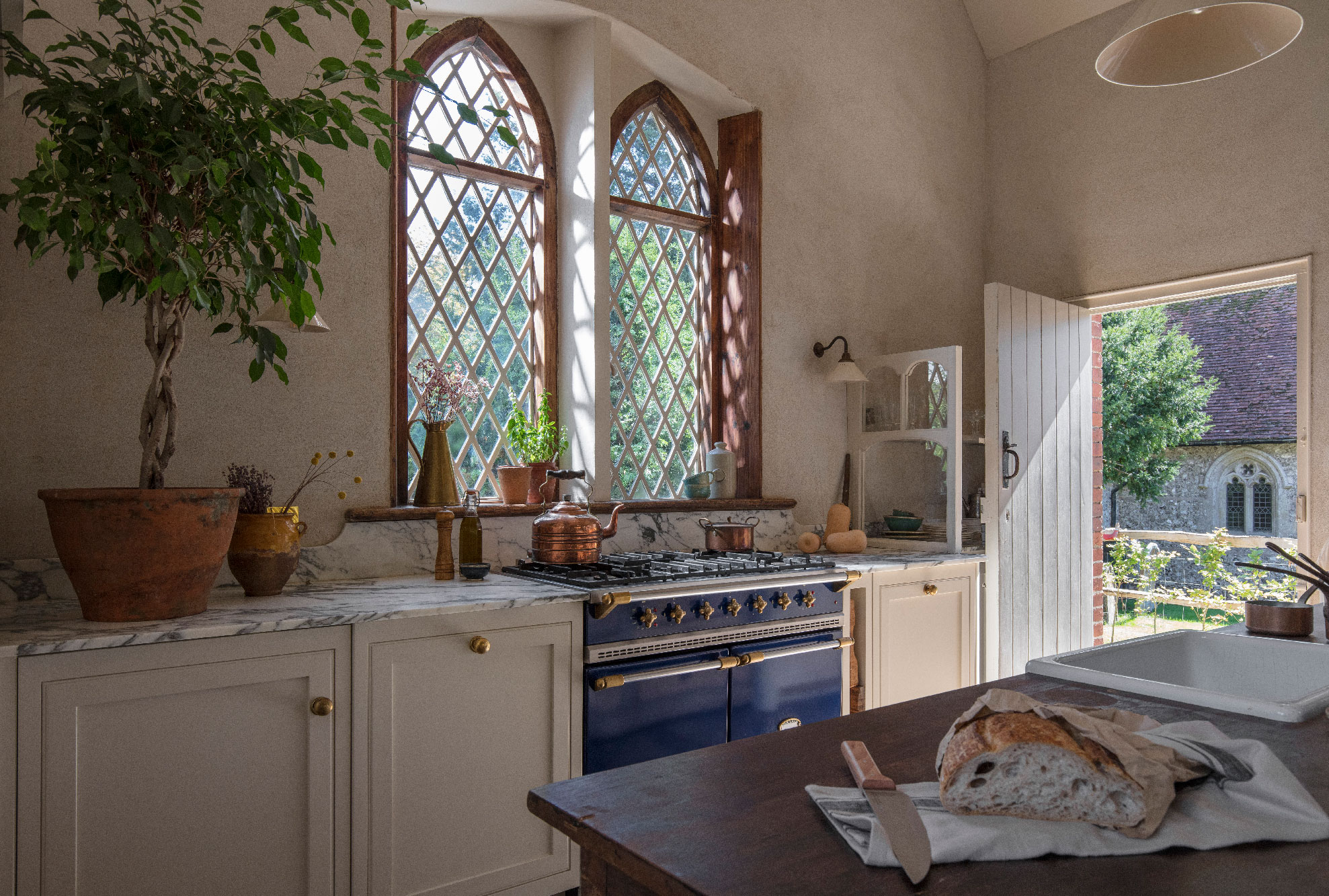
Light cabinetry
Light cabinets give you plenty of scope.
A warm white wall can keep the whole room light and understated. Soft greige can add more definition without introducing a strong colour, while muted green or blue can give the room more personality.
If your worktop has a distinctive pattern or veining, keeping the walls quieter can also help the stone become a feature.
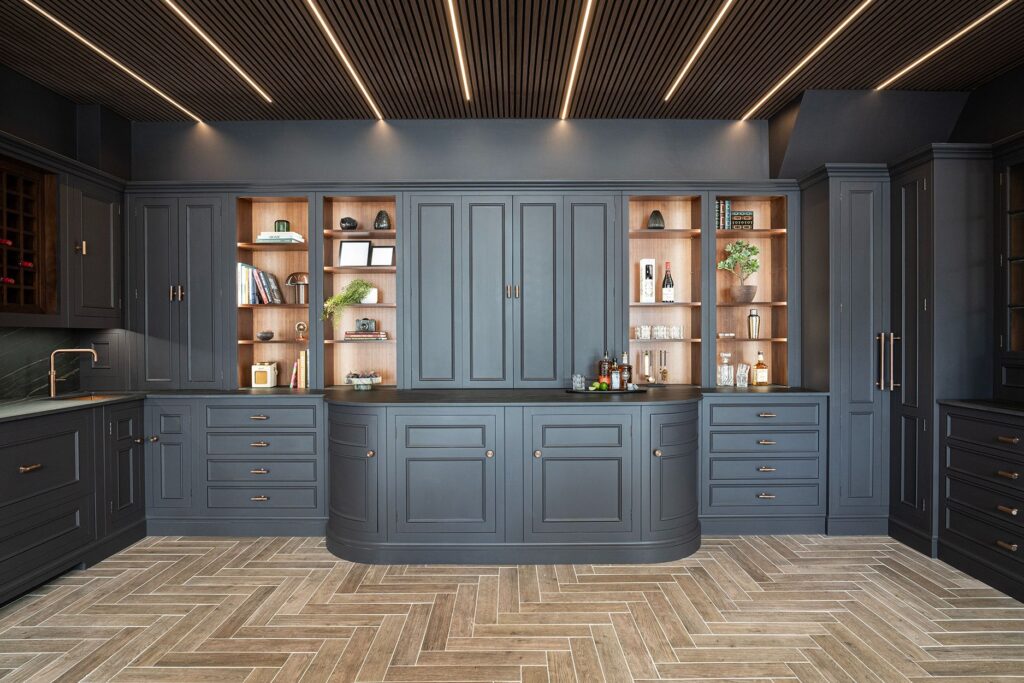
Dark cabinetry
Dark cabinetry doesn’t mean you need to default to white walls. A lighter wall can create contrast and help a darker kitchen feel more open. This works particularly well in smaller spaces or rooms with less natural light.
In a bright kitchen, you can take the opposite approach. A deeper wall colour can sit alongside dark cabinetry to create a more immersive scheme.
For more inspiration, see our guide to dark kitchen colour palettes.
Nautral solid wood
Unpainted solid wood cabinetry already brings warmth and texture into a kitchen.
Warm whites and soft neutrals will complement it without competing with the grain. Muted greens can also work particularly well with oak, creating a more relaxed and natural palette.
With dark wood kitchens, a lighter wall can provide contrast. Alternatively, keeping the tones close together creates a richer, more enveloping feel.
Kitchen designer Josh from Guildford explains an enduring kitchen trend his clients ask for all the time:
“Wood stains continue to be really popular, especially when paired with soft neutral tones. In more classic properties, clients often gravitate towards lighter painted cabinetry, while city homes tend to embrace bolder colour choices with a bit more confidence.“
Two-tone cabinetry
Two-tone kitchens give you even more flexibility.
You could choose a wall colour that relates to one of the cabinet colours, helping the two finishes feel connected. Or you could keep the walls neutral and allow the cabinetry to provide all the contrast.
Our top 15 kitchen colour schemes explores broader combinations of cabinetry, walls, worktops and hardware.
For more specific inspiration, our sage green kitchen ideas looks at how one of the most versatile kitchen colours can be used alongside different materials and finishes.
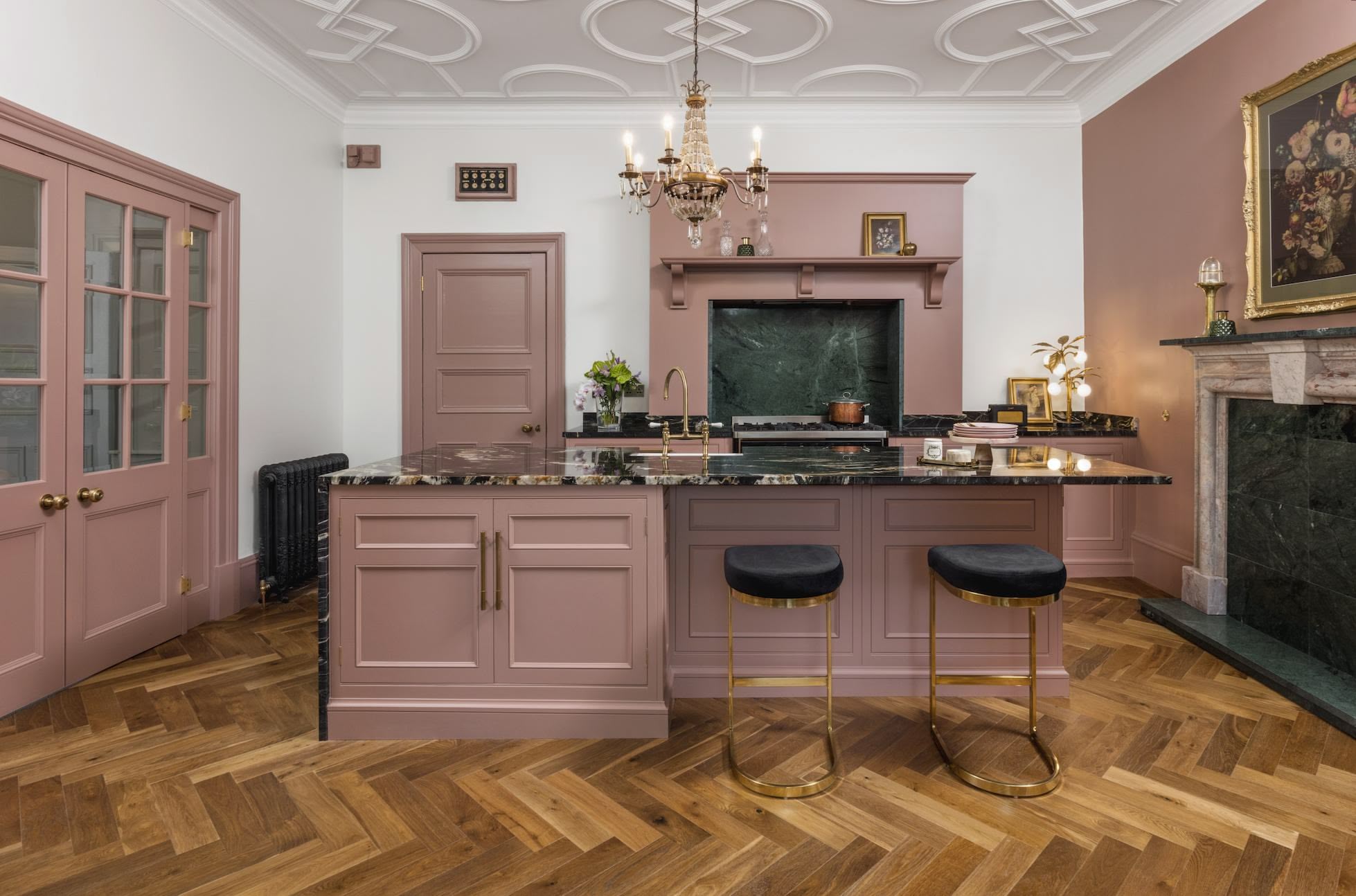
How to Test Your Kitchen Wall Colour Before You Commit
Once you’ve narrowed down your options, it’s time to test them properly.
Look at your chosen samples in the morning, in the afternoon and after dark. Turn the kitchen lighting on too. You may find that a colour you loved in daylight feels completely different under artificial light.
It’s also worth moving the samples around the room. A wall beside a window will receive very different light from a darker corner.
Most importantly, look at the colour alongside the finishes you’ve actually chosen. A neutral wall may appear warmer beside oak, or cooler next to a bright white cabinet.
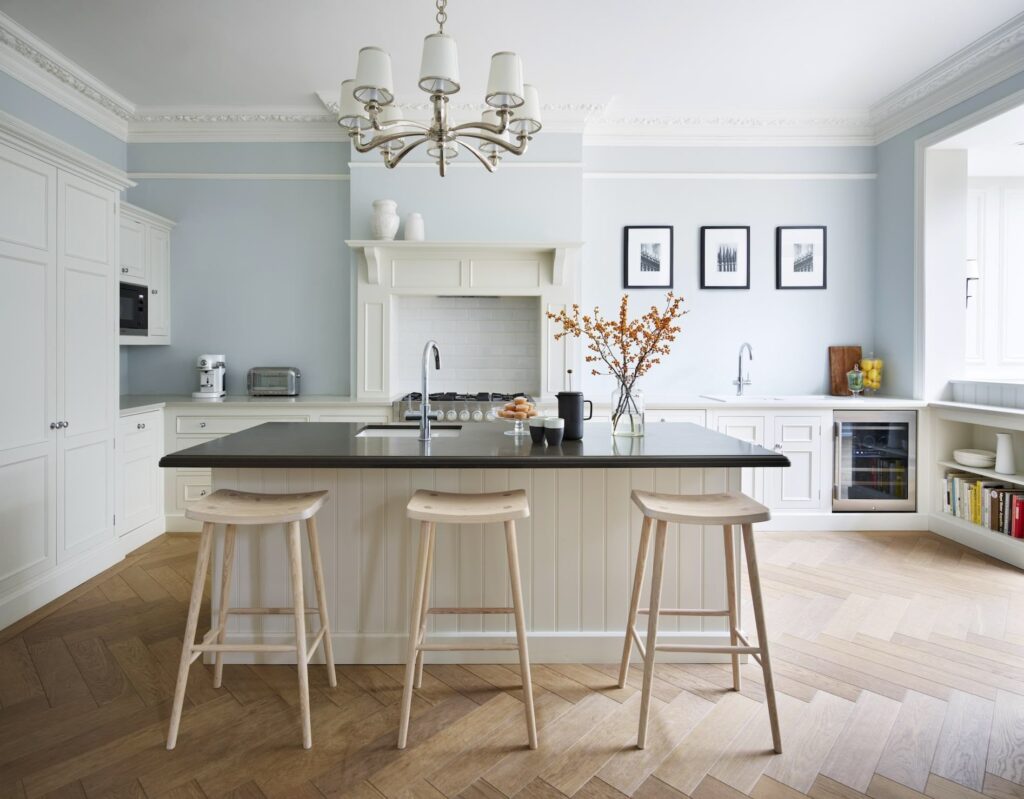
Designer Tips for How to Choose Kitchen Wall Colours
Rather than giving you a long list of the best colours for kitchen walls, our designers have narrowed it down to a few useful starting points.
- Warm whites work well when you want to keep the room light without making it feel stark. They’re particularly suited to warm cabinetry, timber and natural stone.
- Soft greige is useful when white feels too clean but you don’t want a noticeable colour on the walls. Look closely at the undertone, as some greiges are considerably warmer than others.
- Muted greens are a good way to introduce colour without making it the dominant feature. Sage is particularly versatile and works across both classic and more contemporary kitchens.
- Soft blues can bring a cooler quality to a room with plenty of warm natural light. They work well with white, cream and natural timber cabinetry.
- Deeper earthy tones can give a well-lit kitchen more depth. Deep greens, warm browns and muted terracotta can all work well when the rest of the scheme is relatively restrained.
The best colour will depend on the kitchen you’re creating and how the different materials look together.
Discover beautiful kitchen design in person and speak to our experts.
Should Kitchen Walls Match the Cabinets?
They don’t have to. Matching the walls and cabinetry closely can create a calm, tonal look. Choosing a contrasting wall colour gives the cabinetry more definition.
The choice often comes down to how much colour you want in the room.
If you’ve chosen a strong cabinet colour, you may prefer the walls to sit quietly in the background. With pale or neutral cabinetry, the walls can become an opportunity to introduce more colour.
If you’re still working out your wider kitchen palette, our top kitchen colour schemes is the better place to explore different combinations.
Choosing Kitchen Wall Colour as Part of the Design
Wall colour might be one of the final decisions you make, but it shouldn’t be an afterthought. By this stage, your cabinetry, worktops, flooring and lighting are already shaping the room. The walls need to sit comfortably alongside all of them.
This is particularly important with bespoke fitted kitchens. When the cabinetry has been designed around your home, every surrounding finish has an opportunity to add to the overall scheme.
At Harvey Jones, our designers consider these details together. They can help you look beyond individual paint colours and see how the finished kitchen will come together. Book a design appointment with an expert Harvey Jones designer.
FAQs About Kitchen Wall Colours
Warm whites, soft creams and warmer neutrals are a good starting point for a north-facing kitchen. They can help balance the cooler natural light. Deeper colours can also work well if you’d like to create a richer, more intimate room.
Light wall colours can help a kitchen feel more spacious by reflecting natural light. Soft whites and pale neutrals are popular choices. Keeping the walls and cabinetry similar in tone can also make the room feel more continuous.
However, colour isn’t the only factor. Layout, lighting and cabinetry all affect how spacious a kitchen feels. Our guide to colour schemes for small kitchens explores this in more detail.
No. Your walls don’t need to match your kitchen cabinets exactly. A tonal scheme can create a quieter look, while contrast can give the cabinetry more definition.
Warm whites, soft neutrals and muted greens remain popular choices. But a popular colour isn’t necessarily the right colour for your kitchen.
The natural light, cabinetry and materials in your room should all have more influence on the final decision than what’s currently trending.
Discover beautiful kitchen design in person and speak to our experts.